Photo: Kai-Chieh Chan / Pexels
Chinese
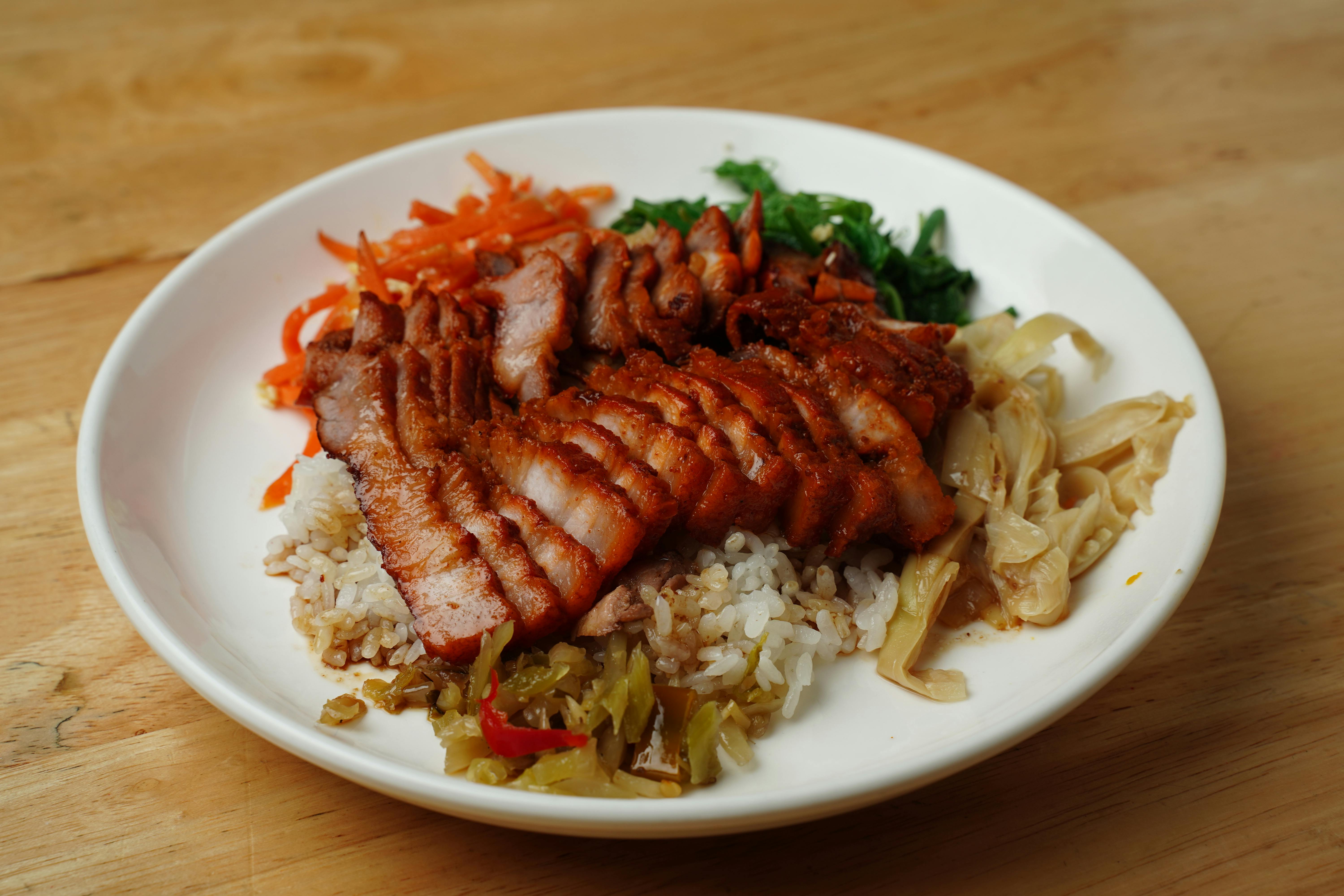
Smoked Pork with Dried Vegetables
The diets react (see scores below)
Common Ingredients
- smoked pork belly
- dried preserved vegetables
- dried chiles
- garlic
- ginger
- scallions
- soy sauce
- cooking wine
Specific recipes may vary.
Incompatible with 9 of 11 diets
Diet Ratings
Smoked pork belly is inherently keto-friendly — high in fat and protein with negligible carbs. The problematic elements are the dried preserved vegetables (梅干菜/mei gan cai or similar), which can vary widely in carb content and may contain added sugar during preservation; cooking wine, which adds a small amount of sugar/carbs; and soy sauce, which contains trace carbs and often added sugar. Dried chiles, garlic, ginger, and scallions contribute minor carbs but are generally fine in cooking quantities. The dish as a whole is likely moderate in net carbs per serving, not a dealbreaker, but the preserved vegetables and condiments introduce enough uncertainty that portion control and ingredient scrutiny are warranted. A typical serving could fall within keto limits if condiments are minimized and preserved vegetables are used sparingly, but restaurant or traditional preparations may tip it over.
Stricter keto practitioners would flag this dish due to the combination of cooking wine (residual sugars), soy sauce (often contains wheat and sugar), and preserved vegetables which frequently have added sugar in commercial preparations — arguing the cumulative carb and insulin load from these condiments makes it unreliable for maintaining ketosis.
Smoked Pork with Dried Vegetables is unambiguously non-vegan. The primary protein and defining ingredient is smoked pork belly, which is animal flesh. All other ingredients (dried preserved vegetables, dried chiles, garlic, ginger, scallions, soy sauce, cooking wine) are plant-based, but the dish is fundamentally built around pork and cannot be considered vegan in any form of the diet.
This dish contains multiple non-paleo ingredients that disqualify it. Soy sauce is a fermented soy-based condiment — soy is a legume and therefore excluded from paleo. Cooking wine (Shaoxing rice wine) is grain-derived and contains additives and added salt, making it doubly non-compliant. Smoked pork belly, while pork itself is paleo-approved, is typically a processed/cured meat that contains added salt, nitrates, and preservatives, placing it firmly in the avoid category. Dried preserved vegetables are often salted and may contain additives. While some base ingredients like garlic, ginger, scallions, and dried chiles are fully paleo-compliant, the dish as a whole is built on a foundation of non-paleo condiments and processed meats. There is no meaningful way to reconstruct this dish in its traditional Chinese form without the soy sauce and cured pork, which are core to its identity.
This dish fundamentally conflicts with Mediterranean diet principles on multiple fronts. Smoked pork belly is a high-fat, high-sodium processed red meat — exactly the type of food the Mediterranean diet restricts to a few times per month at most, and ideally in small quantities. Smoking and curing processes add further sodium and potentially harmful compounds. The dish lacks olive oil as the primary fat, contains no whole grains or legumes, and relies on soy sauce (high sodium, processed condiment) and cooking wine rather than Mediterranean-style seasonings. Dried preserved vegetables, while conceptually plant-based, are typically very high in sodium from their preservation process. The overall nutritional profile — high saturated fat, high sodium, processed red meat as the centerpiece — is antithetical to Mediterranean diet principles regardless of cuisine origin.
This dish is fundamentally incompatible with the carnivore diet. While smoked pork belly is an acceptable animal protein, the dish is built around multiple plant-based ingredients that are explicitly excluded from the carnivore diet. Dried preserved vegetables and dried chiles are plant foods. Garlic, ginger, and scallions are plant aromatics. Soy sauce is a fermented legume product — one of the most plant-derived condiments possible. Cooking wine (Shaoxing rice wine) is a grain-derived fermented alcohol. The smoked pork belly itself may also contain additives. The ratio of plant to animal ingredients makes this dish a clear avoid — there is no meaningful way to make it carnivore-compatible without stripping it down to just the pork.
This dish contains two clearly excluded ingredients: soy sauce (soy is a legume and explicitly banned on Whole30) and cooking wine (alcohol is excluded). Smoked pork belly may also contain added sugars or sulfites in its cure, though sulfites are no longer a disqualifying factor per 2024 rules. Dried preserved vegetables (梅干菜 or similar) may also contain added sugar or soy-based ingredients. The combination of soy sauce and cooking wine alone is sufficient to disqualify this dish under standard Whole30 rules.
This dish contains multiple high-FODMAP ingredients that make it unsuitable during the elimination phase. Garlic is one of the highest-FODMAP foods (rich in fructans) and is a primary flavoring. Scallions (white parts) also contain fructans, though the green tops are low-FODMAP. Dried preserved vegetables (梅干菜 or similar) are a significant concern — dehydration concentrates FODMAPs, and many Chinese preserved vegetable blends contain high-FODMAP ingredients or additives. Soy sauce in small amounts is generally considered low-FODMAP, as is ginger and dried chiles. Smoked pork belly itself (plain pork) is low-FODMAP, and cooking wine in small culinary quantities is typically acceptable. However, garlic alone is sufficient to classify this dish as high-FODMAP, and the combination with scallion whites and potentially high-FODMAP preserved vegetables compounds the problem significantly. There is no realistic way to make this dish FODMAP-compliant without fundamentally altering its flavor profile by removing garlic and substituting garlic-infused oil.
Smoked Pork with Dried Vegetables is fundamentally incompatible with DASH diet principles on multiple fronts. Smoked pork belly is among the worst possible protein choices for DASH: it is high in saturated fat, high in total fat, and the smoking and curing process loads it with sodium — often 600–1,000mg+ per serving before any additional seasoning. Dried preserved vegetables (梅干菜 or similar) are typically salt-cured and contribute substantial additional sodium. Soy sauce adds yet another heavy sodium load, easily pushing a single serving of this dish well beyond the entire daily DASH sodium ceiling of 1,500–2,300mg. The pork belly cut is also explicitly the type of high-fat, processed red meat that DASH guidelines instruct followers to limit or avoid. While garlic, ginger, scallions, and dried chiles are DASH-friendly aromatics, they are minor ingredients that cannot offset the core nutritional problems. This dish conflicts with DASH on sodium, saturated fat, and processed/smoked meat restrictions simultaneously.
Smoked pork belly is the primary protein concern here — pork belly is one of the fattiest cuts available, with a high saturated fat content that conflicts with Zone's lean protein principle. A typical Zone meal targets ~25g protein with only 10-15g fat, but pork belly routinely delivers as much or more fat than protein by weight, making it very difficult to hit the 30/30 protein/fat calorie targets without dramatically overshooting fat. The smoking process and soy sauce also add significant sodium. On the positive side, the dish has several Zone-friendly elements: dried preserved vegetables (likely a low-glycemic carb source), garlic, ginger, scallions (all polyphenol-rich and anti-inflammatory), dried chiles (favorable in Zone for their capsaicin content), and cooking wine used in small amounts as a flavoring agent. The carbohydrate load from the dried vegetables and aromatics is relatively modest and low-glycemic. However, the dish as traditionally prepared is protein-and-fat heavy with insufficient carbohydrate to reach 40% carb ratio, and the fat profile skews saturated rather than monounsaturated. A Zone practitioner could modify this dish — using a leaner pork cut, adding more vegetables, and reducing portion size of the belly — but as traditionally prepared it falls into the caution range due to the fatty protein source.
This dish centers on smoked pork belly, which is the primary concern from an anti-inflammatory standpoint. Pork belly is a high-fat, high-saturated-fat cut, and the smoking process introduces polycyclic aromatic hydrocarbons (PAHs) and advanced glycation end-products (AGEs), both of which are associated with increased inflammatory markers. Preserved/dried vegetables in Chinese cuisine (typically meicai or similar) are often heavily salted, contributing high sodium, which can exacerbate inflammation and is not emphasized in anti-inflammatory protocols. Soy sauce adds further sodium load. The cooking wine (likely Shaoxing rice wine) is alcohol other than red wine, which falls in the 'limit to avoid' category. On the positive side, garlic, ginger, dried chiles, scallions, and soy sauce (fermented) all carry some anti-inflammatory benefit through allicin, gingerols, capsaicin, and fermentation-derived compounds — but these are condiments and aromatics that cannot offset the primary protein source. Red meat and processed/smoked meats are explicitly in the 'limit' to 'avoid' category across virtually all anti-inflammatory frameworks, including Dr. Weil's pyramid and IF Rating methodology. The combination of smoked fatty pork, preserved high-sodium vegetables, and alcohol-based wine makes this dish a poor fit for an anti-inflammatory diet overall.
Smoked pork belly is one of the least GLP-1-compatible proteins available. Pork belly is an extremely high-fat cut — typically 40-50% fat by weight, heavily saturated — which directly worsens the core GLP-1 side effects of nausea, bloating, and reflux due to slowed gastric emptying. The smoking process does not reduce fat content, and the preserved/dried vegetables, while adding some fiber value, are typically high in sodium and do not offset the fat burden. Dried chiles may further aggravate reflux and GI discomfort. Soy sauce and cooking wine add negligible nutritional benefit and additional sodium. The dish scores poorly on nearly every GLP-1 priority: low protein density relative to fat content, high saturated fat, poor digestibility, high sodium, and likely to trigger or worsen GI side effects. This is not a portion-sensitivity issue — even a small serving delivers a problematic fat load for GLP-1 patients.
*See how scores were generated at our methodology page.
Nutritional profile
Six traits that cut across every diet.
Fiber & Plants
How much whole-plant food and fiber it delivers.
Healthy Fats
The quality of its fats (unsaturated, omega-3).
Whole / Unprocessed
How close it is to its natural, unprocessed form.
Gut Gentle
How easy it is on digestion (low FODMAP, few irritants).
Low Glycemic
How little it spikes your blood sugar.
Protein Density
How much protein it packs per calorie.
Controversy Index
Higher controversy = more disagreement between diets.
Diet-Specific Tips
 Keto — 5/10
View tips
- Pork belly is high-fat and keto-core
- Dried preserved vegetables have variable and potentially high carb/sugar content depending on preparation
- Cooking wine adds residual sugars
- Soy sauce may contain wheat and added sugar
- Garlic, ginger, scallions add minor but cumulative carbs
- Restaurant preparation likely uses more condiments than home cooking
- Portion size of preserved vegetables is critical
 Zone — 4/10
View tips
- Pork belly is excessively high in saturated fat, violating Zone's lean protein guideline
- Fat calories will far exceed the 30% target, disrupting the 40/30/30 ratio
- Dried preserved vegetables and aromatics (garlic, ginger, chiles) are low-glycemic and Zone-favorable
- Dish is carbohydrate-light relative to Zone requirements — would need additional vegetables to balance
- Soy sauce adds sodium but minimal glycemic impact; cooking wine is used in negligible amounts
- Anti-inflammatory aromatics (ginger, garlic, chiles) align with Sears' polyphenol emphasis
- Could be salvaged for Zone by substituting lean pork loin and significantly increasing vegetable volume