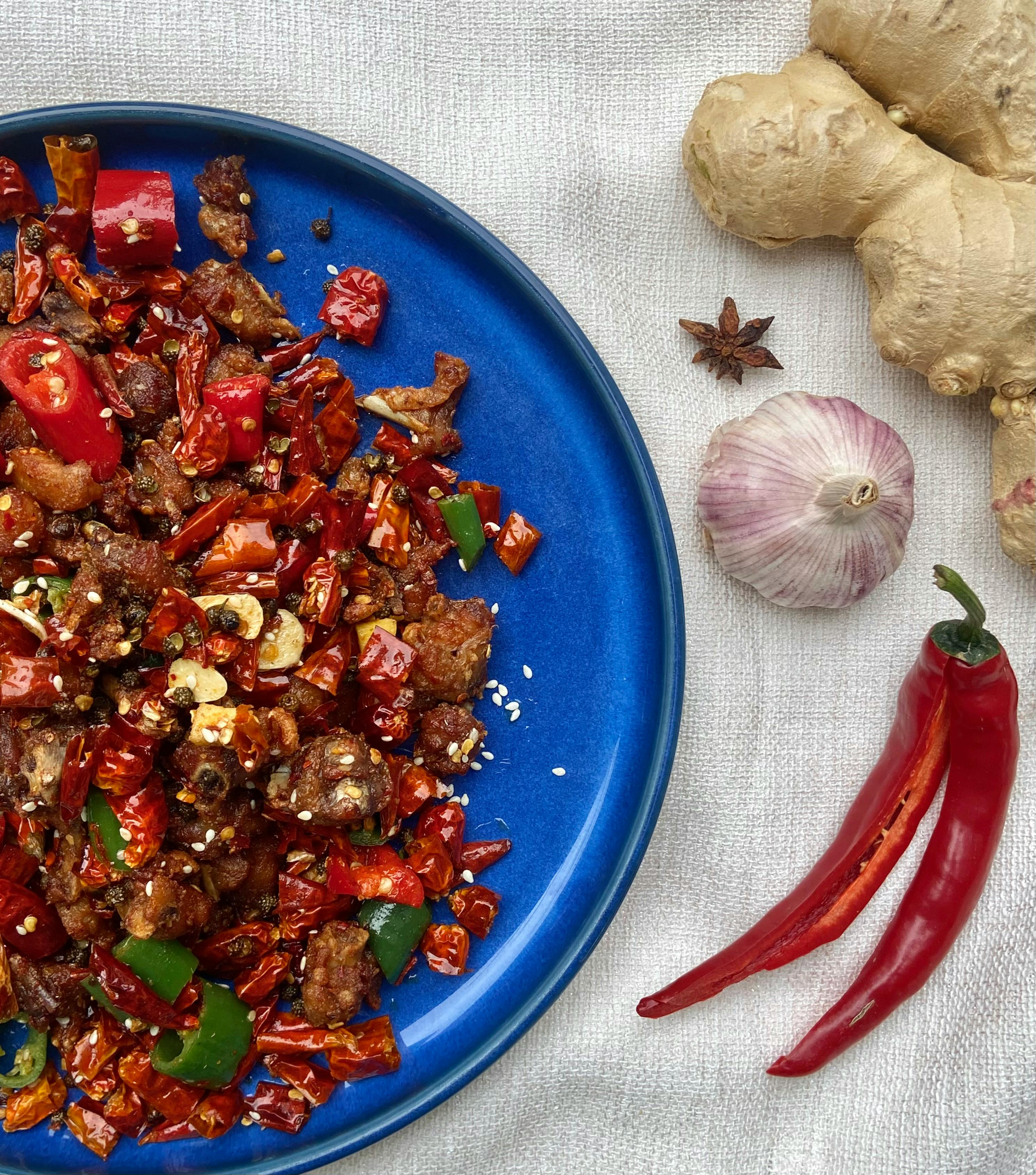
Photo: Mariam Antadze / Pexels
Chinese
Xiang La Zi Ji
The diets react (see scores below)
Common Ingredients
- chicken
- fresh red chiles
- dried chiles
- garlic
- ginger
- scallions
- soy sauce
- doubanjiang
Specific recipes may vary.
Incompatible with 7 of 11 diets
Diet Ratings
Xiang La Zi Ji (Sichuan crispy chili chicken) is largely keto-compatible in its protein and fat profile, but several ingredients introduce meaningful carb concerns. Doubanjiang (fermented broad bean and chili paste) contains fermented beans and often added sugar, contributing moderate net carbs and a small glucose load. Soy sauce adds a minor carb amount but is generally acceptable in typical quantities. The volume of fresh and dried chiles, while adding flavor, also contributes a non-trivial carb load if used heavily. The dish is often deep-fried with a starch coating in traditional preparation — if coated, it becomes significantly less keto-friendly. Assuming no starch coating and moderate portions of doubanjiang, the dish can fit within a daily keto budget with careful portioning, but is not a clean approve due to the cumulative carb load from condiments and chiles.
Strict keto practitioners would flag doubanjiang outright due to its bean base and common added sugar content, arguing that restaurant or traditional versions of this dish are too carb-variable and should be avoided rather than cautioned. They would recommend recreating it at home with controlled, sugar-free substitutes.
Xiang La Zi Ji (香辣子鸡) is a Sichuan-style crispy chili chicken dish whose primary protein is chicken, an animal product that is unequivocally excluded from a vegan diet. All other ingredients — fresh and dried chiles, garlic, ginger, scallions, soy sauce, and doubanjiang — are plant-based, but the presence of chicken renders the dish entirely incompatible with veganism. There is no ambiguity here.
Xiang La Zi Ji (Sichuan chili chicken) contains two clear paleo violations that cannot be overlooked. Soy sauce is a fermented soy and wheat product — both legume and grain derivatives that are firmly excluded from the paleo diet. Doubanjiang (fermented broad bean and chili paste) is a legume-based fermented paste, equally non-compliant. These are not incidental trace ingredients; they are foundational flavor components of the dish. The remaining ingredients — chicken, fresh and dried chiles, garlic, ginger, and scallions — are all paleo-approved, but the dish as traditionally prepared cannot be considered paleo-compatible.
Xiang La Zi Ji (Chongqing-style spicy chicken) is a Chinese dish built around chicken as the primary protein, which aligns with Mediterranean diet guidance for poultry as an acceptable moderate protein. The chile peppers, garlic, ginger, and scallions are all plant-based ingredients consistent with Mediterranean principles emphasizing vegetables and aromatics. However, the dish deviates from Mediterranean patterns in several ways: it is typically deep-fried or stir-fried in high-heat neutral oils rather than extra virgin olive oil; soy sauce adds significant sodium and is a processed condiment not native to the Mediterranean framework; and doubanjiang (fermented broad bean and chile paste) is a heavily processed, high-sodium fermented condiment outside Mediterranean tradition. The dish is not processed food per se, but the cooking method and condiment profile place it in a moderate 'caution' zone rather than a clear approval.
Some Mediterranean diet interpreters take a broader view, noting that fermented foods like doubanjiang provide probiotic benefits similar to fermented Mediterranean staples such as olives or aged cheeses, and that chile-heavy dishes rich in plant aromatics (garlic, ginger, peppers) reflect the spirit of plant-forward eating even if the specific ingredients are not traditional. Under this reading, the dish's vegetable density and lean poultry base could push it toward the lower end of 'approve.'
Xiang La Zi Ji is a classic Sichuan spicy chicken dish that is fundamentally incompatible with the carnivore diet. While chicken itself is an acceptable animal protein for most carnivore practitioners, the dish is built around a heavy array of plant-based ingredients: fresh red chiles, dried chiles, garlic, ginger, scallions, soy sauce (fermented soybeans and wheat), and doubanjiang (fermented broad bean and chili paste). The plant ingredients are not incidental garnishes — they are the defining flavor base of the dish, comprising the majority of the ingredient list. Soy sauce and doubanjiang are particularly problematic, being heavily processed, plant-derived, fermented products containing soy, wheat, and legumes. This dish cannot be modified into a carnivore-compatible version without ceasing to be Xiang La Zi Ji entirely.
Xiang La Zi Ji (Fragrant Spicy Chicken) contains two soy-based ingredients that are excluded on Whole30: soy sauce (a soy product, and soy is a legume) and doubanjiang (a fermented broad bean and chili paste that typically contains both soy and added sugar). Both are core, load-bearing ingredients in this dish — soy sauce provides the primary savory seasoning and doubanjiang delivers the signature spicy-fermented flavor. There is no easy substitution that preserves the dish's character; coconut aminos could replace soy sauce, but doubanjiang has no direct Whole30-compliant equivalent. As commonly prepared, this dish is not Whole30 compatible.
Xiang La Zi Ji (Sichuan crispy chili chicken) contains multiple high-FODMAP ingredients that make it unsuitable during the elimination phase. Garlic is one of the highest-FODMAP foods tested by Monash University, being rich in fructans and problematic even in very small quantities. Scallions (white parts) are also high in fructans, though the green tops are low-FODMAP. Doubanjiang (spicy fermented broad bean paste) is a compound ingredient containing fermented broad beans (high in GOS) and typically garlic, making it a significant FODMAP source. These three ingredients alone — garlic, white scallion parts, and doubanjiang — are sufficient to classify this dish as high-FODMAP at any standard restaurant serving. Fresh and dried chiles themselves are generally low-FODMAP at normal quantities, chicken is low-FODMAP, and soy sauce is low-FODMAP at standard servings (1-2 tbsp). Ginger is low-FODMAP. However, the combination of garlic and doubanjiang makes this dish clearly unsuitable during elimination phase without significant recipe modification.
Xiang La Zi Ji (Spicy Crispy Chicken) is a Sichuan dish that presents multiple significant DASH diet concerns. The two primary sodium offenders are soy sauce and doubanjiang (spicy fermented bean paste). Soy sauce contributes approximately 900mg sodium per tablespoon, and doubanjiang is even more sodium-dense, typically delivering 600-900mg per tablespoon or more. Together, a single serving of this dish can easily exceed 1,500-2,000mg of sodium — surpassing the entire daily sodium ceiling of the low-sodium DASH target (1,500mg) and approaching the standard DASH limit (2,300mg) in one dish alone. Doubanjiang is also a fermented, heavily processed condiment with significant saturated fat content from its broad bean and chili oil base. While the lean chicken and fresh aromatics (garlic, ginger, scallions, chiles) are DASH-compatible ingredients, they cannot offset the sodium burden from the two high-sodium condiments that are central to this dish's flavor profile. This dish as traditionally prepared is incompatible with DASH principles.
Xiang La Zi Ji (Sichuan chili chicken) has a solid Zone foundation: chicken is a lean protein that fits perfectly into Zone protein blocks, and the aromatics (garlic, ginger, scallions, fresh and dried chiles) are all low-glycemic, polyphenol-rich vegetables that Zone actively encourages. The dish is naturally low in carbohydrates and moderate in fat when prepared traditionally. However, several factors require caution. First, traditional preparation often uses bone-in, skin-on chicken pieces (sometimes fried), which increases saturated fat and omega-6 content beyond Zone ideals — skinless pieces would be preferred. Second, doubanjiang (fermented broad bean chili paste) adds sodium and a small amount of fermented carbohydrates, but more importantly, the oil content in doubanjiang and the cooking oil used (typically a neutral seed oil high in omega-6) conflicts with Zone's preference for monounsaturated fats. Third, the dish provides almost no Zone-favorable carbohydrate volume beyond aromatics, so it would need to be paired with low-glycemic vegetables to complete a balanced Zone meal. The anti-inflammatory potential from chiles (capsaicin) and ginger is a Zone positive. With modifications — skinless chicken, olive or avocado oil substitution, and served alongside steamed vegetables — this dish can fit Zone principles well.
Some Zone practitioners would score this higher (7-8) for its naturally low-glycemic, high-protein profile and the anti-inflammatory polyphenol load from chiles and ginger, which aligns with Sears' later writings emphasizing omega-3s and polyphenols. The concern about seed oils and skin-on chicken preparation is context-dependent — restaurant versus home preparation varies significantly, and Sears' later work (The Zone Diet) acknowledges that the overall dietary pattern matters more than any single dish.
Xiang La Zi Ji (Sichuan spicy diced chicken) features several strongly anti-inflammatory ingredients: fresh and dried chiles contain capsaicin, which has well-documented anti-inflammatory properties; garlic and ginger are potent anti-inflammatory spices with research supporting reduction of inflammatory markers; scallions provide quercetin and flavonoids. Chicken is a lean protein, generally rated as moderate (acceptable) on anti-inflammatory frameworks. However, the dish has two meaningful concerns. First, doubanjiang (fermented broad bean and chile paste) is high in sodium and often contains preservatives and additives depending on the commercial brand — fermented foods can be beneficial for gut health (a pro), but processed condiment versions with additives and very high sodium may blunt that benefit. Second, the cooking method matters significantly: traditional Xiang La Zi Ji is deep-fried in oil before the stir-fry finish. If cooked in refined seed oils (common in restaurant preparation), that introduces a substantial omega-6 load that is a concern under anti-inflammatory guidelines. If made at home with avocado oil or a modest amount of peanut oil, the profile improves. The soy sauce adds sodium but in typical cooking quantities is not a major inflammatory driver. Overall, the spice profile is genuinely impressive and anti-inflammatory, but frying method and condiment quality create meaningful uncertainty, landing this dish in the caution zone with an upward lean.
Anti-inflammatory advocates like Dr. Weil who emphasize chiles, garlic, and ginger as cornerstone anti-inflammatory spices would rate this dish more favorably, particularly when home-cooked with a quality oil — the spice synergy alone could push it toward 'approve.' Conversely, practitioners following stricter autoimmune or low-sodium protocols would flag doubanjiang's sodium, additives, and the frequent use of high-omega-6 frying oils in restaurant preparation as significant concerns, potentially pushing the verdict lower.
Xiang La Zi Ji (Chongqing-style spicy chicken) is a high-protein dish at its core — bone-in chicken pieces provide meaningful protein — but the preparation method and ingredient profile create significant concerns for GLP-1 patients. The chicken is typically deep-fried before stir-frying, adding substantial fat that worsens nausea, bloating, and reflux, all common GLP-1 side effects. More critically, this dish is aggressively spicy: it combines large volumes of dried chiles, fresh red chiles, and doubanjiang (a fermented spicy bean paste), making it one of the hotter preparations in Chinese cuisine. Very spicy foods are explicitly flagged as likely to worsen GLP-1 GI side effects, particularly reflux and nausea. Doubanjiang also contributes meaningful sodium, which can be a secondary concern. The dish scores low on easy digestibility due to the frying step and high capsaicin load. The aromatics (garlic, ginger, scallions, soy sauce) are individually fine or beneficial, but they do not offset the core problems.
Some GLP-1-focused dietitians note that if the chicken is prepared without deep-frying (e.g., stir-fried or baked) and the chile volume is substantially reduced, the dish could be reclassified as a caution — chicken remains a high-quality lean protein and ginger has mild antiemetic properties. Individual spice tolerance also varies considerably among GLP-1 patients, with some reporting no worsening of GI symptoms at moderate heat levels.
*See how scores were generated at our methodology page.
Nutritional profile
Six traits that cut across every diet.
Fiber & Plants
How much whole-plant food and fiber it delivers.
Healthy Fats
The quality of its fats (unsaturated, omega-3).
Whole / Unprocessed
How close it is to its natural, unprocessed form.
Gut Gentle
How easy it is on digestion (low FODMAP, few irritants).
Low Glycemic
How little it spikes your blood sugar.
Protein Density
How much protein it packs per calorie.
Controversy Index
Higher controversy = more disagreement between diets.
Diet-Specific Tips
 Keto — 5/10
View tips
- Doubanjiang contains fermented broad beans and often added sugar, raising net carb content
- Dried and fresh chiles in large quantities add moderate carbs cumulatively
- Traditional preparation may include a cornstarch or flour coating on chicken — a major keto disqualifier if present
- Soy sauce is low-carb in typical amounts and generally accepted on keto
- Chicken is an excellent keto protein source
- Dish can be made keto-compatible with home preparation using sugar-free doubanjiang and no starch coating
 Mediterranean — 5/10
View tips
- Chicken (poultry) is acceptable in moderation per Mediterranean guidelines
- Abundant plant ingredients: fresh and dried chiles, garlic, ginger, scallions are positive
- Typically cooked in neutral high-heat oil, not extra virgin olive oil — misaligns with primary fat source
- Soy sauce is a high-sodium processed condiment not part of Mediterranean tradition
- Doubanjiang is a heavily processed, high-sodium fermented paste outside Mediterranean norms
- No whole grains, legumes, or Mediterranean staples present in the dish itself
- Not inherently unhealthy, but culturally and compositionally distant from Mediterranean dietary patterns
 Zone — 6/10
View tips
- Chicken is a Zone-ideal lean protein source
- Chiles, garlic, ginger, and scallions are low-glycemic, polyphenol-rich Zone-favorable vegetables
- Traditional skin-on, sometimes fried chicken preparation increases saturated fat and omega-6 intake
- Doubanjiang adds sodium and seed oil, conflicting with Zone's monounsaturated fat preference
- Dish is carbohydrate-light, requiring pairing with additional low-glycemic vegetables to balance Zone macros
- Capsaicin and ginger provide anti-inflammatory benefits aligned with Zone's anti-inflammatory focus
- Cooking oil choice (typically seed oil) is a notable Zone concern; substituting olive or avocado oil improves compatibility
 Anti-Inflammatory — 6/10
View tips
- Capsaicin in fresh and dried chiles — well-researched anti-inflammatory compound
- Garlic and ginger — potent anti-inflammatory spices with evidence for CRP reduction
- Chicken as lean protein — acceptable/moderate on anti-inflammatory frameworks
- Doubanjiang — fermented food with gut-health potential but high sodium and possible additives
- Deep-frying method common in traditional preparation introduces high omega-6 oil load
- Soy sauce adds sodium; minimal inflammatory concern at culinary quantities
- Scallions contribute quercetin and polyphenols