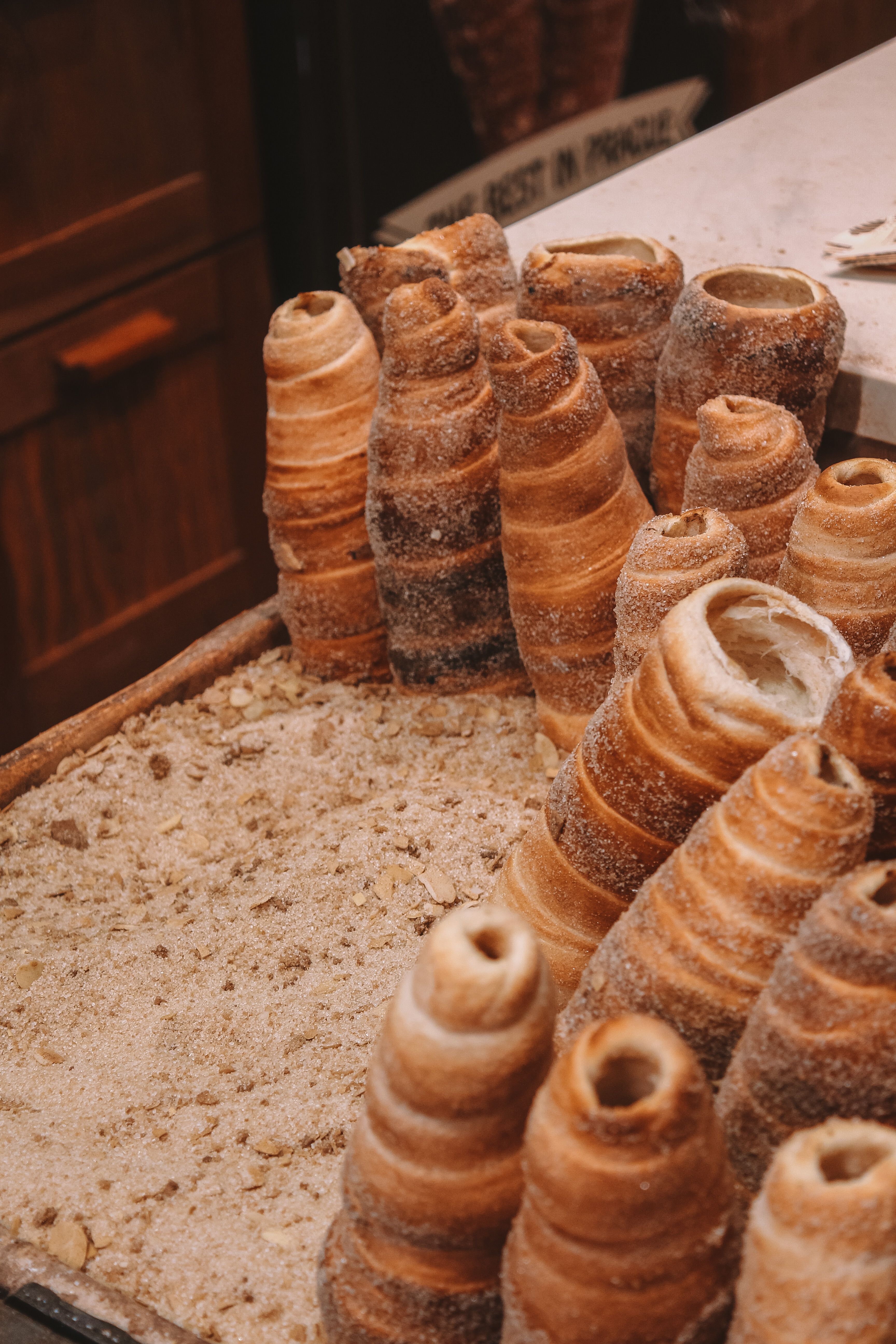
Photo: Yelyzaveta Martynenko / Pexels
Hungarian
Kurtoskalacs
The diets react (see scores below)
Common Ingredients
- flour
- yeast
- sugar
- eggs
- butter
- milk
- cinnamon
- walnuts
Specific recipes may vary.
Incompatible with 10 of 11 diets
Diet Ratings
Kurtoskalacs (chimney cake) is a traditional Hungarian spit cake made primarily from wheat flour, yeast, and sugar — three ingredients that are fundamentally incompatible with ketogenic eating. Flour alone delivers massive amounts of fast-digesting carbohydrates, while added sugar further spikes blood glucose and directly blocks ketosis. Yeast-leavened dough is essentially pure net carbs. Even the butter and eggs, which are keto-friendly, cannot offset the overwhelming carbohydrate load. A single serving of kurtoskalacs can easily contain 50–80g of net carbs, exceeding the entire daily keto carb budget in one snack.
Kurtoskalacs (chimney cake) contains multiple animal-derived ingredients that make it incompatible with a vegan diet. Eggs, butter, and milk are all direct animal products and central to the traditional recipe's structure, flavor, and texture. There is no ambiguity here — these are core ingredients, not traces or cross-contamination warnings. While vegan versions of chimney cake can be made by substituting plant-based butter, non-dairy milk, and flax or chia eggs, the traditional dish as listed is firmly non-vegan.
Kurtoskalacs (chimney cake) is a traditional Hungarian spit cake that is fundamentally incompatible with the paleo diet. The core of the dish is wheat flour — a grain that is categorically excluded from paleo. Beyond flour, it contains yeast (a processed leavening agent), refined sugar, and milk (dairy) — all of which are explicitly off-limits. Butter is also dairy. While eggs, cinnamon, and walnuts are individually paleo-approved ingredients, the foundational structure of this dish relies entirely on non-paleo components. There is no meaningful way to consider this dish paleo-compatible in its traditional form.
Kurtoskalacs (chimney cake) is a traditional Hungarian sweet pastry that directly conflicts with Mediterranean diet principles. It is made primarily from refined white flour and significant added sugar, both of which the Mediterranean diet explicitly discourages. Butter, not olive oil, is the primary fat, further distancing it from Mediterranean guidelines. While eggs, milk, and walnuts have some place in the Mediterranean framework, they are overwhelmed here by the refined grain base and added sugar. The walnuts are a positive element but minimal in proportion. This is an ultra-processed, sugar-forward baked confection with no meaningful plant-forward or whole-food qualities.
Kurtoskalacs (chimney cake) is a Hungarian sweet pastry that is fundamentally incompatible with the carnivore diet. Its primary ingredients are flour, yeast, and sugar — all plant-derived or processed carbohydrates that are strictly excluded. Additional plant-based ingredients include cinnamon (a plant spice) and walnuts (a nut). While eggs, butter, and milk are animal-derived and carnivore-compatible in isolation, they are minor components in what is essentially a grain-based confection. This dish has no meaningful animal protein and is dominated by excluded plant foods and sugar. It represents exactly the type of processed, carbohydrate-heavy food the carnivore diet eliminates entirely.
Kurtoskalacs (chimney cake) is a traditional Hungarian spit cake that contains multiple excluded ingredients: flour (grain), sugar (added sugar), butter (dairy), and milk (dairy). Even setting aside the excluded ingredients, this is a classic baked good — a sweet pastry/bread — which is explicitly prohibited under Whole30's rule against recreating baked goods and junk food, regardless of ingredient compliance. This dish fails on both the ingredient level and the spirit-of-the-program level.
Kurtoskalacs (chimney cake) is a traditional Hungarian sweet bread made with wheat flour as its primary ingredient. Wheat flour is high in fructans, which are one of the main FODMAP groups restricted during the elimination phase. A standard serving of this pastry would contain a substantial amount of wheat flour, making it clearly high-FODMAP. Additionally, milk contributes lactose (a disaccharide), and walnuts become high-FODMAP above approximately 10 walnut halves, though they may be within range depending on quantity. Sugar, eggs, butter, yeast, and cinnamon are low-FODMAP. However, the wheat flour alone is sufficient to classify this dish as high-FODMAP and unsuitable during the elimination phase. There is no fermentation process comparable to sourdough that would meaningfully reduce the fructan content.
Kurtoskalacs (chimney cake) is a Hungarian sweet pastry made by wrapping dough around a spit and rolling it in sugar before baking. It is high in refined carbohydrates (white flour, sugar), added sugars, saturated fat (butter), and offers minimal nutritional value in terms of fiber, potassium, calcium, or magnesium relative to its calorie load. DASH diet explicitly limits sweets, added sugars, and refined grains while emphasizing whole grains and nutrient-dense foods. The high sugar content and use of butter place this firmly in the 'avoid' category for DASH compliance. While walnuts offer some benefit (healthy fats, magnesium), they are a minor component and insufficient to offset the overall nutritional profile. This is an occasional treat food, not compatible with regular DASH eating patterns.
Kurtoskalacs (chimney cake) is a traditional Hungarian sweet pastry made from enriched dough wrapped around a spit and baked, then rolled in sugar and cinnamon. From a Zone Diet perspective, this food is highly problematic. The macronutrient profile is dominated by high-glycemic carbohydrates (white flour, sugar) with significant saturated fat from butter and milk, and virtually no protein contribution. This makes achieving anything close to a 40/30/30 ratio essentially impossible without radical modification. The primary carbohydrate sources — white flour and sugar — are exactly the high-glycemic, insulin-spiking foods Dr. Sears categorizes as 'unfavorable' and recommends avoiding. There is no lean protein component, and the fat profile is saturated rather than the preferred monounsaturated fats. While walnuts do provide some beneficial omega-3s and cinnamon has polyphenol value, these minor positives are overwhelmed by the overall macro imbalance. This is a dessert/snack designed around refined carbohydrates and sugar, making it one of the rare foods that genuinely cannot be incorporated into a Zone-balanced meal or snack in any reasonable portion size.
Kurtoskalacs (chimney cake) is a traditional Hungarian sweet pastry made primarily from refined white flour, sugar, butter, eggs, and milk — a profile dominated by refined carbohydrates, added sugar, and saturated fat. These are precisely the ingredients that anti-inflammatory frameworks consistently flag as problematic: refined flour causes rapid blood glucose spikes that promote inflammatory cytokine release, added sugar drives glycation and increases CRP, and butter contributes saturated fat. The eggs and milk are moderate-category ingredients that add little anti-inflammatory benefit here. On the positive side, cinnamon is a genuine anti-inflammatory spice, and walnuts are one of the most strongly anti-inflammatory foods available (rich in ALA omega-3s, polyphenols, and ellagitannins). However, both cinnamon and walnuts are minor components in this dish and cannot offset the dominant pro-inflammatory base of refined flour, sugar, and butter. The overall profile of this dish is essentially a sweet enriched bread — a treat that most anti-inflammatory nutrition authorities would recommend limiting significantly. The score leans toward 'avoid' territory (3) given the heavy refined carb and sugar load, but stops short of 1-2 because it is a whole-food preparation with no trans fats, artificial additives, or high-fructose corn syrup, and contains trace anti-inflammatory ingredients.
Kurtoskalacs (chimney cake) is a traditional Hungarian sweet pastry made by wrapping yeasted dough around a spit, baking it, then coating it in sugar and cinnamon — sometimes finished with crushed walnuts. It is essentially a refined-carbohydrate, high-sugar, moderate-fat treat with negligible protein and minimal fiber. For GLP-1 patients, this food fails on nearly every priority: it offers virtually no protein to protect muscle mass, minimal fiber to support digestion, and delivers most of its calories from refined flour and sugar — the definition of empty calories. The butter and egg content add saturated fat, and the sugar coating spikes blood glucose rapidly. With reduced appetite on GLP-1 medications, spending calories on this food means displacing the protein and fiber that patients critically need. The sweet, doughy texture may also be easy to overconsume despite GLP-1-suppressed appetite, as it does not provide meaningful satiety signals. Walnuts provide a small amount of beneficial unsaturated fat and minimal protein, but in the quantities used as a topping they do not meaningfully improve the nutritional profile.
*See how scores were generated at our methodology page.
Nutritional profile
Six traits that cut across every diet.
Fiber & Plants
How much whole-plant food and fiber it delivers.
Healthy Fats
The quality of its fats (unsaturated, omega-3).
Whole / Unprocessed
How close it is to its natural, unprocessed form.
Gut Gentle
How easy it is on digestion (low FODMAP, few irritants).
Low Glycemic
How little it spikes your blood sugar.
Protein Density
How much protein it packs per calorie.
Controversy Index
Higher controversy = more disagreement between diets.
Diet-Specific Tips
 Anti-Inflammatory — 5/10
View tips
- Refined white flour — high glycemic, promotes inflammatory cytokine release
- Added sugar — drives glycation, elevates CRP and pro-inflammatory markers
- Butter — saturated fat, flagged as a 'limit' ingredient in anti-inflammatory frameworks
- Walnuts — strongly anti-inflammatory (ALA omega-3s, polyphenols), but a minor component
- Cinnamon — anti-inflammatory spice, but used in small amounts
- No trans fats, artificial additives, or HFCS — marginally better than ultra-processed alternatives
- Eggs and milk — moderate/neutral anti-inflammatory profile