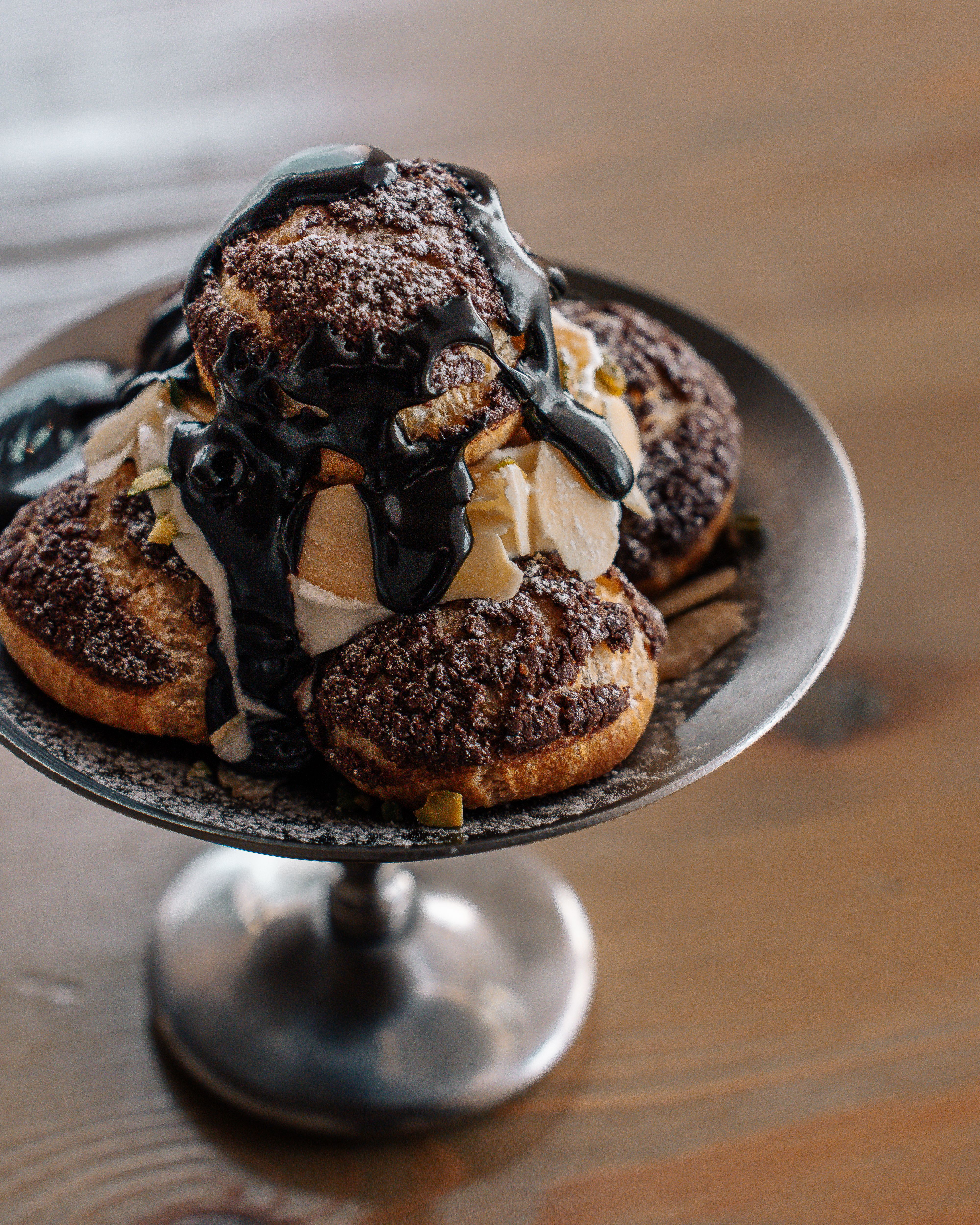
Photo: Szymon Shields / Pexels
Hungarian
Somloi Galuska
The diets react (see scores below)
Common Ingredients
- sponge cake
- eggs
- sugar
- milk
- walnuts
- rum
- chocolate
- whipped cream
Specific recipes may vary.
Incompatible with 11 of 11 diets
Diet Ratings
Somloi Galuska is a traditional Hungarian trifle-style dessert that is fundamentally incompatible with a ketogenic diet. The base is sponge cake made from flour and sugar, which alone delivers a massive carbohydrate load. Added sugar appears both in the cake and custard layers, milk contributes lactose carbs, and chocolate (unless specified as very high cacao) adds more sugar. The rum adds additional sugars. While walnuts, eggs, and whipped cream are individually keto-friendly, they are completely overwhelmed by the high-carb, high-sugar components that define this dish. A single serving would almost certainly exceed the entire daily net carb allowance of 20-50g, making ketosis impossible to maintain.
Somloi Galuska is a traditional Hungarian trifle-style dessert that contains multiple animal-derived ingredients. Eggs are listed as the primary protein and are a core component of the sponge cake layers. Milk is used in the custard or cream components, and whipped cream is dairy-based. These three ingredients — eggs, milk, and whipped cream — are all unambiguously animal products excluded from a vegan diet. There is no meaningful debate here: this dish is incompatible with veganism in its traditional form. A vegan adaptation would require substituting all three with plant-based alternatives (e.g., flax eggs, plant milk, coconut whipped cream), but the dish as described is not vegan.
Somloi Galuska is a classic Hungarian trifle dessert that is fundamentally incompatible with the Paleo diet. The dish is built on sponge cake, which requires wheat flour — a grain that is strictly excluded from Paleo. Beyond the base, it contains refined sugar (a core Paleo exclusion), milk and whipped cream (dairy, excluded), and chocolate which in this context is a processed, sugar-laden form rather than high-cacao dark chocolate. Rum is an alcohol derived from fermented sugarcane, adding another processed, grain-adjacent ingredient. Walnuts and eggs are the only Paleo-compliant components. The dish is structurally and fundamentally a grain-and-dairy-based dessert with multiple non-negotiable Paleo violations — there is no meaningful way to consider it Paleo-compatible.
Somloi Galuska is a classic Hungarian dessert trifle that fundamentally conflicts with Mediterranean diet principles. It is built around refined sponge cake (refined grains, added sugar), large amounts of sugar, whipped cream (high saturated fat), and chocolate sauce — a combination that is high in added sugars, refined carbohydrates, and saturated fat. While eggs and walnuts have some nutritional merit within the Mediterranean framework, they are minor components overwhelmed by the dessert's overall profile. This is a highly processed, sugar-laden confection with no meaningful plant-forward or whole-food qualities, placing it firmly in the 'avoid' category.
Somlói Galuska is a traditional Hungarian trifle-style dessert that is almost entirely plant-based and heavily processed. The dish contains sponge cake (wheat flour, sugar), walnuts (plant-based nuts), rum (plant-derived alcohol), chocolate (plant-derived cacao with sugar), and added sugar throughout. While eggs, milk, and whipped cream are animal-derived, they are minor components buried within a dessert built on grains, sugar, plant oils, and plant derivatives. Every core structural component violates carnivore principles. This dish represents the opposite of carnivore-compatible eating — it is a grain-and-sugar-forward confection with only incidental animal ingredients.
Somloi Galuska is a traditional Hungarian trifle dessert that contains multiple Whole30-excluded ingredients. Sponge cake is a grain-based baked good (flour/wheat), sugar is an excluded added sweetener, milk and whipped cream are dairy products, rum is alcohol, and the dish itself is a classic dessert/junk food recreation. Virtually every component violates Whole30 rules, making this completely incompatible with the program.
Somloi Galuska is a traditional Hungarian trifle-like dessert that contains multiple high-FODMAP ingredients. The sponge cake is wheat-based, making it high in fructans. Milk contributes lactose (high-FODMAP at standard serving quantities used in this dish). Whipped cream in larger quantities also adds lactose load. Walnuts are low-FODMAP only at small portions (10 walnut halves per Monash), but desserts like this typically use more. Rum in small quantities is generally considered low-FODMAP, and dark chocolate is low-FODMAP at small servings (~30g). However, the combination of wheat-based sponge cake and milk as the primary structural components makes this dish unavoidably high-FODMAP. Even if individual problematic ingredients were substituted, the cumulative FODMAP stacking across multiple moderate-risk ingredients would still pose a significant risk during the strict elimination phase. This dish is not suitable for the elimination phase without extensive reformulation (gluten-free sponge, lactose-free milk, lactose-free cream).
Somloi Galuska is a rich Hungarian dessert trifle that is fundamentally incompatible with DASH diet principles. It combines multiple high-concern ingredients: whipped cream and chocolate contribute significant saturated fat, refined white sugar and sponge cake provide high added sugars with no fiber or nutrient density, rum adds empty alcohol calories, and the overall caloric and fat load is substantial. DASH explicitly limits sweets, added sugars, saturated fat, and full-fat dairy products — all of which are core components of this dish. While walnuts, eggs, and milk have some DASH-friendly properties individually, they are minor contributors in this context and cannot offset the dessert's overall nutritional profile. As a snack category item, the portion would need to be extremely small to be considered even occasionally acceptable, but even then it offers no meaningful contribution of potassium, magnesium, calcium, or fiber relative to its saturated fat and sugar load.
Somloi Galuska is a classic Hungarian trifle-style dessert built almost entirely on Zone-unfavorable ingredients. The base is sponge cake made from refined flour and sugar — high-glycemic carbohydrates that spike insulin rapidly. Additional sugar is layered throughout, compounded by chocolate and whipped cream. While walnuts and eggs offer some Zone-friendly elements (monounsaturated fats and lean protein respectively), they are minor components buried under a dominant load of simple sugars and saturated fat. The macronutrient profile is wildly skewed: overwhelmingly carbohydrate-heavy with high-glycemic index, substantial saturated fat from whipped cream and chocolate, and negligible lean protein relative to the caloric load. There is no practical way to portion this dish into a Zone-balanced snack — even a tiny serving would deliver a disproportionate carbohydrate and saturated fat load that would blow any Zone block structure. Rum adds alcohol calories with no nutritional benefit. This is precisely the category of food Dr. Sears identifies as maximally pro-inflammatory and insulin-spiking.
Somloi Galuska is a classic Hungarian dessert trifle with a heavily pro-inflammatory nutritional profile. The dish is built on a sponge cake base of refined flour and large quantities of added sugar — two of the primary dietary drivers of inflammation. Whipped cream is a full-fat dairy product high in saturated fat. Rum contributes alcohol, which anti-inflammatory frameworks broadly advise against (especially spirits, as opposed to the moderate red wine exception). While walnuts are genuinely anti-inflammatory (rich in omega-3 ALA and polyphenols), and chocolate can be beneficial at >70% cacao, in this dessert context they appear in small amounts within a matrix of sugar, refined carbohydrates, and saturated fat. Eggs are a neutral-to-moderate ingredient but do not offset the inflammatory burden here. The overall dish is a refined carbohydrate and added sugar vehicle — precisely the category anti-inflammatory nutrition most consistently flags as harmful. There is no meaningful anti-inflammatory redemption in the ingredient profile at the dish level.
Somloi Galuska is a classic Hungarian dessert trifle made of sponge cake soaked in rum syrup, layered with walnut cream, chocolate sauce, and topped with whipped cream. It is fundamentally incompatible with GLP-1 dietary guidelines across nearly every dimension. The dish is high in sugar (sponge cake, sugar syrup, chocolate), high in saturated fat (whipped cream, chocolate, walnuts in large quantity), and contains alcohol (rum). Protein content is negligible per serving relative to calorie load — eggs are present but contribute minimally in the final dish structure. Fiber content is essentially zero. The combination of high fat and high sugar is likely to worsen GLP-1 side effects including nausea, bloating, and reflux, given slowed gastric emptying. Whipped cream and chocolate add significant saturated fat. As a snack category item, it provides almost entirely empty calories with no meaningful protein, fiber, or micronutrient density to justify consumption on a GLP-1 dietary plan. The rum component alone would push this toward avoid regardless of other factors.
*See how scores were generated at our methodology page.
Nutritional profile
Six traits that cut across every diet.
Fiber & Plants
How much whole-plant food and fiber it delivers.
Healthy Fats
The quality of its fats (unsaturated, omega-3).
Whole / Unprocessed
How close it is to its natural, unprocessed form.
Gut Gentle
How easy it is on digestion (low FODMAP, few irritants).
Low Glycemic
How little it spikes your blood sugar.
Protein Density
How much protein it packs per calorie.
Controversy Index
Higher controversy = more disagreement between diets.