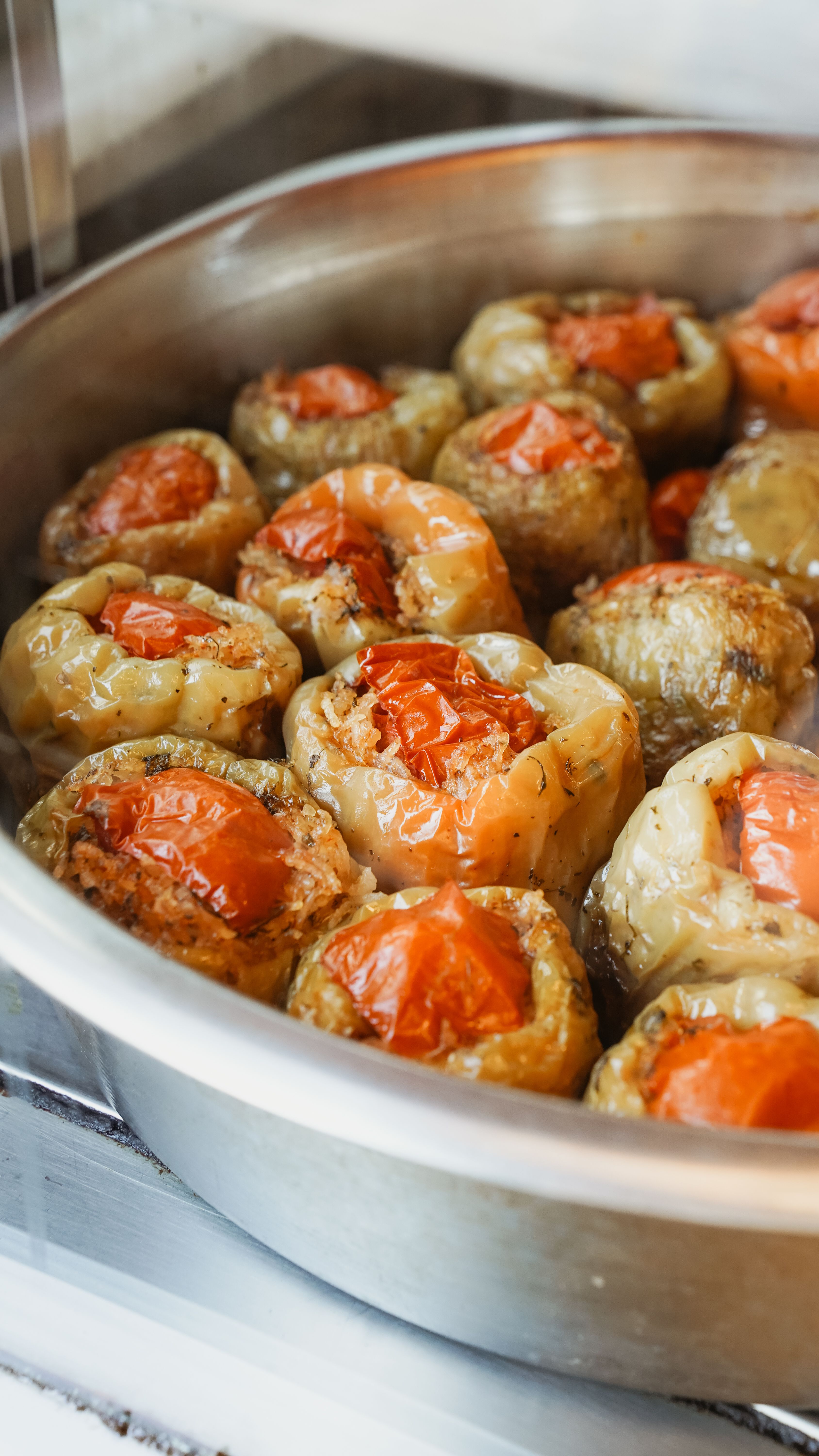
Photo: Cansu Hangül / Pexels
Hungarian
Toltott Paprika
The diets react (see scores below)
Common Ingredients
- bell peppers
- ground pork
- rice
- onion
- tomato
- paprika
- garlic
- parsley
Specific recipes may vary.
Incompatible with 7 of 11 diets
Diet Ratings
Toltott Paprika (Hungarian stuffed peppers) is fundamentally incompatible with ketogenic eating due to the inclusion of rice as a core filling ingredient. Rice is a high-glycemic grain that can contribute 30-45g of net carbs per serving on its own, far exceeding the daily keto limit. While bell peppers themselves are moderate in carbs (~4-6g net carbs each), the combination with rice and a tomato-based sauce creates a dish with an estimated 50-70g+ net carbs per standard serving. The ground pork component is keto-friendly, but the dish as traditionally prepared cannot be adapted to keto without fundamentally changing the recipe (e.g., replacing rice with cauliflower rice).
Toltott Paprika (Hungarian stuffed peppers) contains ground pork as its primary protein, which is a direct animal product and fundamentally incompatible with a vegan diet. There is no ambiguity here — pork is animal flesh and is categorically excluded under all definitions of veganism. The remaining ingredients (bell peppers, rice, onion, tomato, paprika, garlic, parsley) are all plant-based, but the presence of ground pork makes the dish non-vegan regardless.
Toltott Paprika (Hungarian stuffed peppers) contains rice as a core structural ingredient — a grain that is clearly excluded from all mainstream paleo frameworks. Rice is used as the primary filler mixed with the ground pork, making it inseparable from the dish. The remaining ingredients (bell peppers, ground pork, onion, tomato, paprika, garlic, parsley) are all paleo-approved, but the presence of rice disqualifies the dish as a whole. This is not a gray-area grain like white rice in Perfect Health Diet contexts — the dish cannot be meaningfully prepared in its traditional form without the grain component.
Toltott Paprika (Hungarian stuffed peppers) is centered on ground pork as the primary protein, which classifies it as a red meat dish. The Mediterranean diet limits red meat to a few times per month, making pork-heavy mains a poor fit. The white rice filling is a refined grain rather than a whole grain, further diverging from Mediterranean principles. On the positive side, the dish features several Mediterranean-friendly vegetables and aromatics — bell peppers, tomato, onion, garlic, and parsley — and the spice profile is plant-based. However, the dominant ingredient by nutritional impact is ground pork, which is high in saturated fat and explicitly limited in the Mediterranean framework. The overall dish structure does not align with Mediterranean dietary patterns.
Some Mediterranean diet interpreters note that stuffed vegetables (e.g., gemista in Greek cuisine) are a traditional Mediterranean preparation, and if the pork filling were reduced and replaced partially with legumes or lean protein, or if pork were used as a minor flavoring rather than the primary protein, the dish could be made compatible. Additionally, occasional red meat consumption is not strictly forbidden, so this dish consumed very infrequently (once a month) would not technically violate Mediterranean guidelines.
Toltott Paprika (Hungarian stuffed peppers) is fundamentally incompatible with the carnivore diet. While ground pork is a carnivore-approved protein, it is completely overwhelmed by plant-based ingredients. The dish is built around bell peppers (a plant vessel), rice (a grain and major carnivore exclusion), onion, tomato, garlic, parsley, and paprika spice — all strictly plant-derived and excluded from the carnivore diet. Rice alone as a grain carbohydrate source would disqualify the dish entirely. The tomato-based sauce and aromatic vegetables compound the violation. There is no version of this traditional dish that could be considered carnivore-compatible without fundamentally deconstructing it into an entirely different recipe.
Toltott Paprika (Hungarian stuffed peppers) contains rice, which is a grain explicitly excluded on the Whole30 program. Rice is one of the named excluded grains, making this dish non-compliant as traditionally prepared. All other ingredients — bell peppers, ground pork, onion, tomato, paprika, garlic, and parsley — are fully Whole30 compliant. The dish could be modified by omitting the rice (or substituting cauliflower rice), but as classically prepared with rice, it must be rated 'avoid.'
Toltott Paprika (Hungarian stuffed peppers) contains multiple high-FODMAP ingredients that make it unsuitable during the elimination phase. Onion is one of the highest-FODMAP foods tested by Monash University, containing significant fructans at any cooking amount used in a stuffed pepper recipe. Garlic is similarly high in fructans and problematic at any culinary dose. These two ingredients alone are sufficient to classify this dish as high-FODMAP. While the remaining ingredients — ground pork, rice, bell peppers (in moderate portions), tomato (in small amounts), paprika spice, and parsley — are individually low-FODMAP or low-FODMAP at standard servings, the presence of onion and garlic cooked directly into the filling means their FODMAPs are fully incorporated and cannot be removed. Tomato sauce used in the dish can also be high-FODMAP if used in large quantities (Monash rates canned tomatoes as low-FODMAP only at ½ cup or less). This dish as traditionally prepared is a clear avoid during the elimination phase.
Toltott Paprika (Hungarian stuffed peppers) contains a mix of DASH-friendly and DASH-cautionary ingredients. On the positive side, bell peppers, tomato, onion, garlic, and parsley are excellent DASH vegetables rich in potassium, fiber, and antioxidants. Rice contributes whole-grain-compatible carbohydrates if white rice is substituted with brown rice. However, ground pork is the primary protein concern — it is a red meat with moderate-to-high saturated fat content depending on fat percentage (e.g., 80/20 ground pork), which DASH explicitly limits. Traditional Hungarian preparation often uses higher-fat ground pork, sour cream-based tomato sauce, and added salt, which would push this dish further toward 'avoid.' As commonly prepared with standard ground pork and a tomato-based sauce, the dish lands in 'caution' territory. Swapping ground pork for lean ground turkey or chicken, using brown rice, and controlling sodium would significantly improve its DASH compatibility.
NIH DASH guidelines categorically limit red meat including pork due to saturated fat content. However, some updated clinical interpretations note that lean cuts of pork (e.g., pork loin ground at <10% fat) can fit within DASH's lean protein allowance, and recent evidence suggests moderate unprocessed red meat consumption may not independently harm cardiovascular outcomes when overall dietary pattern is healthful.
Toltott Paprika (Hungarian stuffed peppers) presents a mixed Zone profile. The bell peppers are an excellent Zone-favorable vegetable — low glycemic, high in polyphenols and vitamin C, and they serve as the structural component of the dish. The tomato sauce base, onion, garlic, and parsley are all Zone-friendly ingredients. However, two elements create friction: (1) Ground pork is a moderately fatty protein — unlike skinless chicken or fish, it carries more saturated fat, making it less ideal than leaner Zone proteins, though it can serve as a protein block source with portion awareness. (2) Rice mixed into the filling is an 'unfavorable' Zone carbohydrate — moderate-to-high glycemic index and relatively low fiber, which disrupts the low-glycemic carb principle. The rice also shifts the carb balance away from vegetables toward starch. The dish is not catastrophically unbalanced — there is no added sugar, the peppers and tomato provide genuine vegetable carbs, and the fat content, while higher than ideal, is not extreme. With modifications (cauliflower rice substitution, lean ground turkey or pork loin), this dish becomes much more Zone-compliant. As written, it requires careful portioning to approximate 40/30/30 ratios, and the rice-heavy filling is the primary concern.
Some Zone practitioners note that rice in small quantities can be accommodated within the block system, especially when surrounded by high-fiber vegetables that moderate glycemic impact. In Sears' later writings, he softened absolute prohibitions in favor of anti-inflammatory focus — the paprika spice itself is a notable polyphenol source, and the tomato-based sauce provides lycopene. A practitioner following Sears' later OmegaRx Zone framework might rate this more favorably if portions are controlled and omega-3 balance (e.g., from a fish oil supplement) is maintained.
Toltott Paprika (Hungarian stuffed peppers) is a mixed dish from an anti-inflammatory standpoint. On the positive side, bell peppers are rich in vitamin C, carotenoids, and antioxidants — genuinely anti-inflammatory foods. Tomato provides lycopene. Garlic and paprika (the spice) both have meaningful anti-inflammatory properties; paprika contains capsaicin-related compounds and antioxidant carotenoids. Parsley and onion add further polyphenols. These vegetable and spice components are real assets. However, the primary protein is ground pork, which is a red meat — categorized under 'limit' in anti-inflammatory frameworks due to its saturated fat content and arachidonic acid. Ground pork in particular tends to have a higher fat content than lean cuts. White rice, while not the worst refined carbohydrate, lacks the fiber and phytonutrients of whole grains and has a moderate glycemic load. The dish is not heavily processed and contains no trans fats or artificial additives, which is a clear positive. Overall, the anti-inflammatory benefits of the pepper, tomato, garlic, and spice base are real but substantially offset by the red meat protein and refined grain. Substituting ground turkey or chicken, or using brown rice, would meaningfully improve the profile. As prepared, this is a moderate-quality dish — acceptable occasionally but not a staple of an anti-inflammatory diet.
Some anti-inflammatory practitioners, particularly those following Dr. Weil's broader Mediterranean-adjacent framework, would note that a traditional home-cooked dish with abundant vegetables, garlic, lycopene-rich tomato sauce, and anti-inflammatory spices like paprika represents a much better choice than most processed foods — and would rate it more favorably at a 6. Conversely, stricter anti-inflammatory and autoimmune protocol (AIP) adherents would score it lower, flagging both the red meat and nightshade vegetables (bell peppers, tomato, paprika) as potentially pro-inflammatory for sensitive individuals.
Toltott Paprika (Hungarian stuffed peppers) is a mixed-profile dish for GLP-1 patients. The bell peppers provide fiber, hydration, and vitamin C, and the tomato-based sauce adds lycopene and additional fiber — these are genuine positives. However, the primary protein source is ground pork, which is typically higher in saturated fat than lean alternatives like chicken breast or turkey. The rice filler increases the carbohydrate and caloric load while diluting protein density per serving. A standard serving may deliver only 15-20g protein depending on meat-to-rice ratio, which is at the lower end of the per-meal target. The dish is not fried and is slow-cooked or simmered, making it reasonably easy to digest — a meaningful advantage for GLP-1 patients. Paprika and garlic are well-tolerated spices. The main concerns are the fat content from ground pork and the refined rice reducing overall nutrient density per calorie. Substituting lean ground turkey or chicken and reducing the rice portion (or using cauliflower rice) would substantially improve the GLP-1 profile of this dish.
Some GLP-1-focused dietitians would rate this more favorably if made with lean ground pork (93%+ lean), noting that the overall dish is home-cooked, vegetable-forward, and avoids common GLP-1 triggers like frying or heavy cream sauces. Others maintain that ground pork — even lean — carries enough saturated fat variability that patients with GI sensitivity or early-stage medication adjustment should avoid it in favor of more controlled protein sources.
*See how scores were generated at our methodology page.
Nutritional profile
Six traits that cut across every diet.
Fiber & Plants
How much whole-plant food and fiber it delivers.
Healthy Fats
The quality of its fats (unsaturated, omega-3).
Whole / Unprocessed
How close it is to its natural, unprocessed form.
Gut Gentle
How easy it is on digestion (low FODMAP, few irritants).
Low Glycemic
How little it spikes your blood sugar.
Protein Density
How much protein it packs per calorie.
Controversy Index
Higher controversy = more disagreement between diets.
Diet-Specific Tips
 DASH — 5/10
View tips
- Ground pork is a red meat with moderate-to-high saturated fat — a primary DASH limitation
- Bell peppers, tomato, onion, and garlic are DASH-approved vegetables rich in potassium and fiber
- Traditional preparation may include high-sodium additions and full-fat sour cream sauce
- White rice is commonly used; brown rice would improve fiber and nutrient profile
- Dish can be DASH-improved by substituting lean poultry for pork and controlling sodium
- Paprika spice itself is sodium-free and antioxidant-rich — DASH neutral to positive
 Zone — 5/10
View tips
- Bell peppers are Zone-favorable low-glycemic vegetables and serve as an excellent carbohydrate vehicle
- Rice in the filling is an 'unfavorable' Zone carbohydrate — moderate GI, low fiber, displaces vegetable carbs
- Ground pork provides adequate protein blocks but carries more saturated fat than Zone-preferred lean proteins like chicken or fish
- Tomato, onion, garlic, and parsley are all Zone-compatible ingredients
- No added sugar or trans fats; dish is whole-food based
- Portion control is critical — rice content makes macro ratio difficult to balance without modification
- Cauliflower rice substitution and leaner protein would significantly improve Zone compliance
 Anti-Inflammatory — 5/10
View tips
- Bell peppers: high in vitamin C, carotenoids, and antioxidants — anti-inflammatory asset
- Tomato: lycopene content is anti-inflammatory, though a nightshade
- Garlic: well-established anti-inflammatory properties (allicin, sulfur compounds)
- Paprika spice: carotenoids and capsaicinoids with antioxidant activity
- Ground pork: red meat, higher in saturated fat and arachidonic acid — falls in 'limit' category
- White rice: refined grain with moderate glycemic load, lacks whole grain fiber benefits
- No processed ingredients, trans fats, or artificial additives — favorable
- Nightshade ingredients (peppers, tomato, paprika) may be a concern for autoimmune-sensitive individuals
 GLP-1 Friendly — 4/10
View tips
- Ground pork is higher in saturated fat than recommended lean proteins; fat content depends heavily on grind leanness
- Rice increases refined carbohydrate load and reduces protein density per calorie
- Bell peppers and tomato sauce contribute meaningful fiber and hydration support
- Simmered/braised preparation is GLP-1 friendly — not fried, not greasy
- Per-meal protein yield may fall short of 20-30g target depending on portion and meat-to-rice ratio
- Spices used (paprika, garlic, parsley) are generally well-tolerated and not GI-aggravating
- Dish can be made significantly more GLP-1 compatible with lean ground turkey/chicken and reduced or replaced rice