Indian
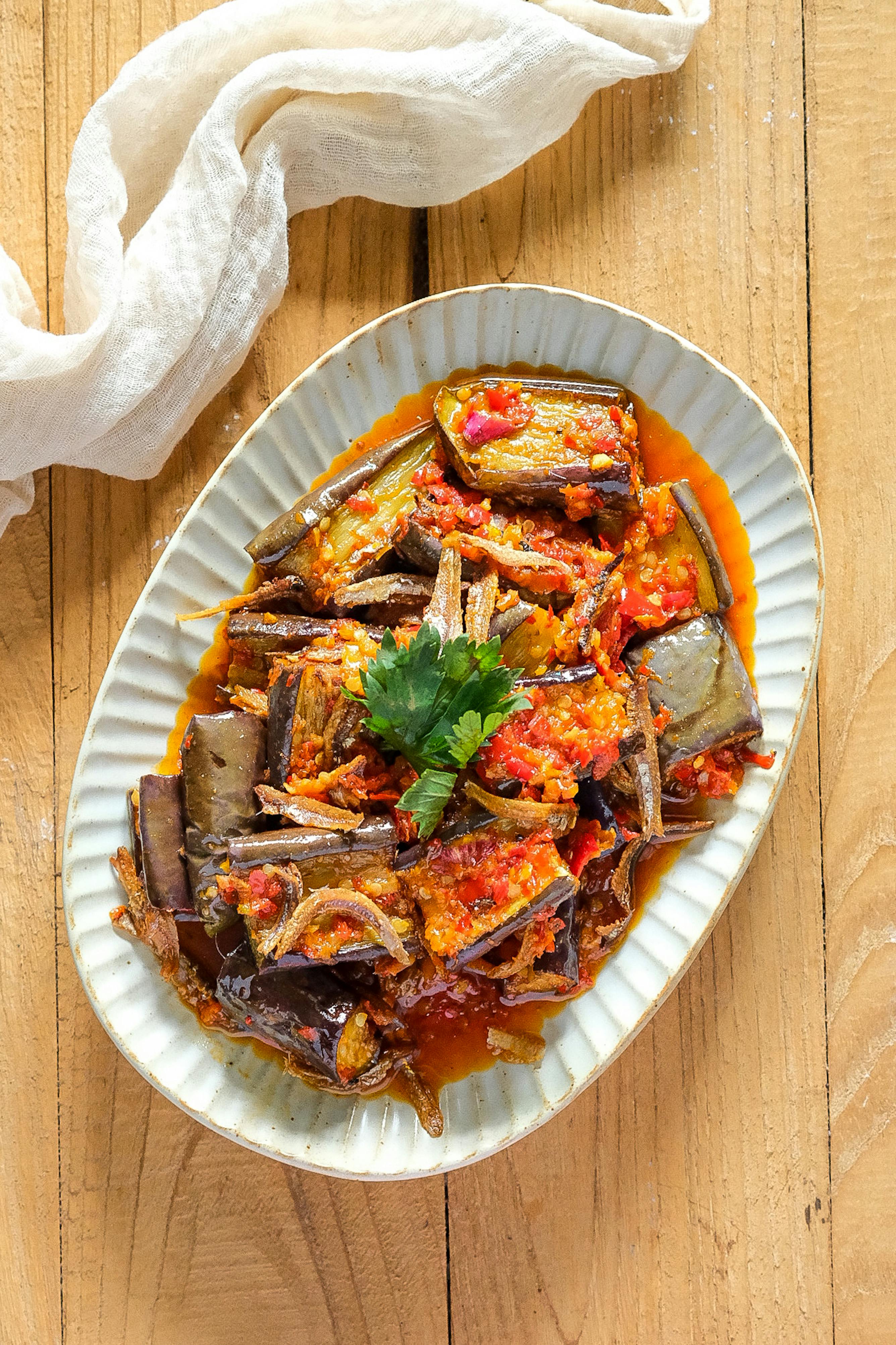
Bagara Baingan
The diets react (see scores below)
Common Ingredients
- eggplant
- peanuts
- sesame seeds
- coconut
- tamarind
- onion
- ginger
- garlic
- curry leaves
Specific recipes may vary.
Incompatible with 4 of 11 diets
Diet Ratings
Bagara Baingan is a rich, flavorful Hyderabadi dish where the primary concern is the cumulative carb load from multiple moderate-carb ingredients. Eggplant itself is relatively low in net carbs (~3g per 100g), but the sauce base uses a significant quantity of peanuts, sesame seeds, coconut, tamarind, and onion — all of which contribute carbs. Tamarind is notably high in carbs (~25g per 100g of paste), and traditional recipes use it in meaningful amounts. The peanut-sesame-coconut gravy does provide healthy fats, which is a keto positive. However, a standard serving likely pushes net carbs into the 10-18g range, making it risky for strict keto practitioners (targeting <20g/day total) but potentially workable for those with a 50g daily ceiling. Portion control is essential.
Some lazy keto and moderate keto practitioners consider this dish acceptable in small portions, pointing to the high-fat peanut-coconut base and eggplant's low net carbs as net positives. Strict keto adherents, however, flag tamarind and onion as significant sugar contributors that could disrupt ketosis even in moderate servings.
Bagara Baingan is a traditional Hyderabadi eggplant dish built entirely on whole plant ingredients. The base of eggplant (brinjal) is cooked in a rich gravy made from ground peanuts, sesame seeds, and coconut — all nutrient-dense whole foods — with tamarind providing sourness and onion, ginger, garlic, and curry leaves forming the aromatic foundation. Every ingredient listed is unambiguously plant-derived with no animal products or animal-derived additives. The dish is naturally vegan as traditionally prepared and scores highly as a whole-food preparation rather than a processed product.
Bagara Baingan is disqualified primarily by peanuts, which are legumes — explicitly excluded from the paleo diet. The dish also typically contains sesame seeds, which are a seed oil source when pressed, though whole sesame seeds themselves occupy a gray area; more critically, the peanuts alone are a hard disqualifier. Eggplant, tamarind, onion, ginger, garlic, and curry leaves are all paleo-approved whole foods. Coconut is fully approved. However, the inclusion of peanuts — a legume — makes this dish non-compliant by clear paleo consensus. If peanuts were substituted with a tree nut (e.g., cashews or almonds), the dish could be largely paleo-compatible.
Bagara Baingan is a plant-forward dish centered on eggplant, a vegetable well-aligned with Mediterranean dietary principles. The supporting ingredients — peanuts, sesame seeds, onion, garlic, and tamarind — are all whole, minimally processed plant foods. Peanuts and sesame seeds contribute healthy unsaturated fats and protein, similar in nutritional profile to nuts and seeds encouraged on the Mediterranean diet. Tamarind, ginger, garlic, and curry leaves add flavor without processed additives. The primary concern is coconut, which is high in saturated fat and not a traditional Mediterranean ingredient, diverging from the olive oil-centric fat profile of the diet. However, coconut is used in modest amounts as part of a paste, not as the dominant fat source, which limits its impact.
Some stricter Mediterranean diet interpretations would flag the use of coconut as a source of saturated fat inconsistent with the diet's emphasis on olive oil and unsaturated fats. Modern clinical guidelines (e.g., from the American Heart Association) advise limiting saturated fat regardless of source, which would lower the score for any dish featuring coconut prominently.
Bagara Baingan is entirely plant-based with zero animal-derived ingredients. Every component — eggplant, peanuts, sesame seeds, coconut, tamarind, onion, ginger, garlic, and curry leaves — is explicitly excluded on the carnivore diet. There is no animal protein, animal fat, or any animal product present. This dish is the antithesis of carnivore eating: it contains vegetables, legumes (peanuts), seeds, and plant-based flavor compounds. There is complete consensus across all carnivore diet tiers and authorities that this dish is entirely incompatible.
Bagara Baingan contains peanuts, which are a legume and explicitly excluded on Whole30. Peanuts are a core ingredient in this dish — they form part of the base masala paste along with sesame seeds and coconut — so the dish cannot be made compliant without fundamentally altering its character. All other ingredients (eggplant, sesame seeds, coconut, tamarind, onion, ginger, garlic, curry leaves) are Whole30-compatible, but the peanuts render the dish non-compliant.
Bagara Baingan is a traditional Hyderabadi dish that contains multiple high-FODMAP ingredients that make it unsuitable during the elimination phase. Garlic and onion are primary aromatics in this dish and both are high in fructans — among the most problematic FODMAPs. These ingredients are typically used in significant quantities and cannot be easily reduced to safe levels in this recipe. Eggplant (aubergine) is low-FODMAP at 75g but can become moderate at larger serves. Peanuts are low-FODMAP at small servings (32 nuts) but are used as a thickening paste here in quantities that may exceed safe limits. Coconut (dried/desiccated) is low-FODMAP at 1/4 cup but higher amounts contain polyols. Tamarind is low-FODMAP in small amounts but can accumulate FODMAPs. Sesame seeds and curry leaves are generally low-FODMAP. The core disqualifying factors are garlic and onion, which are foundational to this dish and cannot be omitted without fundamentally altering the recipe. Even if garlic-infused oil were substituted, the onion alone makes this dish high-FODMAP. This dish is not suitable during the elimination phase.
Bagara Baingan is a traditional Hyderabadi dish featuring eggplant (a DASH-friendly vegetable) with a richly spiced peanut, sesame, and coconut-based gravy. The eggplant provides fiber, potassium, and antioxidants, while peanuts and sesame seeds offer healthy unsaturated fats, magnesium, and protein — all consistent with DASH principles. However, coconut is a tropical oil/fat source high in saturated fat, which DASH explicitly limits. Peanuts and sesame seeds are calorie-dense and require portion control. Tamarind adds a small amount of natural sourness with minimal sodium. Onion, ginger, garlic, and curry leaves are all DASH-positive aromatics. The dish is typically oil-heavy in preparation, and the combination of coconut, peanuts, and sesame seeds creates a high saturated and total fat load. Sodium is generally low if home-prepared without added salt excess. On balance, the dish has strong DASH-positive elements (eggplant, legume-based nuts, aromatics) undermined by coconut content and high fat density — suitable in moderation but not a core DASH food.
NIH DASH guidelines explicitly restrict tropical oils and saturated fat, placing coconut-containing dishes in the caution zone; however, some updated clinical interpretations note that when coconut is used as a flavoring ingredient in small quantities rather than as a primary cooking fat, the overall saturated fat load may remain within acceptable daily limits, and the dish's fiber, potassium, and magnesium content from eggplant and nuts may still offer cardiovascular benefit.
Bagara Baingan is a traditional Hyderabadi dish centered on eggplant (brinjal) cooked in a rich sauce of peanuts, sesame seeds, and coconut with tamarind and aromatics. From a Zone perspective, eggplant is a favorable low-glycemic vegetable and the aromatics (onion, ginger, garlic, curry leaves) are also Zone-friendly carb sources. However, the dish is high in fat from peanuts, sesame seeds, and coconut — a combination that skews the fat block significantly and introduces considerable saturated fat (from coconut) and omega-6 fatty acids (from peanuts and sesame). The dish has no primary protein source, making it inherently unbalanced as a Zone meal component — it would need to be paired with a lean protein. Tamarind adds some sugar load but is used in small quantities. The fat profile is the primary concern: while peanuts and sesame provide some monounsaturated fat, the coconut contributes saturated fat and the overall fat density of the dish is very high relative to its carbohydrate and (absent) protein content. As a side dish paired with a lean protein, it can be incorporated in controlled portions, but the coconut-peanut-sesame base makes precise Zone blocking difficult and tips the macros toward fat-heavy.
Some Zone practitioners following Sears' later anti-inflammatory writings (e.g., 'The Zone Diet' updated materials) note that coconut contains medium-chain triglycerides with a different metabolic profile than long-chain saturated fats, and that peanuts and sesame seeds do provide monounsaturated fats and polyphenols. In this reading, Bagara Baingan in small portions alongside lean protein could be acceptable, especially given eggplant's favorable glycemic profile and the dish's absence of refined carbohydrates. The high-polyphenol content from curry leaves, tamarind, and spices also aligns with Sears' anti-inflammatory focus.
Bagara Baingan is a Hyderabadi dish with a genuinely mixed anti-inflammatory profile. On the positive side, eggplant (a nightshade) is rich in nasunin and chlorogenic acid — potent antioxidants — and the aromatic base of ginger, garlic, and curry leaves offers meaningful anti-inflammatory compounds (gingerols, allicin, carbazole alkaloids). Tamarind provides polyphenols and tartaric acid with antioxidant properties. Sesame seeds contain sesamin and sesamol, lignans with documented anti-inflammatory effects. However, the dish's core profile is complicated by peanuts (high in omega-6 linoleic acid, though also containing resveratrol and some anti-inflammatory polyphenols), coconut (saturated fat — primarily lauric acid, which has debated inflammatory effects), and the dominant use of peanuts + sesame + coconut as a paste, creating an omega-6-heavy fat profile. Eggplant is also a nightshade, which is mainstream-approved but flagged by AIP protocols. Traditionally, this dish is cooked in oil (often peanut or vegetable oil), which would further elevate omega-6 content, though that was not listed as an ingredient here. Overall: rich in antioxidant and anti-inflammatory spices, but the peanut-coconut-sesame base introduces sufficient omega-6 and saturated fat concerns to keep this in the caution zone rather than approve.
Mainstream anti-inflammatory nutrition (including Dr. Weil's framework) would view peanuts and sesame seeds as acceptable sources of plant-based fats with polyphenol benefits, and coconut's lauric acid as a relatively neutral saturated fat — under this view, the dish's spice profile and antioxidant-rich ingredients might push it toward a low 'approve.' Conversely, strict anti-inflammatory and AIP protocols flag eggplant (nightshade/solanine concerns for autoimmune individuals), peanuts (aflatoxin risk, omega-6 load), and coconut's saturated fat, potentially rating this dish lower as a regular staple.
Bagara Baingan is a traditional Hyderabadi dish built on a rich, oil-heavy gravy made from ground peanuts, sesame seeds, and coconut — all calorie-dense, high-fat ingredients. While these are predominantly unsaturated fats (which are preferred over saturated fats on GLP-1 protocols), the total fat per serving is high, which can worsen GLP-1 side effects like nausea, bloating, and reflux given the slowed gastric emptying these medications cause. Eggplant itself is low-calorie, high-fiber, and easy to digest, which is a positive. Tamarind adds a modest fiber contribution and digestive support. The dish has no primary protein source, making it a poor fit as a standalone meal for GLP-1 patients who need 15–30g protein per meal. As a small side dish paired with a high-protein main (grilled chicken, dal, paneer in moderation), it becomes more acceptable, but the fat load from the nut-and-seed paste remains a concern. The dish is also typically prepared with significant added oil for tempering. Overall: nutritionally interesting but fat-heavy and protein-absent, making it a caution-level side in small portions only.
Some GLP-1-focused dietitians may view peanuts, sesame, and coconut as acceptable fat sources given their unsaturated fat profiles and modest micronutrient contributions (magnesium, zinc, vitamin E), and would permit this dish in very small portions as a flavor-rich condiment-style side. Others are more conservative about any high-fat preparation given the strong association between dietary fat and GLP-1 GI side effects, and would recommend avoiding nut-paste-based gravies entirely during the early medication adjustment period.
*See how scores were generated at our methodology page.
Nutritional profile
Six traits that cut across every diet.
Fiber & Plants
How much whole-plant food and fiber it delivers.
Healthy Fats
The quality of its fats (unsaturated, omega-3).
Whole / Unprocessed
How close it is to its natural, unprocessed form.
Gut Gentle
How easy it is on digestion (low FODMAP, few irritants).
Low Glycemic
How little it spikes your blood sugar.
Protein Density
How much protein it packs per calorie.
Controversy Index
Higher controversy = more disagreement between diets.
Diet-Specific Tips
 Keto — 4/10
View tips
- Tamarind adds notable sugars and net carbs to the sauce
- Peanuts, sesame seeds, and coconut provide fats but also accumulate carbs
- Eggplant is relatively low in net carbs (~3g/100g) — a positive factor
- Onion contributes additional net carbs to the base
- High-fat gravy aligns with keto macro ratios in terms of fat content
- Cumulative net carbs per standard serving likely 10-18g — viable only with strict portion control
 Vegan — 9/10
View tips
- Eggplant: whole plant vegetable, fully vegan
- Peanuts, sesame seeds, coconut: whole plant fats and proteins, fully vegan
- Tamarind: plant-based souring agent, fully vegan
- Onion, ginger, garlic, curry leaves: standard plant aromatics, fully vegan
- No animal products, dairy, eggs, or animal-derived additives present
- Whole-food preparation scores near the top of the approval range
 Mediterranean — 8/10
View tips
- Eggplant is the star ingredient — a highly encouraged Mediterranean vegetable
- Peanuts and sesame seeds provide healthy unsaturated fats and plant protein
- No meat, processed foods, refined grains, or added sugars
- Coconut adds saturated fat, which is not aligned with Mediterranean fat principles
- Garlic, onion, and tamarind are whole, health-supporting plant ingredients
- Overall dish is whole-food, plant-based despite not being traditionally Mediterranean
 DASH — 5/10
View tips
- Eggplant is a DASH-approved vegetable rich in fiber and potassium
- Coconut is a tropical fat high in saturated fat, explicitly limited by DASH
- Peanuts and sesame seeds provide healthy fats and magnesium but are calorie-dense
- No added sodium from processed ingredients — preparation-dependent
- Tamarind, onion, ginger, garlic, and curry leaves are DASH-compatible aromatics
- High total fat content from the triple combination of peanuts, sesame, and coconut requires portion control
- Dish is sodium-modest but saturated fat content is the primary concern
 Zone — 5/10
View tips
- Eggplant is a favorable, low-glycemic Zone vegetable
- No primary protein source — must be paired with lean protein to approach Zone balance
- High fat content from peanuts, sesame, and coconut creates fat-heavy macro profile
- Coconut contributes saturated fat, which early Zone methodology discourages
- Peanuts and sesame introduce omega-6 fats, counter to Zone's anti-inflammatory focus
- Tamarind adds modest sugar load but is used in small quantities
- Aromatics (onion, garlic, ginger, curry leaves) are Zone-favorable carb contributors
- Dish can be used in small portions as a fat block contributor alongside lean protein and additional low-GI vegetables
 Anti-Inflammatory — 6/10
View tips
- Eggplant provides nasunin and chlorogenic acid — strong antioxidants, but flagged by AIP/autoimmune protocols as a nightshade
- Ginger, garlic, and curry leaves are well-established anti-inflammatory aromatics
- Peanuts and sesame seeds contribute meaningful omega-6 linoleic acid, which is pro-inflammatory in excess
- Coconut adds saturated fat (lauric acid) with debated inflammatory effects — moderate concern under anti-inflammatory guidelines
- Tamarind offers polyphenols and antioxidant tartaric acid — a mild positive
- No refined sugars, processed ingredients, or trans fats present
- Overall fat profile is omega-6 dominant due to peanut-sesame-coconut paste base
 GLP-1 Friendly — 4/10
View tips
- High fat content from peanut, sesame, and coconut paste — major GLP-1 side effect risk
- No meaningful protein source — fails the 15–30g per meal protein priority
- Eggplant is high-fiber, low-calorie, and easy to digest — a positive
- Fats are predominantly unsaturated, which is preferred but does not eliminate the fat-load concern
- Typically prepared with added oil for tempering, increasing total fat further
- Portion-sensitive: only acceptable as a very small side alongside a high-protein main
- Tamarind and spices are generally well-tolerated and add digestive and flavor value