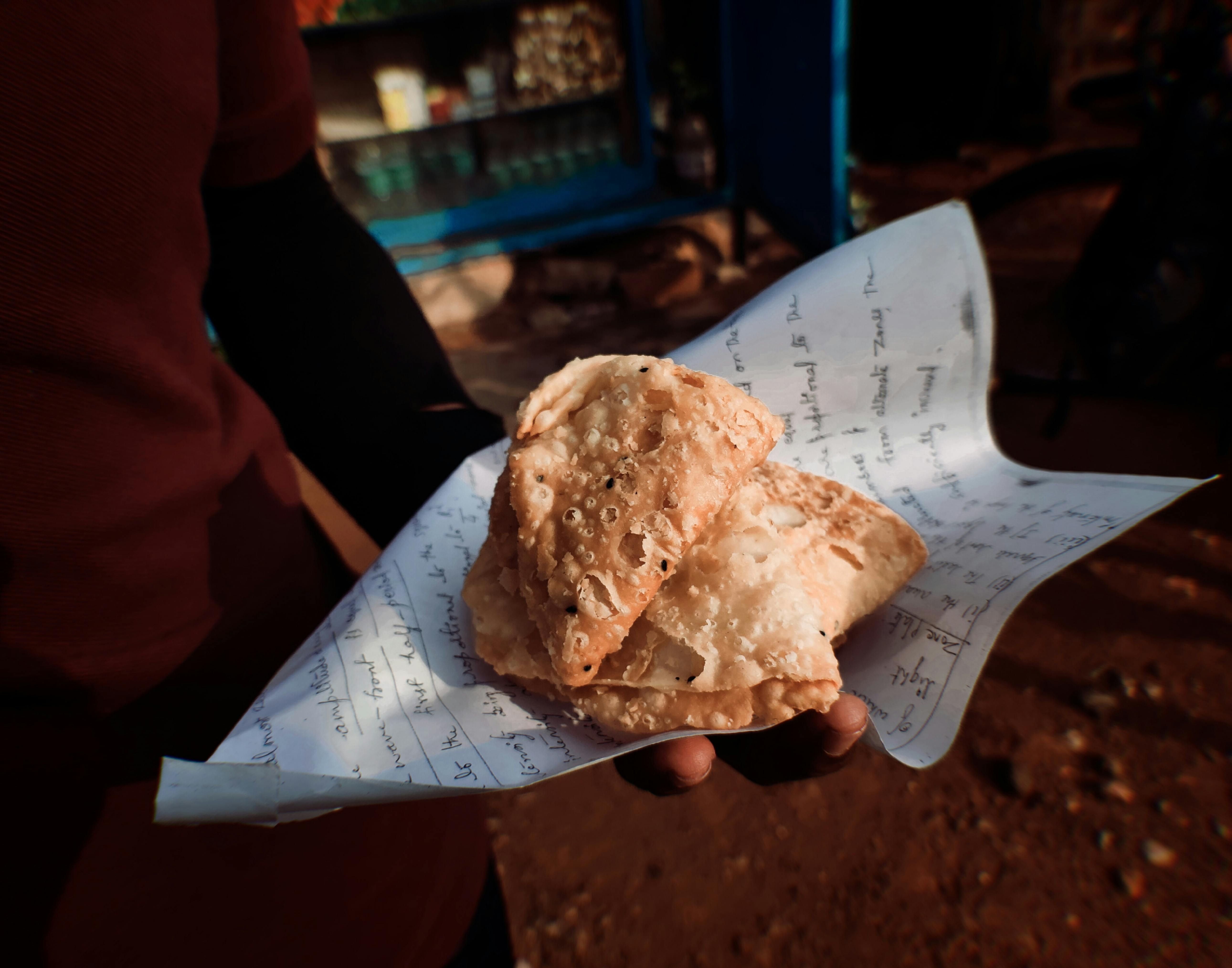
Photo: Calwin Veigas / Pexels
The diets react (see scores below)
Common Ingredients
- maida flour
- minced mutton
- onion
- ginger
- garlic
- green chili
- garam masala
- cilantro
- oil
Specific recipes may vary.
Incompatible with 10 of 11 diets
Diet Ratings
Lukhmi is a deep-fried pastry snack from Hyderabad made with maida (refined all-purpose wheat flour) as the primary shell/dough component. Maida is a highly refined grain flour that is completely incompatible with ketogenic diets — a single lukhmi piece can contain 15-25g of net carbs from the pastry shell alone, making even one or two pieces capable of exceeding a full day's keto carb budget. While the minced mutton filling itself is keto-friendly (protein, fat, spices, onion in small amounts), the dominant ingredient — maida dough — is pure high-glycemic refined carbohydrate. The overall dish cannot be made keto-compatible without fundamentally replacing the flour shell, which would make it a different dish entirely.
Lukhmi contains minced mutton (lamb), which is a direct animal product — specifically mammalian flesh. This unambiguously disqualifies it from any vegan diet. The remaining ingredients (maida flour, onion, ginger, garlic, green chili, garam masala, cilantro, oil) are all plant-based, but the presence of mutton is a clear and non-negotiable disqualifier under all vegan standards.
Lukhmi is a fried pastry snack from Hyderabad, India, made primarily with maida flour (refined wheat flour) as the pastry shell. Maida is a highly refined grain product — one of the clearest disqualifiers in the paleo framework. While the filling contains several paleo-compatible ingredients (minced mutton, onion, ginger, garlic, green chili, garam masala, cilantro), the dish is fundamentally defined by its wheat-flour pastry casing, making the overall dish non-paleo. Additionally, the 'oil' listed is unspecified and likely a seed oil (sunflower, vegetable, or similar) used for deep-frying, which is also excluded. The filling alone would be largely paleo-approved, but Lukhmi cannot be evaluated without its defining pastry component.
Lukhmi is a deep-fried pastry made with maida (refined white flour) and filled with minced mutton (red meat). It combines two major Mediterranean diet red flags: refined/processed grain in the form of maida (white refined flour with no fiber or whole grain qualities) and red meat (lamb/mutton), which is explicitly limited to only a few times per month. The frying oil is unspecified and likely not extra virgin olive oil. The dish is also a fried snack, placing it firmly in the 'processed/fried food' category that the Mediterranean diet discourages. While aromatics like onion, garlic, ginger, cilantro, and chili are positive elements, they are insufficient to offset the dominant problematic components.
Lukhmi is a deep-fried pastry snack from Hyderabad consisting of a minced mutton filling encased in maida (refined wheat flour) dough. While the mutton filling itself would be carnivore-compatible, the dish is fundamentally built around maida flour — a plant-derived grain product that is entirely excluded from the carnivore diet. Additionally, the filling contains multiple plant-based ingredients: onion, ginger, garlic, green chili, garam masala (a blend of plant spices), and cilantro. The frying oil is also likely a plant-based oil. The dominant macrostructure of this dish is a grain-based pastry shell, making it incompatible with carnivore principles regardless of the meat filling inside.
Lukhmi is a Hyderabadi snack consisting of a pastry shell (made from maida flour, which is refined wheat flour — a grain) filled with spiced minced mutton. Maida is a wheat-derived grain product and is explicitly excluded on the Whole30. Furthermore, Lukhmi is essentially a fried pastry/dumpling, which falls squarely into the 'baked goods and recreated junk food' prohibition even if one were to attempt a grain-free version. The mutton filling itself (minced mutton, onion, ginger, garlic, green chili, garam masala, cilantro, oil) would be compliant, but the defining element of this dish — the maida pastry casing — makes the dish as a whole non-compliant.
Lukhmi contains multiple high-FODMAP ingredients that make it unsuitable during the elimination phase. Maida (refined wheat flour) is the primary structural ingredient and is high in fructans — a major FODMAP trigger. Onion is one of the highest-FODMAP foods tested by Monash University, rich in fructans at virtually any serving size. Garlic is similarly among the highest-FODMAP foods, also due to fructans. These three ingredients alone — wheat flour, onion, and garlic — are all definitive 'avoid' foods during FODMAP elimination and are used in quantities significant enough that no portion reduction of the finished dish would bring it into a safe range. The minced mutton, ginger, green chili, garam masala, cilantro, and oil are generally low-FODMAP, but the combination of maida, onion, and garlic makes this dish incompatible with the elimination phase.
Lukhmi is a deep-fried pastry made with refined white flour (maida) filled with minced mutton (lamb). This dish conflicts with DASH diet principles on multiple fronts. Maida is a refined, low-fiber flour with no whole grain benefit, directly opposing DASH's emphasis on whole grains. The dish is deep-fried, adding significant total fat and potentially trans or saturated fats depending on the frying oil. Minced mutton/lamb is a red meat — DASH guidelines explicitly limit red meat consumption due to its saturated fat content. The combination of deep frying and red meat filling creates a high saturated fat, high calorie, low-nutrient-density snack. While some individual ingredients (onion, garlic, ginger, cilantro, green chili) are DASH-friendly aromatics, they do not offset the core dietary concerns. This snack is heavily processed relative to DASH standards and provides none of the emphasized nutrients — potassium, calcium, magnesium, fiber — in meaningful quantities.
Lukhmi is a deep-fried pastry snack made with maida (refined white flour) and filled with spiced minced mutton. From a Zone Diet perspective, this dish presents multiple challenges. The maida flour is a high-glycemic refined carbohydrate — essentially white flour — which Sears classifies as an 'unfavorable' carb that spikes insulin rapidly. The deep-frying adds significant saturated and omega-6 fat from cooking oil, which disrupts the Zone's anti-inflammatory goal and ideal fat ratios. While the mutton filling provides protein, mutton is a fattier red meat not in the lean protein category Sears recommends. The macro ratio is badly skewed: high in refined carbs and saturated/omega-6 fat, with protein embedded in a high-fat context, making it nearly impossible to hit 40/30/30 without radical restructuring. As a snack, there are no accompanying low-GI vegetables to offset the glycemic load. The dish scores a 3 rather than 1-2 only because the spiced mutton filling and aromatics (onion, garlic, ginger, cilantro) have some nutritional merit, and the protein content is real — but the overall structure works against Zone principles on almost every axis.
Lukhmi is a deep-fried pastry made with maida (refined white flour) and filled with minced mutton — combining two significant inflammatory concerns in a single dish. Maida is highly refined, stripped of fiber and nutrients, and causes rapid blood glucose spikes that drive pro-inflammatory pathways (elevated AGEs, insulin response). Minced mutton (red meat) is a source of saturated fat and arachidonic acid, both of which are associated with elevated inflammatory markers (CRP, IL-6) when consumed regularly. The deep-frying process, likely using refined seed oils high in omega-6 fatty acids, adds further oxidized fat load. On the positive side, the spice blend — garlic, ginger, green chili, and garam masala — contains meaningful anti-inflammatory compounds (allicin, gingerols, capsaicin, and spice polyphenols), and onion provides quercetin. Cilantro adds antioxidant value. However, these beneficial spice contributions are modest and do not offset the dominant inflammatory profile of refined flour, red meat, and deep frying. This is a dish best avoided on an anti-inflammatory diet or reserved as a very occasional indulgence.
Lukhmi is a deep-fried pastry snack from Hyderabad made with maida (refined white flour) stuffed with spiced minced mutton. It fails on nearly every GLP-1 dietary criterion. The pastry shell is made from maida — a refined, low-fiber flour with negligible nutritional value — and is deep-fried, making it high in fat and very difficult to digest given GLP-1-slowed gastric emptying. The frying process adds significant saturated and potentially trans fat depending on the frying oil, which directly worsens nausea, bloating, and reflux — the most common GLP-1 side effects. While the minced mutton filling provides some protein, the protein-to-calorie ratio is poor because the dominant macronutrient contribution comes from the fried refined-flour shell, not the meat. Green chili and garam masala add moderate spice, which can further aggravate GI discomfort in GLP-1 patients. As a snack category food, it offers small portion size but very low nutritional density per calorie — the opposite of what GLP-1 patients need. There is no meaningful fiber, the fat content is high, digestibility is poor, and the refined carbohydrate base provides empty calories. This is a textbook example of a food to avoid on GLP-1 therapy.
*See how scores were generated at our methodology page.
Nutritional profile
Six traits that cut across every diet.
Fiber & Plants
How much whole-plant food and fiber it delivers.
Healthy Fats
The quality of its fats (unsaturated, omega-3).
Whole / Unprocessed
How close it is to its natural, unprocessed form.
Gut Gentle
How easy it is on digestion (low FODMAP, few irritants).
Low Glycemic
How little it spikes your blood sugar.
Protein Density
How much protein it packs per calorie.
Controversy Index
Higher controversy = more disagreement between diets.
Diet-Specific Tips
 Zone — 5/10
View tips
- Maida (refined white flour) is a high-glycemic carbohydrate classified as 'unfavorable' in Zone terminology
- Deep-frying introduces excessive omega-6 fat and saturated fat, contrary to Zone's anti-inflammatory fat guidelines
- Mutton is a fatty red meat, not a lean protein source preferred by Sears
- No low-GI vegetables present to balance glycemic load or contribute favorable carb blocks
- Macro ratio is heavily skewed toward refined carbs and unhealthy fats — far from 40/30/30
- As a snack, small portion size makes it even harder to construct a balanced Zone block meal around it