Indian
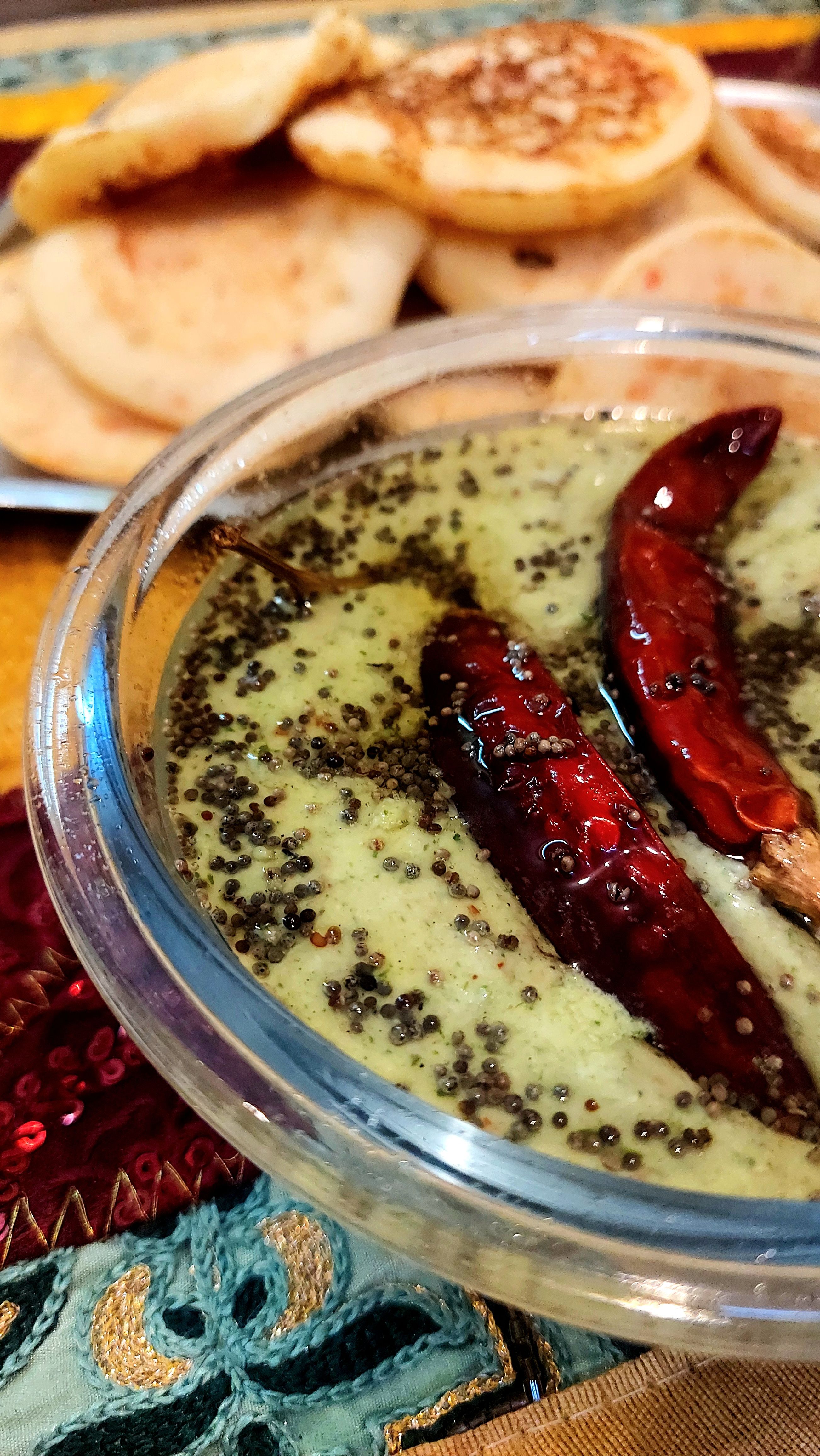
Mirchi Ka Salan
The diets react (see scores below)
Common Ingredients
- green chilies
- peanuts
- sesame seeds
- coconut
- tamarind
- onion
- ginger
- garlic
- curry leaves
Specific recipes may vary.
Incompatible with 5 of 11 diets
Diet Ratings
Mirchi Ka Salan is a complex dish with several ingredients that individually carry carb loads that add up significantly. Peanuts, sesame seeds, and coconut contribute healthy fats and are individually keto-friendly, but peanuts also add moderate carbs. Tamarind is the biggest concern — it is high in sugar and net carbs, and is used in meaningful quantity for the sour base of this dish. Onion adds additional carbs. The green chilies, ginger, garlic, and curry leaves are fine in small amounts. The overall dish, especially with tamarind as a key flavor component, can push net carbs into a range that requires strict portion control. A small serving (2-3 tablespoons as a side) might fit within a daily keto budget, but a standard serving size would likely be borderline or over.
Some strict keto practitioners would rate this as 'avoid' due to tamarind's sugar content and the cumulative carb load from peanuts and onion, arguing that even small portions of tamarind-based dishes create too much glycemic risk. Conversely, lazy keto practitioners comfortable with 50g net carbs daily may find a small portion acceptable.
Mirchi Ka Salan is a traditional Hyderabadi curry made entirely from plant-based whole foods. Every ingredient listed — green chilies, peanuts, sesame seeds, coconut, tamarind, onion, ginger, garlic, and curry leaves — is derived from plants. The dish is built on a rich, nutty gravy from the peanut-sesame-coconut base with tamarind providing tartness, making it a nutritionally dense whole-food vegan preparation. There are no animal products, animal-derived additives, or ethically contested ingredients present.
Mirchi Ka Salan is disqualified primarily by peanuts, which are legumes — one of the clearest exclusions in the paleo framework. Sesame seeds are also a seed oil precursor and are borderline, but the peanut issue alone is sufficient for an 'avoid' verdict. The remaining ingredients — green chilies, coconut, tamarind, onion, ginger, garlic, and curry leaves — are all paleo-approved whole foods, which means the dish is largely built on a solid paleo foundation, but the peanuts are a non-negotiable disqualifier under strict paleo rules.
Mirchi Ka Salan is a whole-food, plant-based dish with no red meat, refined grains, or added sugars. Green chilies, onion, ginger, garlic, and tamarind are vegetables and plant-derived flavor agents fully consistent with Mediterranean principles. Peanuts and sesame seeds are legume/seed-based fats analogous to nuts and tahini, both staples of the Mediterranean diet. The main point of nuance is coconut: it is a saturated plant fat not traditional to the Mediterranean basin, and its use as a primary ingredient slightly diverges from the olive-oil-centric fat model. However, the overall profile — whole plants, legumes, seeds, no animal products, minimal processing — strongly aligns with Mediterranean values.
Some Mediterranean diet authorities, particularly those following the strict Oldways or PREDIMED framework, would downgrade this dish due to coconut's high saturated fat content, which is absent from traditional Mediterranean cooking. Coconut is not a regional ingredient and its saturated fat profile differs from the unsaturated fats emphasized by Mediterranean guidelines.
Mirchi Ka Salan is entirely plant-based with zero animal-derived ingredients. Every component — green chilies, peanuts, sesame seeds, coconut, tamarind, onion, ginger, garlic, and curry leaves — is explicitly excluded on a carnivore diet. This dish contains no meat, fish, seafood, eggs, or animal fats of any kind. It is a classic Indian vegetarian curry built on legumes, seeds, and plant aromatics, all of which are strictly off-limits under carnivore dietary rules. There is no version of this dish that could be adapted to carnivore without a complete reinvention.
Mirchi Ka Salan contains peanuts, which are a legume and explicitly excluded on the Whole30 program. Peanuts are one of the most clearly prohibited foods — the official Whole30 rules specifically call out peanuts as excluded alongside other legumes. All other ingredients (green chilies, sesame seeds, coconut, tamarind, onion, ginger, garlic, curry leaves) are fully compliant. However, the presence of peanuts as a core structural ingredient in this dish makes it non-compliant. There is no compliant workaround that would preserve the authentic character of Mirchi Ka Salan, as peanuts form the base of the sauce.
Mirchi Ka Salan is a traditional Hyderabadi dish that contains multiple high-FODMAP ingredients that cannot be made low-FODMAP without fundamentally altering the recipe. Onion is a primary ingredient and is high in fructans — a major FODMAP offender with no safe serving size in the elimination phase. Garlic is similarly high in fructans and is one of the highest-FODMAP foods tested by Monash. Peanuts are high in GOS (galacto-oligosaccharides) and are rated high-FODMAP at typical serving sizes used in this dish (they form the base of the gravy). Coconut in larger quantities used for a gravy base can also contribute moderate FODMAPs. Tamarind is high-FODMAP at typical serving sizes (Monash rates it as high in fructans and excess fructose beyond very small amounts). The combination of onion, garlic, peanuts, and tamarind — all integral to the dish's flavor and texture — makes this dish unavoidable in terms of high-FODMAP load. Green chilies, sesame seeds, ginger, and curry leaves are generally low-FODMAP, but they cannot offset the multiple high-FODMAP ingredients in this dish.
Mirchi Ka Salan contains several DASH-friendly ingredients — green chilies, onion, ginger, garlic, curry leaves, and tamarind all align well with DASH principles (low sodium, rich in phytonutrients). However, the dish is problematic primarily due to coconut (a tropical oil/fat source high in saturated fat, explicitly limited under DASH) and the significant use of peanuts and sesame seeds, which while healthy in moderation, contribute to a high overall fat and calorie load. The coconut component — typically used as desiccated coconut or coconut paste — is the main DASH concern, as NIH/NHLBI DASH guidelines explicitly limit tropical oils and saturated fats. Peanuts and sesame seeds are DASH-approved foods (nuts and seeds) but DASH recommends limiting servings to 4-5 per week due to caloric density. In typical restaurant or home preparation, the quantities of coconut and oil used for this rich, gravy-based curry can push saturated fat and total fat beyond DASH thresholds. Sodium levels depend on preparation but are generally moderate. Consumed occasionally in small portions, the dish is acceptable, but it is not a DASH staple.
NIH DASH guidelines flag coconut as a tropical oil high in saturated fat and recommend limiting it; however, some updated DASH-oriented clinicians note that whole coconut (as opposed to coconut oil) delivers fiber and micronutrients that may partially offset concerns, and that the overall saturated fat from a small serving of this dish may be manageable within a day's DASH budget.
Mirchi Ka Salan is a complex dish with a mixed Zone profile. The green chilies are a favorable low-glycemic vegetable with polyphenol benefits. Onion, ginger, garlic, and curry leaves are Zone-favorable aromatics with anti-inflammatory properties. However, the fat profile is the primary concern: peanuts, sesame seeds, and coconut are high in omega-6 fatty acids and saturated fat (coconut), which conflicts with Zone's preference for monounsaturated fats and anti-inflammatory omega-3 focus. Tamarind adds moderate glycemic load. The dish lacks a lean protein source, meaning it cannot stand alone as a Zone meal component — it would need to be paired carefully. As a side dish, small portions could fit into a Zone meal that includes lean protein and additional favorable carbs, but the calorie-dense nut/seed/coconut base makes macro balancing challenging. The 40/30/30 ratio would be difficult to achieve with this dish as a component without careful calculation, as the fat-to-protein ratio skews heavily toward fat with minimal protein.
Some Zone practitioners and Sears' later anti-inflammatory writings acknowledge that peanuts and sesame seeds, while omega-6-heavy, still contain beneficial nutrients including polyphenols and some monounsaturated fat. In small block-sized portions as a condiment-like side, the impact on overall meal macros may be manageable. The green chilies and aromatics represent genuinely favorable Zone carbohydrate sources with strong anti-inflammatory phytonutrient profiles, which could partially offset the less-ideal fat sources.
Mirchi Ka Salan is a Hyderabadi curry featuring green chilies as the star ingredient, supported by a rich gravy built from peanuts, sesame seeds, coconut, tamarind, onion, ginger, garlic, and curry leaves — a lineup with strong collective anti-inflammatory credentials. Green chilies are rich in capsaicin, which has well-documented anti-inflammatory effects via inhibition of NF-κB pathways. Ginger and garlic are among the most potent anti-inflammatory spices in the anti-inflammatory canon, with gingerols/shogaols and allicin respectively shown to reduce CRP and IL-6. Curry leaves contain alkaloids and flavonoids with antioxidant properties. Tamarind provides polyphenols and tartaric acid. Peanuts and sesame seeds contribute vitamin E, resveratrol (peanuts), and sesamin/sesamolin (sesame) — compounds with meaningful anti-inflammatory activity. The main concern is the omega-6 load from peanuts and sesame seeds together, which in large quantities could tip the omega-6:3 ratio unfavorably. Coconut contributes saturated fat (lauric acid), which is debated — some view it as neutral to mildly pro-inflammatory in the context of anti-inflammatory eating, others note its medium-chain triglyceride profile as benign. The dish is typically oil-cooked (often in peanut oil or vegetable oil), and the type of cooking oil used matters significantly. As a side dish consumed in moderate portions alongside a larger meal, these concerns are relatively minor. Overall, this is a spice- and vegetable-forward dish with minimal processed ingredients and a strong anti-inflammatory herb and spice profile.
The peanut-sesame-coconut base creates a concentrated omega-6 and saturated fat load that some strict anti-inflammatory protocols would flag — particularly if cooked in refined peanut or vegetable oil, which is common. AIP (Autoimmune Protocol) followers would also avoid peanuts (a legume) and sesame seeds entirely due to lectin and oxalate content and their potential to trigger inflammation in autoimmune-sensitive individuals.
Mirchi Ka Salan is a Hyderabadi side dish built around whole green chilies in a rich, oil-heavy gravy made from ground peanuts, sesame seeds, and coconut — a combination that makes it problematic on multiple GLP-1 dimensions. The fat load is high: peanuts, sesame, and coconut are all dense fat sources, and traditional preparation uses significant oil for tempering and frying the base. High-fat meals directly worsen GLP-1 side effects including nausea, bloating, and reflux. The dish is also heavily spice-forward — green chilies are the star ingredient, not a background note — which can aggravate GI sensitivity and reflux that GLP-1 patients are already prone to due to slowed gastric emptying. Protein contribution is negligible; this is a side dish with no meaningful protein source. Tamarind adds acidity, which can compound reflux risk. Fiber from chilies and onion is modest but not enough to redeem the overall profile. Nutrient density per calorie is poor given the fat and spice burden relative to what GLP-1 patients need from limited appetite. Even a small serving delivers a concentrated hit of fat and heat that is likely to cause discomfort.
Some GLP-1-focused dietitians note that peanuts and sesame seeds do provide unsaturated fats and some micronutrients, and that spice tolerance is highly individual — patients who tolerated spicy food well pre-medication occasionally continue to do so. However, most clinical guidance for GLP-1 patients specifically flags high-fat gravies and chili-heavy dishes as common nausea and reflux triggers, particularly in the first several months of treatment.
*See how scores were generated at our methodology page.
Nutritional profile
Six traits that cut across every diet.
Fiber & Plants
How much whole-plant food and fiber it delivers.
Healthy Fats
The quality of its fats (unsaturated, omega-3).
Whole / Unprocessed
How close it is to its natural, unprocessed form.
Gut Gentle
How easy it is on digestion (low FODMAP, few irritants).
Low Glycemic
How little it spikes your blood sugar.
Protein Density
How much protein it packs per calorie.
Controversy Index
Higher controversy = more disagreement between diets.
Diet-Specific Tips
 Keto — 4/10
View tips
- Tamarind is high in natural sugars and net carbs, raising the dish's carb profile significantly
- Peanuts contribute both healthy fats and moderate net carbs (~6g per oz)
- Coconut and sesame seeds are keto-friendly fat sources
- Onion adds cumulative carbs, especially when used as a base
- Portion size is critical — a small condiment serving may be manageable, a full side portion likely is not
- No added grains or refined sugars, but natural sugar sources (tamarind) are concerning
 Vegan — 9/10
View tips
- All ingredients are whole plant foods with no animal derivatives
- Peanuts, sesame seeds, and coconut provide healthy fats and protein
- Tamarind and green chilies are staple vegan-friendly flavor agents
- No processed substitutes or ethically contested ingredients (e.g., honey, palm oil) involved
- Traditional preparation method does not typically involve ghee or yogurt in this ingredient list
 Mediterranean — 7/10
View tips
- Entirely plant-based with no animal protein
- Peanuts and sesame seeds provide Mediterranean-compatible healthy fats
- Green chilies, onion, garlic, ginger, and tamarind are whole, minimally processed plant foods
- Coconut contributes saturated fat not typical of the Mediterranean dietary pattern
- No refined grains, added sugars, or processed ingredients
- Not traditional Mediterranean cuisine but highly compatible in composition
 DASH — 4/10
View tips
- Coconut is a tropical fat high in saturated fat, explicitly limited under DASH
- Peanuts and sesame seeds are DASH-approved nuts/seeds but calorie-dense — limit to 4-5 servings/week
- Green chilies, garlic, ginger, onion, tamarind, and curry leaves are DASH-compatible whole foods
- No added refined sugar or high-sodium processed ingredients in standard recipe
- High total fat content from combined nuts, seeds, and coconut makes portion control critical
- Moderate sodium in typical preparation, but restaurant versions may be higher
 Zone — 5/10
View tips
- Green chilies are a favorable low-glycemic vegetable with polyphenol benefits
- Peanuts and sesame seeds are high in omega-6 fatty acids, conflicting with Zone's anti-inflammatory fat preference
- Coconut adds saturated fat, which Zone methodology discourages
- No lean protein source — dish is carb and fat dominant
- Tamarind contributes moderate glycemic load
- Aromatics (ginger, garlic, curry leaves, onion) are Zone-favorable with anti-inflammatory properties
- Calorie-dense nut/seed base makes portion control critical
- As a side dish, very small portions could fit within a balanced Zone meal
 Anti-Inflammatory — 8/10
View tips
- Green chilies: capsaicin shown to inhibit NF-κB and reduce inflammatory cytokines
- Ginger and garlic: two of the most evidence-backed anti-inflammatory spices, reduce CRP and IL-6
- Curry leaves: flavonoids and alkaloids with antioxidant and anti-inflammatory activity
- Tamarind: polyphenol content supports antioxidant defense
- Peanuts and sesame seeds: beneficial vitamin E, resveratrol, sesamin — but add to omega-6 load
- Coconut: lauric acid / saturated fat is debated in anti-inflammatory context
- No refined carbohydrates, added sugars, or processed ingredients
- Cooking oil type (not specified) could significantly affect inflammatory profile
- Consumed as a side dish in moderate portions — reduces concern about concentrated fats