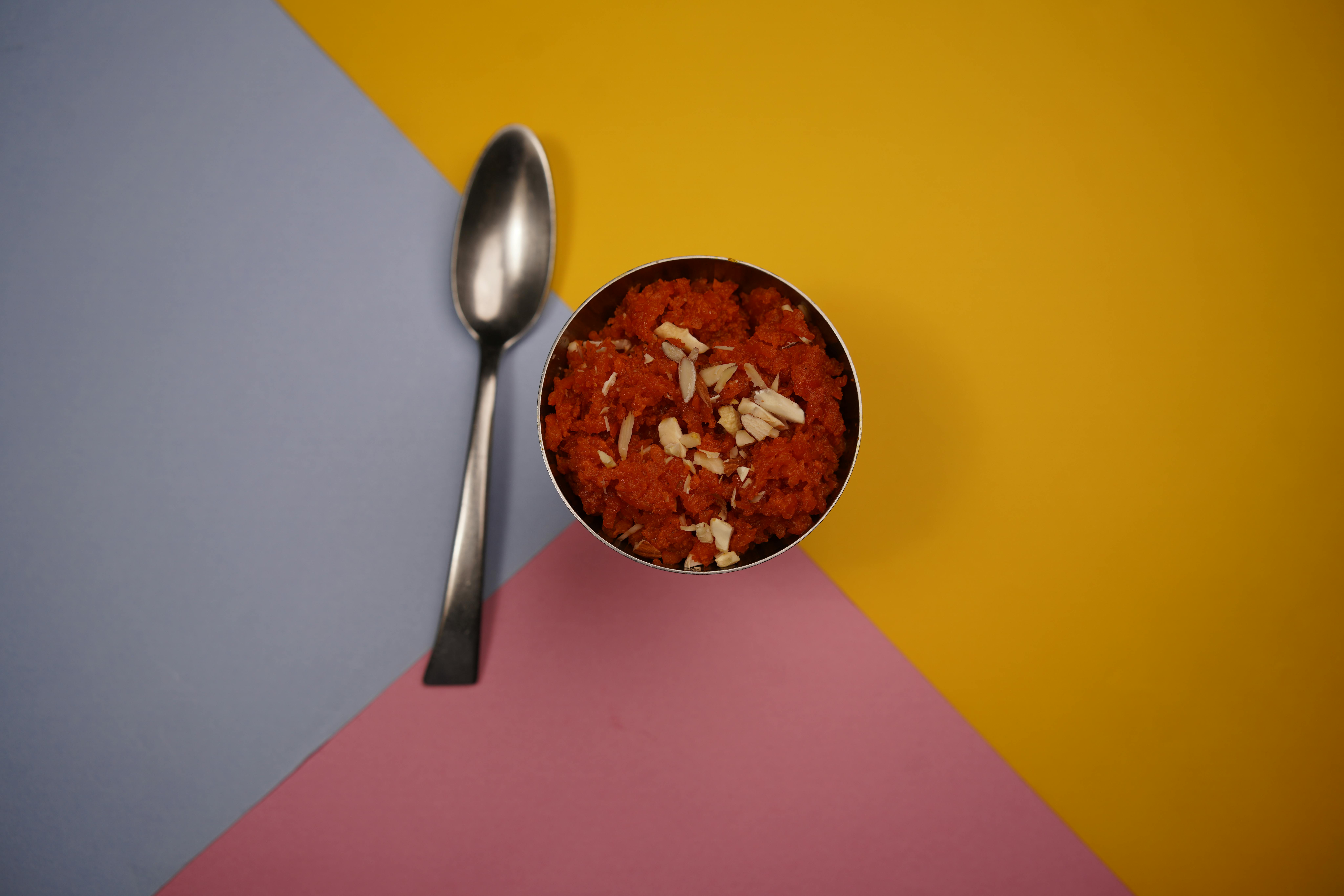
Photo: Jack Baghel / Pexels
Indian
Qubani Ka Meetha
The diets react (see scores below)
Common Ingredients
- dried apricots
- sugar
- cardamom
- almonds
- cream
Specific recipes may vary.
Incompatible with 9 of 11 diets
Diet Ratings
Qubani Ka Meetha is a traditional Hyderabadi dessert made primarily from dried apricots and sugar — two ingredients that are fundamentally incompatible with ketogenic eating. Dried apricots are extremely high in net carbs (roughly 60-65g net carbs per 100g), and added sugar compounds this further. A single standard serving of this dish could easily contain 40-80g of net carbs, far exceeding the entire daily keto budget of 20-50g. While almonds and cream are keto-friendly ingredients, they are used in minor quantities and cannot offset the carbohydrate load from the apricots and sugar. This dish has no meaningful place in a ketogenic diet in any standard serving size.
Qubani Ka Meetha is a traditional Hyderabadi apricot dessert. While most of its ingredients — dried apricots, sugar, cardamom, and almonds — are fully plant-based, the inclusion of cream (dairy cream) makes this dish non-vegan. Dairy cream is an animal product derived from cow's milk and is clearly excluded under vegan dietary rules. The dish as described cannot be approved for a vegan diet.
Qubani Ka Meetha contains two clear paleo violations: refined sugar and cream (dairy). Refined sugar is explicitly excluded from the paleo diet as a processed, non-ancestral food. Cream is a dairy product, which is universally excluded under strict paleo guidelines. While dried apricots, cardamom, and almonds are paleo-compatible, and dried apricots do concentrate natural sugars (warranting some moderation even in a compliant version), the addition of refined sugar and cream makes this dish a definitive avoid. A paleo-adapted version could substitute honey or dates for the sugar and omit the cream, but as traditionally prepared this dish fails on two major paleo exclusion categories.
Qubani Ka Meetha is a traditional Hyderabadi apricot dessert with some Mediterranean-compatible ingredients (dried apricots, almonds, cardamom) but is undermined by significant added sugar and cream. While dried apricots and almonds are genuinely Mediterranean-friendly foods, the dish is structured as a sugar-heavy sweet preparation, which directly contradicts Mediterranean diet principles of minimizing added sugars. The cream adds saturated fat from dairy in a concentrated dessert context rather than incidental moderate dairy use. The net effect is a high-sugar, high-fat confection that qualifies as the kind of processed sweet the Mediterranean diet discourages.
Some Mediterranean diet interpreters might view this more charitably given that dried fruits and nuts are core Mediterranean foods — a small portion could be seen as a fruit-and-nut based treat analogous to traditional Middle Eastern sweets occasionally consumed in Mediterranean cuisines. The apricot-almond base has clear nutritional merit if sugar and cream quantities are modest.
Qubani Ka Meetha is an Indian dessert made almost entirely from plant-derived ingredients: dried apricots, sugar, cardamom, and almonds. The only animal-derived component is cream, which is a minor topping. Dried apricots are fruit, sugar is a refined plant carbohydrate, cardamom is a plant spice, and almonds are plant seeds — all of which are explicitly excluded on the carnivore diet. There is no meaningful animal protein or fat base to this dish. It is fundamentally a plant-based sweet and has no place in any tier of carnivore eating.
Qubani Ka Meetha contains two clearly excluded ingredients: sugar (added sugar is explicitly banned on Whole30) and cream (dairy is excluded, with only ghee/clarified butter as the dairy exception). While dried apricots, cardamom, and almonds are all Whole30-compliant on their own, the dish as traditionally prepared cannot be made Whole30-compatible without significant modification — removing sugar entirely and substituting or omitting the cream.
Qubani Ka Meetha is a traditional Hyderabadi dessert made primarily from dried apricots, which are a significant FODMAP concern. Dried apricots are high in polyols (sorbitol) and excess fructose — they are explicitly listed as high-FODMAP by Monash University at typical serving sizes. Fresh apricots are already high-FODMAP (limit 1 small apricot), and drying concentrates the FODMAPs substantially, making even small portions problematic. This dish is built around a large quantity of dried apricots as its base ingredient, making avoidance essentially unavoidable. The cream adds lactose concerns (heavy cream is low-FODMAP in small amounts but cream-based toppings in dessert servings can push into moderate lactose territory). Sugar, cardamom, and almonds (up to ~10 almonds per serve) are low-FODMAP. However, the dried apricots alone disqualify this dish during the elimination phase.
Qubani Ka Meetha is a traditional Hyderabadi apricot dessert with a mixed DASH profile. The dried apricots are a positive element — rich in potassium, fiber, and magnesium, all nutrients DASH emphasizes. Almonds are also DASH-friendly as a healthy nut. However, the dish is problematic due to significant added sugar (a core DASH-limit item) and heavy cream (full-fat dairy, which DASH specifies should be avoided in favor of low-fat alternatives). The combination of added sugar and saturated fat from cream pushes this dish into caution territory. As a snack category, portion size is critical — a small serving may be acceptable occasionally, but the dish as traditionally prepared is not aligned with DASH principles as a regular food. The low sodium content and fruit base prevent a full 'avoid' rating.
NIH DASH guidelines clearly limit added sugars and full-fat dairy, placing this dessert in caution territory. However, some updated clinical interpretations note that emerging research challenges the cardiovascular harm of full-fat dairy, and the potassium-rich apricot base offers genuine cardiovascular benefit — a DASH-informed clinician might allow a small portion infrequently while recommending substitution of cream with low-fat yogurt and reducing sugar.
Qubani Ka Meetha is a traditional Hyderabadi dessert made primarily from dried apricots and sugar, served with cream. From a Zone Diet perspective, this dish fails on multiple fronts. Dried apricots are considered an 'unfavorable' carbohydrate in Zone terminology — they are high in sugar and have a significantly elevated glycemic load compared to fresh fruit. Added sugar is one of the few foods Dr. Sears categorically discourages, as it spikes insulin rapidly and disrupts the hormonal balance the Zone aims to maintain. The cream adds saturated fat with no accompanying lean protein to balance the macronutrient ratio. There is no meaningful protein source in this dish, making it structurally impossible to construct a Zone-balanced meal around it as a snack. The 40/30/30 ratio is severely skewed — this dish is overwhelmingly carbohydrate and fat with negligible protein, and the carbohydrate quality is poor (high-glycemic sugar + concentrated dried fruit). The almonds provide a small amount of favorable monounsaturated fat and minimal protein, but they cannot offset the fundamental macro imbalance. This is essentially a sugar-forward dessert with no Zone-compatible pathway as a standalone snack.
Qubani Ka Meetha is a traditional Hyderabadi dessert made from stewed dried apricots, sugar, cardamom, and topped with almonds and cream. The profile is mixed from an anti-inflammatory standpoint. Dried apricots provide beta-carotene, quercetin, and fiber — all with anti-inflammatory properties — and almonds contribute vitamin E, magnesium, and healthy monounsaturated fats. Cardamom is a beneficial anti-inflammatory spice. However, the dish is significantly undermined by added sugar (likely in substantial quantity for this dessert) and full-fat cream, both of which are on the 'limit' list. Refined added sugar promotes inflammatory markers like CRP and IL-6, and saturated fat from cream is a recognized inflammatory driver when consumed regularly. The dish is essentially a sugar-forward sweet, and even though its base ingredients have nutritional merit, the overall preparation tips it into a cautionary territory. Occasional consumption in moderate portions is compatible with an anti-inflammatory lifestyle due to the redeeming qualities of apricots and almonds, but it should not be a regular feature.
Some anti-inflammatory nutritionists would emphasize the polyphenol and carotenoid richness of dried apricots and the vitamin E content of almonds as genuinely beneficial, and might score this higher if consumed in small portions or made with minimal sugar and a dairy-free cream substitute. Conversely, stricter practitioners (particularly those following AIP or low-sugar anti-inflammatory protocols) would flag the added sugar and dairy cream as sufficient reason to avoid this dish altogether.
Qubani Ka Meetha is a traditional Hyderabadi dessert made of sugar-stewed dried apricots topped with cream and almonds. While dried apricots offer some fiber and micronutrients, the dish is dominated by added sugar and saturated fat from cream, with virtually no protein. It is essentially a high-sugar, high-fat, low-protein dessert — the opposite of what GLP-1 patients need. The concentrated sugar load can spike blood glucose and contribute empty calories at a time when every calorie must count nutritionally. The cream adds saturated fat, which worsens GLP-1 side effects including nausea and reflux. The small amount of almonds does not meaningfully offset these drawbacks. As a snack category item, it fails on the most critical criteria: protein density, fat content, and sugar load.
*See how scores were generated at our methodology page.
Nutritional profile
Six traits that cut across every diet.
Fiber & Plants
How much whole-plant food and fiber it delivers.
Healthy Fats
The quality of its fats (unsaturated, omega-3).
Whole / Unprocessed
How close it is to its natural, unprocessed form.
Gut Gentle
How easy it is on digestion (low FODMAP, few irritants).
Low Glycemic
How little it spikes your blood sugar.
Protein Density
How much protein it packs per calorie.
Controversy Index
Higher controversy = more disagreement between diets.
Diet-Specific Tips
 DASH — 4/10
View tips
- Dried apricots are rich in potassium, fiber, and magnesium — core DASH nutrients
- High added sugar content conflicts with DASH limits on sweets
- Heavy cream is full-fat dairy, which DASH guidelines discourage in favor of low-fat alternatives
- Almonds are DASH-approved healthy fat and protein source
- Low sodium content is a positive attribute
- Cardamom is a DASH-neutral spice with no sodium concerns
- As a snack/dessert, strict portion control would be required for any DASH compatibility
- A modified version using low-fat yogurt instead of cream and reduced sugar would score significantly higher
 Anti-Inflammatory — 4/10
View tips
- High added sugar content — significant pro-inflammatory driver
- Full-fat cream — saturated fat, on the 'limit' list
- Dried apricots — rich in beta-carotene, quercetin, and fiber with anti-inflammatory potential
- Almonds — provide vitamin E and monounsaturated fats, anti-inflammatory
- Cardamom — beneficial anti-inflammatory spice
- Overall dessert classification with sugar as a dominant ingredient tips the balance toward caution