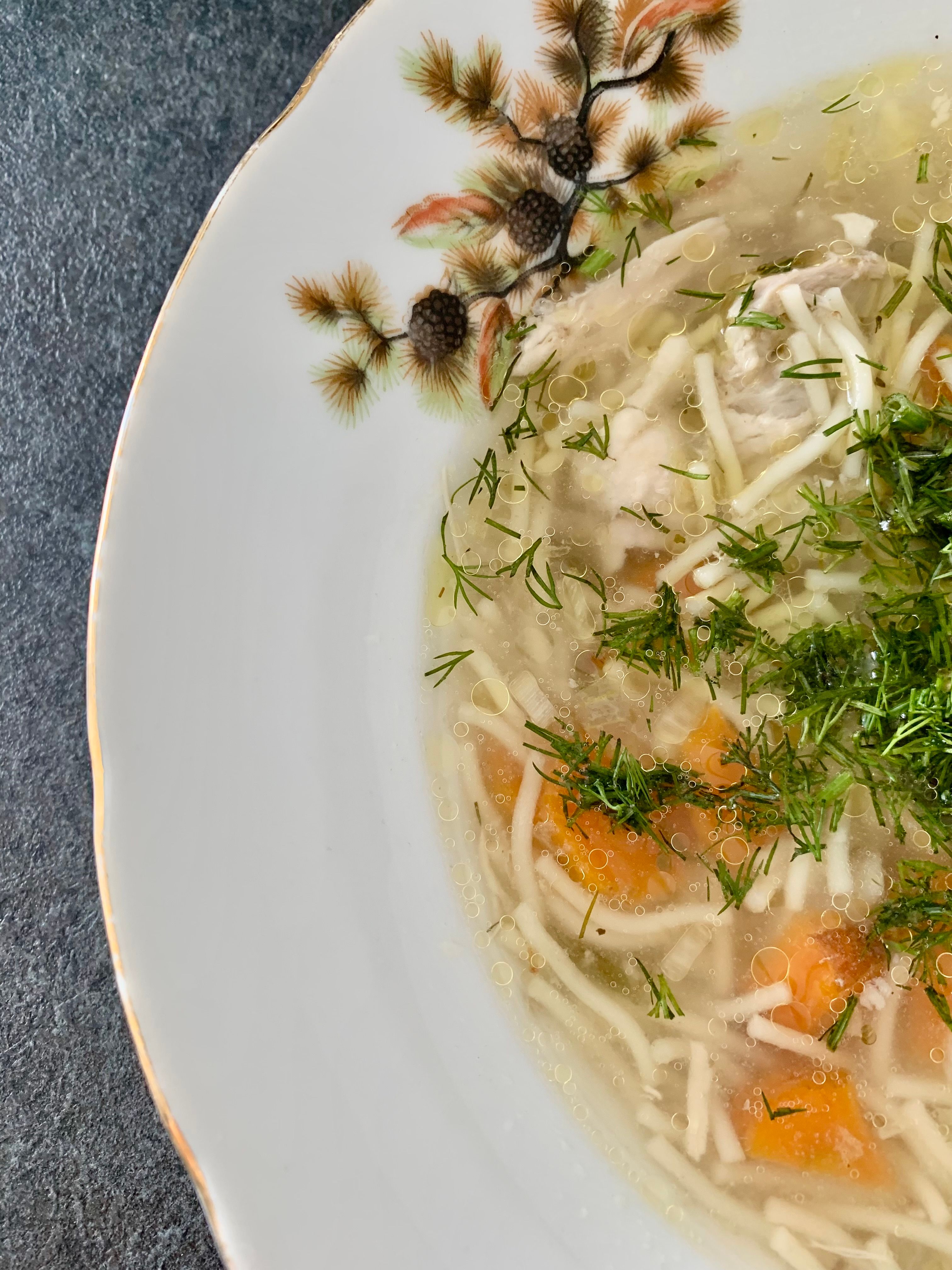
Photo: Helen Brudna / Pexels
The diets react (see scores below)
Common Ingredients
- lamb
- potatoes
- carrot
- rutabaga
- cabbage
- onion
- rice
- thyme
Specific recipes may vary.
Incompatible with 7 of 11 diets
Diet Ratings
Kjotsupa is fundamentally incompatible with ketogenic eating. The dish contains multiple high-carb ingredients stacked together: potatoes (roughly 15-17g net carbs per 100g), rice (roughly 25g net carbs per 100g cooked), rutabaga (roughly 7g net carbs per 100g), and carrots (roughly 8g net carbs per 100g). Even a modest single serving of this soup would almost certainly exceed the entire daily keto carb allowance of 20-50g net carbs, driven primarily by potatoes and rice alone. While lamb is an excellent keto protein and fat source, and cabbage and onion are borderline-acceptable in small amounts, the structural carbohydrate base of this traditional Icelandic recipe makes it impossible to consume in any standard portion without breaking ketosis. There is no realistic modification path that preserves the character of the dish while making it keto-compliant.
Kjotsupa is a traditional Icelandic lamb soup with lamb as its primary protein and defining ingredient. Lamb is unambiguously an animal product — specifically the flesh of a young sheep — making this dish entirely incompatible with a vegan diet. No interpretation of veganism permits the consumption of meat. The remaining ingredients (potatoes, carrot, rutabaga, cabbage, onion, rice, thyme) are all plant-based, but the presence of lamb as a core ingredient disqualifies the dish entirely.
Kjotsupa contains two clear paleo violations: rice (a grain, strictly excluded from all paleo frameworks) and white potatoes (discouraged by The Paleo Diet's original guidelines and considered non-compliant in strict paleo). Rice alone is sufficient to disqualify this dish — it is a grain with anti-nutrients and is excluded across virtually all paleo authorities. The remaining ingredients (lamb, carrot, rutabaga, cabbage, onion, thyme) are all paleo-approved, but the dish as traditionally prepared cannot be considered paleo-compatible.
Kjotsupa is a traditional Icelandic lamb soup with wholesome vegetables (carrot, rutabaga, cabbage, onion) and rice. While the vegetable content is genuinely positive, lamb is red meat, which the Mediterranean diet limits to only a few times per month. Lamb is also typically a fattier red meat, higher in saturated fat than poultry or fish. The soup format with vegetables and herbs is a good preparation method, but the primary protein directly contradicts Mediterranean diet principles around red meat minimization. White rice is also a refined grain, slightly less ideal than whole grains. This dish scores low primarily due to the lamb as the central ingredient.
Some Mediterranean diet scholars note that lamb is consumed in traditional Greek, Turkish, and North African Mediterranean cuisines, particularly on festive or weekly occasions, and argue that lean lamb in a vegetable-rich broth represents an acceptable, if infrequent, inclusion. The PREDIMED study's Mediterranean diet pattern does allow for some red meat consumption, and the abundance of vegetables here partially offsets concerns.
Kjotsupa is a traditional Icelandic lamb soup that is fundamentally incompatible with the carnivore diet. While the base protein — lamb — is an excellent ruminant meat and would score highly on its own, the dish is overwhelmingly plant-based in composition. Potatoes, carrot, rutabaga, cabbage, and onion are all plant-derived vegetables that are strictly excluded from the carnivore diet. Rice is a grain, also entirely off-limits. Thyme is a plant-based herb/spice, excluded even under more lenient carnivore interpretations. The lamb itself is the only carnivore-compliant ingredient, but it represents just one component of a dish that is structurally built around plant foods. This is not a borderline case — the dish cannot be adapted without fundamentally changing its nature.
Kjotsupa (Icelandic lamb soup) contains rice, which is a grain explicitly excluded on the Whole30 program. All other ingredients — lamb, potatoes, carrot, rutabaga, cabbage, onion, and thyme — are fully compliant whole foods. However, the presence of rice is a clear disqualifier. The dish could easily be made Whole30-compliant by simply omitting the rice, as the remaining ingredients are all approved.
Kjotsupa contains two high-FODMAP ingredients that make it unsuitable during the elimination phase: onion (high in fructans at any meaningful cooking amount) and rutabaga/swede (high in GOS and fructans above ~75g per Monash). Onion is one of the most problematic FODMAP foods — fructans leach into the soup broth during cooking, making even 'picking out' onion pieces insufficient to make the dish safe. Rutabaga is rated high-FODMAP by Monash at typical serving sizes. The remaining ingredients are largely low-FODMAP: plain lamb (approved), potatoes (low-FODMAP up to 1 medium), carrot (low-FODMAP up to 1 cup), white rice (low-FODMAP), thyme (low-FODMAP in cooking amounts), and cabbage (low-FODMAP up to 1 cup/75g). However, the onion alone — infused throughout the broth — is disqualifying for the elimination phase.
Kjotsupa is a traditional Icelandic lamb and vegetable soup featuring a strong lineup of DASH-friendly vegetables (carrots, rutabaga, cabbage, onion, potatoes) and rice, which contribute potassium, fiber, magnesium, and complex carbohydrates — all aligned with DASH principles. However, lamb is classified as red meat, which DASH guidelines advise limiting due to its saturated fat content. The fat content of lamb depends heavily on the cut and preparation; fatty cuts with skin-on can be high in saturated fat, though lean trimmed lamb is more acceptable. Traditional Kjotsupa may also use lamb bone broth or be salted significantly during cooking, potentially raising sodium. The dish is not inherently processed and lacks added sugars, trans fats, or tropical oils, which is positive. Eaten with lean, trimmed lamb in moderate portions and low-sodium preparation, this soup is reasonable but not a core DASH dish due to the red meat primary protein.
NIH DASH guidelines recommend limiting red meat (including lamb) and emphasize poultry and fish as preferred proteins. However, updated clinical interpretations note that lean, trimmed lamb in moderate portions (3-4 oz) can fit within a heart-healthy diet, and the otherwise excellent vegetable and nutrient density of this soup may offset the red meat concern for non-hypertensive individuals or those in the less restrictive 2,300mg sodium tier.
Kjotsupa is a traditional Icelandic lamb soup that presents a mixed Zone Diet picture. The protein source (lamb) is moderately fatty compared to Zone-preferred lean proteins like skinless chicken or fish, though it does provide adequate protein blocks. The vegetable base of carrot, rutabaga, cabbage, and onion is genuinely Zone-friendly — these are low-to-moderate glycemic vegetables rich in polyphenols. However, the dish contains two significant Zone 'unfavorable' carbohydrate sources: potatoes and rice. Potatoes are explicitly called out by Dr. Sears as a high-glycemic carb to avoid, and white rice is similarly discouraged. Together, these two ingredients heavily skew the carbohydrate load toward high-glycemic, potentially triggering insulin spikes that disrupt the Zone's eicosanoid balance. The 40/30/30 ratio would be difficult to achieve with standard recipe proportions because the starchy carbs dominate. Adaptation is possible — reducing or eliminating potatoes and rice while increasing the favorable vegetable volume — but as traditionally prepared, this dish falls into the caution zone. The lamb fat content also adds saturated fat, which early Zone writings flagged as problematic, though Sears' later anti-inflammatory work is somewhat more permissive.
Some Zone practitioners argue that in a large vegetable-forward soup, the portion of potato and rice per serving may be small enough to keep net glycemic load manageable, and that the overall meal can be 'zoned' by controlling serving size and pairing with additional lean protein. Sears' later writings also acknowledge that the glycemic index of starchy foods can be moderated when consumed within a fiber-rich, protein-containing meal context — which soup inherently provides.
Kjotsupa is a traditional Icelandic lamb and vegetable soup with a genuinely mixed anti-inflammatory profile. On the positive side, it is rich in colorful, fiber-dense vegetables — carrots, rutabaga, cabbage, and onion — all of which provide antioxidants, carotenoids, glucosinolates, and quercetin with meaningful anti-inflammatory activity. Thyme is a recognized anti-inflammatory herb. The dish is a whole-food, broth-based preparation with no processed ingredients, refined sugars, trans fats, or artificial additives, which is a significant structural advantage. Lamb is the problematic element: anti-inflammatory guidelines classify red meat as something to limit due to its saturated fat content (particularly stearic and palmitic acid), arachidonic acid load, and association with elevated inflammatory markers like CRP and IL-6 with regular consumption. However, Icelandic lamb is notably grass-fed and pasture-raised, which improves the omega-3 to omega-6 ratio compared to grain-fed red meat and modestly reduces the pro-inflammatory burden. The rice adds a refined starch element that is neutral to mildly negative. Potatoes contribute resistant starch and vitamin C but are calorie-dense. Overall, this is a nutrient-dense, whole-food soup that falls short of an 'approve' primarily because of the red meat centerpiece, but its vegetable density, herb inclusion, clean ingredient list, and likely grass-fed lamb sourcing keep it well above 'avoid' territory — acceptable in moderation rather than as a dietary staple.
Some anti-inflammatory practitioners, particularly those influenced by Dr. Andrew Weil's Mediterranean-leaning framework, would view grass-fed lamb consumed occasionally in a vegetable-rich context as broadly acceptable and not meaningfully pro-inflammatory — potentially rating this dish higher. Conversely, stricter anti-inflammatory and autoimmune protocol (AIP) advocates would emphasize that any red meat increases arachidonic acid burden and that the rice introduces a refined starch, recommending this dish only rarely.
Kjotsupa is a traditional Icelandic lamb soup with vegetables and rice. It has meaningful strengths for GLP-1 patients: the broth base is easy to digest and gentle on the stomach, the vegetable variety (cabbage, rutabaga, carrot, onion) contributes fiber and micronutrients, and the high water content supports hydration. However, lamb is a fatty red meat — depending on the cut, it can carry significant saturated fat, which worsens GLP-1 side effects like nausea, bloating, and reflux. The protein content is meaningful but the fat-to-protein ratio is less favorable than lean proteins like chicken breast or fish. Rice and potatoes are refined/high-glycemic carbohydrates that add caloric volume without much fiber benefit. Cabbage and rutabaga partially offset this, contributing some fiber. The overall dish is not empty calories and is far preferable to fried or processed foods, but the fatty lamb and low-fiber starch base prevent a full approve rating. Prepared with lean trimmed lamb cuts and reduced potato/rice volume, this dish becomes considerably more GLP-1 friendly.
Some GLP-1-focused dietitians accept lamb in soup preparations because the broth-based cooking renders out some fat and the overall meal is still protein-containing and easy to digest; others flag lamb categorically alongside other fatty red meats due to saturated fat content worsening GI side effects. Individual tolerance to red meat on GLP-1 therapy varies, and some patients report no additional GI distress from well-cooked lamb in a broth context.
*See how scores were generated at our methodology page.
Nutritional profile
Six traits that cut across every diet.
Fiber & Plants
How much whole-plant food and fiber it delivers.
Healthy Fats
The quality of its fats (unsaturated, omega-3).
Whole / Unprocessed
How close it is to its natural, unprocessed form.
Gut Gentle
How easy it is on digestion (low FODMAP, few irritants).
Low Glycemic
How little it spikes your blood sugar.
Protein Density
How much protein it packs per calorie.
Controversy Index
Higher controversy = more disagreement between diets.
Diet-Specific Tips
 DASH — 5/10
View tips
- Lamb is red meat — DASH guidelines recommend limiting red meat consumption
- Rich vegetable base (carrots, rutabaga, cabbage, onion) provides potassium, fiber, and magnesium in line with DASH
- Saturated fat content depends heavily on lamb cut — fatty cuts are problematic, lean trimmed lamb is more acceptable
- Sodium levels can be high depending on preparation and salting; low-sodium preparation improves DASH compatibility
- No processed ingredients, added sugars, trans fats, or tropical oils — a positive factor
- Portion control of lamb (≤3-4 oz) and low-sodium cooking would improve DASH alignment
 Zone — 4/10
View tips
- Potatoes are explicitly 'unfavorable' high-glycemic carbs in Zone Diet — Sears lists them as foods to avoid
- Rice (presumably white) is another high-glycemic carb that disrupts the 40/30/30 ratio
- Lamb is a fattier protein source with higher saturated fat than Zone-preferred proteins (chicken breast, fish)
- Carrot, rutabaga, cabbage, and onion are Zone-favorable low-glycemic vegetables that support the dish
- As traditionally prepared, carb profile would be too high-glycemic; significant modification needed to Zone-balance
- Portion control and reducing/eliminating potatoes and rice could bring this closer to Zone compliance
 Anti-Inflammatory — 5/10
View tips
- Lamb is red meat — classified as 'limit' in anti-inflammatory guidelines due to saturated fat and arachidonic acid content
- Icelandic lamb is typically grass-fed, improving omega-3:omega-6 ratio compared to grain-fed beef or lamb
- High vegetable density: carrots, rutabaga, cabbage, and onion provide antioxidants, carotenoids, quercetin, and glucosinolates
- Thyme is an approved anti-inflammatory herb with flavonoids and antimicrobial polyphenols
- No processed ingredients, refined sugars, seed oils, trans fats, or artificial additives — clean whole-food preparation
- Broth-based soup format is inherently health-supportive and low in caloric density relative to nutrient load
- White rice is a refined carbohydrate — neutral to mildly negative in anti-inflammatory context
- Onion provides quercetin, a well-studied anti-inflammatory flavonoid
 GLP-1 Friendly — 5/10
View tips
- Lamb is a fatty red meat with higher saturated fat than preferred proteins, risking nausea and reflux on GLP-1 medications
- Broth-based soup format is gentle on the stomach and supports hydration — a significant positive
- Vegetables (cabbage, rutabaga, carrot, onion) contribute fiber and micronutrients
- Rice and potatoes are low-fiber, higher-glycemic carbohydrates that reduce nutrient density per calorie
- Protein content is meaningful but fat-to-protein ratio is less favorable than lean protein sources
- Portion-friendly as a soup — small servings are satisfying due to broth volume and warmth
- Preparation matters significantly: lean trimmed lamb cuts substantially improve the GLP-1 suitability of this dish