Photo: Zsolt Bodnár / Pexels
The diets react (see scores below)
Common Ingredients
- flour
- sugar
- butter
- eggs
- buttermilk
- cardamom
- baking powder
Specific recipes may vary.
Incompatible with 11 of 11 diets
Diet Ratings
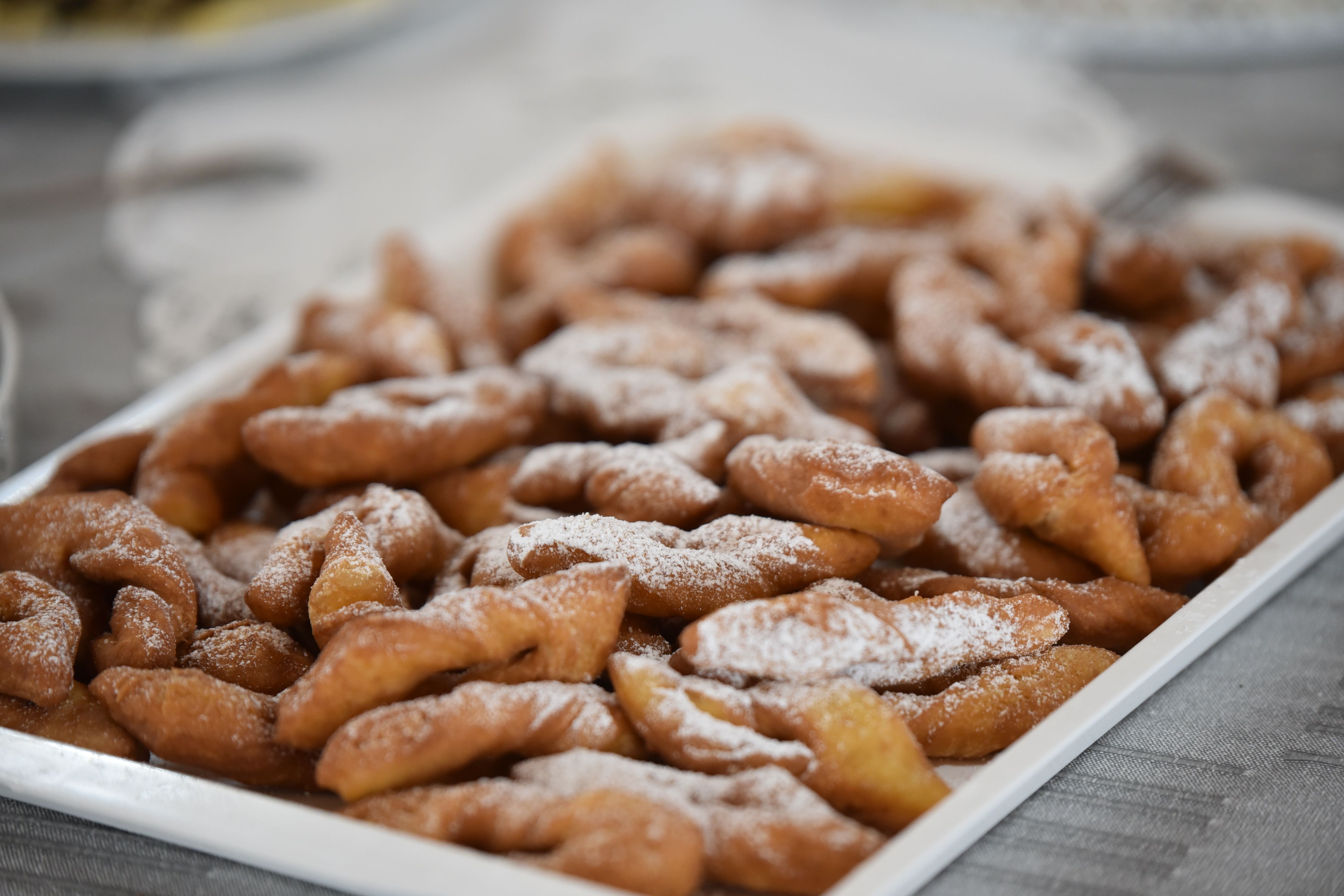
Kleinur are traditional Icelandic twisted doughnuts made primarily from wheat flour and sugar — two completely keto-incompatible ingredients. Flour alone delivers a massive dose of high-glycemic carbohydrates, and combined with added sugar, a single kleinur would likely contain 20-30g or more of net carbs, potentially exceeding the entire daily keto carb allowance in one or two pieces. Buttermilk also adds modest carbs. There is no meaningful fat-to-carb ratio advantage here, and the food is essentially a fried grain-based pastry with sugar. It offers no viable path to keto compatibility in any standard serving.
Kleinur are traditional Icelandic twisted doughnuts that contain multiple animal-derived ingredients. Butter is a dairy product, eggs are an animal product, and buttermilk is a dairy derivative. These three ingredients are unambiguous animal products that disqualify Kleinur from any vegan diet. The remaining ingredients — flour, sugar, cardamom, and baking powder — are plant-based, but the dish as traditionally prepared cannot be considered vegan. A vegan adaptation could substitute plant-based butter, flax eggs or commercial egg replacer, and plant-based milk with a splash of vinegar for buttermilk, but that would be a different recipe.
Kleinur are traditional Icelandic twisted doughnuts that are fundamentally incompatible with paleo principles. The primary ingredient is wheat flour, a grain explicitly excluded from the paleo diet. Sugar is refined and prohibited. Butter and buttermilk are dairy products, which are excluded. Baking powder is a processed leavening agent with non-paleo additives. Nearly every core ingredient violates paleo guidelines, leaving only eggs and cardamom as paleo-compliant components. This dish has no meaningful path to a paleo rating.
Kleinur are Icelandic fried doughnuts made primarily from refined white flour, sugar, and butter — a combination that directly contradicts Mediterranean diet principles. The base is refined grain (not whole grain), the fat source is butter (not olive oil), and added sugar is prominent. These are deep-fried snacks with no plant-forward nutritional value, no legumes, no whole grains, and no healthy fats. This dish is a classic example of the processed, high-saturated-fat, high-sugar foods the Mediterranean diet specifically discourages.
Kleinur are traditional Icelandic fried doughnuts made almost entirely from plant-based ingredients. Flour, sugar, cardamom, and baking powder are all strictly excluded on the carnivore diet. While the dish contains two animal-derived ingredients (butter and eggs), they are minor components in a recipe dominated by grain flour and sugar. This is a pastry/snack food that fundamentally contradicts carnivore principles at its core.
Kleinur (Icelandic twisted doughnuts) are excluded on multiple grounds. They contain flour (a grain, excluded), sugar (added sugar, excluded), and butter (dairy, excluded). Additionally, even if those ingredients were substituted, kleinur are a fried dough/pastry — essentially a doughnut — which falls squarely into the 'no recreating baked goods/junk food' rule that explicitly prohibits pancakes, bread, cookies, and similar items. This dish fails both on ingredients and on the spirit-of-the-program rule.
Kleinur are traditional Icelandic twisted doughnuts made primarily with wheat flour, which is high in fructans — one of the most problematic FODMAPs. Wheat flour is the dominant ingredient and cannot be consumed safely during the elimination phase at any standard serving size. Buttermilk also contains lactose, adding a second FODMAP concern. The remaining ingredients (butter, eggs, sugar, cardamom, baking powder) are individually low-FODMAP, but the wheat flour alone makes this dish unsuitable for the elimination phase. There is no realistic portion size at which a standard kleinur would be low-FODMAP.
Kleinur are Icelandic twisted doughnuts that are deep-fried, placing them firmly in the category of foods DASH guidelines discourage. The combination of refined white flour (not whole grain), added sugar, butter (saturated fat), and deep-frying in oil results in a high-calorie, high-saturated-fat, low-nutrient-density snack. DASH explicitly limits sweets, refined carbohydrates, saturated fat, and fried foods. While the sodium content is relatively low and eggs and buttermilk have modest nutritional value, the overall profile — refined flour base, added sugars, butter, and deep-frying — makes this a poor fit for the DASH eating plan. This is nutritionally analogous to a doughnut, which DASH guidelines categorize as a food to minimize or avoid.
Kleinur are Icelandic twisted doughnuts — deep-fried pastries made primarily from white flour and sugar, with butter providing saturated fat. This is nearly the opposite of Zone Diet principles. The macronutrient profile is dominated by high-glycemic refined carbohydrates (white flour + sugar), saturated fat (butter), and has virtually no usable lean protein. The 40/30/30 ratio is impossible to achieve from this food alone, and even as a small snack component it contributes a glycemic spike with no protein or favorable fat to balance it. Deep frying (the traditional preparation method) adds further unfavorable fat. There is no practical Zone block structure that accommodates a fried dough pastry as a snack — it would require pairing with significant lean protein and monounsaturated fat while keeping the kleinur portion so small as to make it nutritionally irrelevant. The food is fundamentally a treat built on the exact carbohydrate and fat sources Zone methodology identifies as unfavorable.
Kleinur are Icelandic twisted doughnuts, deep-fried in fat, made primarily from refined white flour, sugar, and butter. This combination hits nearly every pro-inflammatory marker in anti-inflammatory nutrition: refined carbohydrates (white flour) rapidly spike blood glucose and insulin, promoting inflammatory cascades; added sugar directly elevates inflammatory markers like CRP and IL-6; butter contributes saturated fat; and deep-frying (the traditional preparation method) introduces oxidized fats and advanced glycation end-products (AGEs), both of which are strongly pro-inflammatory. The only redemptive ingredient is cardamom, a spice with mild antioxidant and anti-inflammatory properties, but its presence at typical culinary doses is far too minor to offset the overwhelmingly inflammatory profile of the dish. Buttermilk and eggs offer modest nutritional value but do nothing to change the overall assessment. This is a treat food with no meaningful anti-inflammatory benefit.
Kleinur are traditional Icelandic fried doughnuts (twisted crullers) made from a enriched dough and deep-fried in oil or fat. Despite containing eggs and buttermilk, the macronutrient profile is dominated by refined flour, sugar, and frying fat — making them a poor fit for GLP-1 patients on every key dimension. They are high in refined carbohydrates with negligible fiber, high in fat from both butter in the dough and frying oil, offer minimal protein per serving, and are calorie-dense with low nutrient density. The frying process and high fat content are particularly problematic, as they directly worsen the GLP-1 side effect profile: nausea, bloating, slowed gastric emptying discomfort, and reflux. As a snack with no redeeming protein or fiber value, this represents exactly the category of empty-calorie, high-fat food that is counterproductive when patients are eating significantly reduced volumes and every bite needs to count nutritionally.
*See how scores were generated at our methodology page.
Nutritional profile
Six traits that cut across every diet.
Fiber & Plants
How much whole-plant food and fiber it delivers.
Healthy Fats
The quality of its fats (unsaturated, omega-3).
Whole / Unprocessed
How close it is to its natural, unprocessed form.
Gut Gentle
How easy it is on digestion (low FODMAP, few irritants).
Low Glycemic
How little it spikes your blood sugar.
Protein Density
How much protein it packs per calorie.
Controversy Index
Higher controversy = more disagreement between diets.