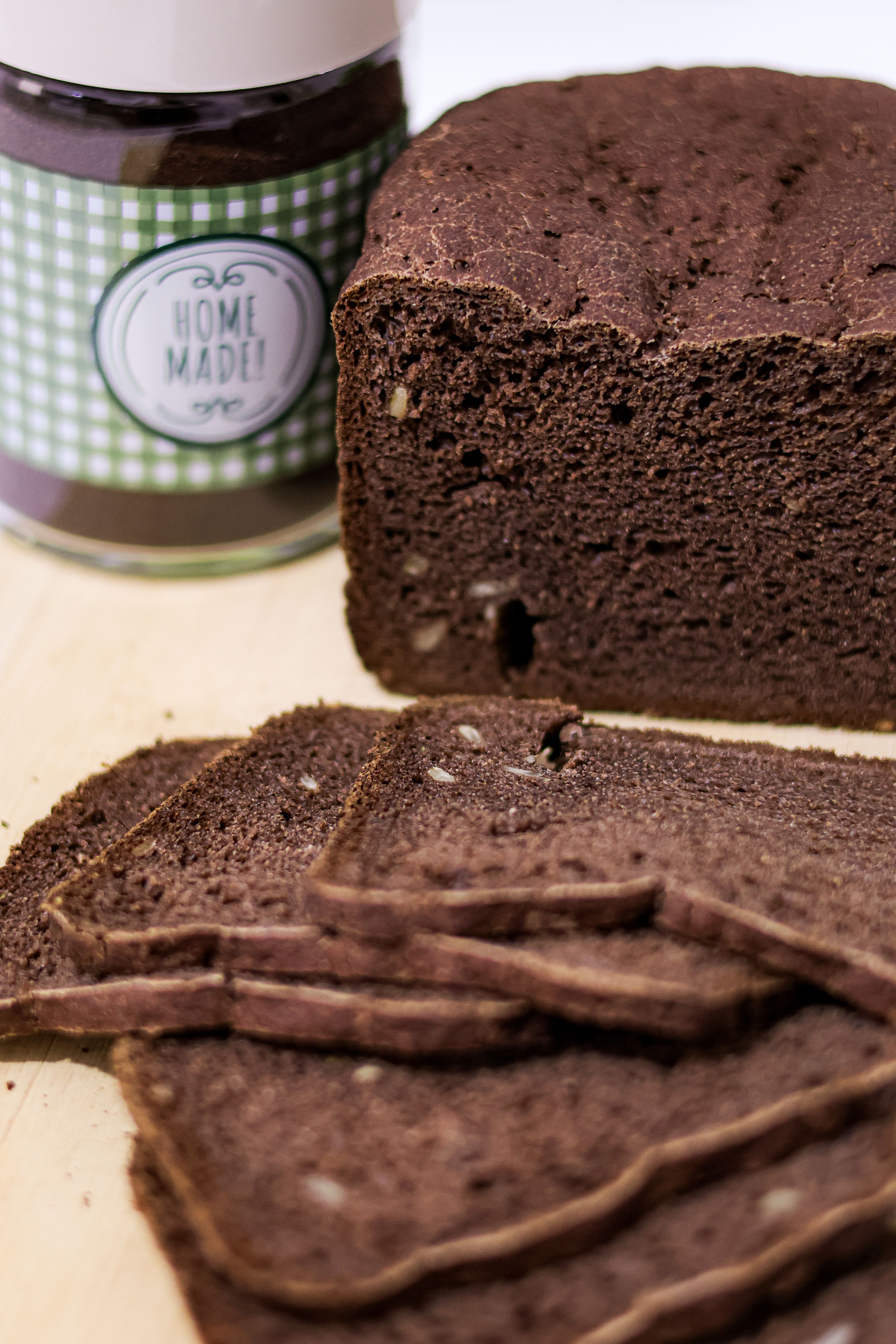
The diets react (see scores below)
Common Ingredients
- rye flour
- wheat flour
- sugar
- buttermilk
- baking soda
- salt
Specific recipes may vary.
Incompatible with 6 of 11 diets
Diet Ratings
Rugbraud is a traditional Icelandic dark rye bread made primarily from rye flour and wheat flour, both of which are high-carbohydrate grains that are fundamentally incompatible with ketogenic eating. A typical slice contains roughly 15-20g of net carbs, meaning even a single slice could consume a significant portion of or exceed the entire daily keto carb allowance. The addition of sugar compounds the problem further. There is no meaningful fat content, no fiber offset sufficient to reduce net carbs to acceptable levels, and two grain-based flours plus added sugar make this a triple violation of core keto rules.
Rugbraud as listed contains buttermilk, which is a dairy product derived from cow's milk. This is a clear animal-derived ingredient that disqualifies the dish from vegan compliance. The remaining ingredients — rye flour, wheat flour, sugar, baking soda, and salt — are all plant-based, so the bread itself could be made vegan by substituting the buttermilk with a plant-based alternative such as non-dairy milk acidified with vinegar or lemon juice.
Rugbraud (Icelandic rye bread) is entirely incompatible with the paleo diet. It contains multiple non-paleo ingredients: rye flour and wheat flour are grains explicitly excluded from the paleo framework, sugar is a refined sweetener, buttermilk is a dairy product, and salt is an excluded additive. Every single ingredient in this dish violates paleo principles. There are no mitigating factors — this is a grain-based bread at its core, which represents one of the clearest 'avoid' categories in paleo dietary guidelines.
Rugbraud is an Icelandic dense rye bread made primarily from rye flour with some wheat flour, buttermilk, and a small amount of sugar. The rye flour component is a whole grain and aligns well with Mediterranean diet principles, which strongly favor whole grains. However, the wheat flour used is likely refined (not whole wheat), and the added sugar, while modest, is a mild concern. Buttermilk is a dairy product acceptable in moderation. The bread is not a processed food in the industrial sense, but the mixed flour composition and added sugar prevent a full approval. It lacks olive oil, which is the canonical Mediterranean fat. Overall, it is an acceptable whole-grain-leaning bread eaten in moderation, but it is not a Mediterranean staple and falls short of ideal whole grain preparations like whole wheat pita or sourdough.
Some Mediterranean diet practitioners would score this higher given the dominant rye content, as whole rye is a fiber-rich grain with well-documented metabolic benefits, and traditional Mediterranean dietary patterns do include varied whole grain breads; the small sugar addition is trivial in modest serving sizes.
Rugbraud is a traditional Icelandic rye bread made entirely from plant-based ingredients. It contains rye flour and wheat flour (grains), sugar, and buttermilk with baking soda — there is no animal protein of significance, and the primary components are grains and sugar, which are strictly forbidden on the carnivore diet. Even the trace buttermilk does not redeem this food, as the overwhelming composition is grain-based carbohydrates. This is as far from carnivore as a food can get.
Rugbraud (Icelandic dark rye bread) contains multiple excluded ingredients. Rye flour and wheat flour are both grains, which are explicitly excluded from the Whole30 program. Sugar is an added sweetener, also explicitly excluded. Buttermilk is a dairy product, also excluded. Even if those ingredients were compliant, this dish is a bread — a baked good explicitly called out in Whole30 Rule 4 as prohibited even when made with compliant ingredients. This dish fails on at least four independent grounds.
Rugbraud (Icelandic rye bread) contains two high-FODMAP ingredients that make it unsuitable during the elimination phase. Rye flour is high in fructans, as confirmed by Monash University testing. Wheat flour is likewise high in fructans. Together, these two grains create a significant fructan load in any standard serving of this dense bread. Buttermilk also contains lactose, adding a second FODMAP category (disaccharides) to the concern. While small amounts of sugar, baking soda, and salt are FODMAP-free, they cannot offset the fructan burden from the two primary grain ingredients. Unlike sourdough, which undergoes long fermentation that can reduce fructan content, Rugbraud is leavened with baking soda (quick-bread method), so there is no fermentation process to degrade the fructans. A standard slice of this dense rye bread would deliver a high fructan dose.
Rugbraud (Icelandic rye bread) is a dense, dark bread made primarily from rye flour with some wheat flour. The rye flour component is a genuine DASH positive — it's a whole grain rich in fiber, magnesium, and potassium, all emphasized by DASH guidelines. Buttermilk provides a small amount of low-fat dairy benefit. However, several factors temper the rating: (1) Salt is a direct ingredient, and baking-soda leavened breads typically carry moderate-to-high sodium — a standard slice can contain 150–300mg sodium, which adds up quickly against the 1,500–2,300mg DASH daily limit. (2) Sugar is added, which DASH discourages. (3) The wheat flour component may be refined rather than whole wheat, diluting the whole-grain benefit. (4) The ratio of rye to wheat flour varies by recipe, affecting the fiber and glycemic profile. In moderate portions (1–2 slices), rugbraud can fit within a DASH eating plan as a whole-grain side, especially compared to white bread, but sodium from salt and baking soda warrants portion awareness. A low-sodium recipe version would score higher (6–7).
NIH DASH guidelines broadly endorse whole grains and would view rye flour favorably, but the added salt and sugar in traditional rugbraud recipes introduce friction. Some DASH-oriented clinicians argue that the high fiber and low glycemic index of rye-dominant breads justify inclusion even with moderate sodium, especially for non-hypertensive individuals — while stricter DASH practitioners on the 1,500mg sodium protocol would limit servings carefully.
Rugbraud (Icelandic rye bread) is a dense, dark bread made primarily from rye flour with some wheat flour, sugar, buttermilk, baking soda, and salt. In Zone Diet terms, it functions as a carbohydrate block source. Rye flour has a lower glycemic index than white bread and contains meaningful fiber, which reduces net carbs — this is more favorable than refined grain products. However, the addition of sugar raises the glycemic load, and wheat flour (likely refined) adds moderate-GI carbs. The Zone Diet classifies most bread products as 'unfavorable' carbohydrates because they are grain-based and tend to be calorie-dense relative to vegetable-based carb blocks. Rugbraud can technically be portioned into Zone carb blocks (roughly 1 slice ≈ 1-2 carb blocks depending on thickness), but it offers no protein or fat contribution on its own, requiring careful pairing with lean protein and monounsaturated fat to complete a Zone meal. As a side dish with no protein, it must be a minor component. The sugar ingredient is a specific concern — it nudges the glycemic response upward compared to pure rye bread. Usable in Zone with strict portion control, but not a preferred carb source.
Some Zone practitioners and later Sears writings on polyphenols note that whole rye products, particularly dense traditional rye breads high in fiber, have a relatively low glycemic response and contain beneficial compounds. Dense rye bread like rugbraud may behave more favorably glycemically than its grain classification suggests, and some would treat a small portion as a reasonable carb block alongside vegetables rather than a food to strictly limit. The sugar content, however, remains a legitimate concern in any Zone reading.
Rugbrauð (Icelandic rye bread) is a dense, dark bread made primarily from rye flour with some wheat flour, buttermilk, sugar, baking soda, and salt. The rye flour is the standout positive ingredient: rye is rich in fiber, lignans, and phenolic compounds with documented anti-inflammatory and metabolic benefits, and whole-grain rye has been associated with reduced CRP levels in studies. Buttermilk provides a modest probiotic-adjacent benefit and is a low-fat dairy product, which is acceptable in the anti-inflammatory framework. However, the formulation has meaningful drawbacks. Added sugar directly contributes to inflammatory load, and the inclusion of refined wheat flour (likely not whole wheat) dilutes the whole-grain benefits. The bread is also a baked grain product with moderate glycemic impact, which anti-inflammatory guidance generally advises moderating. It contains no omega-3s, antioxidant-rich produce, or other strongly anti-inflammatory components. On balance, it is a better bread choice than white bread due to the rye content, but the added sugar and refined flour blend keep it in caution territory rather than approved.
Some anti-inflammatory practitioners, particularly those following whole-food or grain-free frameworks (e.g., AIP or Paleo-adjacent protocols), would rate this more negatively due to the refined carbohydrate and gluten content triggering inflammatory responses in sensitive individuals. Conversely, researchers focused on whole-grain rye (e.g., studies from Nordic nutrition institutions) emphasize rye's exceptional fiber and lignan profile and might rate a rye-dominant loaf closer to approved, provided the sugar content is low.
Rugbrauð is a traditional Icelandic dense rye bread made primarily from rye flour with some wheat flour, sugar, buttermilk, baking soda, and salt. It is low in fat and reasonably easy to digest in small portions, which are positives for GLP-1 patients. The rye flour component provides meaningful dietary fiber (rye is one of the higher-fiber grains) and has a lower glycemic index than refined wheat bread, supporting blood sugar stability. However, it contains added sugar, offers minimal protein, and the wheat flour component reduces the overall fiber density compared to 100% rye products. As a side dish with no primary protein source, it contributes carbohydrates and some fiber but does little to meet the critical protein targets GLP-1 patients require. It is best treated as a small accompaniment to a high-protein main, not a standalone food. Portion sensitivity is high — a small slice alongside eggs or fish is reasonable; multiple slices would crowd out more nutrient-dense foods given reduced appetite on GLP-1 medications.
Some GLP-1-focused dietitians view dense whole-grain rye bread favorably due to its fiber content, lower glycemic impact compared to refined grains, and satiety properties, and would rate it more permissively as a fiber vehicle. Others caution that the added sugar and mixed flour composition dilute its whole-grain benefits, and that with severely reduced caloric intake on GLP-1 medications, even moderate-carbohydrate sides displace higher-priority protein and vegetable choices.
*See how scores were generated at our methodology page.
Nutritional profile
Six traits that cut across every diet.
Fiber & Plants
How much whole-plant food and fiber it delivers.
Healthy Fats
The quality of its fats (unsaturated, omega-3).
Whole / Unprocessed
How close it is to its natural, unprocessed form.
Gut Gentle
How easy it is on digestion (low FODMAP, few irritants).
Low Glycemic
How little it spikes your blood sugar.
Protein Density
How much protein it packs per calorie.
Controversy Index
Higher controversy = more disagreement between diets.
Diet-Specific Tips
 Mediterranean — 5/10
View tips
- Rye flour is a whole grain, positively aligned with Mediterranean principles
- Wheat flour is likely refined, reducing whole grain quality
- Added sugar is a mild negative per Mediterranean guidelines
- Buttermilk is dairy, acceptable in moderation
- No olive oil used as fat source, deviating from Mediterranean pattern
- Not a processed food; minimally prepared traditional bread
- Not a Mediterranean regional food, but nutritional profile is moderately compatible
 DASH — 5/10
View tips
- Rye flour is a beneficial whole grain high in fiber, magnesium, and potassium — aligns with DASH
- Salt and baking soda contribute meaningful sodium per serving, a DASH concern
- Added sugar is discouraged by DASH guidelines
- Wheat flour may be refined, reducing whole-grain benefit
- Buttermilk provides minor low-fat dairy benefit
- Moderate portions (1–2 slices) can fit within DASH; low-sodium recipes score higher
- No saturated fat or cholesterol concerns — a DASH positive
 Zone — 4/10
View tips
- Rye flour has lower GI than wheat and provides fiber, reducing net carb impact
- Added sugar increases glycemic load — a Zone-unfavorable ingredient
- Wheat flour component is likely refined, adding moderate-GI carbs
- Classified as 'unfavorable' carbohydrate in Zone terminology (grain-based bread)
- No protein or fat contribution — requires balanced pairing to form a Zone meal
- Can technically be portioned into Zone carb blocks but is calorie-dense relative to vegetable alternatives
- Traditional dense texture means smaller portions have more fiber buffering the glycemic response
 Anti-Inflammatory — 5/10
View tips
- Rye flour provides fiber, lignans, and phenolic compounds with anti-inflammatory properties
- Added sugar is pro-inflammatory and offsets whole-grain benefits
- Refined wheat flour reduces overall whole-grain nutritional quality
- Buttermilk is an acceptable low-fat dairy ingredient
- No omega-3s, antioxidants, or strongly anti-inflammatory ingredients present
- Better than white bread but not equivalent to a pure whole-grain product
 GLP-1 Friendly — 5/10
View tips
- Contains added sugar — a drawback for GLP-1 patients
- Rye flour provides meaningful fiber and has lower glycemic index than refined wheat
- Mixed flour (rye + wheat) reduces fiber density vs. 100% rye
- Zero primary protein — does not support the 100-120g daily protein target
- Low fat — a positive for GLP-1 tolerability
- Small portion friendly when used as an accompaniment to protein-rich foods
- Nutrient density per calorie is moderate, not high — limited micronutrient contribution