Photo: AI25.Studio Studio / Pexels
The diets react (see scores below)
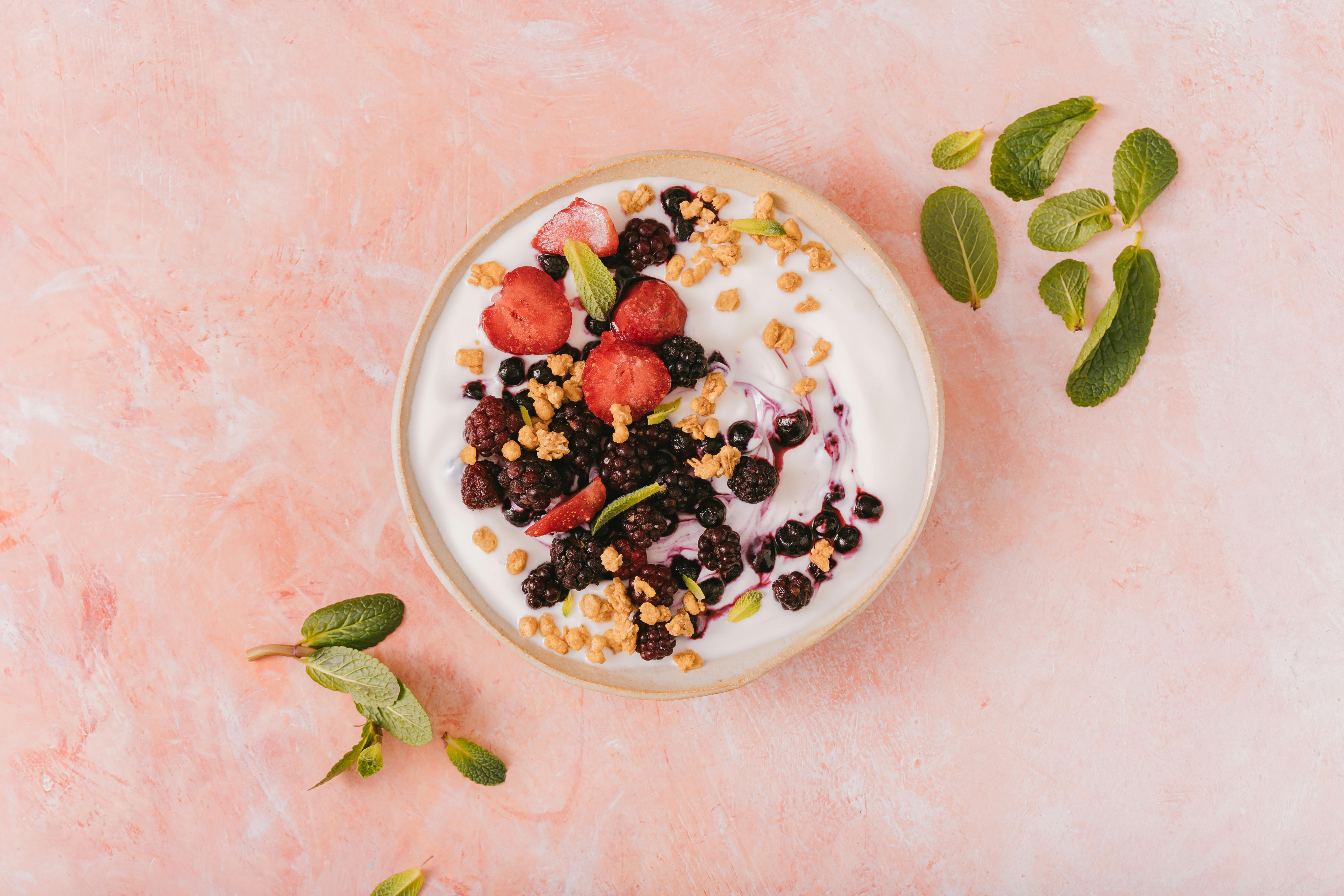
Common Ingredients
- skim milk
- skyr culture
- rennet
- berries
- sugar
Specific recipes may vary.
Incompatible with 5 of 11 diets
Diet Ratings
This skyr preparation is incompatible with ketogenic eating for several compounding reasons. Plain skyr made from skim milk already carries a moderate carbohydrate load (~12g net carbs per 170g serving from lactose), but the addition of both berries and sugar pushes this well into avoid territory. Added sugar is an absolute disqualifier on keto, and berries, while lower-carb among fruits, add additional net carbs on top. Skim milk is used rather than full-fat dairy, meaning there is minimal fat to offset the carb load, making the macronutrient profile the inverse of what keto requires. The combination of lactose, fruit sugars, and added sugar would spike blood glucose and disrupt ketosis.
Skyr is a traditional Icelandic dairy product made from skim milk fermented with skyr cultures and set with rennet. Both skim milk and rennet are animal-derived ingredients, making this dish entirely incompatible with a vegan diet. Skim milk is a direct dairy product (excluded under vegan rule #1), and rennet is typically derived from the stomach lining of ruminant animals (excluded under vegan rule #2). The berries and sugar are plant-based, but the foundational ingredients are unambiguously animal products. No vegan version of traditional skyr exists under this ingredient list, though plant-based skyr-style products made from oat or coconut milk do exist commercially.
Skyr is a dairy product made from skim milk, which is explicitly excluded from the paleo diet. Unlike ghee, which has casein and lactose largely removed, skyr retains the full dairy protein and lactose profile of milk. The inclusion of sugar (refined) further compounds the non-paleo nature of this dish. While berries are paleo-approved, they cannot redeem a dish built on two core paleo-excluded ingredients: dairy and refined sugar. There is strong consensus across major paleo authorities — Cordain, Sisson, and Wolf — that dairy products like yogurt and cultured milk are not permitted.
Skyr is a cultured dairy product similar to yogurt or quark, made from skim milk with live cultures. As a high-protein, low-fat fermented dairy food, it aligns reasonably well with Mediterranean diet principles that allow moderate dairy consumption (a few servings per week to once daily). The fermented nature is a positive, as Mediterranean traditions include yogurt and similar cultured products. However, skyr is not a traditional Mediterranean food, and the added sugar in this preparation is a mild concern. The berries are a genuine positive, contributing antioxidants and fiber. The overall dish is acceptable in moderation but is not a core Mediterranean staple.
Some Mediterranean diet authorities, particularly those following traditional Greek or Levantine practices, would view this more favorably since strained fermented dairy (like Greek yogurt) is a recognized part of the dietary pattern — skyr is functionally very similar. The added sugar, however, would be a point of concern for stricter interpretations favoring unsweetened dairy.
This version of skyr is incompatible with the carnivore diet for multiple reasons. While plain skyr made from skim milk, culture, and rennet would already be debated (dairy is contested, and skim milk is a low-fat processed dairy product rather than full-fat), this preparation includes berries and sugar — both are strictly plant-derived and excluded from all tiers of carnivore eating. The berries are fruit (plant food) and sugar is a processed plant-derived sweetener. Even the most permissive 'animal-based' practitioners following Saladino's approach who include honey and fruit would still reject added refined sugar. The skim milk base is also problematic — carnivore-friendly dairy prioritizes full-fat options like heavy cream or raw whole milk, as skim milk is processed to remove fat and has a higher relative lactose load. The combination of prohibited plant ingredients (berries, sugar) makes this an avoid regardless of the dairy debate.
Skyr contains two excluded ingredients: dairy (skim milk is a dairy product, and skyr itself is classified as a strained dairy product similar to yogurt) and added sugar. Whole30 explicitly excludes all dairy except ghee and clarified butter, and explicitly excludes all added sugar. Both violations independently disqualify this dish.
Skyr is a strained fermented dairy product made from skim milk, and the straining and fermentation process significantly reduces lactose content — similar to Greek yogurt. Monash University has tested plain skyr (low-fat) and found it to be low-FODMAP at a 200g serving. However, this dish includes berries and sugar, which introduce additional variables. Common berries like strawberries and blueberries are low-FODMAP at standard servings (e.g., 10 strawberries, 20 blueberries), but raspberries and blackberries contain excess fructose at larger servings, and mixed berry blends are often ambiguous. The unspecified 'berries' ingredient creates moderate risk. Sugar (sucrose) itself is low-FODMAP in normal culinary amounts. The primary concern is the lactose remaining in skyr and the unspecified berry type — if high-fructose berries (e.g., blackberries, canned cherries) are used in quantity, the dish could become problematic. A standard restaurant or home serving of skyr with berries therefore warrants caution rather than full approval.
Monash University rates plain skyr as low-FODMAP at 200g, and many FODMAP practitioners accept it as a safe Greek yogurt alternative. However, some clinicians remain cautious about any dairy-based fermented products during strict elimination because residual lactose can still trigger symptoms in highly sensitive individuals, and serving sizes in practice often exceed tested portions.
Skyr made with skim milk is essentially a non-fat, high-protein cultured dairy product very similar to non-fat Greek yogurt — an excellent fit for the DASH diet. It aligns with DASH's emphasis on low-fat or fat-free dairy, provides substantial protein, and is rich in calcium and potassium. The berries add fiber, antioxidants, potassium, and micronutrients that are core DASH foods. The added sugar is a minor concern but in typical serving quantities (a small amount to sweeten) it remains acceptable. Sodium is naturally very low. The primary reason this isn't a '9-10' is the added sugar component, which DASH advises limiting, and the fact that DASH guidelines don't explicitly call out skyr by name — though it clearly fits the fat-free dairy category.
NIH DASH guidelines explicitly endorse fat-free and low-fat dairy, which skyr qualifies as, so most DASH clinicians would approve it readily. However, some conservative practitioners note that commercially available skyr products often contain significant added sugars (up to 12-15g per serving), which could push the rating toward 'caution' — the homemade or plain version with minimal added sugar is clearly preferable, and the sugar amount in this recipe is unspecified.
Skyr is a strained Icelandic dairy product similar to Greek yogurt — high in protein, very low in fat, and made from skim milk. Plain skyr would be nearly ideal for Zone purposes: it provides lean protein (approximately 17g per 170g serving) with minimal fat and moderate carbohydrates, closely approximating favorable Zone blocks. However, this version includes added sugar and berries, which raises the glycemic load and shifts the carb block profile upward. The added sugar is the primary concern — it pushes the dish toward unfavorable carbohydrate territory. The berries themselves are favorable low-GI carbs in Zone methodology, but combined with added sugar they create a higher-glycemic carb profile. The protein content is strong and lean, which is a clear Zone positive. The dish lacks fat, so it would need a monounsaturated fat addition (e.g., a few almonds, some avocado) to complete a Zone-balanced meal. With sugar removed or minimized, this would score closer to 8. As presented with added sugar, it sits at caution — usable but requiring portion control on the sugar and fat supplementation to achieve 40/30/30 balance.
Some Zone practitioners treat plain skyr as a near-perfect protein block and accept modest natural sweeteners or fruit as acceptable carb blocks within the 40% carbohydrate allowance. Dr. Sears' later writings (The Mediterranean Zone) increasingly emphasize polyphenol-rich foods like berries, which could elevate the rating of this dish if the sugar quantity is small and the berries are the dominant sweetener. The key disagreement is whether the added sugar is a small flavoring or a meaningful glycemic contributor.
Skyr is a traditional Icelandic fermented dairy product made from skim milk, placing it in the low-fat dairy category, which the anti-inflammatory framework treats as acceptable in moderation. Its fermented nature provides probiotics, which have emerging evidence for reducing systemic inflammation by supporting gut microbiome health. The high protein content and low fat profile are favorable compared to full-fat dairy. Berries are strongly anti-inflammatory, contributing antioxidants, polyphenols, and anthocyanins. However, added sugar is a notable concern — even modest amounts of refined sugar can contribute to inflammatory load, and commercial skyr preparations often contain more sugar than the traditional version. The dairy component itself sits in a contested zone: low-fat fermented dairy is generally accepted in anti-inflammatory protocols, but dairy as a category raises questions for individuals with sensitivities or autoimmune conditions. Overall, skyr with berries and minimal sugar leans toward a favorable profile, but the added sugar prevents a full approval.
Most anti-inflammatory frameworks, including Dr. Weil's pyramid, permit low-fat dairy in moderation and view fermented dairy positively for its probiotic content. However, stricter anti-inflammatory and autoimmune protocols (such as AIP) exclude all dairy due to potential gut irritation, casein sensitivity, and insulin-stimulating effects, regardless of fat content — meaning skyr would be excluded entirely under those frameworks.
Skyr is an Icelandic cultured dairy product nutritionally similar to Greek yogurt — very high in protein (typically 15-17g per 150g serving), low in fat (made from skim milk), and relatively low in calories, making it an excellent GLP-1 companion food. The skyr culture provides probiotics that may support gut health, which is beneficial given GLP-1-related GI side effects. Berries add fiber, antioxidants, and micronutrients. The primary concern here is the added sugar in the ingredient list, which reduces the score from what plain skyr would earn. Plain skyr with naturally sweet berries would rate a 9; the added sugar introduces empty calories and blood sugar variability that are suboptimal for GLP-1 patients. Easy to digest, portion-friendly, and nutrient-dense per calorie — it checks most of the core GLP-1 dietary boxes. Recommend choosing a version with no added sugar or minimal added sugar where possible.
Some GLP-1-focused dietitians flag all flavored or sweetened dairy products due to the added sugar content, preferring patients select only plain unsweetened versions to avoid reinforcing sweet cravings and spiking insulin. Others note that a small amount of sugar in an otherwise high-protein, low-fat food is a reasonable trade-off for palatability and adherence, particularly for patients struggling with appetite and food enjoyment on GLP-1 medications.
*See how scores were generated at our methodology page.
Nutritional profile
Six traits that cut across every diet.
Fiber & Plants
How much whole-plant food and fiber it delivers.
Healthy Fats
The quality of its fats (unsaturated, omega-3).
Whole / Unprocessed
How close it is to its natural, unprocessed form.
Gut Gentle
How easy it is on digestion (low FODMAP, few irritants).
Low Glycemic
How little it spikes your blood sugar.
Protein Density
How much protein it packs per calorie.
Controversy Index
Higher controversy = more disagreement between diets.
Diet-Specific Tips
 Mediterranean — 5/10
View tips
- Fermented dairy is acceptable in moderation in the Mediterranean diet
- Skim milk base keeps saturated fat low, which is a positive
- Added sugar slightly undermines the nutritional profile
- Berries are a strongly encouraged plant-based component
- Not a traditional Mediterranean food — Icelandic origin
- High protein content aligns with Mediterranean dairy norms (e.g., Greek yogurt)
 Low-FODMAP — 5/10
View tips
- Skyr is strained fermented dairy with significantly reduced lactose — generally low-FODMAP at standard serving (200g per Monash)
- Unspecified 'berries' creates ambiguity — low-FODMAP berries (strawberries, blueberries) are safe, but blackberries or large quantities of raspberries may add excess fructose or polyols
- Sugar (sucrose) is low-FODMAP at normal culinary amounts — not a concern here
- Residual lactose in skyr may affect highly sensitive individuals despite fermentation
- Serving size matters — skyr remains low-FODMAP only up to approximately 200g per Monash testing
 DASH — 8/10
View tips
- Made from skim milk — fat-free dairy, core DASH food group
- High protein content supports DASH nutritional goals
- Rich in calcium and potassium, key DASH nutrients
- Very low sodium, aligns with DASH sodium limits
- Berries are excellent DASH-approved fruits (fiber, potassium, antioxidants)
- Added sugar is a mild concern — DASH limits sweets and added sugars
- Plain/minimally sweetened skyr is preferred over heavily sweetened versions
 Zone — 6/10
View tips
- High lean protein content from skim milk skyr culture is a Zone positive
- Added sugar shifts carb profile toward unfavorable, higher-glycemic territory
- Berries are Zone-favorable low-GI carbs with polyphenol benefits
- Very low fat content means fat blocks must be added separately to achieve 40/30/30 ratio
- Plain skyr without added sugar would rate significantly higher (approve, ~8)
- Portion control on sugar quantity is critical for Zone compatibility
- Needs monounsaturated fat addition (almonds, avocado) to complete Zone meal balance
 Anti-Inflammatory — 5/10
View tips
- Low-fat fermented dairy — acceptable in moderation under most anti-inflammatory guidelines
- Probiotic cultures from fermentation may support gut health and reduce systemic inflammation
- Berries are strongly anti-inflammatory due to anthocyanins and polyphenols
- Added sugar is pro-inflammatory and reduces the overall score
- Skim milk base avoids saturated fat concerns associated with full-fat dairy
- Dairy as a category is debated in autoimmune-focused anti-inflammatory protocols
 GLP-1 Friendly — 8/10
View tips
- High protein density (~15-17g per serving) from skim milk base — strong GLP-1 priority alignment
- Very low fat due to skim milk base — minimizes nausea and GI side effects
- Added sugar is a negative — reduces nutrient density per calorie and is suboptimal for blood sugar management
- Berries contribute fiber, antioxidants, and water content — supports digestion and hydration
- Probiotic cultures may support gut microbiome and ease GLP-1-related GI discomfort
- Soft texture and easy digestibility are well-suited to slowed gastric emptying
- Small serving size is satisfying due to protein density — good portion-friendliness
- Recommend plain unsweetened skyr with fresh berries as the optimal version of this dish