Photo: Milan Trninic / Pexels
French
Ile Flottante
The diets react (see scores below)
Common Ingredients
- egg whites
- sugar
- milk
- egg yolks
- vanilla
- salt
Specific recipes may vary.
Incompatible with 8 of 11 diets
Diet Ratings
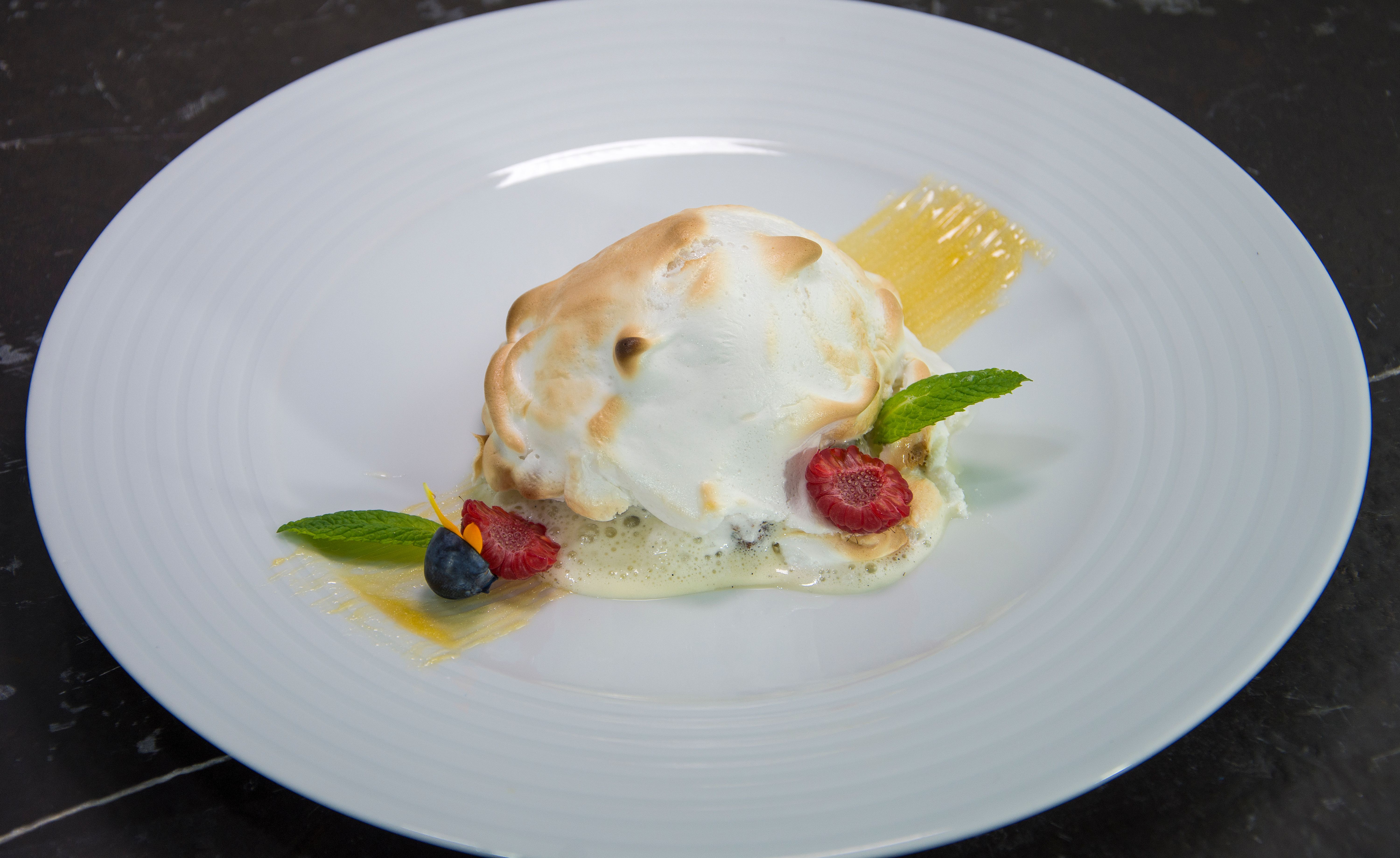
Île Flottante is a classic French dessert consisting of poached meringue (egg whites and sugar) floating on crème anglaise (milk, egg yolks, sugar, vanilla). Sugar is a primary structural ingredient in both components — the meringue requires significant sugar to achieve its texture, and the custard base is heavily sweetened. Milk adds additional lactose-based carbs. A standard serving easily contains 30-50g of net carbs from sugar alone, which can consume or exceed an entire day's keto carb budget in one snack-sized portion. There is no meaningful way to consume a traditional Île Flottante and remain in ketosis.
Île Flottante is a classic French dessert consisting of poached meringue (egg whites and sugar) floating on a crème anglaise custard sauce (egg yolks, milk, vanilla, salt). It contains multiple animal-derived ingredients: egg whites and egg yolks are direct animal products, and milk is a dairy product. All three are explicitly excluded under vegan dietary rules. There is no ambiguity here — this dish is fundamentally built on animal products with no plant-based substitutes in its traditional form.
Île Flottante is a classic French dessert consisting of poached meringue (egg whites and sugar) floating on crème anglaise (milk, egg yolks, vanilla, sugar), finished with salt. While eggs and vanilla are paleo-approved, the dish contains multiple non-paleo ingredients that disqualify it. Dairy milk is excluded from the paleo diet. Refined sugar is explicitly excluded. Added salt is discouraged. The dish is fundamentally structured around these non-compliant ingredients — milk and sugar are not incidental but core components. Even setting aside processing considerations, no version of this dish can be made paleo-compliant without being an entirely different recipe.
Ile Flottante is a classic French dessert consisting of poached meringue (egg whites and sugar) floating on crème anglaise (egg yolks, milk, vanilla, sugar). While eggs and dairy are acceptable in the Mediterranean diet in moderate amounts, this dish is essentially a sugar-forward dessert with no plant-based fiber, no olive oil, and no whole grains or legumes. The added sugar content is its primary concern — Mediterranean diet principles discourage added sugars and sweets, reserving them for occasional treats. The eggs and milk themselves are not problematic, but the overall profile of this dish as a sugary snack conflicts with Mediterranean diet priorities. As an occasional dessert it is borderline tolerable, but calling it a 'snack' elevates its frequency concern.
Some Mediterranean diet interpretations, particularly those rooted in traditional French or southern European culinary culture, allow for egg- and dairy-based desserts in small portions on celebratory or occasional occasions. The Mediterranean diet is not strictly ascetic about sweets — traditional Greek, Italian, and French cuisines all include egg- and dairy-based confections consumed sparingly, and some authorities (e.g., Oldways Preservation Trust) leave room for occasional traditional sweets without full condemnation.
Île Flottante is a French dessert consisting of poached meringue (egg whites beaten with sugar) floating on a vanilla custard (crème anglaise made from egg yolks, milk, sugar, and vanilla). While eggs and milk are animal-derived ingredients that some carnivore practitioners include, this dish is fundamentally disqualified by the significant presence of sugar — a processed, plant-derived sweetener that is explicitly excluded from all tiers of the carnivore diet. Vanilla is also a plant-derived flavoring. The dish is designed as a sugar-forward dessert, meaning the animal-derived components (eggs, milk) are secondary to a non-carnivore structure. Even lenient carnivore practitioners who include dairy and eggs would not approve of a dish where sugar is a core structural ingredient.
Île Flottante (floating island) contains two excluded ingredients: sugar (an added sugar, explicitly prohibited on Whole30) and milk (dairy, explicitly prohibited on Whole30). The dish consists of poached meringue (egg whites + sugar) floating on a vanilla custard (crème anglaise: egg yolks, milk, sugar, vanilla). Both the meringue and the custard base are fundamentally incompatible with Whole30. There is no compliant workaround that preserves the essential character of this dish — it is defined by sugar and dairy.
Île Flottante consists of poached meringue (egg whites + sugar) served on a crème anglaise (milk, egg yolks, vanilla, sugar). The problematic ingredient is the milk used in the crème anglaise base. Whole cow's milk is high in lactose — Monash rates it as high-FODMAP at servings above approximately 100ml. A standard serving of Île Flottante typically involves a meaningful volume of crème anglaise (100–150ml or more), pushing it into high-FODMAP territory due to lactose. Egg whites, egg yolks, sugar, vanilla extract, and salt are all low-FODMAP. If lactose-free milk is substituted, the dish becomes fully low-FODMAP. As traditionally prepared with regular milk, the lactose content is the key concern, making this a caution rather than a clear avoid — portion size of the crème anglaise sauce determines risk.
Monash University rates cow's milk as high-FODMAP above 100ml; a typical restaurant or home serving of crème anglaise often meets or exceeds this threshold. Some clinical FODMAP practitioners would advise avoiding this dish during strict elimination unless lactose-free milk is confirmed, while others may allow a smaller portion with reduced sauce volume.
Île Flottante is a French dessert consisting of poached meringue (egg whites and sugar) floating on crème anglaise (egg yolks, milk, sugar, vanilla). From a DASH perspective, it has mixed qualities: the milk provides some calcium and potassium aligned with DASH dairy goals, and sodium is relatively low. However, the dish is high in added sugar (both the meringue and custard are heavily sweetened), and the egg yolks contribute dietary cholesterol. DASH guidelines explicitly limit sweets and added sugars, and this is a dessert-category food being consumed as a snack, which amplifies portion-control concerns. The dish lacks fiber, potassium-rich vegetables or fruits, and whole grains. While not as problematic as high-sodium or high-saturated-fat foods, the substantial added sugar content and low nutrient density make it a 'caution' item — acceptable very occasionally in small portions but not a DASH-friendly regular choice.
NIH DASH guidelines broadly limit sweets and added sugars as a category, placing this dessert in the 'limit' tier (≤5 servings/week of sweets). However, some updated clinical interpretations note that Île Flottante is relatively low in saturated fat compared to cream-based or butter-heavy French desserts, and the egg cholesterol concern has softened under 2020-2025 Dietary Guidelines — some DASH-aligned practitioners would consider a small portion an acceptable occasional treat within the sweets allowance.
Île Flottante is a classic French dessert consisting of poached meringue (egg whites + sugar) floating on a crème anglaise (egg yolks, milk, sugar, vanilla). While it does contain some protein from egg whites and egg yolks, and milk provides additional protein and fat, the dish is fundamentally sugar-forward with no meaningful low-glycemic carbohydrates, no lean protein portion in Zone-appropriate quantity without the accompanying sugar load, and no favorable fat source. The macronutrient profile is heavily skewed toward high-glycemic simple sugars (from both the meringue and the custard), which would spike insulin dramatically — the exact hormonal response Zone is designed to prevent. The egg white meringue is essentially pure sugar with minimal protein by mass, and the crème anglaise base adds more sugar and saturated fat from egg yolks with no monounsaturated fat component. There is no practical way to portion this dish into Zone blocks without either consuming excessive sugar or receiving negligible protein and fat. As a snack, it provides virtually no Zone-compliant structural value. This is not a portion problem — the dish's construction is fundamentally incompatible with Zone ratios.
Île Flottante (floating island) is a classic French dessert consisting of poached meringue (egg whites + sugar) floating on crème anglaise (egg yolks, milk, vanilla, sugar). From an anti-inflammatory perspective, it occupies neutral-to-mixed territory. Egg whites are essentially pure protein with no fat and minimal inflammatory potential. Egg yolks contain choline, selenium, and fat-soluble nutrients with some anti-inflammatory value, but also arachidonic acid which some authorities flag as mildly pro-inflammatory. Whole milk is a moderate item on anti-inflammatory frameworks — not emphasized but not strictly avoided for the general population. The main concern is the added sugar, which is a primary driver of inflammatory signaling (raising insulin, AGEs, and cytokine activity) and should be limited in anti-inflammatory eating. Vanilla and a pinch of salt are benign. The dish has no strong anti-inflammatory components (no omega-3s, no polyphenols, no fiber, no colorful vegetables, no anti-inflammatory spices beyond vanilla), and its sugar content earns a caution rating. It is not heavily processed and contains no trans fats, seed oils, or artificial additives, keeping it out of 'avoid' territory. Suitable as an occasional treat but not aligned with anti-inflammatory dietary principles as a regular snack.
Some anti-inflammatory practitioners flag egg yolks more strongly due to arachidonic acid content and recommend limiting them (particularly in autoimmune contexts), which would push this dish lower. Conversely, others argue that the egg components provide meaningful micronutrient value and that moderate sugar in a whole-food dessert is acceptable within the less-prescriptive anti-inflammatory framework, potentially rating this as borderline acceptable.
Île Flottante is a classic French dessert consisting of poached meringue (egg whites and sugar) floating on crème anglaise (egg yolks, milk, sugar, vanilla). Despite containing eggs and milk, this dish is nutritionally problematic for GLP-1 patients: it is very high in sugar from both the meringue and the custard sauce, offers minimal protein relative to its calorie load, contains essentially no fiber, and is built almost entirely around empty-calorie sweetness. The crème anglaise base adds fat from egg yolks and milk. As a snack category item, it fails on virtually every GLP-1 priority — low protein density per calorie, zero fiber, high sugar, and poor nutrient density. High-sugar foods worsen blood sugar instability and contribute to the exact dietary pattern GLP-1 medications are trying to counteract. The small serving size does not redeem it, as even a modest portion delivers sugar with negligible protein or fiber payoff.
*See how scores were generated at our methodology page.
Nutritional profile
Six traits that cut across every diet.
Fiber & Plants
How much whole-plant food and fiber it delivers.
Healthy Fats
The quality of its fats (unsaturated, omega-3).
Whole / Unprocessed
How close it is to its natural, unprocessed form.
Gut Gentle
How easy it is on digestion (low FODMAP, few irritants).
Low Glycemic
How little it spikes your blood sugar.
Protein Density
How much protein it packs per calorie.
Controversy Index
Higher controversy = more disagreement between diets.
Diet-Specific Tips
 Mediterranean — 4/10
View tips
- Contains added sugar as a primary ingredient, which Mediterranean diet discourages
- Eggs and dairy (milk) are acceptable in moderation per Mediterranean diet rules
- No olive oil, whole grains, legumes, or vegetables — lacks core Mediterranean staples
- Categorized as a snack, implying regular consumption, which raises concern for a sugary dessert
- Minimally processed but nutritionally poor from a Mediterranean diet perspective
- Occasional consumption as a traditional dessert is more acceptable than regular snacking
 DASH — 4/10
View tips
- High added sugar content from both meringue and crème anglaise — DASH limits sweets
- Low saturated fat relative to many desserts — egg whites and low-fat milk are DASH-compatible
- Egg yolks contribute dietary cholesterol — moderate concern under current guidelines
- Provides some calcium and protein from milk and eggs
- No fiber, no vegetables or fruits, low micronutrient density
- Low sodium — a positive attribute for DASH compliance
- Being consumed as a snack amplifies sugar and calorie concerns in a DASH context
 Anti-Inflammatory — 4/10
View tips
- Added sugar is the primary inflammatory concern — raises insulin and promotes glycation
- No anti-inflammatory powerhouses present: no omega-3s, polyphenols, fiber, or carotenoids
- Egg yolks contain arachidonic acid (mildly pro-inflammatory) but also choline and selenium
- Egg whites are protein-pure and inflammatory-neutral
- Whole milk is a moderate item — not emphasized but acceptable in small amounts
- No trans fats, seed oils, artificial additives, or high-fructose corn syrup — limits 'avoid' classification
- Vanilla contributes negligible anti-inflammatory benefit as used here
- Not appropriate as a regular snack in anti-inflammatory eating