Photo: kevin yung / Pexels
Indonesian
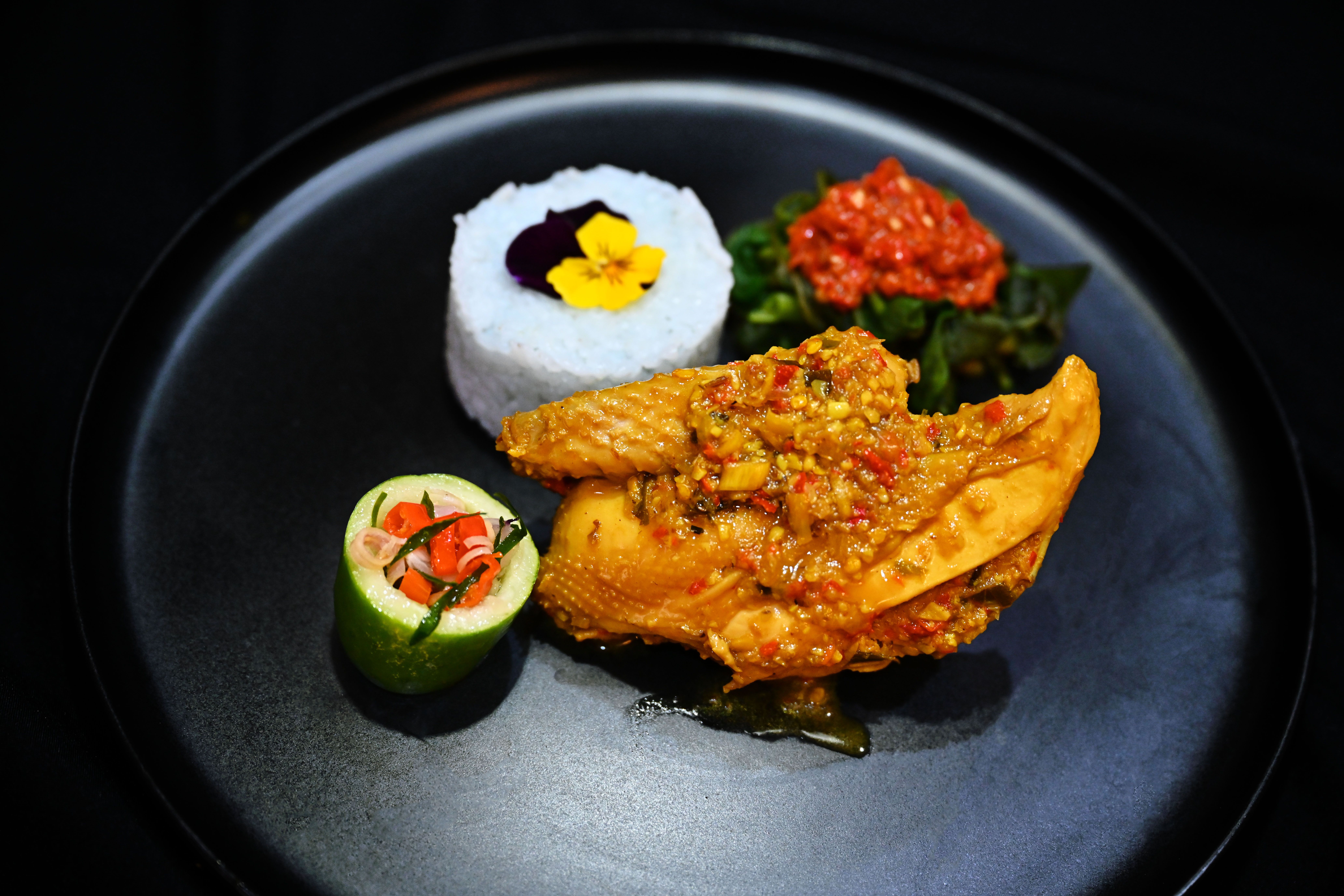
Ayam Betutu
The diets react (see scores below)
Common Ingredients
- chicken
- chili
- garlic
- shallots
- turmeric
- galangal
- candlenuts
- lemongrass
- kaffir lime leaves
- shrimp paste
Specific recipes may vary.
Incompatible with 3 of 11 diets
Diet Ratings
Ayam Betutu is a Balinese slow-cooked spiced chicken dish whose core ingredients are highly keto-compatible. Chicken is an excellent protein source, and the spice paste (bumbu) consists of low-carb aromatics: chili, garlic, shallots, turmeric, galangal, lemongrass, kaffir lime leaves, and shrimp paste. Candlenuts add some fat and minimal net carbs. The aggregate carb contribution from the spice paste per serving is modest, likely 5–10g net carbs depending on portion size of shallots and chili. No grains, sugars, or starchy vegetables are present. This dish fits comfortably within keto macros for a standard serving.
Some stricter keto practitioners flag shallots and candlenuts as borderline ingredients — shallots carry more carbs than regular onions, and some strict protocols avoid them in quantity. Those following very low-carb clinical keto (under 20g/day) may need to track the spice paste carefully or reduce shallot amounts.
Ayam Betutu is a traditional Balinese/Indonesian dish that is fundamentally incompatible with a vegan diet. It contains two distinct animal-derived ingredients: chicken (poultry, a direct animal product) and shrimp paste (terasi/belacan, made from fermented shrimp — a seafood product). Both are clear disqualifiers under any definition of veganism. The aromatic spice paste (bumbu) components — chili, garlic, shallots, turmeric, galangal, candlenuts, lemongrass, and kaffir lime leaves — are all plant-based, but they do not offset the presence of multiple animal ingredients in this dish.
Ayam Betutu is a Balinese slow-cooked spiced chicken dish. Most ingredients are clearly paleo-approved: chicken (unprocessed protein), chili, garlic, shallots, turmeric, galangal, lemongrass, and kaffir lime leaves are all whole plant foods available to hunter-gatherers. Candlenuts (Aleurites moluccanus) are a nut used as a spice/thickener and are generally paleo-compatible. The primary concern is shrimp paste (terasi/belacan), which is a fermented, processed condiment typically containing added salt and sometimes preservatives — making it a processed food that falls outside strict paleo guidelines. Salt is also commonly added during preparation. The dish's underlying concept is excellent for paleo, but the shrimp paste and likely added salt push it into caution territory.
Some paleo practitioners, particularly those following a more ancestral or primal framework (e.g., Mark Sisson's Primal Blueprint), would accept minimally fermented seafood pastes as a traditional, nutrient-dense condiment analogous to ancient fish sauces, and may overlook small amounts of added salt as inconsequential to overall health outcomes.
Ayam Betutu is a Balinese slow-cooked chicken dish featuring a rich blend of aromatic spices and herbs. The primary protein is chicken, which falls into the 'moderate' category under Mediterranean diet principles — acceptable but not a cornerstone food. The spice base (chili, garlic, shallots, turmeric, galangal, lemongrass, kaffir lime leaves) is overwhelmingly plant-based and actually aligns well with Mediterranean values emphasizing herbs, aromatics, and anti-inflammatory compounds. Garlic and shallots are Mediterranean staples. However, shrimp paste (terasi) introduces a fermented, high-sodium, non-traditional Mediterranean ingredient, and candlenuts are a saturated fat source not common in Mediterranean cooking. The dish lacks olive oil as the fat base, and the overall flavor profile is non-Mediterranean. It is a whole-food, minimally processed preparation with no refined grains or added sugars, which counts in its favor. On balance, this is an acceptable occasional dish but not a Mediterranean staple.
Some modern Mediterranean diet interpreters take a broader view, emphasizing the diet's anti-inflammatory and whole-food principles over strict geographic origins. From this perspective, Ayam Betutu's dense use of turmeric, garlic, and fresh aromatics could be seen as highly compatible — analogous to herb-rich Mediterranean poultry dishes. However, traditional Mediterranean diet authorities (e.g., Oldways guidelines) would note the absence of olive oil and the presence of shrimp paste as departures from core principles.
Ayam Betutu is a heavily spiced Indonesian dish that is fundamentally incompatible with the carnivore diet. While the base protein is chicken (an accepted animal product for most carnivore practitioners), the dish is defined by an extensive spice paste containing numerous plant-derived ingredients: chili, garlic, shallots, turmeric, galangal, candlenuts, lemongrass, and kaffir lime leaves. Shrimp paste is the only other animal-derived ingredient. The entire flavor identity and preparation of this dish revolves around plant compounds, anti-nutrients, and spices that are explicitly excluded on a carnivore diet. This is not a matter of trace seasoning — these plant ingredients constitute the core of the dish and cannot be separated from it. Even the most liberal carnivore practitioners who allow occasional spices would not sanction a dish where plant material is the dominant component by design.
Ayam Betutu is a traditional Balinese slow-cooked spiced chicken dish. Most of the ingredients — chicken, chili, garlic, shallots, turmeric, galangal, lemongrass, and kaffir lime leaves — are fully Whole30 compliant. Candlenuts (kemiri) are a tree nut used as a thickening agent and are Whole30 compatible. The key concern is shrimp paste (terasi/belacan), which is commonly fermented with added salt and sometimes sugar, and may contain sulfites or other preservatives depending on the brand. While sulfites and MSG are no longer excluded per 2024 Whole30 rule changes, some commercial shrimp paste products contain added sugar, which remains excluded. Label reading is essential. If using a pure, sugar-free shrimp paste (just fermented shrimp and salt), the dish would be fully compliant and could score higher.
Some Whole30 practitioners flag fermented shrimp paste categorically due to its highly processed nature and potential undisclosed additives, arguing it conflicts with the whole-food philosophy even when sugar-free. However, the official Whole30 guidelines do not explicitly exclude shrimp paste, and compliant versions without added sugar would be technically approved.
Ayam Betutu is a traditional Balinese spiced chicken dish that, despite having a low-FODMAP protein base (chicken), contains multiple high-FODMAP ingredients that make it unsuitable during the elimination phase. Garlic is one of the highest-FODMAP foods tested by Monash University, rich in fructans, and is typically used in significant quantities in this dish. Shallots are also high in fructans and are a core component of the spice paste (base genep). Shrimp paste (terasi/belacan) contains fermented shrimp and often onion derivatives, and while some fermented seafood pastes have been tested as low-FODMAP, the specific formulation and quantity used in Ayam Betutu makes it a risk. The remaining ingredients — chicken, chili, turmeric, galangal, lemongrass, kaffir lime leaves, and candlenuts — are generally low-FODMAP. However, the combination of garlic and shallots as foundational paste ingredients makes this dish clearly high-FODMAP with no practical way to enjoy it at a standard restaurant or home serving during elimination.
Ayam Betutu is a Balinese slow-cooked spiced chicken dish with a largely DASH-compatible base: lean chicken provides quality protein, and aromatics like turmeric, garlic, shallots, galangal, lemongrass, and kaffir lime leaves contribute anti-inflammatory compounds and micronutrients with negligible saturated fat or sodium. However, the inclusion of shrimp paste (terasi/belacan) is the primary concern — this fermented condiment is very high in sodium, and even small quantities can add several hundred milligrams per serving, pushing the dish toward the upper limits of DASH sodium targets. Candlenuts add modest fat but are not a major concern. The dish is not inherently avoid-level, but sodium control depends heavily on the amount of shrimp paste used and whether additional salt is added during cooking. Prepared with minimal shrimp paste and no added salt, it could approach an approve rating; as typically made in restaurants or traditional recipes with generous shrimp paste, it warrants caution.
NIH DASH guidelines explicitly flag high-sodium fermented condiments like shrimp paste as problematic for sodium targets. However, some DASH-oriented clinicians note that when shrimp paste is used in small culinary quantities (as a flavor base rather than a main ingredient), the per-serving sodium contribution may be manageable within a daily 2,300mg budget, and the dish's overall nutrient profile — lean protein, anti-inflammatory spices, no added sugar or saturated fat — aligns well with DASH principles.
Ayam Betutu is a Balinese spiced chicken dish whose core ingredient — chicken — is an ideal Zone protein source (lean, ~7g protein per block-serving). The spice paste (bumbu) is composed almost entirely of anti-inflammatory, low-glycemic aromatics: turmeric, galangal, lemongrass, kaffir lime leaves, garlic, shallots, and chili. These align well with Sears' polyphenol and anti-inflammatory emphasis in later Zone writings. Candlenuts contribute some fat (primarily unsaturated) and a small caloric carb load, but in typical culinary quantities they are not problematic. Shrimp paste adds negligible macros. The primary Zone challenge is that traditional preparation often involves skin-on chicken and a significant amount of coconut oil or rendered fat for slow-cooking, which raises saturated fat content beyond Zone ideals. If prepared with skinless chicken and minimal added fat (or olive oil), the dish fits Zone blocks well: protein block from chicken, fat block from candlenuts/cooking oil, and very low carb load from the spice paste means it needs Zone-favorable vegetable side carbs to complete the 40/30/30 ratio. Overall a Zone-friendly dish with preparation-dependent caveats.
Traditional Ayam Betutu is often cooked whole (skin-on) or wrapped and slow-roasted with coconut-based fat, which introduces saturated fat levels that early Zone protocol (Enter the Zone) would flag as unfavorable. Dr. Sears' later anti-inflammatory framework is more permissive of some saturated fat in context, but a strict early-Zone reading would score this lower (caution/5-6) unless prepared with skinless chicken and no coconut oil. Additionally, candlenuts are high in fat and some practitioners would need to account for them carefully within fat blocks.
Ayam Betutu is a Balinese spiced chicken dish with an exceptionally rich anti-inflammatory spice profile. The base spice paste (bumbu) is dominated by turmeric (curcumin — one of the most studied anti-inflammatory compounds), garlic (allicin, quercetin), shallots (quercetin, polyphenols), chili (capsaicin — reduces CRP and NF-κB signaling), galangal (a close relative of ginger, with similar gingerol-like compounds and demonstrated anti-inflammatory activity), lemongrass (citral, flavonoids), and kaffir lime leaves (flavonoids, antioxidants). These collectively represent nearly the entire roster of emphasized herbs and spices in anti-inflammatory frameworks. Candlenuts contribute some fat (omega-6 present but in modest cooking quantities), and shrimp paste adds umami depth with minimal inflammatory concern at typical culinary doses. The primary protein is chicken, which falls squarely in the 'moderate/lean poultry' category — neither a strong pro-inflammatory nor anti-inflammatory driver. The biggest variables are cooking method (traditionally slow-cooked or wrapped and steamed/roasted, which is preferable to deep-frying) and portion context. Overall, this dish is a standout example of anti-inflammatory spice use embedded in traditional cuisine.
Shrimp paste (terasi/belacan) is a fermented, high-sodium, processed ingredient that some anti-inflammatory practitioners flag due to its additive and sodium content — strict anti-inflammatory protocols may caution against regularly consuming fermented seafood pastes. Additionally, candlenuts have a relatively high omega-6 fat content, which purists applying strict omega-6 limits might note, though the quantities used in cooking are small.
Ayam Betutu is a Balinese spiced chicken dish with a strong protein foundation (chicken), which aligns well with GLP-1 dietary priorities. The spice paste (bumbu) includes turmeric and galangal, which are anti-inflammatory and generally well-tolerated, and aromatics like lemongrass, kaffir lime leaves, garlic, and shallots add flavor with minimal caloric cost. However, two ingredients raise meaningful concerns for GLP-1 patients: chili (present in significant quantity in traditional Betutu, which is known for being quite spicy) and candlenuts (high in fat, used as a thickening agent). The spice level is the primary concern — Ayam Betutu is traditionally one of the spicier Indonesian dishes, and capsaicin-heavy preparations can worsen GLP-1 side effects including reflux, nausea, and gastric discomfort, given already-slowed gastric emptying. Shrimp paste (terasi) is high in sodium, which is a secondary concern. The chicken itself — depending on whether it uses whole chicken with skin or skinless cuts — adds a fat variable. A modified version using skinless chicken breast, reduced chili, and minimal candlenuts would score significantly higher (7-8). As traditionally prepared, the spice level and fat from candlenuts and skin-on chicken push this into caution territory.
Some GLP-1 nutrition practitioners note that spice tolerance is highly individual — patients who regularly consumed spicy food before starting medication may tolerate moderate heat without worsening GI symptoms, and the anti-inflammatory properties of turmeric and galangal may offer modest digestive benefits. Others emphasize that the slowed gastric emptying caused by GLP-1 medications meaningfully lowers spice tolerance even in previously tolerant patients, making traditional Betutu-level heat a consistent GI risk.
*See how scores were generated at our methodology page.
Nutritional profile
Six traits that cut across every diet.
Fiber & Plants
How much whole-plant food and fiber it delivers.
Healthy Fats
The quality of its fats (unsaturated, omega-3).
Whole / Unprocessed
How close it is to its natural, unprocessed form.
Gut Gentle
How easy it is on digestion (low FODMAP, few irritants).
Low Glycemic
How little it spikes your blood sugar.
Protein Density
How much protein it packs per calorie.
Controversy Index
Higher controversy = more disagreement between diets.
Diet-Specific Tips
 Keto — 8/10
View tips
- Chicken is a clean, moderate-fat keto protein
- Spice paste is predominantly low-carb aromatics with no added sugar
- Shallots contribute marginally more net carbs than other alliums — portion awareness advised
- Candlenuts are low in net carbs and add beneficial fat
- No grains, starches, or sugars in the traditional recipe
- Shrimp paste is keto-friendly and adds umami without carbs
- Net carbs per serving estimated at 5–10g, fitting within daily keto limits
 Paleo — 5/10
View tips
- Chicken is a fully paleo-approved protein
- Spices and aromatics (chili, garlic, shallots, turmeric, galangal, lemongrass, kaffir lime leaves) are all paleo-friendly
- Candlenuts are a paleo-compatible nut used as a thickening spice
- Shrimp paste (terasi) is a fermented, processed condiment with added salt — a strict paleo concern
- Added salt during cooking is technically excluded under strict paleo rules
- The dish's core concept is ancestral and whole-food based, making it easily adaptable to full paleo compliance
 Mediterranean — 5/10
View tips
- Chicken is acceptable in moderation under Mediterranean guidelines
- Rich anti-inflammatory spice profile (turmeric, garlic, shallots, chili) aligns with Mediterranean values
- Shrimp paste is a high-sodium, non-Mediterranean fermented ingredient
- Candlenuts are a saturated fat source, unlike Mediterranean nuts (walnuts, almonds)
- No olive oil as cooking fat — key Mediterranean principle absent
- Whole-food, unprocessed preparation with no refined grains or added sugars
- Non-Mediterranean culinary tradition but structurally similar to herb-marinated poultry dishes
 Whole30 — 5/10
View tips
- Shrimp paste (terasi) often contains added sugar — label verification required
- Candlenuts are a compliant tree nut used as a thickener
- All spices and aromatics (turmeric, galangal, lemongrass, kaffir lime, chili, garlic, shallots) are fully compliant
- Chicken as primary protein is fully compliant
- MSG and sulfites no longer excluded per 2024 Whole30 rule update
- Compliant versions of this dish are achievable with careful ingredient sourcing
 DASH — 5/10
View tips
- Lean chicken is a DASH-approved protein source
- Shrimp paste (terasi) is high in sodium and the primary DASH concern
- Rich in anti-inflammatory aromatics: turmeric, galangal, lemongrass, garlic
- No added sugars, tropical oils, or significant saturated fat
- Sodium content varies significantly by recipe — restaurant versions likely higher
- Low-sodium adaptation (reduced or omitted shrimp paste) would score higher
 Zone — 7/10
View tips
- Chicken is a top-tier Zone protein source (lean, block-friendly at ~7g protein per oz)
- Spice blend (turmeric, galangal, chili, lemongrass) is rich in polyphenols and anti-inflammatory compounds — aligns with Sears' later Zone writings
- Very low glycemic load from spice ingredients; minimal carbohydrate contribution
- Candlenuts add primarily unsaturated fat and minimal carbs — manageable within fat blocks
- Preparation method is critical: skin-on + coconut oil raises saturated fat significantly and reduces Zone compatibility
- Dish lacks carbohydrate component — must be paired with low-GI vegetables or fruit to achieve 40/30/30 ratio
- Shrimp paste is negligible macro-wise but adds sodium; not a Zone concern per se
 Anti-Inflammatory — 8/10
View tips
- Turmeric: high curcumin content, one of the best-studied anti-inflammatory spices
- Galangal: anti-inflammatory compounds similar to ginger, with documented NF-κB inhibition
- Garlic and shallots: allicin, quercetin, polyphenols with immune-modulating effects
- Chili: capsaicin reduces inflammatory cytokines (CRP, IL-6, TNF-α)
- Lemongrass and kaffir lime leaves: flavonoids and antioxidants
- Chicken (lean poultry): neutral to mildly favorable protein source
- Shrimp paste: fermented and high-sodium — minor concern at culinary doses
- Candlenuts: modest omega-6 content, low concern at typical quantities
- Cooking method matters: steamed/roasted preferred over deep-fried preparations
 GLP-1 Friendly — 5/10
View tips
- Good lean protein source if skinless chicken breast is used
- Traditionally very spicy — chili load may worsen GLP-1 GI side effects (nausea, reflux)
- Candlenuts are high in fat and increase overall fat content of the dish
- Shrimp paste adds significant sodium
- Anti-inflammatory spices (turmeric, galangal) are generally beneficial
- Skin-on whole chicken (traditional preparation) increases saturated fat
- Low fiber — no vegetables or legumes in base recipe
- Portion-sensitive: small serving of a modified, lower-spice version is more GLP-1 compatible