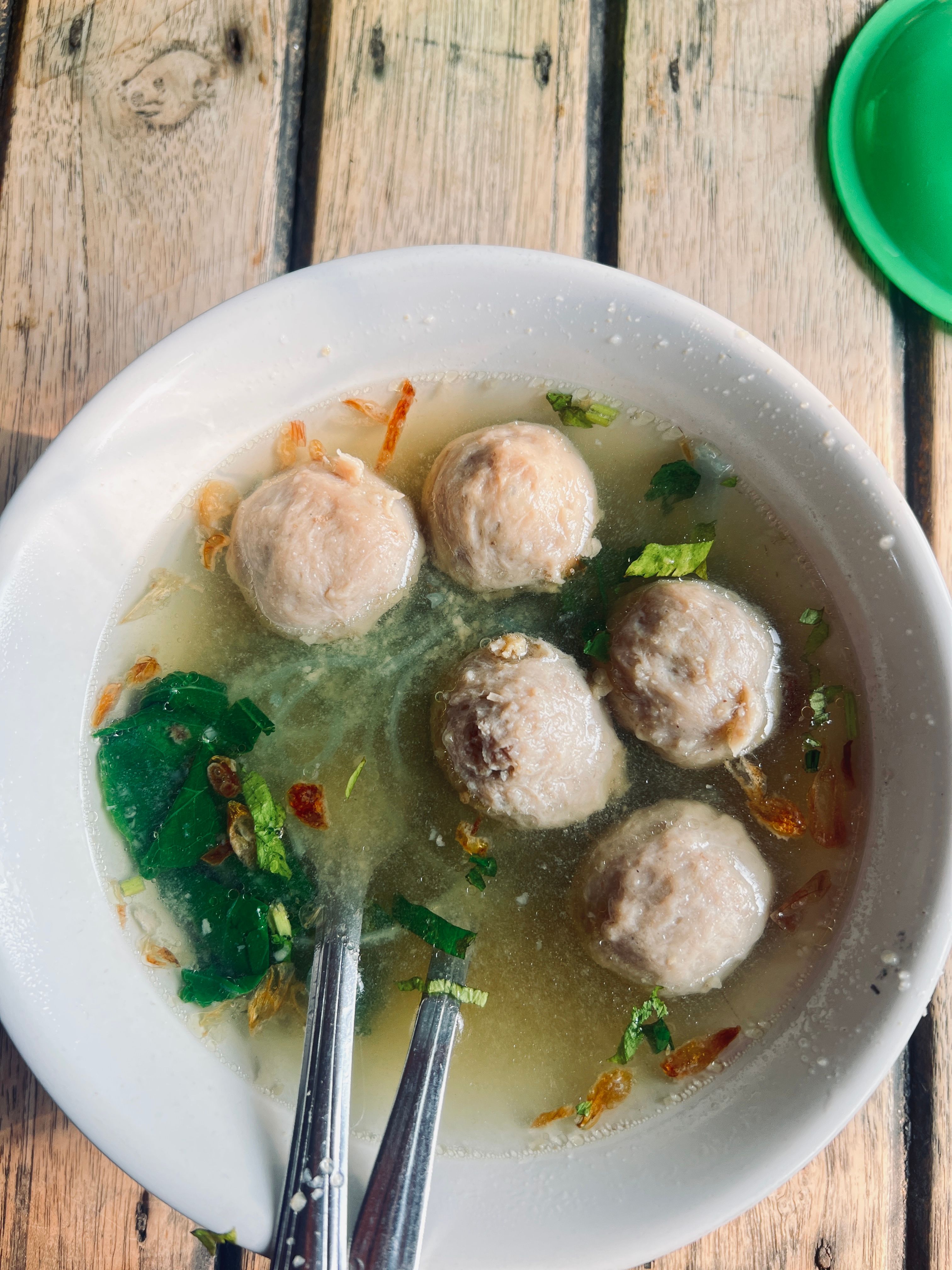
The diets react (see scores below)
Common Ingredients
- beef
- tapioca starch
- garlic
- yellow noodles
- vermicelli
- bok choy
- fried shallots
- celery
- beef broth
- white pepper
Specific recipes may vary.
Incompatible with 7 of 11 diets
Diet Ratings
Bakso is fundamentally incompatible with a ketogenic diet in its traditional form. The dish contains multiple high-carb ingredients: tapioca starch is used as a binder in the meatballs and is a pure starch with virtually no fiber, contributing significant net carbs. Yellow noodles (wheat-based) and vermicelli (rice or mung bean-based) are both grain-derived and extremely high in net carbs, easily pushing a single serving well past the 20-50g daily limit on their own. While the beef broth, beef protein, bok choy, celery, garlic, white pepper, and fried shallots are either keto-friendly or low-impact, the core structural components — tapioca-bound meatballs and two types of noodles — make this dish a clear keto violation. A heavily modified version omitting all noodles and using a low-carb binder substitute could theoretically be adapted, but the standard dish as served cannot fit ketosis.
Bakso is an Indonesian meatball soup that is fundamentally built on animal products. The dish contains beef (in the meatballs themselves), beef broth (animal-derived stock), and yellow noodles which commonly contain egg in their traditional preparation. Multiple core ingredients are animal-derived, making this dish clearly incompatible with a vegan diet. There is no ambiguity here — this is an animal-product-heavy dish by definition.
Bakso is an Indonesian meatball soup that contains multiple non-paleo ingredients. Yellow noodles are wheat-based (a grain), vermicelli is typically made from rice or mung beans (grain/legume), and tapioca starch — while less problematic than wheat — is a highly processed starch used as a binder in the meatballs. The combination of wheat noodles and grain-based vermicelli alone disqualifies this dish under any paleo interpretation. The base components (beef, garlic, bok choy, celery, beef broth, white pepper) are paleo-friendly, but the dish as traditionally prepared cannot be considered paleo-compatible.
Bakso significantly conflicts with Mediterranean diet principles on multiple fronts. The primary protein is beef, which the Mediterranean diet limits to only a few times per month. The meatballs are bound with tapioca starch, a refined starch with no nutritional value. The dish is served with yellow noodles (refined wheat) and vermicelli (refined starch), both of which are processed, refined grains lacking fiber and nutrients. Fried shallots add additional processed/fried components. While there are some positive elements — bok choy, celery, garlic, and broth provide vegetables and aromatics — these are insufficient to offset the core issues: red meat as the primary protein, refined starches as the bulk of the dish, and no olive oil or legumes present. This dish is fundamentally incompatible with Mediterranean dietary patterns.
Bakso is a Indonesian meatball soup that is fundamentally incompatible with the carnivore diet. While the beef meatballs and beef broth are carnivore-approved components, the dish contains numerous plant-based ingredients that are strictly excluded: tapioca starch (a plant-derived binder mixed directly into the meatballs), yellow noodles, vermicelli (both grain/starch-based), bok choy (vegetable), fried shallots (plant, often fried in plant oil), and celery. Additionally, garlic and white pepper are plant-derived spices. The tapioca starch is particularly problematic as it is incorporated into the meatballs themselves, making the primary protein source non-carnivore. This is not a dish that can be easily modified — the starch is structural to the meatball's texture, and the noodles and vegetables are central to the dish's identity.
Bakso contains multiple Whole30-excluded ingredients. Yellow noodles are grain-based (typically wheat flour), vermicelli are also grain-based noodles (usually rice or mung bean), and tapioca starch — while not a grain — is used as a binder in the meatballs in a way that recreates a processed food texture. Most critically, yellow noodles (wheat) and vermicelli (rice or wheat) are grains and explicitly excluded. The noodle components alone disqualify this dish entirely. Fried shallots are also commonly coated in wheat flour before frying, adding another likely grain violation. The soup base itself (beef, broth, bok choy, celery, garlic, white pepper) would otherwise be compliant, but the dish as traditionally prepared cannot be made Whole30-compatible without fundamental restructuring.
Bakso contains multiple high-FODMAP ingredients that make it unsuitable during the elimination phase. Garlic is one of the highest-FODMAP foods tested by Monash University, containing significant fructans even in tiny amounts. Yellow noodles are typically wheat-based (containing fructans), making them high-FODMAP. Fried shallots are also high in fructans. Beef broth prepared with onion or garlic (as is traditional in bakso) would carry FODMAPs in solution. The combination of garlic, wheat-based yellow noodles, and fried shallots alone is enough to render this dish high-FODMAP. Some ingredients are individually low-FODMAP (beef, tapioca starch, vermicelli if rice-based, bok choy at standard serves, celery at small amounts, white pepper), but the high-FODMAP components are central to the dish and not easily omitted.
Bakso presents a mixed DASH profile. On the positive side, it contains DASH-friendly vegetables (bok choy, celery), garlic, and the broth-based format aligns with lower-fat cooking. However, several concerns arise: (1) Beef is a red meat that DASH recommends limiting — the meatball form also incorporates tapioca starch and may include additives that raise sodium; (2) Beef broth is typically high in sodium, often contributing 800–1,200mg per serving, which alone can approach or exceed the low-sodium DASH threshold of 1,500mg/day; (3) Yellow noodles (commonly made from refined wheat flour with added salt and sometimes lye water) and vermicelli add refined carbohydrates with minimal fiber; (4) Fried shallots add small amounts of saturated fat and calories. The dish is not inherently high in saturated fat, but the sodium content from broth, noodles, and processed meatballs is a significant concern for DASH adherence. Modifications such as low-sodium broth, smaller beef portions, and whole-grain noodles would improve compatibility.
NIH DASH guidelines clearly limit red meat and high-sodium soups, placing standard bakso in the caution-to-avoid range. However, some DASH-oriented clinicians note that when prepared with low-sodium broth, modest beef portions, and abundant vegetables, the dish's overall nutrient profile — rich in potassium from bok choy and garlic — may be acceptable within a broader DASH-compliant meal pattern.
Bakso is an Indonesian meatball soup that presents a mixed Zone Diet profile. The beef meatballs (primary protein) are a moderate protein source, though ground beef with tapioca starch binders is fattier and less ideal than skinless chicken or fish. Tapioca starch is a high-glycemic, low-fiber carbohydrate used as a binder in the meatballs, adding unfavorable carb load. The noodle components — yellow noodles (wheat-based) and vermicelli (rice-based) — are both high-glycemic carbohydrates that Zone classifies as 'unfavorable,' making carb block management challenging. On the positive side, bok choy, celery, and garlic are Zone-favorable low-glycemic vegetables, and beef broth provides collagen and minerals with minimal glycemic impact. Fried shallots add some saturated fat and a small glycemic spike. As a dish, Bakso can be modified for Zone compatibility by dramatically reducing the noodles, increasing the bok choy portion, and limiting meatball quantity to hit ~25g protein — but as traditionally served, the noodle-heavy carbohydrate profile and high-GI carb sources make it difficult to achieve the 40/30/30 ratio without significant modification.
Some Zone practitioners note that soup-based dishes naturally moderate glycemic impact through their liquid volume and eating pace, and that a small portion of noodles combined with the protein from meatballs and vegetables from bok choy can approximate Zone blocks if portions are carefully controlled. Dr. Sears' later writings also emphasize anti-inflammatory polyphenols — garlic and the broth-based format do offer some benefit in this regard.
Bakso is an Indonesian meatball soup with a mixed anti-inflammatory profile. On the positive side, it contains bok choy (a cruciferous vegetable rich in antioxidants and vitamin K), garlic (anti-inflammatory allicin compounds), celery (flavonoids, antioxidants), and white pepper (piperine, similar to black pepper). The broth-based format is also preferable to fried preparations. However, the dish has several concerning elements from an anti-inflammatory standpoint: beef is the primary protein, which the anti-inflammatory framework recommends limiting due to saturated fat content and arachidonic acid. The meatballs are typically made with a high ratio of tapioca starch (refined carbohydrate, minimal nutritional value). Yellow noodles are refined wheat-based and represent additional refined carbohydrates, further elevating the glycemic load. Vermicelli adds yet another refined starch component. Fried shallots, while flavorful, are typically deep-fried in vegetable or palm oil, adding potential pro-inflammatory fats. The overall carbohydrate-heavy, beef-forward profile with minimal omega-3s or polyphenol-rich vegetables makes this a dish best consumed occasionally rather than regularly on an anti-inflammatory diet. Reducing noodle portions, increasing bok choy, and sourcing leaner or grass-fed beef would improve the profile meaningfully.
Some anti-inflammatory nutrition perspectives (including Dr. Weil's broader Mediterranean-influenced approach) would note that moderate beef consumption in a vegetable-rich broth context is acceptable, and that the garlic and bok choy provide meaningful anti-inflammatory benefit. Critics of strict beef avoidance also point out that grass-fed beef contains higher omega-3 and CLA content, making sourcing a key variable that shifts the verdict.
Bakso is an Indonesian meatball soup with a mixed nutritional profile for GLP-1 patients. On the positive side, it is a warm broth-based soup — easy to digest, hydrating, and small-portion friendly — which aligns well with GLP-1 dietary principles. The beef meatballs provide meaningful protein, and bok choy adds fiber and micronutrients. However, several factors limit its rating. First, beef is a moderate-to-high saturated fat protein source depending on the cut used; traditional bakso uses ground beef that often includes fattier trims, making it less ideal than lean proteins like chicken breast or fish. Second, the dish is carbohydrate-heavy: yellow noodles, vermicelli, and tapioca starch (used as a binder in the meatballs) together create a high-refined-carbohydrate load with low fiber contribution. Third, fried shallots add unnecessary fat and are a processed topping that slightly worsens the dish's overall profile. The broth base and vegetables are genuine positives. A modified version — smaller noodle portion, leaner beef, skipping fried shallots — would score higher. As served in a typical restaurant portion, the carbohydrate load and saturated fat from beef are the primary concerns for GLP-1 patients.
Some GLP-1-focused dietitians would view bakso more favorably as a warm, broth-based soup that is naturally portion-controlled and easy on the stomach, arguing the protein from beef meatballs is adequate and the GI tolerance profile is generally good. Others would flag the refined carbohydrate density from dual noodle sources and tapioca as meaningfully counterproductive when caloric space is limited, and would flag saturated fat variability in ground beef as a reason for consistent caution.
*See how scores were generated at our methodology page.
Nutritional profile
Six traits that cut across every diet.
Fiber & Plants
How much whole-plant food and fiber it delivers.
Healthy Fats
The quality of its fats (unsaturated, omega-3).
Whole / Unprocessed
How close it is to its natural, unprocessed form.
Gut Gentle
How easy it is on digestion (low FODMAP, few irritants).
Low Glycemic
How little it spikes your blood sugar.
Protein Density
How much protein it packs per calorie.
Controversy Index
Higher controversy = more disagreement between diets.
Diet-Specific Tips
 DASH — 4/10
View tips
- High sodium risk from beef broth — standard broth can contribute 800–1,200mg sodium per bowl
- Red meat (beef) is limited on DASH — prefer poultry or fish
- Bok choy and celery are DASH-positive vegetables providing potassium and fiber
- Yellow noodles and vermicelli are refined carbohydrates with minimal fiber — not emphasized on DASH
- Fried shallots add small amounts of saturated fat
- Tapioca starch in meatballs offers minimal nutritional value and may contain added sodium
- Low-sodium broth substitution would significantly improve DASH compatibility
 Zone — 5/10
View tips
- Yellow noodles and vermicelli are high-glycemic 'unfavorable' carbohydrates per Zone methodology
- Tapioca starch binder adds additional high-GI carb load to meatballs
- Beef protein source is acceptable but fattier than ideal Zone proteins like chicken or fish
- Bok choy, celery, and garlic are Zone-favorable low-glycemic vegetables
- Beef broth base is Zone-neutral and filling
- Dish requires significant modification (reduced noodles, increased vegetables) to approach 40/30/30 ratio
- Fried shallots introduce small saturated fat and glycemic concerns
- Traditional serving size is noodle-dominant, skewing carb ratio unfavorably
 Anti-Inflammatory — 4/10
View tips
- Beef as primary protein — anti-inflammatory diet recommends limiting red meat due to saturated fat and arachidonic acid
- Bok choy and garlic provide meaningful anti-inflammatory antioxidants and phytonutrients
- High refined carbohydrate load from tapioca starch, yellow noodles, and vermicelli — pro-inflammatory glycemic impact
- Fried shallots add potentially pro-inflammatory oils
- Broth-based soup format is preferable to fried or cream-based preparations
- White pepper contains piperine, a mild anti-inflammatory compound
- Minimal omega-3 fatty acids or polyphenol-rich ingredients
- Celery contributes flavonoids (apigenin, luteolin) with anti-inflammatory properties
 GLP-1 Friendly — 5/10
View tips
- Beef meatballs provide moderate protein but come with saturated fat risk depending on fat content of ground beef used
- Dual noodle sources (yellow noodles and vermicelli) plus tapioca starch create a high refined carbohydrate load with minimal fiber
- Broth base is hydrating and easy to digest — well-suited to GLP-1 gastric slowing
- Bok choy and celery add fiber and micronutrients but volume is typically small in this dish
- Fried shallots add unnecessary saturated or processed fat as a topping
- Overall fiber content is low relative to carbohydrate load
- Portion-sensitive: smaller meatball-and-broth servings with reduced noodles would improve the rating meaningfully