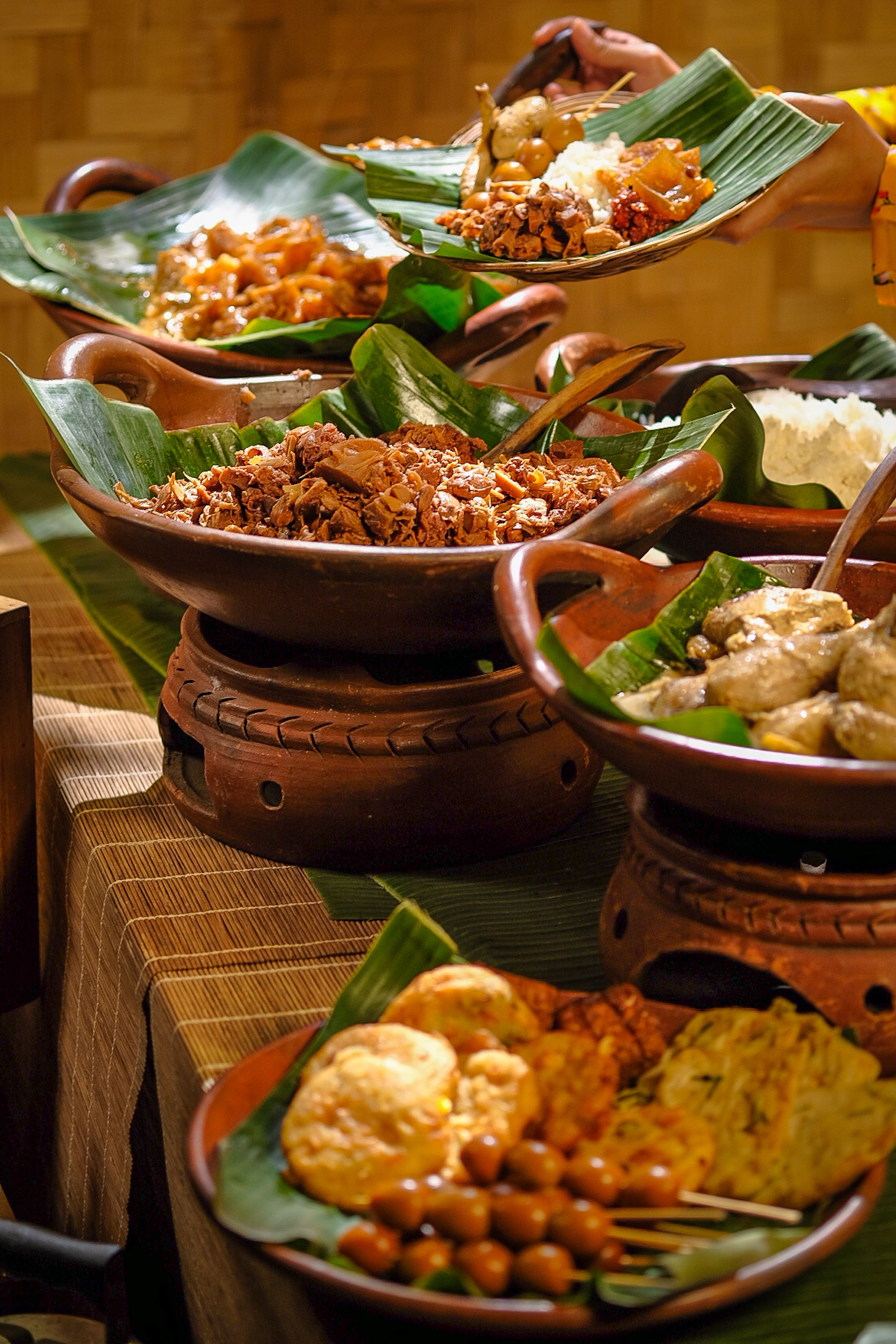
The diets react (see scores below)
Common Ingredients
- young jackfruit
- coconut milk
- palm sugar
- teak leaves
- garlic
- shallots
- galangal
- bay leaves
- coriander
- tamarind
Specific recipes may vary.
Incompatible with 7 of 11 diets
Diet Ratings
Gudeg is a traditional Javanese dish that is fundamentally incompatible with ketogenic diets. The two primary concerns are young jackfruit and palm sugar. Young jackfruit, while lower in carbs than ripe jackfruit, still contains significant net carbs (approximately 9-11g per 100g), and gudeg is served in substantial portions. More critically, palm sugar is a core ingredient used in large quantities — it is a direct added sugar that will spike blood glucose and break ketosis immediately. A typical serving of gudeg can easily contain 40-60g of net carbs, far exceeding the daily keto limit on its own. While coconut milk is keto-friendly and the aromatics (garlic, shallots, galangal, bay leaves, coriander) are used in small amounts, they cannot offset the carbohydrate load from the jackfruit and palm sugar. The dish as traditionally prepared is not modifiable in any meaningful way while retaining its character.
Gudeg as listed contains exclusively plant-based ingredients: young jackfruit (a well-established meat alternative), coconut milk, palm sugar, teak leaves, and a range of aromatics and spices. No animal products are present in this ingredient list, making it technically vegan-compliant. However, two factors push this toward 'caution' with medium confidence. First, traditional Gudeg — particularly the Yogyakarta 'basah' (wet) style — is very commonly served with or cooked alongside krecek (spiced cow skin/crackling) and hard-boiled eggs, meaning restaurant or home versions frequently contain animal products not listed here. Second, palm sugar production and palm oil (a derivative of the same crop) raise ethical concerns among many vegans due to deforestation and displacement of wildlife, and some ethical vegans choose to avoid palm products on these grounds. The version as listed, however, is fully plant-based. The jackfruit itself is a whole food and nutritionally substantive as a primary ingredient.
Some ethical vegans and environmental vegans flag palm sugar (from the Arenga or Borassus palm, sometimes confused with oil palm cultivation zones) as ethically contested, arguing that supporting palm agriculture — even indirectly — conflicts with vegan values around minimizing harm to ecosystems and animals. This position is held by a minority; most vegan organizations do not classify palm products as non-vegan since they are plant-derived.
Gudeg is a traditional Javanese dish with several paleo-compatible ingredients — young jackfruit, garlic, shallots, galangal, bay leaves, coriander, and tamarind are all whole, unprocessed foods available to hunter-gatherers. Coconut milk is broadly accepted in the paleo community. However, two ingredients push this dish into caution territory: palm sugar is a natural sweetener that, while less refined than white sugar, is still a concentrated added sugar debated in paleo circles; and teak leaves, while a traditional cooking ingredient used for color, are not a standard food item evaluated in mainstream paleo frameworks. The combination of palm sugar as a central flavoring ingredient — Gudeg is notably sweet — means this dish contains a meaningful amount of added natural sugar, which most paleo authorities accept only in moderation. There are no grains, legumes, dairy, or seed oils present, which is a positive.
Strict Cordain-school paleo would flag palm sugar as an added refined sugar to avoid entirely, effectively pushing this dish toward 'avoid.' Conversely, more permissive paleo practitioners (e.g., Mark Sisson's Primal Blueprint) treat minimally processed natural sugars like palm sugar as acceptable in moderation, which could support a higher score within caution.
Gudeg features young jackfruit as its plant-based centerpiece, which aligns well with Mediterranean emphasis on vegetables and whole plant foods. The aromatic spices (garlic, shallots, galangal, bay leaves, coriander, tamarind) are broadly compatible with Mediterranean flavor principles. However, two ingredients raise concerns: coconut milk is high in saturated fat and not traditional to the Mediterranean diet, where olive oil is the canonical fat source; and palm sugar adds significant amounts of refined/added sugar, which the Mediterranean diet minimizes. The dish has no red meat, no processed ingredients, and is plant-forward, which are positives, but the combination of coconut milk and palm sugar meaningfully departs from Mediterranean dietary principles, pushing it into 'caution' territory rather than approval.
Some modern Mediterranean diet interpreters take a broader 'plant-forward, whole food' view and would approve the jackfruit and spice base as Mediterranean-compatible, arguing that occasional use of coconut milk as a whole-food plant fat is acceptable — similar to how nuts and seeds are permitted despite their saturated fat content. However, mainstream Mediterranean diet authorities (e.g., Oldways, PREDIMED researchers) consistently favor olive oil and would not endorse coconut milk as a substitute fat source.
Gudeg is an entirely plant-based Indonesian dish with zero animal-derived ingredients. Every single component — young jackfruit (the primary base), coconut milk (plant fat), palm sugar (plant-derived sweetener), teak leaves, garlic, shallots, galangal, bay leaves, coriander, and tamarind — is excluded on the carnivore diet. There is no animal protein, no animal fat, and no animal product of any kind. This dish is the antithesis of carnivore eating: it is a sweet, starchy, heavily spiced plant dish. It would be rejected under every tier of carnivore, from the most liberal 'animal-based' approach all the way to the strict Lion Diet.
Gudeg contains palm sugar, which is an added sugar explicitly excluded on the Whole30 program. Palm sugar is a caloric sweetener derived from palm sap and falls squarely within the 'added sugar (real or artificial)' prohibition. All other ingredients — young jackfruit, coconut milk, teak leaves, garlic, shallots, galangal, bay leaves, coriander, and tamarind — are individually Whole30-compatible. However, palm sugar is a core, structural ingredient in Gudeg; it is not incidental or trace — it gives the dish its characteristic sweet, dark flavor. The dish cannot be considered compliant as traditionally prepared.
Gudeg contains multiple high-FODMAP ingredients that make it unsuitable during the elimination phase. Garlic and shallots are both significant sources of fructans and are high-FODMAP at any meaningful culinary quantity — they are used as core aromatics here, not trace amounts. Young jackfruit is a concern: Monash has not extensively tested it, but ripe jackfruit is rated high-FODMAP due to excess fructose and polyols, and the young/unripe form lacks clear low-FODMAP certification. Tamarind is high-FODMAP due to excess fructose. Coconut milk is low-FODMAP only at small portions (100ml or less), and traditional gudeg uses it liberally. Palm sugar in moderate amounts may be acceptable, but combined with tamarind's fructose load, the sugar profile is problematic. Bay leaves, galangal, coriander, and teak leaves are generally low-FODMAP as spices used in small amounts. However, the combination of garlic, shallots, tamarind, and potentially problematic jackfruit and coconut milk quantity makes this dish high-FODMAP overall with no straightforward modification possible given the foundational role of onion-family aromatics.
Monash University has not specifically tested young jackfruit, and some FODMAP practitioners note it may behave differently from ripe jackfruit due to its starch-dominant (rather than sugar-dominant) composition — however, the garlic and shallot base alone would disqualify this dish during strict elimination phase regardless of jackfruit status. Garlic-infused oil could theoretically substitute for garlic, but traditional gudeg recipes do not use this substitution.
Gudeg contains two significant DASH-problematic ingredients: coconut milk and palm sugar. Coconut milk is high in saturated fat from tropical oils, which DASH explicitly limits. Palm sugar, while less processed than refined white sugar, is still an added sugar that DASH discourages. The young jackfruit base is actually a DASH-positive ingredient — it is a nutrient-dense fruit/vegetable source with fiber and potassium. The spice blend (garlic, shallots, galangal, coriander, tamarind, bay leaves) is broadly DASH-compatible and adds flavor without sodium. However, the dish is traditionally cooked for many hours in coconut milk, meaning the saturated fat content is substantial and concentrated into the jackfruit. Palm sugar adds significant added sugar. The combination of high saturated fat (from tropical oil) and high added sugar places Gudeg outside DASH recommendations. Sodium content is relatively low compared to many processed foods, which is a mild positive. Without the coconut milk and palm sugar, a jackfruit-based dish could score much higher on DASH compatibility.
NIH DASH guidelines explicitly restrict both saturated fat and added sugars, clearly placing coconut milk and palm sugar in the 'limit' category. However, some updated clinical interpretations note that coconut milk's medium-chain triglycerides (MCTs) may have a different metabolic profile than long-chain saturated fats, and that palm sugar's lower glycemic index compared to refined sugar may be marginally preferable — some integrative DASH practitioners may permit small portions in an otherwise DASH-adherent diet.
Gudeg is a traditional Javanese dish built around young jackfruit slow-cooked in coconut milk with substantial palm sugar. From a Zone perspective, this dish presents multiple compounding problems. First, it has no meaningful lean protein source — jackfruit is primarily a carbohydrate and provides negligible protein, making it essentially impossible to construct a Zone-balanced meal around gudeg as a standalone main without significant protein supplementation. Second, palm sugar is the primary sweetener used in large quantities, making the carbohydrate load both high and high-glycemic — exactly the kind of refined sugar Dr. Sears categorically discourages. Third, coconut milk is high in saturated fat, which early Zone methodology strictly limited, and even in Sears' later anti-inflammatory writings, it is not the preferred fat source (monounsaturated fats like olive oil and avocado are favored). The combination of high-glycemic sweeteners, saturated fat, and near-zero lean protein means gudeg is structurally incompatible with Zone ratios. It essentially inverts the Zone framework: high-glycemic carbs + saturated fat + no protein. Even with careful portioning, you would be working entirely against the 40/30/30 architecture. The aromatic spices (garlic, galangal, coriander, tamarind) are Zone-friendly, but they are minor contributors that cannot rescue the macro imbalance of the dish.
Some Zone practitioners might argue that young jackfruit itself, before the addition of sugar, has a moderate glycemic index and can serve as a vegetable-like carbohydrate block — and that coconut milk's medium-chain triglycerides have a distinct metabolic profile from other saturated fats, which Sears acknowledged in later writings. In a heavily modified version with drastically reduced palm sugar, added lean protein (e.g., tofu or chicken), and coconut milk used very sparingly, gudeg's components could theoretically be worked into Zone blocks. However, as traditionally prepared, the dish cannot realistically be portioned into Zone compliance.
Gudeg is a Javanese dish with a genuinely mixed anti-inflammatory profile. On the positive side, young jackfruit is a fiber-rich, plant-based ingredient with some antioxidant properties. The spice base — garlic, shallots, galangal, coriander, bay leaves, and tamarind — is strongly anti-inflammatory; galangal is closely related to ginger and shares similar bioactive compounds, and garlic and coriander are well-established anti-inflammatory agents. Tamarind provides polyphenols and antioxidants. However, two ingredients pull the dish in a problematic direction: coconut milk is high in saturated fat, which the anti-inflammatory framework consistently flags as something to limit, and palm sugar is an added sugar — even if less refined than white sugar, it still contributes to glycemic load and should be limited. Gudeg is traditionally slow-cooked with generous amounts of both, making them structural to the dish rather than incidental. Teak leaves (used for color and mild tannins) are neutral to mildly beneficial. Overall, the dish is not pro-inflammatory in the way processed foods are, but the combination of full-fat coconut milk and palm sugar in meaningful quantities prevents an approval rating under standard anti-inflammatory principles.
Some anti-inflammatory practitioners, particularly those following paleo-adjacent or whole-food frameworks, consider coconut milk acceptable or even beneficial due to its medium-chain triglycerides (MCTs), which may have neutral or positive metabolic effects distinct from long-chain saturated fats — this view would push Gudeg closer to approval. Conversely, stricter anti-inflammatory protocols aligned with Dr. Weil's guidance would flag both coconut milk (saturated fat) and palm sugar (added sugar) more firmly, potentially scoring the dish lower.
Gudeg is a Javanese dish where young jackfruit is slow-braised in full-fat coconut milk and palm sugar for several hours. The result is a dish that is high in saturated fat (from coconut milk), high in added sugar (palm sugar), very low in protein (jackfruit is a fruit with negligible protein — typically 1-2g per 100g cooked), and moderate in calories from fat and sugar rather than from nutritionally dense sources. For GLP-1 patients, this combination is problematic on multiple fronts: the high saturated fat content can worsen nausea, bloating, and reflux due to slowed gastric emptying; the high sugar load conflicts with the blood sugar stabilization goals central to GLP-1 therapy; and the near-zero protein content means it contributes almost nothing toward the 100-120g daily protein target while consuming valuable appetite and caloric bandwidth. The dish is also calorie-dense relative to its nutritional return. The aromatics (galangal, garlic, shallots, coriander, tamarind, bay leaves) are fine and even beneficial, but they cannot offset the core issues. Teak leaves are used for color and have no meaningful nutritional impact. While jackfruit does provide some fiber (~1.5-2g per serving), this modest benefit is insufficient to offset the fat and sugar burden. As a standalone main dish with no stated protein accompaniment, Gudeg fails to meet the foundational requirements for a GLP-1-friendly meal.
Some GLP-1 nutrition practitioners note that jackfruit can serve as a satisfying, plant-based volume food with some fiber, and that traditional preparations vary in coconut milk quantity — a lighter version with reduced palm sugar could shift the rating toward caution. Individual tolerance to saturated fat from coconut milk also varies, and some patients tolerate it without significant GI side effects.
*See how scores were generated at our methodology page.
Nutritional profile
Six traits that cut across every diet.
Fiber & Plants
How much whole-plant food and fiber it delivers.
Healthy Fats
The quality of its fats (unsaturated, omega-3).
Whole / Unprocessed
How close it is to its natural, unprocessed form.
Gut Gentle
How easy it is on digestion (low FODMAP, few irritants).
Low Glycemic
How little it spikes your blood sugar.
Protein Density
How much protein it packs per calorie.
Controversy Index
Higher controversy = more disagreement between diets.
Diet-Specific Tips
 Vegan — 6/10
View tips
- Young jackfruit is fully plant-based and a recognized whole-food meat alternative
- All listed ingredients are plant-derived: coconut milk, palm sugar, aromatics, spices
- Traditional Gudeg is frequently accompanied by krecek (cow skin) and eggs in non-vegan versions — this listed version omits those
- Palm sugar is ethically contested among a minority of environmentally-focused vegans
- No animal-derived hidden ingredients (gelatin, dairy, etc.) present in this formulation
 Paleo — 4/10
View tips
- Palm sugar is a natural but concentrated added sweetener — a key caution ingredient used in significant quantity in Gudeg
- Young jackfruit is paleo-approved as a whole plant food
- Coconut milk is widely accepted in the paleo community
- Garlic, shallots, galangal, bay leaves, coriander, and tamarind are all paleo-compliant whole ingredients
- Teak leaves are an unusual ingredient with no clear paleo precedent, though used only for color/flavor
- No grains, legumes, dairy, or seed oils present
- The dish's characteristic sweetness from palm sugar makes moderation important under paleo guidelines
 Mediterranean — 5/10
View tips
- Young jackfruit is a whole plant food consistent with Mediterranean plant-forward eating
- Coconut milk is high in saturated fat and not a traditional Mediterranean fat source
- Palm sugar adds significant added sugar, conflicting with Mediterranean low-sugar principles
- Rich spice profile (garlic, shallots, coriander, tamarind) is broadly compatible
- No red meat, processed ingredients, or refined grains
- Not a Mediterranean dish by origin; compatibility is partial
 Anti-Inflammatory — 5/10
View tips
- Young jackfruit: plant-based, fiber-rich, antioxidant properties — anti-inflammatory positive
- Garlic and shallots: well-documented anti-inflammatory alliums (organosulfur compounds)
- Galangal: related to ginger, contains bioactive anti-inflammatory compounds (galangin, ACA)
- Coriander, bay leaves, tamarind: polyphenol and antioxidant contributors — positive
- Coconut milk: high in saturated fat — flagged as 'limit' under anti-inflammatory guidelines
- Palm sugar: added sugar contributing to glycemic load — flagged as 'limit'
- No omega-3 sources, lean protein, or significant antioxidant-dense vegetables in the dish