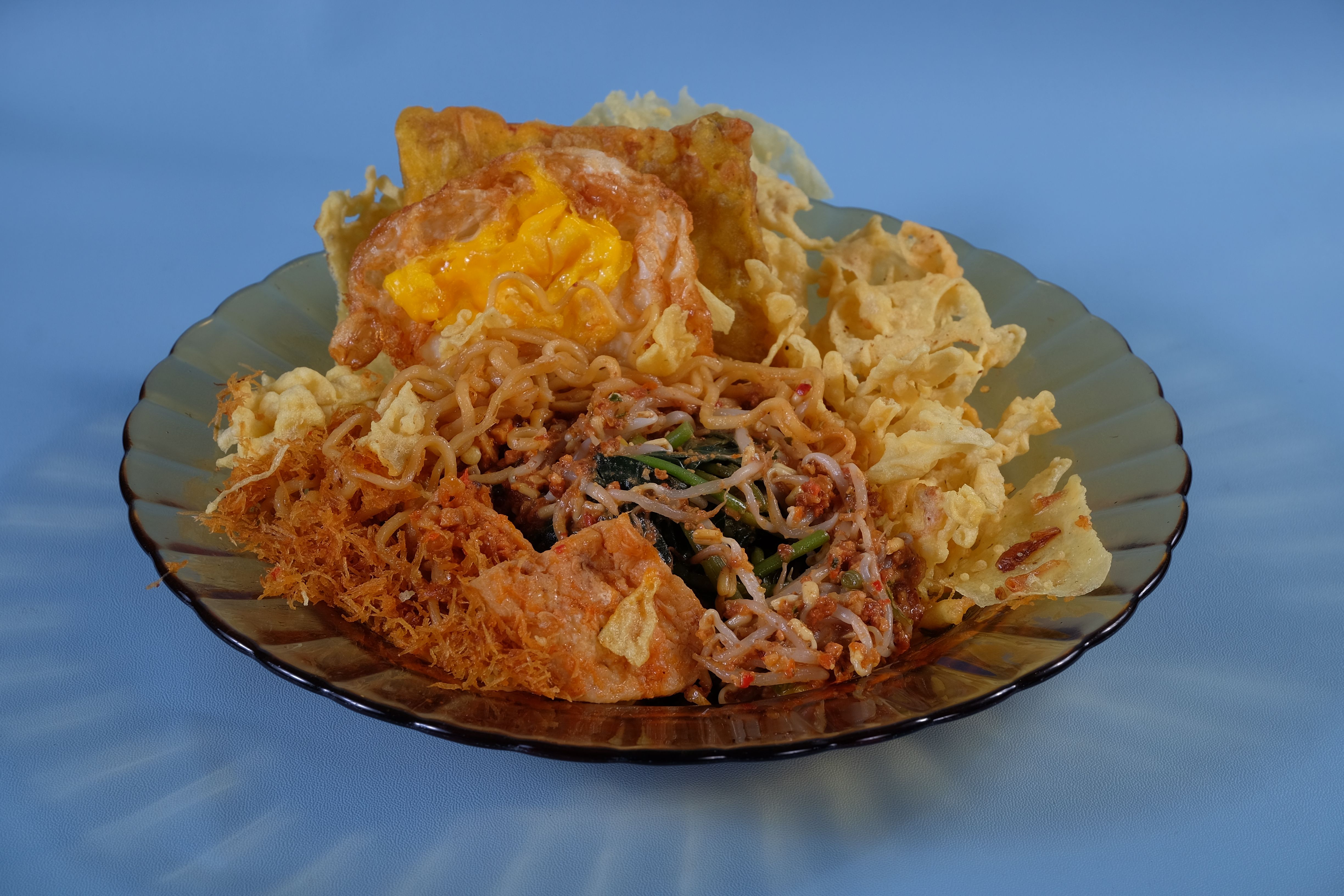
Photo: Ahmad Nafik Mundzir / Pexels
The diets react (see scores below)
Common Ingredients
- tofu
- rice cakes
- vermicelli
- bean sprouts
- peanuts
- garlic
- kecap manis
- chili
- palm sugar
- fried shallots
Specific recipes may vary.
Incompatible with 5 of 11 diets
Diet Ratings
Ketoprak is fundamentally incompatible with a ketogenic diet. The dish is built around multiple high-carbohydrate staples: rice cakes (lontong/ketupat) are compressed cooked rice with very high net carbs, and vermicelli (glass noodles or rice noodles) adds another heavy carb load. Kecap manis is essentially sweetened soy sauce laden with palm sugar, and additional palm sugar is listed as a separate ingredient — both are direct sugar sources. Together, a single standard serving likely delivers well over 60-80g of net carbs, far exceeding the entire daily keto allowance. While tofu, bean sprouts, and peanuts have some keto-adjacent properties, they are completely overwhelmed by the carb-dense core ingredients. There is no meaningful way to portion-control this dish while retaining its identity.
Ketoprak is an Indonesian street dish built entirely on plant-based ingredients: tofu, rice cakes (lontong), rice vermicelli, bean sprouts, and peanuts form the core, dressed with a peanut sauce made from garlic, chili, kecap manis (sweet soy sauce), and palm sugar, topped with fried shallots. Every ingredient in this list is derived from plants with no animal products present. Kecap manis is traditionally brewed from soy and sugar — fully vegan. Fried shallots are shallots fried in oil (typically vegetable oil in Indonesian cooking). The score is 8 rather than 9-10 primarily because palm sugar production and palm oil-adjacent concerns occasionally surface in vegan discourse, and kecap manis brands warrant a label check as some add additives, though the base ingredient is plant-derived. This is otherwise a whole-food-leaning, nutritionally solid vegan dish.
Some ethical vegans raise concerns about palm sugar and palm-derived products due to habitat destruction linked to palm cultivation, arguing that environmental harm to wildlife is incompatible with vegan ethics — though this is a minority position and palm sugar itself contains no animal ingredients.
Ketoprak is fundamentally incompatible with the Paleo diet. The dish contains multiple core Paleo exclusions: tofu (soy-based legume), rice cakes (grain), vermicelli (grain-based noodles), bean sprouts (legume), and peanuts (legume). Kecap manis is a sweetened soy sauce — combining soy (legume) with refined sugar and additives. Fried shallots are typically prepared with wheat flour coating and seed oils. Palm sugar, while arguably more natural, is still a refined/processed sugar. With the majority of the dish's primary components falling squarely in the 'avoid' category, there is no meaningful Paleo-compliant version of this dish without a complete reconstruction.
Ketoprak is a plant-based Indonesian dish with several Mediterranean-compatible elements: tofu (legume-based protein), bean sprouts (vegetables), peanuts (nuts/legumes), garlic, and chili all align well with Mediterranean principles. However, the dish also contains several ingredients that create friction with Mediterranean guidelines. Rice cakes and vermicelli are refined grains with minimal fiber, departing from the whole-grain emphasis. Kecap manis and palm sugar introduce added sugars, which the Mediterranean diet minimizes. Fried shallots add some processed/fried element. The overall dish is meat-free and plant-forward, which is positive, but the refined carbohydrate base and added sugar content prevent a full approval. It sits comfortably in the moderation/caution zone.
Some Mediterranean diet interpreters might score this higher, arguing that the dish is entirely plant-based with legume protein, nuts, and vegetables — hallmarks of Mediterranean eating — and that rice-based staples appear in Eastern Mediterranean and Middle Eastern traditions. Others might score it lower, emphasizing that the kecap manis and palm sugar represent a meaningful added-sugar load inconsistent with Mediterranean principles regardless of the plant-forward profile.
Ketoprak is entirely plant-based and incompatible with the carnivore diet. Every single ingredient — tofu, rice cakes, vermicelli, bean sprouts, peanuts, garlic, kecap manis (sweetened soy sauce), chili, palm sugar, and fried shallots — is plant-derived. There is no animal product whatsoever in this dish. It is a legume-based, grain-based, sugar-laden Indonesian street food that violates every core principle of the carnivore diet simultaneously.
Ketoprak contains multiple excluded ingredients that make it entirely incompatible with Whole30. Tofu is a soy product (legumes are excluded). Rice cakes are made from rice (grains are excluded). Vermicelli noodles are grain-based (typically rice or mung bean starch — both excluded as grains or legume derivatives). Peanuts are legumes and explicitly excluded. Kecap manis is a sweetened soy sauce, excluded both for soy content and added sugar. Palm sugar is an added sugar and excluded. This dish has at least five separate categories of excluded ingredients, making it impossible to adapt into a Whole30-compliant version without fundamentally changing the dish entirely.
Ketoprak contains multiple high-FODMAP ingredients that make it unsuitable during the elimination phase. Garlic is one of the highest-FODMAP foods (high fructans) and is a core component of the peanut sauce. Fried shallots are also high in fructans and are used as a topping. Kecap manis (sweet soy sauce) contains wheat (fructans) and high levels of sugar that may contribute excess fructose. Palm sugar in significant quantities can also be problematic. Peanuts are borderline but generally considered low-FODMAP at a standard 32g serving. Tofu (firm), rice cakes, rice vermicelli, bean sprouts, and chili are individually low-FODMAP ingredients, but the dish is fundamentally built around a garlic-and-shallot-laden peanut sauce with kecap manis, making the overall dish high-FODMAP with no easy substitution in its traditional preparation.
Ketoprak contains several DASH-friendly components — tofu provides lean plant protein, bean sprouts are a low-calorie vegetable, and garlic has cardiovascular benefits. However, the dish has meaningful DASH concerns: peanut sauce (ground peanuts with palm sugar) adds saturated fat and significant added sugar; kecap manis (sweet soy sauce) is high in sodium and added sugar (palm sugar); palm sugar contributes substantially to added sugar load; fried shallots are cooked in oil adding fat; and palm sugar/kecap manis together can push this dish into high glycemic and high-sugar territory. Rice cakes and vermicelli are refined carbohydrates with little fiber. The overall sodium content from kecap manis is a particular concern for DASH's sodium restriction goals. The dish is not inherently DASH-hostile — it lacks red meat, is plant-forward, and avoids full-fat dairy — but the preparation method and condiments make it a cautious choice requiring portion control and ideally modification (reduced kecap manis, omitting fried shallots, using less palm sugar).
NIH DASH guidelines emphasize limiting both sodium and added sugars, which kecap manis and palm sugar clearly violate. However, some DASH-oriented clinicians note that a plant-protein-forward dish like ketoprak, when prepared with reduced condiment quantities and eaten in moderate portions, can fit within an overall DASH eating pattern — particularly since the foundational ingredients (tofu, vegetables, legume-based protein) align well with DASH's plant-emphasis philosophy.
Ketoprak presents a mixed Zone Diet profile. On the positive side, tofu is a Zone-favorable vegetarian protein source, and bean sprouts are low-glycemic vegetables that support the Zone's carbohydrate goals. However, the dish is heavily carbohydrate-loaded with multiple high-glycemic sources stacked together: rice cakes (lontong) are high-GI refined starch, vermicelli noodles are another refined carbohydrate, and peanuts add fat with a significant carb contribution. Kecap manis (Indonesian sweet soy sauce) and palm sugar are essentially concentrated sugar sources, dramatically spiking the glycemic load of the dish. This combination of starchy carbs plus added sugars makes it very difficult to achieve the 40/30/30 Zone ratio — the carbohydrate fraction would be far too high and predominantly high-glycemic. Peanuts provide fat but are high in omega-6 (not the preferred monounsaturated or omega-3 fats Sears favors). Fried shallots add additional problematic fat from frying oil, likely seed oil. The tofu protein is positive, but the overall macro ratio skews heavily toward unfavorable carbohydrates with insufficient lean protein and inadequate healthy fat to balance. A Zone-adapted version would require eliminating or drastically reducing rice cakes and vermicelli, cutting the sweet sauce, and increasing tofu while adding a monounsaturated fat source like a small amount of sesame or almond-based dressing.
Some Zone practitioners note that tofu-based dishes with peanut sauce can approximate Zone blocks if portions of the starchy components are kept very small. In Sears' vegetarian Zone framework, peanuts (despite being high in omega-6) can serve as a combined protein-fat block source. A strict portion-controlled serving with minimal rice cake and vermicelli could technically be assembled into a Zone meal, though this would bear little resemblance to the traditional dish preparation.
Ketoprak is an Indonesian street dish with a mixed anti-inflammatory profile. On the positive side, tofu is an emphasized whole soy food in anti-inflammatory frameworks, providing plant protein and isoflavones with anti-inflammatory properties. Garlic and chili are beneficial anti-inflammatory spices. Bean sprouts contribute modest antioxidants and fiber. Peanuts offer some anti-inflammatory monounsaturated fats and resveratrol, though they are higher in omega-6 than ideal. The problematic elements are the sweeteners: kecap manis (sweet soy sauce) and palm sugar together add substantial refined/added sugar, which is a known driver of inflammatory markers like CRP and IL-6. Palm sugar is slightly less refined than white sugar and has a lower glycemic index, but in the quantities typical of ketoprak's sweet-savory peanut sauce, the total sugar load is a concern. Rice cakes and vermicelli (typically made from rice flour) are refined carbohydrates with minimal fiber, contributing to glycemic load without anti-inflammatory benefit. Fried shallots, depending on the frying oil used (often palm or refined seed oils in Indonesian cooking), may add pro-inflammatory refined oils. The dish is not disqualifying — the tofu, garlic, chili, and bean sprouts offer real benefits — but the high sugar content in the peanut sauce and the refined carbohydrate base prevent an 'approve' rating. Occasional consumption is reasonable; regular consumption of the sweetened version warrants caution.
Some anti-inflammatory practitioners following a strict approach (e.g., aligned with blood sugar regulation protocols or AIP-adjacent frameworks) would rate this lower due to the combined glycemic load of rice cakes, vermicelli, palm sugar, and kecap manis — arguing this sugar burden overrides the benefits of tofu and spices. Conversely, whole-food-focused practitioners aligned with Dr. Weil's broader framework might note that the dish is plant-forward with beneficial soy, garlic, and chili, and that traditional Indonesian palm sugar in moderation is preferable to refined industrial sweeteners.
Ketoprak is a plant-based Indonesian street dish with some redeeming nutritional qualities but several meaningful drawbacks for GLP-1 patients. Tofu provides moderate protein and is a preferred unsaturated fat source, and bean sprouts add fiber and water content with easy digestibility. However, the dish is carbohydrate-heavy: rice cakes and vermicelli are refined, low-fiber starches that deliver calories with minimal protein or fiber payoff, directly conflicting with the nutrient-density-per-calorie priority. The peanut-based sauce (peanuts, palm sugar, kecap manis) is calorie-dense, moderately high in fat, and adds significant sugar — kecap manis in particular is a sweetened soy sauce that meaningfully raises the glycemic and sugar load of the dish. Fried shallots, while used as a garnish, add small amounts of saturated fat. Chili and garlic are generally fine in moderate amounts but may worsen reflux or nausea in sensitive GLP-1 patients. The overall macronutrient profile skews heavily toward refined carbohydrates and sugar-sweetened fats, with protein insufficient for a GLP-1 main meal target of 20-30g without meaningful portion scaling. The dish is not fried or alcohol-based, and tofu and sprouts are genuinely beneficial components, preventing a lower score, but the refined carb and sugar burden places this firmly in caution territory.
Some GLP-1-focused dietitians may view Ketoprak more favorably when portion-controlled, citing tofu's complete amino acid profile and the satiety value of peanut-based fats — particularly for patients who struggle to meet calorie minimums. Others would flag the palm sugar and kecap manis combination as a meaningful glycemic concern, especially for patients with concurrent insulin resistance or type 2 diabetes, and recommend avoiding it in favor of higher-protein, lower-sugar alternatives.
*See how scores were generated at our methodology page.
Nutritional profile
Six traits that cut across every diet.
Fiber & Plants
How much whole-plant food and fiber it delivers.
Healthy Fats
The quality of its fats (unsaturated, omega-3).
Whole / Unprocessed
How close it is to its natural, unprocessed form.
Gut Gentle
How easy it is on digestion (low FODMAP, few irritants).
Low Glycemic
How little it spikes your blood sugar.
Protein Density
How much protein it packs per calorie.
Controversy Index
Higher controversy = more disagreement between diets.
Diet-Specific Tips
 Vegan — 8/10
View tips
- Tofu is fully plant-based protein
- Rice cakes and vermicelli are plant-derived carbohydrates
- Peanut sauce base (peanuts, garlic, chili, palm sugar) is entirely vegan
- Kecap manis is soy-based sweet soy sauce — no animal derivatives in traditional formulations
- Fried shallots are typically cooked in vegetable oil in Indonesian cuisine
- Palm sugar is plant-derived but carries minor ethical debate among some vegans
- No animal products, dairy, eggs, or animal-derived additives identified in the ingredient list
 Mediterranean — 5/10
View tips
- Tofu provides plant-based legume protein — Mediterranean-compatible
- Peanuts and garlic align with Mediterranean nut and aromatic traditions
- Bean sprouts and chili are positive plant-based components
- Rice cakes and vermicelli are refined grains, not whole grains — suboptimal
- Kecap manis and palm sugar introduce added sugars — contradicts Mediterranean minimization of added sugars
- Fried shallots add a processed element
- Dish is entirely meat-free and uses no olive oil as fat base
 DASH — 4/10
View tips
- Tofu is a DASH-approved lean plant protein source
- Kecap manis is high in sodium and added sugar — a significant DASH concern
- Palm sugar adds substantial added sugar load
- Fried shallots increase total and saturated fat content
- Bean sprouts and garlic are DASH-compatible vegetables
- Peanuts provide healthy unsaturated fats but also add saturated fat and calories
- Rice cakes and vermicelli are refined carbohydrates with minimal fiber
- Palm oil (if used in frying shallots) is a tropical oil that DASH limits
- Dish is plant-forward and red-meat-free, which aligns with DASH principles
 Zone — 4/10
View tips
- Rice cakes (lontong) are high-glycemic refined starch — unfavorable Zone carbohydrate
- Vermicelli noodles add a second high-GI refined carbohydrate source, compounding glycemic load
- Kecap manis and palm sugar are concentrated sugar sources that sharply elevate glycemic index
- Tofu is a Zone-favorable vegetarian protein source — a positive element
- Bean sprouts are low-glycemic and Zone-favorable vegetables
- Peanuts are high in omega-6 fatty acids, contrary to Zone anti-inflammatory fat preferences
- Fried shallots likely cooked in omega-6-heavy seed oil, further unfavorable for inflammation
- Overall macronutrient ratio skews heavily toward high-glycemic carbohydrates, making Zone balance very difficult
- Dish can only approach Zone compliance with major ingredient substitutions or severe portion restriction
 Anti-Inflammatory — 5/10
View tips
- Tofu (whole soy food) is explicitly emphasized in anti-inflammatory frameworks for isoflavones and plant protein
- Garlic and chili are beneficial anti-inflammatory spices
- Kecap manis and palm sugar add significant added sugar load, which elevates inflammatory markers (CRP, IL-6)
- Rice cakes and rice vermicelli are refined carbohydrates with high glycemic load and minimal fiber
- Peanuts provide some anti-inflammatory monounsaturated fats but are higher in omega-6 than ideal
- Fried shallots may introduce pro-inflammatory refined cooking oils depending on preparation
- Bean sprouts add modest antioxidants and fiber as a positive element
- Overall dish is plant-based but sugar-heavy — acceptable occasionally, not ideal regularly
 GLP-1 Friendly — 4/10
View tips
- Refined carbohydrate dominance: rice cakes and vermicelli are low-fiber starches that displace nutrient-dense calories
- High sugar load from kecap manis (sweetened soy sauce) and palm sugar in the peanut sauce
- Tofu is a GLP-1-approved protein source but quantity in a standard serving likely falls short of the 20-30g per meal target
- Peanut-based sauce is calorie-dense and moderately high in fat — portion-sensitive
- Bean sprouts contribute fiber, water content, and easy digestibility — a positive factor
- Fried shallots add minor saturated fat as garnish
- Chili may worsen nausea or reflux in GLP-1 patients with GI sensitivity
- No alcohol, no carbonation, not fried — avoids the worst GLP-1 triggers
- Low fiber overall despite plant-based profile due to refined grain base