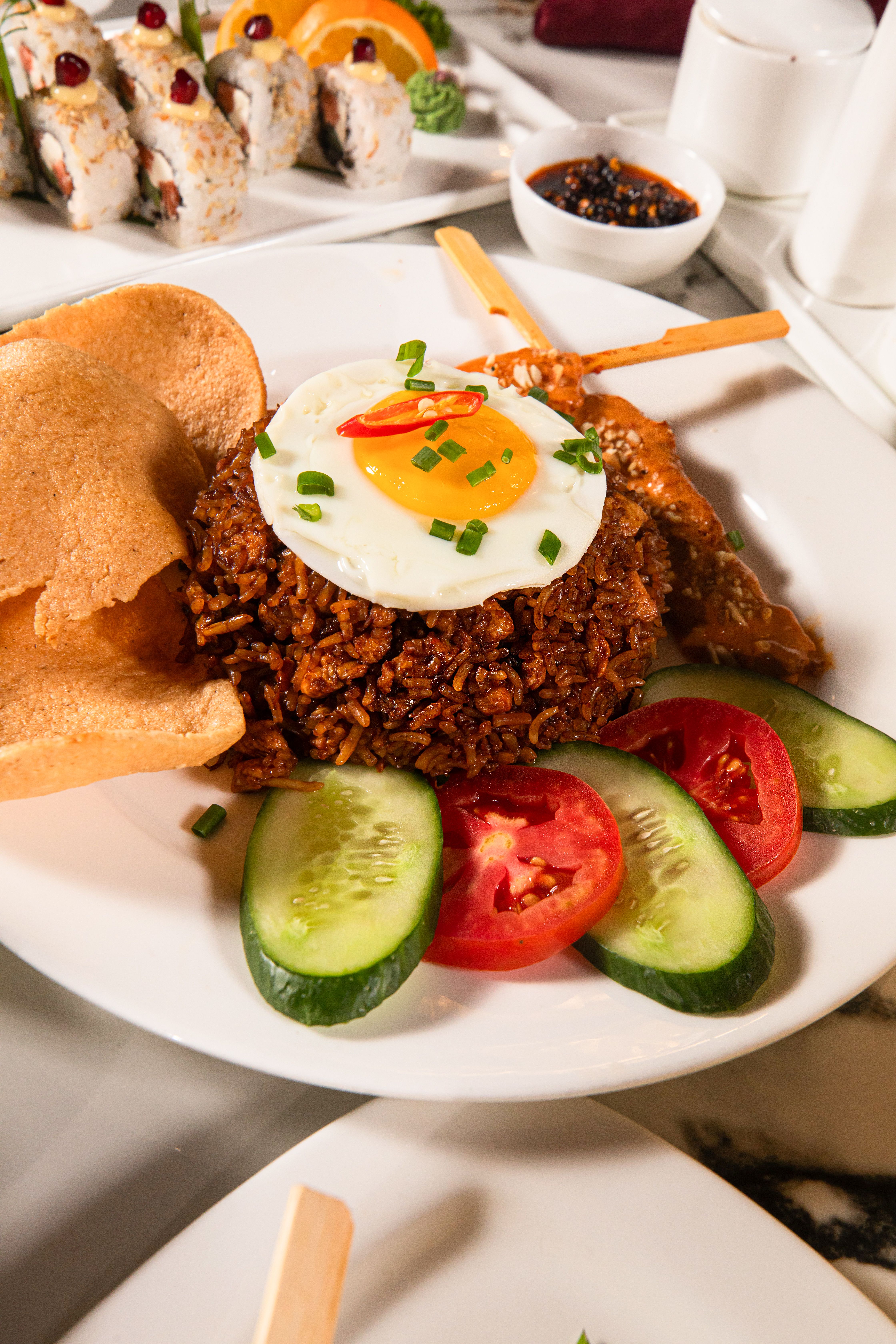
Photo: Anil Sharma / Pexels
Indonesian
Nasi Goreng
The diets react (see scores below)
Common Ingredients
- rice
- kecap manis
- shrimp paste
- garlic
- shallot
- chile
- egg
- chicken
- scallion
Specific recipes may vary.
Incompatible with 8 of 11 diets
Diet Ratings
Nasi Goreng is fundamentally built on white rice, which is one of the highest net-carb foods available (approximately 45g net carbs per cup cooked). A standard serving of Nasi Goreng contains 1-2 cups of rice, putting it well over the entire daily keto carb budget in a single dish. Kecap manis (sweet soy sauce) compounds the problem significantly, as it is a thick, sugar-laden Indonesian sweet soy sauce that adds substantial additional sugar and carbs. While several individual ingredients are keto-friendly — eggs, chicken, shrimp paste, garlic, chiles, shallots, and scallions — the two core components (rice and kecap manis) make this dish completely incompatible with ketogenic eating in its traditional form. There is no meaningful portion size of traditional Nasi Goreng that would fit within keto macros.
Nasi Goreng as described contains multiple animal products: egg (a direct animal product), chicken (poultry/meat), and shrimp paste (a fermented seafood product). Any one of these ingredients alone would disqualify it from a vegan diet; together they make it unambiguously non-vegan. There is no meaningful debate within the vegan community about any of these ingredients.
Nasi Goreng is fundamentally incompatible with the Paleo diet. Rice is a grain and one of the most clearly excluded foods in Paleo eating. Kecap manis is a sweetened soy sauce — doubly disqualifying as it combines soy (a legume) with refined sugar. Shrimp paste, while made from fermented shrimp, is a heavily processed condiment typically containing added salt and preservatives. The remaining ingredients — garlic, shallot, chile, egg, chicken, and scallion — are all Paleo-approved, but the foundational components of the dish (rice and kecap manis) are core violations. This dish cannot be made Paleo-compliant without ceasing to be Nasi Goreng.
Nasi Goreng presents several conflicts with Mediterranean diet principles. The base is white rice, a refined grain that Mediterranean guidelines discourage in favor of whole grains. Kecap manis is a sweetened soy sauce with significant added sugar, contradicting the minimal added sugars principle. Shrimp paste, while a fermented ingredient, is highly processed and sodium-dense — far removed from Mediterranean flavor profiles. The dish uses no olive oil and no vegetables of substance. On the positive side, it contains eggs and chicken (acceptable in moderation) and shrimp-derived protein, but these positives are outweighed by the refined grain base, added sugars, and absence of Mediterranean staples like legumes, fresh vegetables, and olive oil. The overall dish pattern — fried rice with sweet sauce — is fundamentally misaligned with Mediterranean dietary structure.
Some Mediterranean diet interpreters take a flexible, 'whole foods' approach and might view this dish more charitably: eggs and chicken are permitted proteins, garlic and shallots are Mediterranean-friendly aromatics, and chiles provide antioxidant value. A liberal modern interpretation might classify it as 'caution' rather than 'avoid' if portion size is controlled and the white rice is the primary concern.
Nasi Goreng is fundamentally incompatible with the carnivore diet. The dish is built on rice (a grain), which is entirely plant-derived and one of the primary foods excluded from any carnivore protocol. Beyond the rice base, the ingredient list contains multiple additional plant-based components: kecap manis (a sweetened soy sauce made from fermented soybeans and sugar), garlic, shallot, chile, and scallion. Shrimp paste is animal-derived, and eggs and chicken are accepted by most carnivore practitioners, but these are minor components in a dish that is overwhelmingly plant-based. There is no version of this dish that can be made carnivore-compliant without being completely deconstructed and reconstructed — at which point it is no longer Nasi Goreng.
Nasi Goreng contains multiple excluded ingredients that make it incompatible with Whole30. First and most fundamentally, rice is a grain and is explicitly excluded from the program. Second, kecap manis is a sweet soy sauce made from soy (a legume) and sugar — both excluded ingredients. Shrimp paste (terasi/belacan) is typically compliant on its own, but the dish as traditionally prepared cannot be made Whole30-compatible without fundamentally changing its character. The remaining ingredients (garlic, shallot, chile, egg, chicken, scallion) are all Whole30-compliant, but the core components — rice and kecap manis — are deal-breakers. Even if kecap manis were substituted with coconut aminos, the rice alone disqualifies the dish.
Traditional Nasi Goreng contains multiple high-FODMAP ingredients that make it unsuitable during the elimination phase. Garlic is one of the highest-fructan foods per Monash and is a definitive avoid. Shallots are also high in fructans and should be avoided. Shrimp paste (belacan/terasi) typically contains high-FODMAP ingredients and fermented alliums. Kecap manis (sweet soy sauce) often contains wheat (fructans) and onion/garlic as additives. Scallions (spring onions) are high-FODMAP when the green AND white parts are used — only the green tops are low-FODMAP, and traditional Nasi Goreng uses the whole scallion. Even if individual quantities of each ingredient are small, the cumulative FODMAP load from garlic alone is disqualifying. The base ingredients (rice, egg, chicken) are individually low-FODMAP, but the dish as traditionally prepared is not safe during elimination.
Nasi Goreng is problematic for the DASH diet primarily due to its high sodium content. Shrimp paste (belacan/terasi) is extremely high in sodium — a single tablespoon can contain 1,000–1,600mg — easily exceeding the entire daily DASH sodium allowance in one dish. Kecap manis (sweet soy sauce) adds additional sodium alongside significant added sugar. The dish is also typically made with white refined rice rather than whole grains, missing a key DASH nutritional opportunity. While some ingredients are DASH-friendly (garlic, shallots, scallions, egg, chicken), the dominant condiments make this dish incompatible with standard DASH guidelines regardless of portion size. The overall sodium load from shrimp paste and kecap manis alone would likely push a single serving well beyond the 2,300mg/day DASH limit, let alone the stricter 1,500mg/day low-sodium DASH target.
Nasi Goreng is built on a foundation of white rice, which is a high-glycemic 'unfavorable' carbohydrate in Zone terminology. Kecap manis (sweet soy sauce) adds significant sugar, further elevating the glycemic load of the dish. These two elements are the primary Zone concerns. On the positive side, the protein sources — egg and chicken — are lean and Zone-favorable, and aromatics like garlic, shallot, scallion, and chile are low-glycemic vegetables that count positively. Shrimp paste is a high-protein, low-carb condiment with negligible Zone impact. The dish lacks a meaningful monounsaturated fat source (typically cooked in palm or vegetable oil, which skews toward saturated or omega-6 fats). To be incorporated into a Zone meal, portions would need to be small (treating rice as a limited 'unfavorable' carb block), the kecap manis minimized dramatically, and additional low-glycemic vegetables added to offset the glycemic load. As traditionally prepared, the carbohydrate ratio skews far above 40% and the glycemic quality is poor, making this a dish that requires significant modification to fit Zone principles.
Nasi Goreng is a mixed dish from an anti-inflammatory standpoint. On the positive side, it contains genuinely beneficial ingredients: garlic and shallots are rich in quercetin, allicin, and prebiotic compounds with well-documented anti-inflammatory effects; chiles provide capsaicin, which inhibits NF-κB inflammatory pathways; scallions add additional flavonoids; and eggs and chicken supply lean protein with choline and selenium. Shrimp paste (terasi/belacan), while pungent and fermented, is not inherently pro-inflammatory and may offer some probiotic-adjacent benefits. The primary concerns are the refined white rice (high glycemic index, spikes blood sugar and insulin which drives inflammatory mediators) and kecap manis, a sweet soy sauce that is high in added sugar — a meaningful pro-inflammatory factor. The dish is also typically fried in unspecified cooking oil, which if a high-omega-6 seed oil (common in Indonesian commercial cooking), adds oxidative and inflammatory load. Preparation method matters significantly: home-prepared with a small amount of extra virgin olive oil or coconut oil and moderate kecap manis would score higher, while restaurant versions fried in vegetable/canola oil with generous sweet sauce pull it down. Overall, this is a flavorful, moderately mixed dish — acceptable in moderation, especially with modifications like reducing kecap manis and using a better cooking fat.
Some anti-inflammatory practitioners, particularly those following lower-glycemic or autoimmune protocols, would rate this more negatively due to refined white rice's high glycemic load and the significant added sugar in kecap manis, arguing these consistently elevate insulin and CRP. Conversely, traditional food researchers note that fermented shrimp paste and the aromatic base of garlic, shallot, and chile represent a genuinely functional culinary combination — and that context (portion size, overall diet pattern) matters more than single-dish assessment.
Nasi Goreng is a mixed dish with meaningful protein from chicken and egg, but its foundation is white rice — a refined carbohydrate with low fiber and high glycemic load. Kecap manis (sweet soy sauce) adds notable sugar, which conflicts with GLP-1 dietary goals of minimizing empty calories and blood sugar spikes. Shrimp paste and chile are present in small amounts as flavor base, but chile may worsen reflux or nausea in GLP-1 patients with GI sensitivity. The dish is stir-fried, typically in oil, adding moderate fat. On the positive side, chicken and egg together can deliver 20-30g protein depending on portion, and garlic, shallot, and scallion contribute minor micronutrient value. The dish is not fried in the deep-fry sense, which is a meaningful distinction. Key concern is the rice-to-protein ratio in a typical serving — rice dominates volume and calories while contributing minimal fiber or protein density. Portioning is critical: a small serving focused on the protein components with minimal rice would shift this toward acceptable, but the standard restaurant or home portion is rice-forward and sugar-seasoned.
Some GLP-1-focused dietitians note that a modest portion of white rice is not categorically harmful — the reduced appetite effect of GLP-1 medications naturally limits rice intake, and the protein from chicken and egg can make this dish adequate if prepared with portion control. Others flag the kecap manis sugar content and chile as consistent concerns that make this a poor default choice for patients with GI sensitivity or blood sugar management goals.
*See how scores were generated at our methodology page.
Nutritional profile
Six traits that cut across every diet.
Fiber & Plants
How much whole-plant food and fiber it delivers.
Healthy Fats
The quality of its fats (unsaturated, omega-3).
Whole / Unprocessed
How close it is to its natural, unprocessed form.
Gut Gentle
How easy it is on digestion (low FODMAP, few irritants).
Low Glycemic
How little it spikes your blood sugar.
Protein Density
How much protein it packs per calorie.
Controversy Index
Higher controversy = more disagreement between diets.
Diet-Specific Tips
 Zone — 4/10
View tips
- White rice is a high-glycemic 'unfavorable' carbohydrate — the dominant ingredient
- Kecap manis adds significant sugar, raising glycemic load beyond typical Zone tolerance
- Egg and chicken are lean Zone-favorable proteins that partially redeem the dish
- Aromatics (garlic, shallot, scallion, chile) are low-glycemic and Zone-positive
- Typically cooked in palm or vegetable oil — not a monounsaturated fat source
- As traditionally prepared, carbohydrate calories far exceed the 40% Zone target
- Significant portion reduction and recipe modification required for Zone compatibility
 Anti-Inflammatory — 5/10
View tips
- Garlic and shallots: high in quercetin, allicin — well-documented anti-inflammatory compounds
- Chile: capsaicin inhibits NF-κB inflammatory signaling
- Kecap manis: significant added sugar content — pro-inflammatory at typical usage levels
- White rice: high glycemic index, raises blood glucose and insulin — drives inflammatory markers
- Egg and chicken: lean proteins with anti-inflammatory micronutrients (choline, selenium), acceptable in moderation
- Cooking oil unknown: if high-omega-6 seed oil (common in commercial prep), adds pro-inflammatory load
- Shrimp paste: fermented, not inherently inflammatory, adds umami without significant negative profile
- Scallions: additional flavonoids and antioxidants
 GLP-1 Friendly — 5/10
View tips
- White rice base is low fiber and high glycemic — poor nutrient density per calorie
- Kecap manis adds meaningful sugar content, conflicting with GLP-1 dietary guidelines
- Chicken and egg together provide solid protein potential (20-30g per serving) — a clear positive
- Stir-fried preparation adds moderate fat but is not deep-fried — a meaningful distinction
- Chile may worsen GLP-1-related reflux or nausea in sensitive patients
- Dish is rice-volume-dominant in standard portions, reducing protein density per calorie
- Shrimp paste is a high-sodium fermented ingredient — relevant for patients monitoring sodium
- Portion control is the primary lever: small, protein-focused serving improves the rating significantly