Indonesian
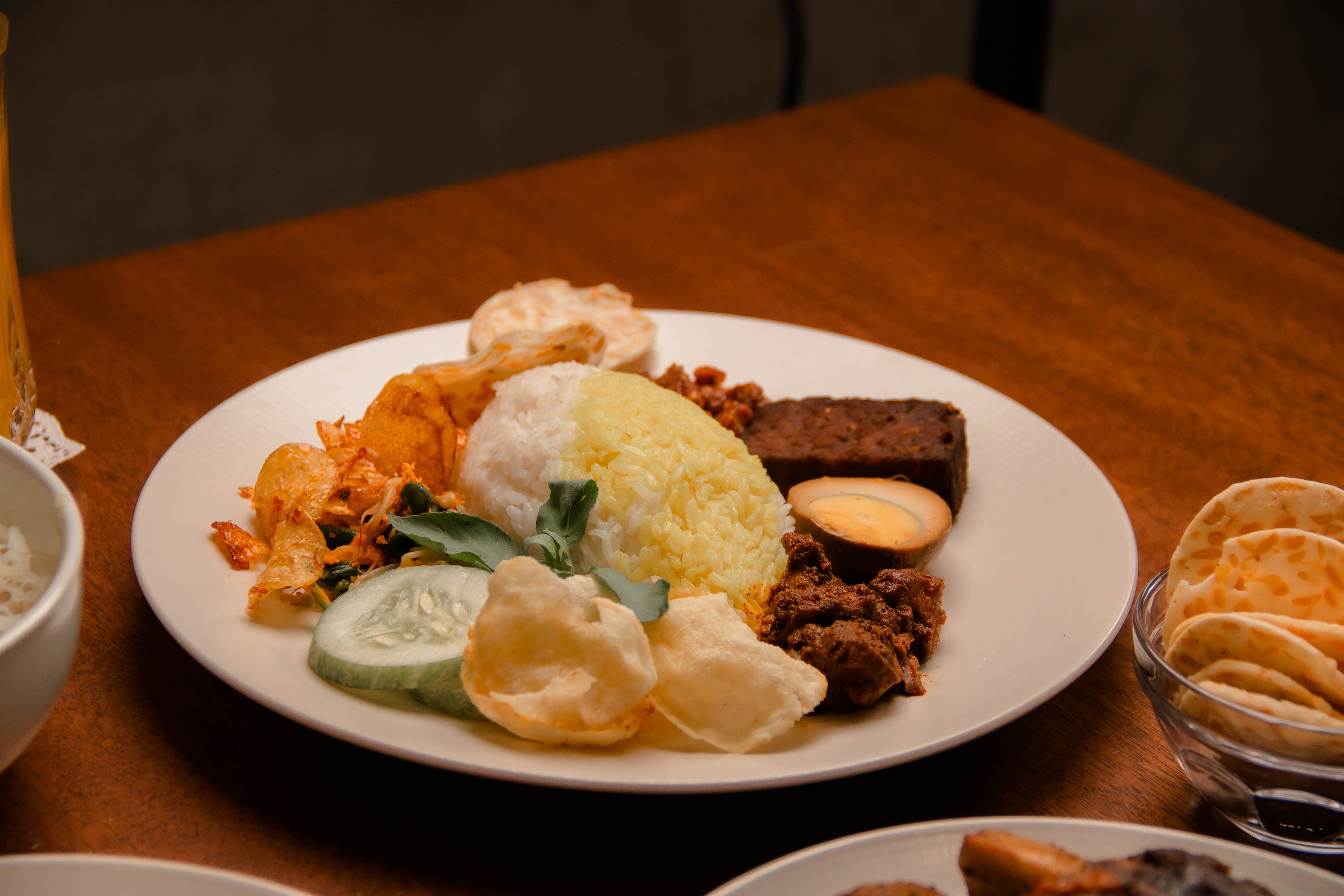
Nasi Padang
The diets react (see scores below)
Common Ingredients
- rice
- beef
- chicken
- coconut milk
- chili
- turmeric
- lemongrass
- galangal
- cassava leaves
- eggs
Specific recipes may vary.
Incompatible with 9 of 11 diets
Diet Ratings
Nasi Padang is fundamentally built around white rice, which is a high-glycemic, high-net-carb grain that is completely incompatible with ketogenic eating. A standard serving of rice alone contains 40-50g of net carbs, instantly exceeding the daily keto limit. While several individual components of the dish are keto-friendly — beef, chicken, coconut milk, eggs, and the aromatic spices (chili, turmeric, lemongrass, galangal) are all excellent keto foods — the rice base makes the dish as a whole unavoidable for ketosis disruption. Cassava leaves are lower in carbs than cassava root but are a borderline ingredient. The dish cannot be meaningfully adapted without fundamentally changing its identity.
Nasi Padang contains multiple animal products that are strictly excluded from a vegan diet. Beef and chicken are direct animal flesh, eggs are an animal product, and while coconut milk is plant-based, it cannot offset the presence of these non-vegan ingredients. The dish is fundamentally built around animal proteins, making it entirely incompatible with vegan dietary principles.
Nasi Padang is fundamentally built around white rice ('nasi' literally means rice), which is a grain explicitly excluded from the paleo diet. Rice is a high-carbohydrate grain with anti-nutrients and was not part of the Paleolithic human diet. While several other ingredients are paleo-friendly — beef, chicken, eggs, coconut milk, chili, turmeric, lemongrass, and galangal are all approved — and cassava leaves are a debated but generally tolerated whole food, the rice is a non-negotiable disqualifier. The dish cannot be made paleo-compliant without fundamentally changing its identity, as rice is the centerpiece of the meal, not a minor ingredient.
Nasi Padang presents multiple conflicts with Mediterranean diet principles. The dish centers on white rice (refined grain, not whole grain), beef as the primary protein (red meat should be limited to a few times per month), and coconut milk as the primary fat source (high in saturated fat, not olive oil). While the dish does contain beneficial spices (turmeric, lemongrass, galangal) and some plant elements (cassava leaves, chili), these positives are outweighed by the combination of refined grains, red meat, and saturated-fat-rich coconut milk in a single meal. Chicken and eggs are present but are secondary to the problematic primary components. This is not a Mediterranean dish and contradicts several core pillars simultaneously.
Nasi Padang is fundamentally incompatible with the carnivore diet. The dish is built around rice (a grain) as its base, which alone disqualifies it entirely. Beyond that, it contains multiple plant-derived ingredients: chili, turmeric, lemongrass, and galangal are plant spices/aromatics; cassava leaves are a leafy plant food; and coconut milk is a plant-based fat source. While the dish does include animal proteins (beef, chicken, eggs), these are completely overshadowed by the extensive plant ingredient list. Even the most permissive carnivore practitioners — including those following Paul Saladino's liberal 'animal-based' approach — would not consume rice, cassava leaves, or a dish so thoroughly dominated by plant foods. There is universal consensus in the carnivore community that this dish is off-limits.
Nasi Padang's foundational ingredient is rice, which is explicitly excluded on the Whole30 program as a grain. Regardless of the other ingredients — many of which are individually compliant (beef, chicken, coconut milk, chili, turmeric, lemongrass, galangal, eggs) — the dish cannot be made Whole30-compatible without removing its defining component. The name itself means 'Padang rice,' making rice inseparable from the dish's identity. Cassava leaves are generally considered compliant as a vegetable. All spices and aromatics listed are allowed. However, the presence of rice as a primary ingredient makes this dish a clear avoid.
Nasi Padang is a complex Indonesian dish where the combination of ingredients creates multiple FODMAP concerns. The base rice is low-FODMAP and fine. However, the dish almost certainly contains onion and garlic (standard in all Padang cooking, even if not explicitly listed), which are high-FODMAP fructan sources. Coconut milk is low-FODMAP at small servings (~60ml) but Padang curries are typically coconut-milk-heavy, and larger quantities (>500ml) become high-FODMAP due to sorbitol. Cassava leaves are not well-tested by Monash but are a significant concern — cassava itself is moderate-FODMAP and the leaves are rarely assessed. Lemongrass and galangal are generally considered low-FODMAP in typical culinary quantities. Chili, turmeric, eggs, and the proteins (beef, chicken) are low-FODMAP. The critical issue is that authentic Nasi Padang preparation universally involves onion and garlic in the rendang, gulai, and other curries, which makes the overall dish high-FODMAP for the elimination phase. Even if a modified version avoided alliums, the cassava leaves and high coconut milk volume add additional risk.
Monash University has not specifically tested Nasi Padang as a composite dish, and the FODMAP load depends heavily on preparation. A home-cooked version omitting onion and garlic, using garlic-infused oil instead, and limiting coconut milk to one small serving could theoretically reduce FODMAP content significantly — some clinical FODMAP dietitians would guide patients to modify rather than eliminate dishes like this entirely.
Nasi Padang is a traditional Indonesian meal-set that is fundamentally misaligned with DASH diet principles on multiple fronts. The dish centers on coconut milk-based curries and rendang, which are extremely high in saturated fat — a primary concern for DASH. Coconut milk is a tropical oil-derived fat explicitly limited under DASH guidelines. The beef component (likely rendang or beef curry) adds saturated fat and often significant sodium. The overall meal as served in restaurants or traditional settings is heavily salted across multiple side dishes. While individual ingredients like turmeric, lemongrass, galangal, chili, and cassava leaves have nutritional merit (anti-inflammatory properties, fiber, potassium), they cannot offset the dominant concerns. Rice is a neutral starch but typically refined white rice. Eggs are acceptable in moderation but add to the overall dietary burden here. The cumulative sodium load from multiple dishes served together in the Nasi Padang format routinely exceeds 1,500–2,300mg per sitting, making it problematic even for standard DASH targets.
NIH DASH guidelines explicitly limit tropical oils like coconut milk due to high saturated fat content, making Nasi Padang a clear concern. However, some updated DASH-oriented clinicians note that the spice-rich profile (turmeric, galangal, lemongrass) and plant-based components like cassava leaves offer meaningful micronutrient and anti-inflammatory benefits, and argue that a carefully portioned, home-prepared version with reduced coconut milk and sodium could be adapted to fit DASH principles — though this diverges substantially from Nasi Padang as traditionally served.
Nasi Padang is a traditional Indonesian feast dish that presents several Zone Diet challenges. The foundation is white rice, a high-glycemic carbohydrate that Dr. Sears classifies as 'unfavorable' due to its rapid insulin response. A typical Nasi Padang serving is heavily rice-centric, with the rice portion far exceeding what a Zone meal would allow (a single carb block of rice is roughly 1/3 cup cooked). Coconut milk is a significant saturated fat source, which early Zone literature discouraged, though it does provide some lauric acid with nuanced metabolic effects. The proteins (beef, chicken, eggs) are usable Zone building blocks, though the beef and coconut milk preparation (rendang-style) adds substantial saturated fat load. Cassava leaves provide some vegetable carbohydrates and polyphenols, which is Zone-positive. The spice profile (turmeric, lemongrass, galangal) is actually anti-inflammatory and aligns with Sears' later omega-3/polyphenol emphasis. The core problem is the macro imbalance: as typically served, Nasi Padang is carbohydrate-dominant (white rice), high in saturated fat (coconut milk), and the protein-to-carb ratio is skewed. A Zone practitioner could theoretically deconstruct this dish — take a small portion of rice (one carb block), lean protein portions of chicken or egg, and minimize the coconut-milk-heavy rendang — but as served in a traditional setting, the ratios are difficult to manage without significant modification.
Sears' later writings (The Anti-Inflammation Zone, The Mediterranean Zone) place greater emphasis on polyphenols and anti-inflammatory spices, which Nasi Padang delivers abundantly via turmeric, galangal, lemongrass, and chili. Some Zone practitioners in Southeast Asian contexts argue that small portions of white rice can be incorporated as a single carb block alongside the rich protein and fat components, making Nasi Padang manageable if one self-selects predominantly the protein dishes (lauk) over the rice. Additionally, coconut milk's saturated fat (lauric acid) is viewed more favorably in later Zone-adjacent anti-inflammatory frameworks than in early 1990s Zone doctrine.
Nasi Padang is a complex Indonesian feast with a genuinely mixed anti-inflammatory profile. On the positive side, the dish features an impressive array of anti-inflammatory spices — turmeric (curcumin), chili (capsaicin), lemongrass, and galangal are all potent anti-inflammatory agents with solid research support. Cassava leaves provide fiber and micronutrients. Chicken is an acceptable lean protein. However, several elements pull in the opposite direction: beef (especially in Padang-style rendang) is typically fatty, slow-cooked in full-fat coconut milk, which is high in saturated fat — a component the anti-inflammatory framework recommends limiting. Coconut milk is itself a point of debate (see dissenting view). White rice is a refined carbohydrate with a high glycemic index, contributing to insulin spikes that can promote inflammation. Eggs are contextually neutral to mildly mixed. The dish is also often served with offal, fried preparations, and heavily salted accompaniments in its traditional form. The result is a dish where the exceptional spice profile partially offsets the saturated fat load and refined carbohydrates, landing it in 'caution' territory — beneficial components exist but are counterbalanced by pro-inflammatory ones.
Coconut milk is a significant point of contention: mainstream anti-inflammatory guidance (including Dr. Weil) cautions against high saturated fat intake, and coconut milk is primarily saturated fat (lauric acid). However, a growing number of functional medicine practitioners and paleo/ancestral diet advocates argue that medium-chain triglycerides (MCTs) in coconut milk are metabolized differently and may not drive systemic inflammation — and that traditional whole-food saturated fats behave differently from processed ones. This divide between conventional anti-inflammatory guidance and ancestral/functional medicine camps meaningfully affects how this dish is rated.
Nasi Padang is a traditional Indonesian spread built around white rice as the base, with proteins and vegetables cooked in rich coconut milk-based sauces (rendang-style beef, coconut-braised chicken). This combination creates multiple serious concerns for GLP-1 patients. First, coconut milk is extremely high in saturated fat — a full Nasi Padang plate can easily deliver 30–50g of fat, much of it saturated, which is strongly linked to worsened nausea, bloating, and reflux in GLP-1 users. Second, white rice is a refined carbohydrate with low fiber and low protein density per calorie, occupying stomach space without contributing meaningfully to protein or fiber targets. Third, the chili content (often significant in Padang cooking) may worsen reflux or nausea. Fourth, the high-fat, slow-digesting nature of coconut milk curries compounds the already-slowed gastric emptying caused by GLP-1 medications, significantly increasing GI discomfort risk. While the dish does contain protein from beef, chicken, and eggs, and cassava leaves add some micronutrients and fiber, the overall fat load and refined carbohydrate base make this dish poorly suited for GLP-1 patients as typically prepared and served.
Some GLP-1-focused dietitians may note that Nasi Padang can be selectively eaten — prioritizing the egg and chicken portions over the beef rendang, reducing rice quantity, and focusing on the cassava leaf side — which could yield a more tolerable plate. Individual tolerance to coconut milk varies, and some patients with lower GI sensitivity may manage small portions without significant side effects, though the high saturated fat load remains a consistent concern across clinical guidance.
*See how scores were generated at our methodology page.
Nutritional profile
Six traits that cut across every diet.
Fiber & Plants
How much whole-plant food and fiber it delivers.
Healthy Fats
The quality of its fats (unsaturated, omega-3).
Whole / Unprocessed
How close it is to its natural, unprocessed form.
Gut Gentle
How easy it is on digestion (low FODMAP, few irritants).
Low Glycemic
How little it spikes your blood sugar.
Protein Density
How much protein it packs per calorie.
Controversy Index
Higher controversy = more disagreement between diets.
Diet-Specific Tips
 Zone — 4/10
View tips
- White rice as the carbohydrate base is high-glycemic and an 'unfavorable' Zone carb, making portion control critical
- Heavy coconut milk usage significantly raises saturated fat content, disrupting the preferred monounsaturated fat profile
- Multiple protein sources (beef, chicken, eggs) offer lean protein options if selected carefully
- Cassava leaves provide vegetable-based carbohydrates and some fiber, which is Zone-positive
- Anti-inflammatory spice profile (turmeric, galangal, lemongrass) aligns with Sears' polyphenol emphasis
- As traditionally served, carbohydrate-to-protein ratio is heavily skewed toward carbohydrates
- Dish can be partially Zone-adapted by emphasizing lauk (side dishes) over rice and choosing leaner proteins
 Anti-Inflammatory — 5/10
View tips
- Strong anti-inflammatory spice blend: turmeric, galangal, lemongrass, chili
- Beef as primary protein — saturated fat, pro-inflammatory at excess intake
- Coconut milk — high saturated fat, debated in anti-inflammatory contexts
- White rice — refined carbohydrate, high glycemic index
- Chicken — lean protein, neutral to mildly positive
- Eggs — mixed anti-inflammatory profile
- Cassava leaves — fiber, micronutrients, mild positive
- Traditional preparation often includes additional fried or salted dishes