Indonesian
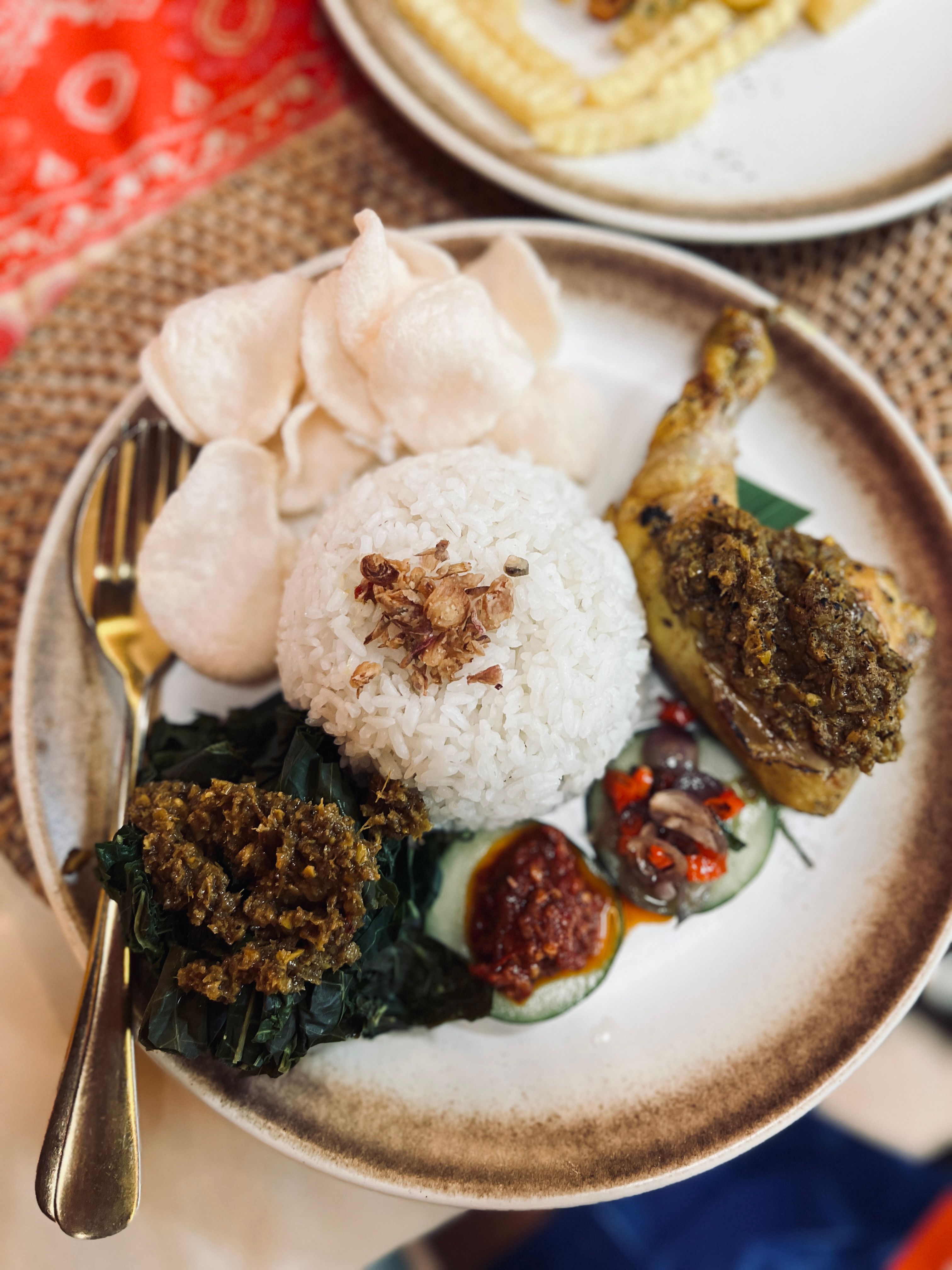
Nasi Uduk
The diets react (see scores below)
Common Ingredients
- rice
- coconut milk
- pandan leaves
- lemongrass
- bay leaves
- galangal
- cloves
- fried shallots
- salt
- kaffir lime leaves
Specific recipes may vary.
Incompatible with 9 of 11 diets
Diet Ratings
Nasi Uduk is a rice-based dish, and rice is one of the most keto-incompatible foods available. A standard serving of cooked white rice (~150g) contains approximately 40-45g of net carbs, which alone can exceed the entire daily carb allowance on a ketogenic diet. While coconut milk is keto-friendly and the aromatic spices (pandan, lemongrass, galangal, kaffir lime leaves, cloves) are negligible in carbs, they cannot offset the massive carbohydrate load from rice. The fried shallots add a small additional carb burden. There is no practical way to consume a meaningful portion of Nasi Uduk while maintaining ketosis.
Nasi Uduk is an Indonesian fragrant rice dish cooked in coconut milk with aromatic herbs and spices. Every ingredient listed is entirely plant-based: rice and coconut milk form the base, while pandan leaves, lemongrass, bay leaves, galangal, cloves, kaffir lime leaves, and fried shallots are all plant-derived aromatics. Salt is a mineral. There are no animal products, dairy, eggs, or animal-derived additives present. The dish is made from whole or minimally processed plant ingredients, which places it at the higher end of the approval range. In traditional Indonesian contexts, Nasi Uduk is typically served alongside non-vegan accompaniments (fried egg, fried chicken, tempeh), but the rice dish itself as described here is fully vegan-compliant.
Nasi Uduk is fundamentally a rice-based dish — rice is a grain and is explicitly excluded from the paleo diet. While several individual ingredients are paleo-friendly (coconut milk, pandan leaves, lemongrass, bay leaves, galangal, cloves, kaffir lime leaves), the base ingredient (rice) is a non-negotiable disqualifier. Salt and fried shallots (likely cooked in seed oil) are additional concerns. The dish cannot be modified to be paleo without losing its identity entirely.
Nasi Uduk is Indonesian coconut milk rice, presenting two significant concerns for Mediterranean diet compatibility. First, white rice is a refined grain lacking the fiber of whole grains preferred by Mediterranean diet guidelines. Second, and more critically, coconut milk is the primary fat source — high in saturated fat and entirely outside Mediterranean dietary tradition, which centers on extra virgin olive oil as the principal fat. The aromatic spices (lemongrass, galangal, pandan, kaffir lime leaves) are neutral to mildly positive, and fried shallots add minimal processed-food concern. However, the combination of refined white rice cooked in coconut milk makes this dish structurally incompatible with Mediterranean principles on two fronts simultaneously.
Some modern Mediterranean diet interpretations acknowledge that coconut milk, as a plant-derived fat, is preferable to animal saturated fats like butter or lard, and traditional South and Southeast Asian cuisines show that plant-based cooking patterns can yield good health outcomes. A flexible interpretation might rate this as 'caution' rather than 'avoid,' especially if served in small portions alongside vegetables.
Nasi Uduk is entirely plant-based with zero animal-derived ingredients. It is built on rice (a grain, strictly forbidden on carnivore), coconut milk (plant fat from coconut), and an array of plant aromatics and spices — pandan leaves, lemongrass, bay leaves, galangal, cloves, fried shallots, and kaffir lime leaves. Every single ingredient violates carnivore diet principles. There is no protein source listed, and nothing in this dish is animal-derived. This is about as far from carnivore-compatible as a dish can get.
Nasi Uduk is an Indonesian coconut milk rice dish. The core ingredient — rice — is explicitly excluded on the Whole30 as a grain. Regardless of the other ingredients (which are largely compliant: coconut milk, pandan leaves, lemongrass, bay leaves, galangal, cloves, salt, kaffir lime leaves, and fried shallots), the rice alone disqualifies this dish. There is no compliant workaround that preserves the identity of Nasi Uduk without rice.
Nasi Uduk is Indonesian coconut rice with several ingredients that require careful FODMAP assessment. White rice is low-FODMAP and safe. Coconut milk is low-FODMAP at up to 1/2 cup (125ml) per serve, but becomes high-FODMAP at larger amounts due to polyols (sorbitol); in a rice dish the coconut milk is typically used in moderate quantities absorbed by the rice, so per-serving exposure is likely within safe limits. Pandan leaves, lemongrass, bay leaves, galangal, kaffir lime leaves, and cloves are used as aromatics and either removed before serving or used in such small quantities that FODMAP load is negligible. Salt is FODMAP-free. The critical problematic ingredient is fried shallots — shallots are high in fructans (a key FODMAP), and frying does not eliminate fructans. Fried shallots are a traditional garnish on Nasi Uduk and are typically sprinkled over the finished dish in meaningful quantities. This ingredient alone pushes the dish into caution territory. The dish could be made low-FODMAP by omitting the shallot garnish, but as traditionally served, the shallots pose a real risk.
Some FODMAP practitioners note that if fried shallots are used in very small amounts (e.g., a teaspoon as garnish), fructan exposure may remain below the tolerance threshold for many individuals; however, Monash University classifies shallots as high-FODMAP even in small quantities, and clinical practitioners typically advise avoiding them entirely during the elimination phase.
Nasi Uduk is Indonesian coconut milk rice, and its primary DASH concern is the coconut milk, which is high in saturated fat from a tropical oil — a category explicitly limited by DASH guidelines. The dish is also made with white (refined) rice rather than whole grains, which DASH de-emphasizes in favor of whole grains. Fried shallots add additional saturated/trans fat depending on frying oil, and the added salt contributes sodium. While the aromatic spices (lemongrass, pandan, galangal, kaffir lime, bay leaves, cloves) are DASH-neutral or mildly beneficial, they do not offset the core concerns. The dish lacks meaningful fiber, potassium, calcium, or magnesium relative to its saturated fat load. As a staple dish, it would be consumed in meaningful portions, making the saturated fat contribution significant.
NIH DASH guidelines explicitly limit tropical oils including coconut oil/milk due to high saturated fat content. However, some updated clinical interpretations note that coconut milk's medium-chain triglycerides (MCTs) may be metabolized differently than long-chain saturated fats, and emerging research on whole dietary patterns suggests occasional inclusion in small portions may not meaningfully harm cardiovascular outcomes for non-hypertensive individuals — though the AHA and most DASH clinicians still advise limiting coconut-based products.
Nasi Uduk is essentially coconut milk-infused white rice, making it deeply problematic for the Zone Diet on multiple fronts. White rice is a high-glycemic carbohydrate that Dr. Sears explicitly classifies as 'unfavorable' — it causes rapid blood sugar spikes and disrupts the insulin response the Zone is designed to control. The coconut milk adds significant saturated fat with virtually no monounsaturated fat benefit, compounding the problem. Most critically, this dish contains no meaningful protein source, making it impossible to construct a Zone-balanced 40/30/30 meal without completely rebuilding the dish around it. As a standalone main dish component, Nasi Uduk is carbohydrate-dominant (high-GI), fat-heavy (saturated), and protein-absent — a trifecta of Zone unfavorability. The aromatic spices (lemongrass, pandan, galangal, kaffir lime) offer some polyphenol benefit, but they are nutritionally negligible in practical terms. Even with careful portioning, the foundational ingredients (white rice + coconut milk) cannot be rebalanced to meet Zone ratios without fundamentally changing what the dish is.
Nasi Uduk is Indonesian coconut milk rice with a genuinely mixed anti-inflammatory profile. On the positive side, it contains a remarkable array of anti-inflammatory aromatics and spices: lemongrass (contains citral, shown to reduce inflammatory cytokines), galangal (a close relative of ginger with similar anti-inflammatory compounds including galangin and kaempferol), kaffir lime leaves (rich in alkaloids and flavonoids), pandan leaves (antioxidant properties), bay leaves (eugenol content), cloves (one of the highest ORAC-rated spices, rich in eugenol with COX-2 inhibiting properties), and fried shallots (quercetin). These spices collectively represent a significant anti-inflammatory botanical load. However, the base is white rice — a refined carbohydrate with a high glycemic index that can promote postprandial inflammation and glycemic spikes — and full-fat coconut milk, which is high in saturated fat (lauric acid). Coconut milk's lauric acid is a debated saturated fat; some evidence suggests it raises HDL alongside LDL, while anti-inflammatory frameworks generally flag high saturated fat intake as pro-inflammatory. The fried shallots are typically prepared in oil (often palm or refined vegetable oil), adding another marginal concern. The dish is not a dietary disaster — the spice profile is genuinely impressive — but the white rice base and coconut milk make it a 'caution' rather than an approval.
Coconut milk's saturated fat content (primarily lauric acid) is viewed differently across frameworks: mainstream anti-inflammatory guidance (aligned with AHA) treats saturated fat broadly as pro-inflammatory and recommends limiting coconut milk, while proponents of ancestral and paleo-adjacent diets (e.g., Mark Sisson, Chris Kresser) argue lauric acid has distinct metabolic effects and immune-supportive properties. Similarly, white rice is contested — it is a staple in traditionally healthy Asian populations with low chronic disease rates, leading some researchers (including those citing the 'Asian paradox') to argue that context, portion size, and overall dietary pattern matter more than the glycemic index of any single food.
Nasi Uduk is white rice cooked in coconut milk, making it a high-fat, low-protein, low-fiber dish that conflicts with nearly every core GLP-1 dietary priority. Coconut milk is high in saturated fat, which worsens GLP-1 side effects such as nausea, bloating, and reflux. White rice is a refined carbohydrate with minimal fiber and negligible protein — the opposite of what GLP-1 patients need from limited-appetite meals. Fried shallots add additional fat. The aromatic ingredients (pandan, lemongrass, galangal, kaffir lime, cloves) are fine in small amounts, but they cannot offset the dish's core nutritional profile. With no meaningful protein source listed, this dish provides almost no muscle-sparing benefit and represents largely empty calories for a patient already eating very little. As a standalone main dish for a GLP-1 patient, it scores extremely poorly on protein density, fiber content, and fat load simultaneously.
*See how scores were generated at our methodology page.
Nutritional profile
Six traits that cut across every diet.
Fiber & Plants
How much whole-plant food and fiber it delivers.
Healthy Fats
The quality of its fats (unsaturated, omega-3).
Whole / Unprocessed
How close it is to its natural, unprocessed form.
Gut Gentle
How easy it is on digestion (low FODMAP, few irritants).
Low Glycemic
How little it spikes your blood sugar.
Protein Density
How much protein it packs per calorie.
Controversy Index
Higher controversy = more disagreement between diets.
Diet-Specific Tips
 Vegan — 8/10
View tips
- Coconut milk is fully plant-based — no dairy involved
- All aromatics (pandan, lemongrass, galangal, kaffir lime, bay leaves, cloves) are plant-derived
- Fried shallots are plant-based; the frying oil is typically vegetable oil
- No eggs, meat, or animal-derived ingredients listed
- Whole and minimally processed ingredients score well even by whole-food plant-based standards
- Traditional serving accompaniments may be non-vegan, but the rice dish itself is not
 Anti-Inflammatory — 4/10
View tips
- White rice (refined carbohydrate, high glycemic index — pro-inflammatory base)
- Full-fat coconut milk (high saturated fat — flagged by mainstream anti-inflammatory guidelines)
- Cloves (exceptional antioxidant and anti-inflammatory spice — eugenol inhibits COX-2)
- Galangal (anti-inflammatory polyphenols including galangin and kaempferol)
- Lemongrass (citral compound reduces inflammatory cytokine production)
- Kaffir lime leaves and pandan (antioxidant flavonoids and alkaloids)
- Bay leaves (eugenol, caffeic acid — anti-inflammatory phenolics)
- Fried shallots (quercetin is anti-inflammatory, but frying method and oil type matter)
- No added sugar, no processed ingredients or artificial additives — relatively clean whole-food dish