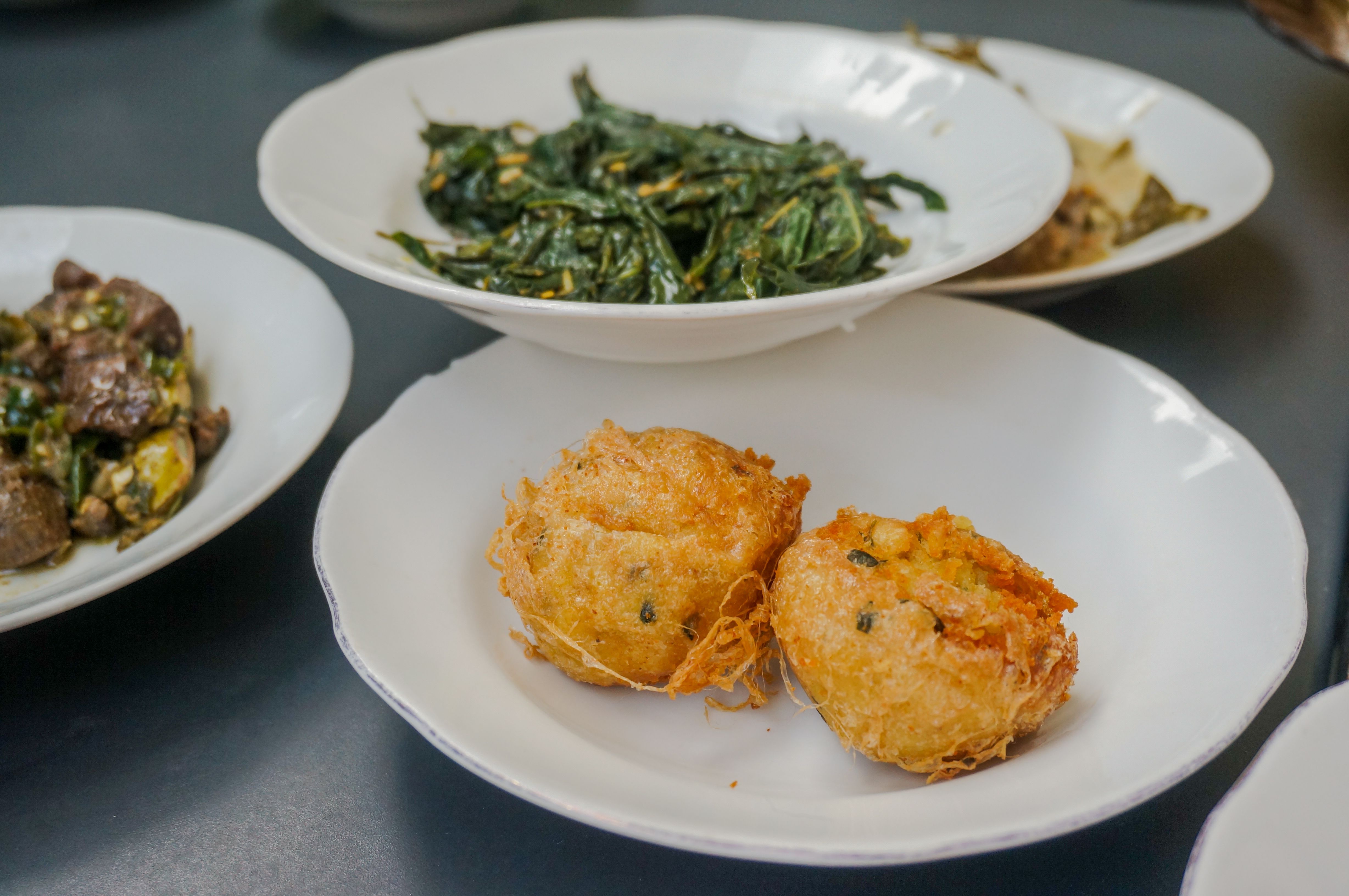
Photo: Firman Marek_Brew / Pexels
The diets react (see scores below)
Common Ingredients
- potatoes
- eggs
- garlic
- shallots
- celery
- white pepper
- nutmeg
- salt
- scallions
Specific recipes may vary.
Incompatible with 5 of 11 diets
Diet Ratings
Perkedel are Indonesian potato fritters where potatoes are the dominant ingredient. Potatoes are extremely high in net carbohydrates — a medium potato contains roughly 30-35g net carbs. Even a small serving of perkedel (2-3 pieces) would likely exceed the entire daily keto carb budget of 20-50g. There is no meaningful way to consume this dish in a standard portion and remain in ketosis. The eggs provide some fat and protein, but they cannot offset the overwhelming carb load from the potato base. This is a starchy-vegetable-based snack that is fundamentally incompatible with ketogenic principles.
Perkedel is an Indonesian fried potato fritter that contains eggs as a binding agent. Eggs are an animal product and are explicitly excluded from a vegan diet. All other ingredients — potatoes, garlic, shallots, celery, white pepper, nutmeg, salt, and scallions — are fully plant-based, but the presence of eggs makes this dish non-vegan in its traditional form. A vegan version could be made by substituting eggs with a plant-based binder such as flaxseed meal, aquafaba, or cornstarch.
Perkedel is an Indonesian potato fritter where most ingredients are paleo-friendly — eggs, garlic, shallots, celery, scallions, white pepper, and nutmeg are all approved. However, two issues place this dish in the caution zone. First, white potatoes are debated within the paleo community: Cordain's original framework excludes them, while modern practitioners like Mark Sisson and the Whole30 protocol permit them. Second, salt is listed as an ingredient, which is explicitly excluded under strict paleo rules (no added salt). Traditionally, perkedel is also deep-fried, which raises the question of frying oil — seed oils commonly used in Indonesian cooking (palm olein, soybean) would be non-paleo, though the dish could be pan-fried in coconut oil. The combination of debated white potatoes, added salt, and likely seed oil frying pushes this into caution territory rather than approve.
Strict Cordain-school paleo would rate this closer to avoid due to white potatoes (high glycemic index, excluded in The Paleo Diet) and added salt. Conversely, more permissive paleo frameworks (Sisson's Primal Blueprint, Whole30) would accept white potatoes and might overlook minimal salt use, potentially rating this as approve if cooked in coconut oil.
Perkedel is an Indonesian potato fritter made primarily from potatoes, eggs, and aromatics. The core ingredients — potatoes, garlic, shallots, celery, scallions — are wholesome plant-based foods consistent with Mediterranean principles. Eggs are an acceptable moderate ingredient. However, perkedel is traditionally deep-fried, which introduces a significant concern: if fried in non-olive oil (common in Indonesian cooking), it contradicts the Mediterranean fat principle. Even if olive oil were used, deep-frying as a cooking method is not aligned with Mediterranean dietary patterns, which favor baking, roasting, or light sautéing. The starchy potato base without whole grains or legumes also limits its nutritional alignment. As an occasional snack with good ingredient quality, it is acceptable in moderation but not a Mediterranean staple.
Some Mediterranean diet interpretations are flexible about occasional fried preparations, particularly when olive oil is used — traditional Spanish patatas bravas and Greek fried zucchini show that frying is not entirely excluded from Mediterranean culinary tradition. If baked or pan-fried in olive oil, this dish could score more favorably given its plant-forward ingredient list.
Perkedel is an Indonesian potato fritter that is fundamentally incompatible with the carnivore diet. The primary ingredient is potatoes, a starchy plant food that is strictly excluded from all tiers of carnivore eating. The dish also contains multiple other plant-derived ingredients: garlic, shallots, celery, white pepper, nutmeg, and scallions — all of which are plant foods and most are spices or aromatics excluded even by more lenient carnivore practitioners. The only carnivore-compatible ingredient is eggs and salt. This dish has no animal protein base and is essentially a plant-based snack with a small egg binder. It provides high carbohydrates from potatoes and numerous plant compounds that strict carnivore aims to eliminate entirely.
Perkedel is an Indonesian potato fritter made by mashing potatoes, mixing with eggs, aromatics, and spices, then shaping into patties and frying. All listed ingredients — potatoes, eggs, garlic, shallots, celery, white pepper, nutmeg, salt, and scallions — are individually Whole30 compliant. However, the dish falls into a gray zone under Rule 4: it is a formed, fried patty that mimics the texture and experience of a fritter or croquette, which are in the same spirit-of-the-program category as items like pancakes, tots, and hash brown patties. The Whole30 program explicitly lists 'tots' and 'french fries' as recreated junk food to avoid, and Perkedel is functionally a potato tot/fritter. This is the key tension — all ingredients are clean, but the preparation style (mashed potato shaped into a fried cake/patty) closely resembles the excluded 'tot' format.
Official Whole30 guidelines explicitly call out 'tots' and 'french fries' as disallowed even with compliant ingredients, which could encompass Perkedel as a fried, shaped potato cake. However, some Whole30 practitioners argue that Perkedel is a culturally traditional savory side dish — not a recreation of a Western junk food — and that the spirit of the rule targets mimicking comfort foods, not all potato preparations; roasted or pan-cooked potato patties for a meal may be seen as acceptable by some coaches.
Perkedel contains two high-FODMAP ingredients that make it unsuitable during the elimination phase: garlic (high in fructans at any culinary amount) and shallots (also high in fructans/GOS). These alliums are among the most concentrated sources of FODMAPs and cannot be made safe through portion reduction at typical cooking quantities. Scallions (green onions) are low-FODMAP only in the green tops — if the white bulb portions are used, they are also high-FODMAP. Potatoes, eggs, celery (in small amounts), white pepper, nutmeg, and salt are all low-FODMAP and unproblematic. However, the garlic and shallots alone are sufficient to classify this dish as high-FODMAP and unsafe during elimination.
Perkedel is an Indonesian potato fritter made from mashed potatoes mixed with eggs, aromatics (garlic, shallots, scallions, celery), and spices, then pan-fried or deep-fried. The base ingredients are largely DASH-friendly: potatoes provide potassium and fiber, and the aromatics add flavor with minimal sodium impact. However, the dish is typically deep-fried or pan-fried in oil, which significantly increases total fat content and caloric density beyond what DASH emphasizes. Added salt during preparation can push sodium into a moderate-to-high range depending on portion and cook. Eggs are present but in modest amounts relative to the potato base. The frying method is the primary concern — if baked or lightly pan-fried with minimal oil, this dish would score higher. As commonly prepared (deep-fried), it sits in the caution zone due to elevated fat from frying and variable sodium from added salt.
NIH DASH guidelines emphasize limiting total and saturated fat and favor low-fat cooking methods, which would flag the typical deep-fried preparation. However, an updated clinical interpretation notes that the potato base is nutrient-dense and potassium-rich, and if perkedel is baked or air-fried with sodium minimized, many DASH-oriented dietitians would consider it acceptable as an occasional snack within portion guidelines.
Perkedel is an Indonesian potato fritter where potatoes are the dominant ingredient. Potatoes are explicitly listed as an 'unfavorable' high-glycemic carbohydrate in Dr. Sears' Zone Diet framework — they appear alongside corn and bananas as carbs to avoid due to their high glycemic load. A typical serving of perkedel would be almost entirely high-GI carbohydrate with minimal lean protein and likely fried in oil (often omega-6-heavy vegetable oils). The eggs provide some protein but in insufficient quantity to balance the macro ratio, and the dish lacks lean protein as a primary component. There is no practical way to portion this snack into a balanced Zone block without it being nearly entirely an unfavorable carbohydrate load. The aromatics (garlic, shallots, scallions, celery) are Zone-favorable but represent negligible macro contribution. This scores at the low end of 'caution' rather than 'avoid' only because eggs do contribute some protein and the dish is not pure sugar — but it is very difficult to incorporate into a Zone-compliant meal.
Perkedel is an Indonesian potato patty made from mashed potatoes, eggs, and aromatics. The ingredient profile is mixed from an anti-inflammatory standpoint. On the positive side, garlic and shallots contain quercetin and allicin with documented anti-inflammatory properties. Scallions and celery add antioxidants and polyphenols. Eggs contribute choline and selenium. White pepper and nutmeg offer modest anti-inflammatory compounds. However, potatoes are a starchy, moderate-to-high glycemic carbohydrate that provides little fiber relative to its glycemic load — not inherently pro-inflammatory but not a standout anti-inflammatory food. The dish's main concern lies in preparation: traditional perkedel are pan-fried or deep-fried, typically in vegetable or palm oil, which would significantly worsen the inflammatory profile (omega-6 load, oxidized oils). If rated on ingredients alone, the dish is largely neutral. The cooking method — almost certainly frying — pushes it into caution territory. Baked or air-fried versions would rate more favorably. No red flags like processed additives, refined sugars, or trans fats are present in the ingredient list itself.
Some anti-inflammatory practitioners following Dr. Weil's framework would view this more favorably, noting that garlic, shallots, and eggs are all included or tolerated in anti-inflammatory eating, and that potatoes — while starchy — are a whole food with potassium and some resistant starch. However, the frying method typical of perkedel introduces seed oils high in omega-6 fatty acids, which most anti-inflammatory protocols flag as problematic, while mainstream nutrition science (AHA) considers many of these oils acceptable in moderation.
Perkedel are Indonesian fried potato patties — the defining preparation is deep-frying, which makes them a poor fit for GLP-1 patients on multiple dimensions. The base is mashed potato, a refined starchy carbohydrate with low fiber density and minimal protein. Deep-frying adds significant saturated fat, which worsens GLP-1 side effects including nausea, bloating, and reflux due to slowed gastric emptying. The egg content contributes a small amount of protein, but not nearly enough to compensate for the high fat load and low nutrient density per calorie. The aromatics (garlic, shallots, scallions, celery) are fine, and white pepper and nutmeg are acceptable in small amounts, but these do not meaningfully alter the nutritional profile. As a snack, perkedel also lacks the protein density (15–30g per eating occasion) that GLP-1 patients need to preserve muscle mass. Even in a small portion, the fat-to-protein-to-fiber ratio is unfavorable for this population.
Some GLP-1-aware dietitians note that if perkedel were baked or air-fried instead of deep-fried, the fat content drops substantially and the dish becomes more tolerable — a few clinicians allow baked versions occasionally as a small side rather than a snack, particularly for patients who are culturally reliant on these foods and tolerating GLP-1 side effects well. However, the low protein and fiber content remain concerns regardless of cooking method.
*See how scores were generated at our methodology page.
Nutritional profile
Six traits that cut across every diet.
Fiber & Plants
How much whole-plant food and fiber it delivers.
Healthy Fats
The quality of its fats (unsaturated, omega-3).
Whole / Unprocessed
How close it is to its natural, unprocessed form.
Gut Gentle
How easy it is on digestion (low FODMAP, few irritants).
Low Glycemic
How little it spikes your blood sugar.
Protein Density
How much protein it packs per calorie.
Controversy Index
Higher controversy = more disagreement between diets.
Diet-Specific Tips
 Paleo — 4/10
View tips
- White potatoes are debated — excluded by Cordain, accepted by Sisson and Whole30
- Added salt is excluded under strict paleo guidelines
- Frying medium matters — seed oils (common in Indonesian cooking) are non-paleo; coconut oil would be acceptable
- Eggs, garlic, shallots, celery, scallions, white pepper, and nutmeg are all paleo-approved
- No grains or legumes present
- Processing method (deep frying) contradicts paleo whole-food philosophy
 Mediterranean — 5/10
View tips
- Plant-based core ingredients (potatoes, garlic, shallots, scallions, celery) are Mediterranean-friendly
- Eggs are a moderate-use ingredient consistent with Mediterranean guidelines
- Traditional deep-frying method conflicts with Mediterranean cooking practices
- Likely fried in non-olive oil in authentic preparation, which contradicts Mediterranean fat principles
- No whole grains or legumes; potato is a refined starch source
- No red meat or added sugars — avoids the worst offenders
 Whole30 — 5/10
View tips
- All listed ingredients are individually Whole30 compliant
- Perkedel is a formed, fried potato patty/fritter — functionally similar to 'tots' which Whole30 explicitly excludes
- Rule 4 prohibits recreating junk food forms even with compliant ingredients
- Cultural dish, not a direct Western junk food recreation — creates ambiguity
- Cooking method (deep frying mashed potato patties) is the primary concern, not the ingredients
 DASH — 5/10
View tips
- Potatoes are a DASH-positive ingredient — rich in potassium and fiber
- Typically deep-fried, significantly increasing total fat and caloric load
- Added salt raises sodium concern; amount varies widely by preparation
- Eggs add modest saturated fat and cholesterol but in small quantities
- Aromatics (garlic, shallots, scallions, celery) are DASH-compatible flavor enhancers
- Baked or air-fried versions with reduced salt would align much better with DASH principles
- No high-sodium processed ingredients, which limits worst-case sodium exposure
 Zone — 5/10
View tips
- Potatoes are explicitly classified as 'unfavorable' high-glycemic carbohydrates in Zone Diet methodology
- Dish is predominantly carbohydrate with minimal lean protein — breaks the 40/30/30 ratio severely
- Typically deep-fried, adding likely omega-6-heavy seed oils rather than favorable monounsaturated fats
- Eggs provide some protein but insufficient to balance macros at normal serving size
- No lean protein source listed as primary ingredient — category confirms 'none'
- Aromatics (garlic, shallots, scallions, celery) are Zone-favorable but nutritionally minor in this context
 Anti-Inflammatory — 5/10
View tips
- Potatoes are a moderate-glycemic starchy carbohydrate with limited anti-inflammatory benefit
- Garlic and shallots contribute allicin and quercetin with anti-inflammatory properties
- Eggs are a moderate food under anti-inflammatory guidelines — neither strongly beneficial nor harmful
- Traditional frying preparation likely introduces high-omega-6 seed oils, worsening the inflammatory profile
- Celery and scallions add modest antioxidant value
- No processed additives, refined sugars, or trans fats in the ingredient list
- Preparation method (frying vs. baking) is the key determinant of inflammatory impact