Indonesian
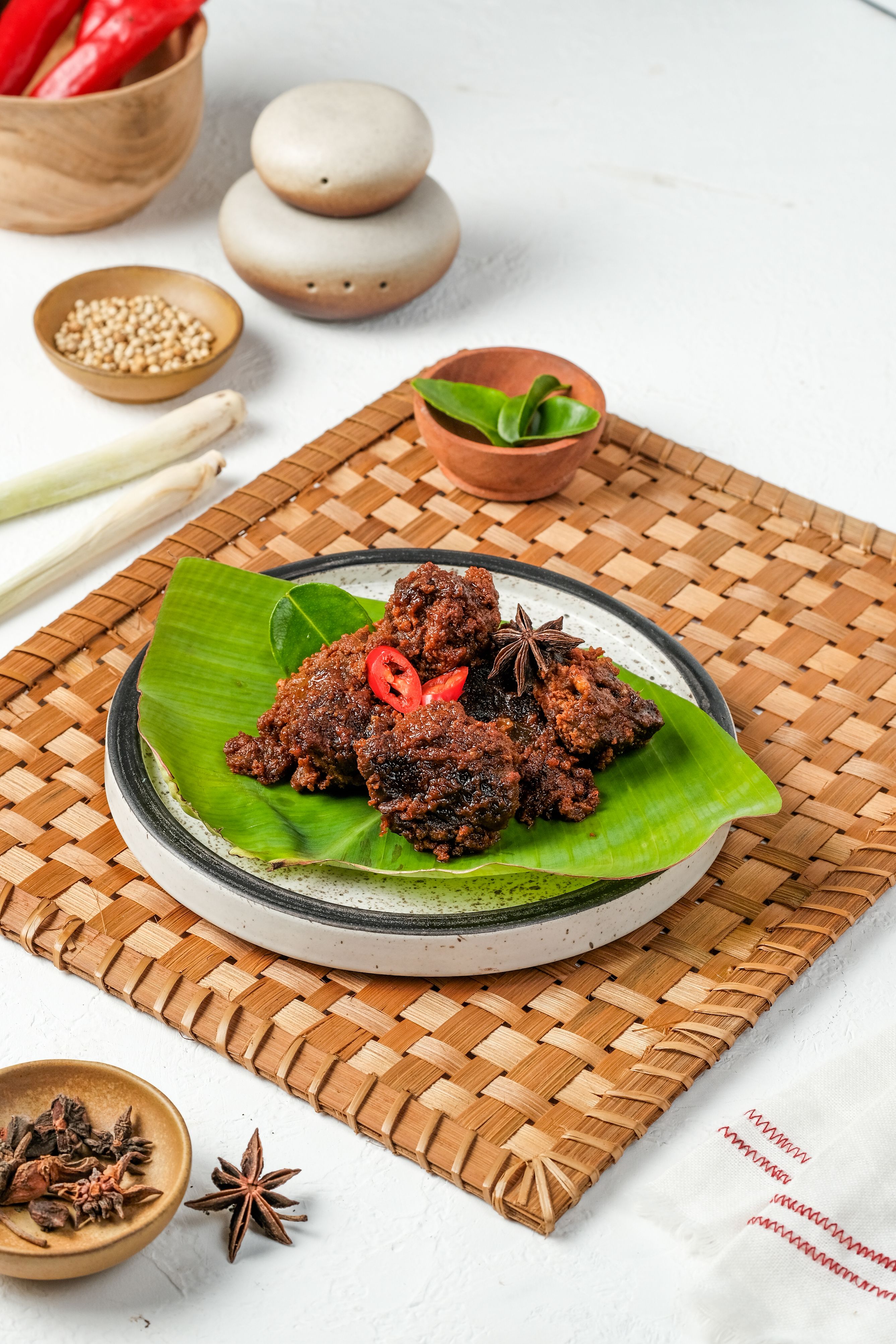
Rendang
The diets react (see scores below)
Common Ingredients
- beef
- coconut milk
- lemongrass
- galangal
- garlic
- shallot
- chile
- turmeric leaf
- kaffir lime leaf
- candlenut
Specific recipes may vary.
Incompatible with 6 of 11 diets
Diet Ratings
Rendang is an excellent keto dish at its core. Beef provides high-quality protein and fat, while coconut milk delivers substantial healthy saturated fat (MCTs). The aromatic ingredients — lemongrass, galangal, garlic, shallots, chiles, and spices — contribute minimal net carbs in the quantities used as seasoning paste. Candlenuts add a small amount of carbs but are used sparingly. The long slow-cooking process reduces the coconut milk significantly, concentrating fat. A standard serving (~200g) likely contains 5–10g net carbs, comfortably within keto limits. The dish is naturally high-fat, moderate-protein, and whole-food based with no grains or added sugars in the traditional preparation.
Some stricter keto practitioners flag the cumulative carb load from shallots, galangal, lemongrass, and candlenuts — particularly in restaurant or commercial versions where the spice paste is used more liberally — warning that portion control is still necessary and restaurant rendang may include added sugar or sweeteners that tip it into caution territory.
Rendang is a beef-based dish, making it entirely incompatible with a vegan diet. Beef is a direct animal product and the primary protein of this dish. While many of the accompanying ingredients — coconut milk, lemongrass, galangal, garlic, shallot, chile, turmeric leaf, kaffir lime leaf, and candlenut — are fully plant-based, the foundational ingredient is animal flesh. There is no ambiguity here: this dish cannot be considered vegan in its traditional form. A vegan rendang could theoretically be made by substituting beef with jackfruit, tempeh, or tofu, which would produce an approve-rated dish.
Rendang is a slow-cooked beef dish using whole, unprocessed ingredients that align well with paleo principles. Beef is a cornerstone paleo protein, and the aromatics — lemongrass, galangal, garlic, shallots, chili, turmeric leaf, kaffir lime leaf — are all whole herbs and spices available in nature. Coconut milk is widely accepted in paleo as a whole-food fat source from coconuts. Candlenuts (kemiri) are tree nuts, analogous to macadamia nuts, and are generally paleo-compliant. The dish contains no grains, legumes, seed oils, refined sugar, or dairy. Traditional rendang is minimally processed — the ingredients are simply cooked together — which fits the paleo philosophy well. The main gray area is coconut milk: most commercial versions contain guar gum or other stabilizers, which would push the dish toward 'caution.' Using homemade or additive-free coconut milk keeps it solidly in 'approve' territory.
Strict Cordain-school paleo practitioners may flag commercially prepared coconut milk for containing guar gum (a legume-derived additive) or emulsifiers. Additionally, some very strict interpretations question candlenuts due to limited data on their anti-nutrient profile, though most paleo authorities treat all tree nuts as approved.
Rendang presents multiple conflicts with Mediterranean diet principles. The primary protein is beef (red meat), which should be limited to only a few times per month. More critically, coconut milk is the dominant fat source — a saturated fat-heavy ingredient that directly contradicts the Mediterranean diet's emphasis on extra virgin olive oil as the primary fat. Coconut milk is neither traditional to Mediterranean cuisine nor endorsed as a healthy fat in Mediterranean diet frameworks. The aromatic herbs and spices (lemongrass, galangal, garlic, turmeric, chili) are positive, but they cannot offset the core issues. This dish is a double violation: red meat as the protein base and coconut milk as the fat base.
Rendang is a heavily spiced Indonesian beef dish that, despite its beef base, is overwhelmingly non-carnivore due to its extensive use of plant-derived ingredients. Coconut milk (a plant fat/liquid), lemongrass, galangal, garlic, shallot, chile, turmeric leaf, kaffir lime leaf, and candlenut are all strictly excluded on the carnivore diet. The beef itself is the only carnivore-compliant component. The dish is essentially defined by its rich plant-based spice paste and coconut milk braise — removing these would leave plain beef, which is not rendang. While some very lenient carnivore practitioners use minimal spices, the sheer volume and variety of plant ingredients here — including nuts (candlenut), aromatics, and multiple herb leaves — make this dish incompatible with any tier of carnivore eating. Even the most permissive carnivore practitioners who tolerate trace spices would draw the line at coconut milk, alliums, and candlenuts as primary structural ingredients.
Rendang as described is an excellent Whole30-compliant dish. Every ingredient is explicitly allowed: beef (unprocessed meat), coconut milk (natural fat), lemongrass, galangal, garlic, shallot, chile, turmeric leaf, and kaffir lime leaf are all whole vegetables, aromatics, and herbs. Candlenut (kemiri) is a tree nut, not a legume, and is Whole30-compatible. There are no grains, dairy, added sugars, soy, or other excluded ingredients in this traditional preparation. Rendang is a slow-cooked, whole-food dish that exemplifies the spirit of the Whole30 program — real ingredients, no processed additives.
Rendang contains multiple high-FODMAP ingredients that make it unsuitable during the elimination phase. Garlic is one of the highest-FODMAP foods tested by Monash University, containing significant fructans even in small amounts. Shallots are similarly high in fructans and GOS. These two ingredients alone are sufficient to classify the dish as high-FODMAP. Coconut milk is low-FODMAP at 1/2 cup but can become moderate-to-high at larger quantities typical in rendang. The remaining ingredients — beef, lemongrass, galangal, chili, turmeric leaf, kaffir lime leaf, and candlenut — are generally low-FODMAP or untested but not problematic. However, the garlic and shallot combination is a dealbreaker and cannot be offset by safe ingredients elsewhere in the dish.
Rendang presents multiple significant conflicts with DASH diet principles. The dish is built on two DASH-discouraged ingredients: red meat (beef) and coconut milk, which is very high in saturated fat. DASH guidelines explicitly limit red meat and restrict saturated fat intake, recommending lean poultry or fish as primary proteins. Coconut milk — a tropical oil-adjacent product — is extremely high in saturated fat (approximately 21g per 100ml), directly opposing DASH's emphasis on limiting saturated fat and avoiding tropical oils. Candlenut also adds additional fat load. While the aromatic base (lemongrass, galangal, garlic, shallots, turmeric leaf, kaffir lime leaf, chili) is rich in beneficial phytonutrients and the dish is naturally low in sodium, these benefits are substantially outweighed by the high saturated fat content from both the beef and coconut milk. The combination of red meat and coconut milk in the quantities typical of rendang makes this dish fundamentally incompatible with DASH eating goals for most servings.
NIH DASH guidelines categorically limit red meat and saturated fat, which rendang contains in high amounts via beef and coconut milk. However, some updated clinical interpretations note that rendang is consumed in small portions in traditional Indonesian meals alongside vegetables and rice, and emerging research questions whether saturated fat from whole-food sources like coconut carries the same cardiovascular risk as processed saturated fats — some DASH-aligned nutritionists may allow occasional very small servings rather than a blanket exclusion.
Rendang presents a mixed Zone Diet profile. On the positive side, it contains lean protein from beef (though the cut matters significantly), and the aromatics (lemongrass, galangal, garlic, shallots, turmeric leaf, kaffir lime leaf, chile) are all Zone-favorable low-glycemic carbohydrates rich in polyphenols and anti-inflammatory compounds that Sears would appreciate. However, the dish has two notable Zone challenges: (1) Beef, particularly the cuts traditionally used in rendang (chuck, brisket, short rib), tends to be fatty rather than lean, adding saturated fat beyond what Zone recommends. (2) Coconut milk is high in saturated fat — predominantly lauric acid — which conflicts with Zone's preference for monounsaturated fats and its traditional caution against saturated fat. In a typical rendang serving, fat calories are likely to far exceed the Zone's 30% fat target, and the fat profile skews heavily saturated rather than monounsaturated. The carbohydrate contribution from the aromatics is minimal and low-glycemic, meaning the macronutrient imbalance is primarily a fat excess and potential protein-to-fat ratio problem. Rendang can technically be incorporated into a Zone meal in a small, controlled portion paired with a large volume of non-starchy vegetables to balance ratios, but as typically served it is difficult to fit cleanly into Zone blocks without significant modification.
Sears' later work, particularly 'The Zone Diet' evolution toward anti-inflammatory eating, acknowledges that saturated fats from whole food sources are less problematic than once thought, particularly when omega-3 intake is adequate. Some Zone practitioners note that coconut milk contains medium-chain triglycerides (MCTs) which are metabolized differently from long-chain saturated fats. Additionally, rendang's extraordinary polyphenol density from its aromatic ingredients (curcumin from turmeric family, allicin from garlic, capsaicin from chile) aligns perfectly with Sears' anti-inflammatory focus, and strict Zone practitioners following his later writings might rate this more favorably than earlier Zone publications would suggest.
Rendang presents a genuinely mixed anti-inflammatory profile. On the positive side, it contains an impressive array of anti-inflammatory spices and aromatics: turmeric leaf and galangal (both from the ginger family, rich in curcuminoids and gingerols), lemongrass (contains citral, with antioxidant and anti-inflammatory properties), garlic and shallots (rich in quercetin, allicin, and organosulfur compounds), kaffir lime leaf (flavonoids, limonene), and chili (capsaicin is a well-documented anti-inflammatory compound). These ingredients collectively represent some of the most potent anti-inflammatory botanicals in the world. However, the two primary structural ingredients — red meat (beef) and full-fat coconut milk — pull the score down significantly. Beef is classified as a food to limit under anti-inflammatory guidelines due to saturated fat content and association with elevated CRP and other inflammatory markers. Coconut milk is high in saturated fat (predominantly lauric acid), which is contested: some researchers consider lauric acid less inflammatory than other saturated fats, while mainstream anti-inflammatory guidance (including Dr. Weil) recommends limiting full-fat coconut products. Candlenut adds additional saturated fat. The dish is also typically slow-cooked until the coconut milk reduces and nearly fries the meat, concentrating both the beneficial spice compounds and the saturated fat. Net result: a caution rating — extraordinary spice profile partially offsets problematic protein and fat sources, but the heavy saturated fat load prevents an approval.
Some functional medicine and ancestral health practitioners would rate traditional rendang more favorably, arguing that lauric acid in coconut milk is metabolized differently from other saturated fats and may even support immune function, and that unprocessed grass-fed beef contains conjugated linoleic acid (CLA) with anti-inflammatory properties. Conversely, strict anti-inflammatory protocols (including Dr. Weil's pyramid) explicitly limit both red meat and full-fat coconut products, which would push some practitioners toward a lower score or even an 'avoid' classification for regular consumption.
Rendang is one of the most fat-dense preparations in Southeast Asian cuisine and is poorly suited for GLP-1 patients. The dish is built on two compounding fat sources: fatty beef cuts (typically chuck or short rib, often 15–30% fat by weight) and full-fat coconut milk, which is high in saturated fat. Rendang is slow-cooked until nearly all the liquid reduces and the fat is reabsorbed into the meat — this cooking method concentrates rather than drains the fat. A typical serving can exceed 30–40g of fat, predominantly saturated. This profile directly worsens the most common GLP-1 side effects: nausea, bloating, reflux, and prolonged gastric discomfort, all of which are amplified when gastric emptying is already slowed. The chile content adds risk of reflux and GI irritation. While beef does provide protein, the fat-to-protein ratio makes it an inefficient protein source for GLP-1 patients — far better protein density is available from leaner options. Candlenut adds additional fat. The dish has essentially no fiber and minimal digestibility advantages. This is not a portion-sensitivity issue; even a small serving carries a fat load that can trigger significant GI distress in GLP-1 patients.
*See how scores were generated at our methodology page.
Nutritional profile
Six traits that cut across every diet.
Fiber & Plants
How much whole-plant food and fiber it delivers.
Healthy Fats
The quality of its fats (unsaturated, omega-3).
Whole / Unprocessed
How close it is to its natural, unprocessed form.
Gut Gentle
How easy it is on digestion (low FODMAP, few irritants).
Low Glycemic
How little it spikes your blood sugar.
Protein Density
How much protein it packs per calorie.
Controversy Index
Higher controversy = more disagreement between diets.
Diet-Specific Tips
 Keto — 8/10
View tips
- Beef is a zero-carb, high-fat, high-protein keto staple
- Coconut milk is rich in MCT-heavy saturated fat, highly keto-friendly
- Aromatic paste (shallots, garlic, galangal, lemongrass) contributes modest net carbs
- Candlenuts add minor carbs but used in small quantities
- No grains, starches, or added sugars in traditional preparation
- Restaurant or packaged versions may contain added sugar — verify before consuming
- Estimated net carbs per serving ~5–10g, fits within daily keto budget
 Paleo — 8/10
View tips
- Beef is a core paleo protein — fully approved
- Coconut milk is paleo-approved; watch for guar gum or additives in commercial versions
- All aromatics (lemongrass, galangal, garlic, shallots, chili, turmeric leaf, kaffir lime leaf) are whole herbs/spices — fully paleo
- Candlenuts are tree nuts and generally paleo-compliant
- No grains, legumes, dairy, refined sugar, or seed oils
- Traditional preparation is slow-cooked and minimally processed — consistent with paleo philosophy
 Whole30 — 9/10
View tips
- Beef is a fully compliant protein source
- Coconut milk is an approved natural fat
- All aromatics (lemongrass, galangal, garlic, shallot, chile) are whole, compliant ingredients
- Herbs (turmeric leaf, kaffir lime leaf) are explicitly allowed
- Candlenut is a tree nut — not a legume — and is Whole30-compatible
- No grains, dairy, added sugars, soy, or other excluded ingredients present
- Traditional preparation aligns with Whole30's whole-food philosophy
 Zone — 4/10
View tips
- Beef cut typically used (fatty cuts like chuck/brisket) adds excess saturated fat beyond Zone targets
- Coconut milk is high in saturated fat, conflicting with Zone's preference for monounsaturated fat sources
- Aromatic ingredients (lemongrass, galangal, garlic, shallots, chile, turmeric leaf, kaffir lime leaf) are Zone-favorable, polyphenol-rich, low-glycemic carbohydrates
- Overall fat-to-protein ratio in a typical serving likely exceeds Zone's 30% fat ceiling
- No high-glycemic carbohydrates present — the dish avoids sugar, starch, and grains
- Can be portioned into Zone blocks but requires pairing with large quantities of non-starchy vegetables to correct macronutrient ratios
- Candlenut adds additional fat load (high fat nut), compounding the saturated fat concern
 Anti-Inflammatory — 4/10
View tips
- Beef (red meat) is classified as a food to limit — associated with saturated fat and pro-inflammatory potential
- Full-fat coconut milk is high in saturated fat — cautioned under most anti-inflammatory frameworks despite debate over lauric acid
- Galangal and turmeric leaf provide curcuminoids and gingerol-related compounds with well-documented anti-inflammatory effects
- Garlic and shallots supply allicin and quercetin — both reduce inflammatory markers in research
- Chili peppers contain capsaicin — a well-established anti-inflammatory and antioxidant compound
- Lemongrass and kaffir lime leaf contribute antioxidant flavonoids and terpenes
- Candlenut adds additional saturated fat to an already high-saturated-fat dish
- Slow-cooking may enhance bioavailability of fat-soluble spice compounds (curcumin is fat-soluble) while also concentrating saturated fat as coconut milk reduces