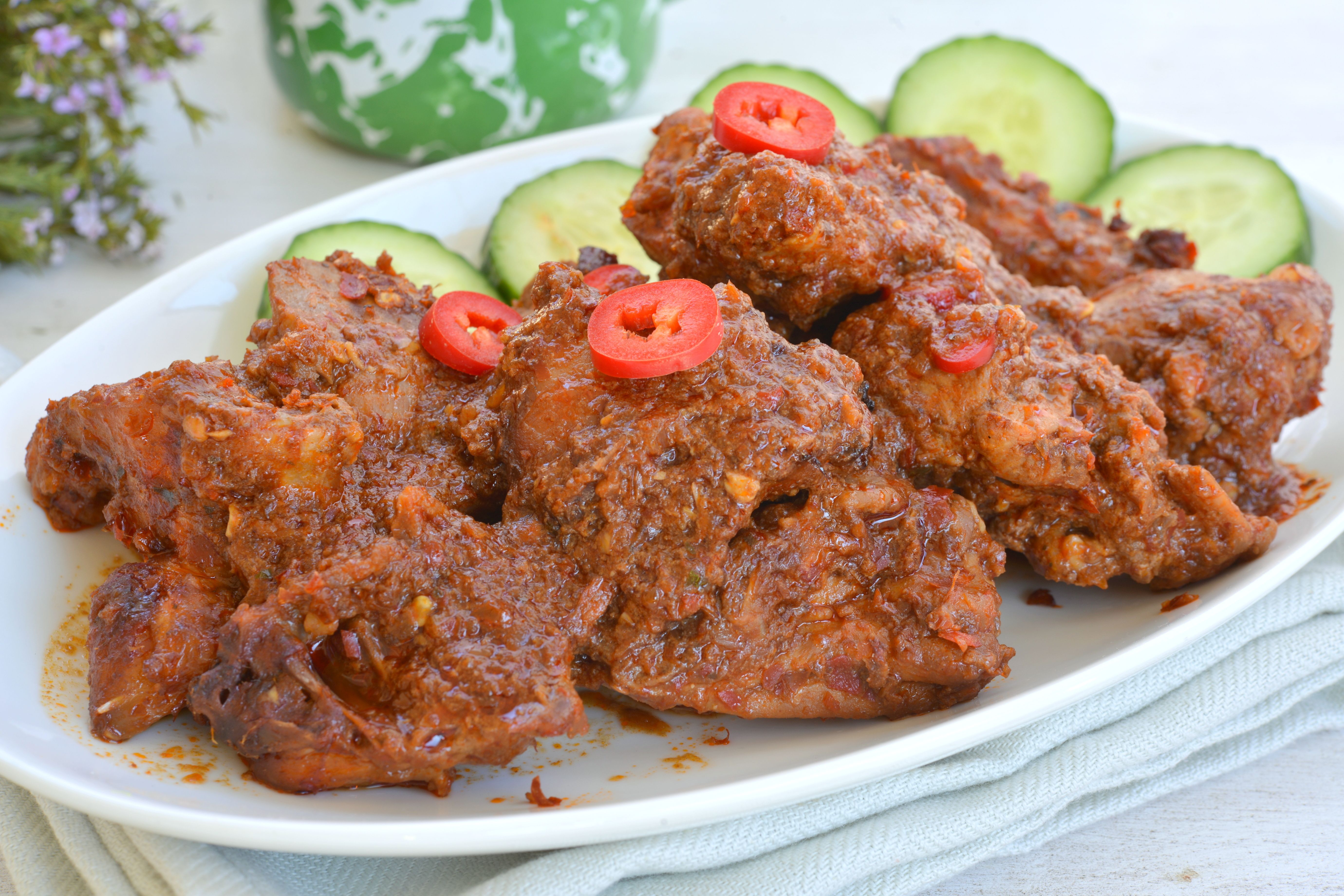
Photo: Nonik Yench / Pexels
Indonesian
Rendang Ayam
The diets react (see scores below)
Common Ingredients
- chicken
- coconut milk
- chili
- lemongrass
- galangal
- turmeric leaves
- garlic
- shallots
- kaffir lime leaves
- candlenuts
Specific recipes may vary.
Incompatible with 3 of 11 diets
Diet Ratings
Rendang Ayam is fundamentally keto-friendly. Chicken provides quality protein, and coconut milk contributes significant healthy saturated fat, aligning well with the 70-80% fat target. The aromatics — lemongrass, galangal, turmeric leaves, kaffir lime leaves, garlic, shallots, and chili — are used in relatively small quantities as flavor bases, contributing modest net carbs that remain manageable in a standard serving. Candlenuts add a small amount of fat and minimal carbs. Shallots and garlic are the primary carb contributors among the aromatics, but their quantities in a typical serving are low enough to stay within keto limits. The slow-cooked, dry-style preparation of rendang concentrates flavors without adding sugars or grains. A standard serving (150-200g) is well within daily net carb limits.
Some strict keto practitioners flag shallots and the cumulative carb load of multiple aromatic ingredients, arguing that the spice paste can push net carbs higher than estimated — particularly in restaurant versions where ratios are unknown. Carnivore-adjacent keto followers may also object to the volume of plant-based aromatics on principle.
Rendang Ayam contains chicken as its primary protein, which is poultry and a direct animal product. This is an unambiguous violation of vegan dietary rules. All other ingredients in the dish — coconut milk, chili, lemongrass, galangal, turmeric leaves, garlic, shallots, kaffir lime leaves, and candlenuts — are fully plant-based, but the inclusion of chicken makes the entire dish non-vegan. There is no meaningful debate within the vegan community about whether poultry is excluded.
Rendang Ayam is an excellent fit for the paleo diet in its traditional form. Chicken is a clean, unprocessed protein fully approved under paleo guidelines. The spice paste (bumbu) is built entirely from whole, unprocessed plant ingredients — chili, lemongrass, galangal, turmeric leaves, garlic, shallots, and kaffir lime leaves — all of which are herbs, spices, or vegetables available to pre-agricultural humans. Candlenuts (Aleurites moluccanus) are a tree nut used as a thickener and are paleo-compatible. Coconut milk is a whole-food fat source widely accepted in the paleo community. The dish contains no grains, legumes, dairy, refined sugar, seed oils, or processed additives in its authentic preparation. The one minor caveat is that some commercial rendang pastes or preparations may include added salt, sugar, or preservatives — but the dish as listed with whole ingredients is clean.
Some strict Cordain-school paleo practitioners may flag coconut milk's high saturated fat content or question candlenuts, as they are less commonly discussed in Western paleo literature. Additionally, traditional rendang often includes added salt, which purist paleo authorities discourage, though most modern paleo practitioners accept natural salt use in cooking.
Rendang Ayam uses chicken as its primary protein, which is acceptable in moderation under Mediterranean diet guidelines (poultry a few times per week). The aromatic spice base — garlic, shallots, turmeric, lemongrass, galangal, chili, kaffir lime leaves — is rich in anti-inflammatory plant compounds and broadly compatible with the diet's emphasis on whole, minimally processed ingredients. However, coconut milk is the significant sticking point: it is high in saturated fat and is not a traditional Mediterranean fat source, standing in direct contrast to the diet's reliance on extra virgin olive oil as the primary fat. Candlenuts also add additional saturated fat. The dish is not processed or sugar-laden, and the spice profile is nutritionally positive, but the heavy coconut milk base pulls it away from Mediterranean principles.
Some modern Mediterranean diet researchers apply the diet's principles more broadly to any whole-food, plant-rich cooking pattern, and may view coconut milk more charitably given its traditional culinary context and the presence of medium-chain triglycerides. However, mainstream clinical guidelines (e.g., from the Harvard T.H. Chan School of Public Health and traditional Greek/Italian dietary models) consistently prioritize olive oil and flag coconut milk as a high-saturated-fat ingredient inconsistent with the diet's cardiovascular benefits.
Rendang Ayam is fundamentally incompatible with the carnivore diet. While chicken is an acceptable animal protein, the dish is defined by an extensive array of plant-based ingredients that make up the core of its flavor and structure. Coconut milk is a plant-derived fat source. Chili, lemongrass, galangal, turmeric leaves, garlic, shallots, kaffir lime leaves, and candlenuts are all plant foods — spices, aromatics, and nuts — that are categorically excluded on a carnivore diet. The dish cannot be modified to be carnivore-compatible without ceasing to be rendang entirely. There is no meaningful animal-to-plant ratio argument here; the plant ingredients are structural, not incidental.
Rendang Ayam is a traditional Indonesian dry curry made entirely from whole, unprocessed ingredients that are all Whole30 compliant. Chicken is an approved protein. Coconut milk is a natural fat/liquid with no excluded additives (assuming no added sugar, carrageenan, or sulfites — though all three are now Whole30-compatible per 2024 rule changes anyway). Chili, lemongrass, galangal, turmeric leaves, garlic, shallots, and kaffir lime leaves are all vegetables, aromatics, or herbs explicitly allowed on Whole30. Candlenuts (kemiri) are tree nuts, not legumes or grains, and are Whole30 compliant. There are no grains, legumes, dairy, added sugars, or any other excluded ingredients in this dish as described.
Rendang Ayam contains two significant high-FODMAP ingredients that make it unsuitable during the elimination phase: garlic (high in fructans, rated avoid at any culinary amount by Monash) and shallots (also high in fructans, a member of the onion family and equally problematic). These two ingredients are core to the rendang spice paste and cannot be reduced to trace amounts in a standard preparation. Coconut milk is low-FODMAP at 1/2 cup per serve, and chicken is FODMAP-free. Lemongrass, galangal, turmeric leaves, chili, kaffir lime leaves, and candlenuts are all low-FODMAP at typical culinary quantities. However, the unavoidable presence of garlic and shallots as structural flavor components of the dish makes the overall dish high-FODMAP regardless of other ingredients.
Rendang Ayam presents a mixed DASH profile. The chicken (lean protein) and aromatic spices (lemongrass, galangal, turmeric, garlic, shallots, kaffir lime leaves) are well-aligned with DASH principles, providing anti-inflammatory compounds and flavor without sodium. However, the dish's defining characteristic — cooking in generous amounts of coconut milk until it is nearly fully absorbed — is the primary DASH concern. Coconut milk is high in saturated fat (predominantly lauric acid from a tropical oil source), which DASH guidelines explicitly limit. A typical serving of rendang can contain 15–25g of fat, a significant portion of which is saturated. Candlenuts also contribute additional fat. Sodium content, while not inherently high from these ingredients, can rise depending on preparation. The chicken protein is a positive, and the dish contains no added sugars or processed ingredients, which prevents a lower score. Occasional consumption in a portion-controlled context is acceptable, but regular inclusion conflicts with DASH's emphasis on limiting saturated fat and tropical oils.
NIH DASH guidelines explicitly restrict saturated fat and categorize coconut-derived tropical oils as foods to limit, which would push this dish toward 'avoid.' However, some updated clinical interpretations note that the lauric acid in coconut milk may behave differently from other saturated fats in terms of HDL impact, and that whole-food culinary coconut milk (as opposed to processed coconut oil) delivers it alongside fiber and phytonutrients — some DASH-aligned dietitians therefore permit small portions in an otherwise compliant diet rather than categorically excluding it.
Rendang Ayam presents a mixed Zone Diet profile. The chicken is a lean, Zone-favorable protein source that aligns well with the 30% protein target. The aromatic ingredients — lemongrass, galangal, turmeric leaves, garlic, shallots, kaffir lime leaves, and chili — are low-glycemic, polyphenol-rich, and anti-inflammatory, which Sears would actively applaud. However, the dominant concern is coconut milk, which is high in saturated fat (primarily lauric acid). Traditional rendang is slow-cooked until most of the coconut milk is absorbed into the chicken, resulting in a dish that can be quite high in saturated fat per serving. Candlenuts also contribute additional fat. The fat profile skews heavily saturated rather than the monounsaturated fats Sears prefers. This dish lacks a carbohydrate block component entirely, meaning it needs to be paired with low-glycemic vegetables or a small portion of whole grain to complete a Zone meal. With careful portioning — a modest serving of chicken to hit ~25g protein, paired with a large serving of low-GI vegetables — this dish can fit Zone ratios, but the saturated fat load makes it a 'use with care' food rather than an ideal Zone building block.
Some Zone practitioners and later Sears writings (notably 'The Mediterranean Zone') take a more nuanced view of saturated fat, particularly from whole food sources like coconut milk. Lauric acid in coconut milk has some unique metabolic properties, and in the context of an otherwise anti-inflammatory meal rich in polyphenols (turmeric, galangal, lemongrass), some Zone-informed practitioners would rate this dish more favorably, arguing the overall anti-inflammatory spice profile partially offsets the saturated fat concern. Under this view, a smaller portion of rendang could score a 6-7.
Rendang Ayam presents a genuinely mixed anti-inflammatory profile. On the positive side, the spice paste (rempah) is exceptionally rich in anti-inflammatory compounds: turmeric leaves and galangal contribute curcuminoids and gingerol-related phytochemicals, garlic and shallots provide allicin and quercetin, chili peppers deliver capsaicin (a known anti-inflammatory agent), and lemongrass and kaffir lime leaves offer antioxidant flavonoids and essential oils. These aromatics collectively represent one of the most potent spice combinations in Southeast Asian cooking. Chicken as the primary protein is a lean, moderate-category protein consistent with anti-inflammatory principles. However, the defining issue is coconut milk, which forms the base of the sauce and is used in substantial quantities in rendang — typically reduced down to a thick, rich coating. Coconut milk is high in saturated fat (primarily lauric acid), which is a contested ingredient in anti-inflammatory nutrition. Traditional anti-inflammatory frameworks (Dr. Weil) limit saturated fat, placing coconut milk in the 'use sparingly' category. The cooking process — long simmering until the coconut milk fat separates and fries the chicken — further concentrates saturated fat content. Candlenuts add additional fat. The result is a dish with genuinely impressive phytochemical complexity but a significant saturated fat load that tempers its overall anti-inflammatory rating. Portion size matters considerably here.
Dr. Weil's anti-inflammatory framework and mainstream anti-inflammatory research caution against saturated fat from coconut-based sources, recommending it be used sparingly. However, a growing camp within ancestral health, paleo, and whole-food nutrition (including researchers like Dr. Mary Newport and proponents of medium-chain triglyceride research) argue that the lauric acid in coconut milk has neutral-to-beneficial effects on inflammation and cardiovascular risk, and that the rich spice matrix in rendang significantly offsets any concern — making the dish a net anti-inflammatory food in the real-world dietary context.
Rendang Ayam uses chicken as its protein base, which is a strong positive, but the dish is prepared with a significant quantity of coconut milk — a high-saturated-fat ingredient that is the defining characteristic of rendang. Even in the chicken version, a typical serving contains 15–25g of fat, much of it saturated, which directly conflicts with the low-fat guideline for GLP-1 patients. The spice paste (chili, garlic, shallots, galangal, lemongrass, turmeric, kaffir lime) is nutritionally beneficial and anti-inflammatory, but the chili load may worsen nausea or reflux in GLP-1-sensitive individuals. Candlenuts add additional fat. On the positive side, the slow-cooked chicken provides moderate-to-good protein per serving, and the dish is low in refined carbohydrates. However, the high fat content slows digestion further on top of GLP-1-induced delayed gastric emptying, increasing risk of bloating, nausea, and reflux. This dish is not ideal for GLP-1 patients but is not categorically off-limits if consumed in a small portion with attention to fat load.
Some GLP-1-focused dietitians may allow rendang ayam occasionally, noting that coconut milk contains medium-chain triglycerides (MCTs) that are metabolized differently than long-chain saturated fats, and that the dish is protein-forward and low in sugar. Others flag the total saturated fat load and the spice intensity as meaningful GI risk factors for patients already experiencing nausea or gastroparesis-like slowing, and would recommend avoiding it during GLP-1 dose escalation phases in particular.
*See how scores were generated at our methodology page.
Nutritional profile
Six traits that cut across every diet.
Fiber & Plants
How much whole-plant food and fiber it delivers.
Healthy Fats
The quality of its fats (unsaturated, omega-3).
Whole / Unprocessed
How close it is to its natural, unprocessed form.
Gut Gentle
How easy it is on digestion (low FODMAP, few irritants).
Low Glycemic
How little it spikes your blood sugar.
Protein Density
How much protein it packs per calorie.
Controversy Index
Higher controversy = more disagreement between diets.
Diet-Specific Tips
 Keto — 8/10
View tips
- Coconut milk provides substantial healthy saturated fat, supporting ketogenic fat ratios
- Chicken is a clean, moderate-protein source with zero carbs
- Shallots and garlic contribute the most net carbs but are used as aromatics in small amounts
- No added sugars, grains, or starchy ingredients in the traditional recipe
- Candlenuts are low-carb and add healthy fat
- Cumulative carb load from multiple aromatics warrants portion awareness
- Restaurant versions may vary in shallot/spice paste quantity — home preparation is more predictable
 Paleo — 8/10
View tips
- Chicken is a fully approved paleo protein
- Coconut milk is a widely accepted paleo fat source
- All spices and aromatics (lemongrass, galangal, turmeric leaves, kaffir lime leaves, chili, garlic, shallots) are whole-food herbs and vegetables
- Candlenuts are a tree nut — paleo-compatible
- No grains, legumes, dairy, refined sugar, or seed oils in the listed ingredients
- Dish is naturally gluten-free and grain-free
- Commercial or restaurant versions may contain added salt, sugar, or preservatives — home preparation recommended
 Mediterranean — 4/10
View tips
- Chicken is an acceptable moderate protein source under Mediterranean guidelines
- Coconut milk is high in saturated fat and not a traditional Mediterranean fat
- No extra virgin olive oil present as the primary fat source
- Rich anti-inflammatory spice base (turmeric, garlic, lemongrass, galangal) is a positive factor
- Candlenuts add additional saturated fat load
- Dish is whole-food and minimally processed, with no added sugars or refined grains
 Whole30 — 9/10
View tips
- Chicken is a fully approved Whole30 protein
- Coconut milk is a compliant natural fat
- All aromatics (lemongrass, galangal, garlic, shallots, kaffir lime leaves, turmeric leaves, chili) are herbs/vegetables — fully allowed
- Candlenuts are tree nuts, not legumes — compliant
- No grains, dairy, soy, added sugar, or other excluded ingredients present
- Dish is a whole-food preparation, not a recreation of a junk food or baked good
 DASH — 4/10
View tips
- Coconut milk is high in saturated fat from a tropical oil source — explicitly limited by DASH guidelines
- Chicken is a lean protein source, strongly DASH-compatible
- Aromatic spices (lemongrass, galangal, turmeric, garlic, shallots) provide nutrients and flavor without sodium
- Candlenuts add additional fat load
- No added sodium from processed ingredients, keeping sodium moderate
- Preparation style concentrates coconut milk, increasing saturated fat per serving
- Portion size is critical — a small serving is more compatible than a large one
 Zone — 5/10
View tips
- Chicken is a Zone-favorable lean protein source
- Coconut milk introduces significant saturated fat, misaligned with Sears' preference for monounsaturated fats
- Traditional rendang preparation concentrates coconut fat into the chicken, making fat content per serving high
- Candlenuts add additional saturated fat to the dish
- Spice blend (turmeric, galangal, lemongrass, kaffir lime) is highly anti-inflammatory and polyphenol-rich — a Zone positive
- Dish is carbohydrate-deficient and must be paired with low-GI vegetables to achieve 40/30/30 ratio
- Shallots and garlic provide modest favorable carbohydrate blocks
- Portion control is essential — a small serving can be incorporated into a Zone meal but typical restaurant portions would imbalance fat macros
 Anti-Inflammatory — 5/10
View tips
- Exceptionally potent anti-inflammatory spice base: galangal, turmeric leaves, lemongrass, garlic, shallots, chili, kaffir lime leaves
- Coconut milk is high in saturated fat (lauric acid) — a significant limiting factor under most anti-inflammatory frameworks
- Chicken is a lean, moderate-category protein consistent with anti-inflammatory principles
- Rendang preparation concentrates coconut fat through prolonged reduction, increasing saturated fat density per serving
- Candlenuts contribute additional fat content
- Capsaicin from chili has well-documented anti-inflammatory effects
- No refined carbohydrates, added sugars, trans fats, or seed oils in the ingredient list
- Portion size and frequency of consumption are key moderating variables
 GLP-1 Friendly — 4/10
View tips
- Coconut milk contributes high saturated fat per serving, worsening nausea and bloating risk on GLP-1s
- Chicken provides a lean protein base, a clear positive
- Slow gastric emptying from GLP-1 is compounded by high-fat content in this dish
- Chili load may trigger or worsen reflux and nausea in sensitive patients
- Candlenuts add additional fat beyond coconut milk
- No refined carbohydrates or added sugar — a meaningful positive
- Small portion control can partially mitigate fat load concerns
- Spice blend (galangal, turmeric, lemongrass) offers anti-inflammatory micronutrient benefit