Photo: Firman Marek_Brew / Pexels
Indonesian
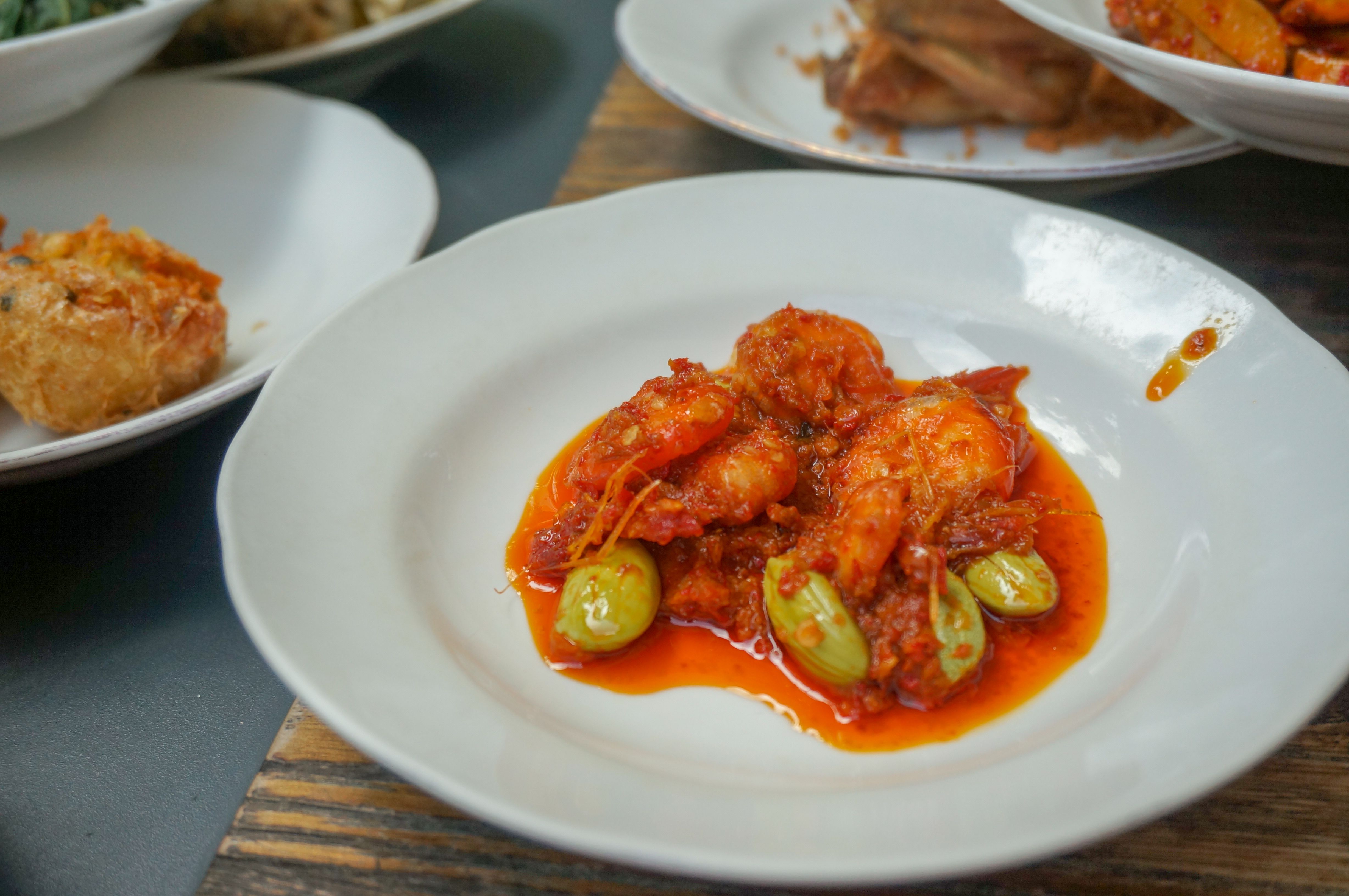
Sambal Goreng
The diets react (see scores below)
Common Ingredients
- tempeh
- tofu
- chili
- garlic
- shallots
- palm sugar
- kecap manis
- galangal
- tamarind
- bay leaves
Specific recipes may vary.
Incompatible with 5 of 11 diets
Diet Ratings
Sambal Goreng as traditionally prepared contains multiple high-carb, keto-incompatible ingredients that make it unsuitable for ketosis. Kecap manis is a sweet Indonesian soy sauce loaded with sugar (roughly 15-20g carbs per tablespoon), palm sugar is a direct added sugar, and tamarind paste contributes additional natural sugars and carbs. Together these ingredients create a significant sugar and carb load that would likely exceed daily keto limits in a single serving. Tempeh itself has moderate net carbs (~7-10g per 100g), and combined with the sweet sauce components, this dish is fundamentally structured around sweetness that is incompatible with ketogenic eating. The individual aromatics (chili, garlic, shallots, galangal, bay leaves) are keto-friendly in isolation, and tofu is low-carb, but the dish as a whole cannot be considered keto without radical reformulation that would fundamentally change the recipe.
Sambal Goreng as listed here is fully plant-based. Tempeh and tofu are fermented soy and soy-derived proteins respectively, both vegan staples. Chili, garlic, shallots, galangal, tamarind, and bay leaves are all whole plant ingredients. Palm sugar (if plant-derived, which it is) and kecap manis (Indonesian sweet soy sauce, typically made from soy, palm sugar, and spices) are vegan-compliant. The dish scores high as a whole-food-forward preparation. Confidence is medium rather than high for two reasons: (1) kecap manis brands occasionally contain non-vegan additives or fish-based flavoring in some regional variants, so the specific product used matters; (2) palm oil/palm sugar raises ethical concern among a notable subset of vegans due to deforestation and habitat destruction, though it does not contain animal products.
Some ethical vegans avoid palm sugar and palm-derived products entirely, arguing that the mass deforestation caused by palm cultivation — and the resulting destruction of orangutan habitat — is incompatible with vegan ethics broadly defined. Additionally, some strict vegans flag kecap manis, as certain regional or commercial versions incorporate fish sauce or shrimp paste as flavoring, making ingredient verification necessary.
Sambal Goreng contains multiple non-paleo ingredients that disqualify it clearly. Tempeh and tofu are both soy-based products — soy is a legume, strictly excluded from the paleo diet due to its phytoestrogens, phytic acid, and anti-nutrient profile. Kecap manis is an Indonesian sweet soy sauce, again soy-derived and also heavily processed with added sugar. Palm sugar, while less refined than white sugar, is still a concentrated refined sugar excluded under strict paleo rules. The base aromatics — chili, garlic, shallots, galangal, tamarind, and bay leaves — are all paleo-compatible, but they cannot salvage a dish built on two legume-based proteins and processed soy sauce. This is not a gray-area dish; the core protein sources are foundational paleo exclusions.
Sambal Goreng features a strong Mediterranean-compatible core: tempeh and tofu are excellent plant-based protein sources (legume-derived), and aromatics like garlic, shallots, chili, and tamarind align well with the diet's emphasis on vegetables, herbs, and bold flavors. However, two ingredients introduce concern. Palm sugar and kecap manis (sweetened soy sauce) add notable amounts of added sugar, which the Mediterranean diet discourages. Palm sugar is also a saturated fat source unlike olive oil. The dish is not traditional to the Mediterranean and lacks olive oil as the fat base. That said, the overall plant-forward, legume-rich profile keeps it from a full 'avoid' rating — it sits comfortably in moderate/occasional territory.
Some modern Mediterranean diet practitioners take a flexible, globally-inclusive view, arguing that tempeh and tofu are exemplary plant proteins that align perfectly with the diet's spirit, and that small amounts of palm sugar and kecap manis are no worse than moderate honey or wine used in traditional Mediterranean cooking. From this lens, the dish's plant-forward, legume-centric identity could arguably earn an 'approve' with a note to use these sweeteners sparingly.
Sambal Goreng is entirely incompatible with the carnivore diet. Every single ingredient is plant-derived or plant-processed: tempeh and tofu are soy-based legume products, chili and galangal are plant spices, garlic and shallots are alliums, palm sugar and kecap manis (sweet soy sauce) are plant-derived sweeteners, tamarind is a fruit-based acidulant, and bay leaves are herbs. There is not a single animal-derived ingredient in this dish. This is essentially a vegan/plant-based Indonesian dish that sits at the absolute opposite end of the spectrum from carnivore eating. The primary protein sources (tempeh and tofu) are legume-based and explicitly excluded under all carnivore frameworks.
Sambal Goreng contains multiple excluded ingredients that make it clearly non-compliant with Whole30. Tempeh and tofu are both soy-based products, and soy is explicitly excluded from the Whole30 program. Kecap manis is an Indonesian sweet soy sauce that contains both soy (excluded) and added sugar (excluded). Palm sugar is an added sugar, also excluded. These are not edge cases — soy/legumes and added sugars are among the most fundamental exclusions of the program.
Sambal Goreng contains multiple high-FODMAP ingredients that make it unsuitable during the elimination phase. Garlic is one of the highest-FODMAP foods tested by Monash University, containing significant fructans even in small amounts. Shallots are also very high in fructans and are essentially interchangeable with onion in terms of FODMAP content. Tempeh, while fermented, is made from soybeans and is high in GOS at standard serving sizes. Kecap manis (sweet soy sauce) typically contains wheat (fructans) and may contain high-fructose sweeteners. Tamarind paste/concentrate is high-FODMAP due to excess fructose. The combination of these ingredients — garlic, shallots, tempeh, kecap manis, and tamarind — creates a dish with multiple overlapping FODMAP triggers across different categories (fructans, GOS, excess fructose), making it clearly unsuitable for the elimination phase regardless of portion size. Tofu in firm/extra-firm form is low-FODMAP, and chili, galangal, palm sugar in small amounts, and bay leaves are generally low-FODMAP, but these safe ingredients are outweighed by the multiple high-FODMAP components.
Sambal Goreng contains several DASH-friendly components — tempeh and tofu are excellent plant-based proteins rich in potassium and magnesium, and aromatics like garlic, shallots, galangal, and tamarind contribute beneficial phytonutrients with minimal sodium. However, kecap manis (sweet soy sauce) is a significant concern: it contributes both added sugar and moderate-to-high sodium, two things DASH actively limits. Palm sugar adds additional refined/added sugar load. Kecap manis is also made from fermented soy with substantial sodium per tablespoon. The dish is not heavily meat-based or saturated-fat-laden, but the combination of added sugars (palm sugar + kecap manis) and sodium from kecap manis pushes it out of straightforward approval territory. If prepared with reduced kecap manis and a low-sodium soy sauce substitute, the dish would align much better with DASH principles. The plant protein base is genuinely DASH-positive, so this lands in cautious moderation territory rather than avoidance.
NIH DASH guidelines flag added sugars and sodium as primary concerns, which kecap manis and palm sugar clearly trigger. However, some DASH-oriented clinicians note that when tempeh and tofu form the protein base and the dish is vegetable-forward, modest use of traditional flavor agents like kecap manis in a small side-dish portion may be acceptable within a broader DASH-compliant meal pattern, particularly for non-hypertensive individuals on the standard 2,300mg sodium threshold.
Sambal Goreng features tempeh and tofu as its protein base, both of which are excellent Zone-friendly vegetarian protein sources with favorable amino acid profiles and phytochemical benefits. The aromatic base (garlic, shallots, galangal, chili) is largely low-glycemic and polyphenol-rich, aligning well with Zone anti-inflammatory principles. However, two ingredients create meaningful concern: palm sugar and kecap manis (sweet soy sauce). Both are concentrated sugar sources that raise the glycemic load significantly. Kecap manis in particular is a thick, sweetened soy sauce with substantial added sugar — it can quickly push the carbohydrate block count into unfavorable territory and spike the glycemic index of the dish. Tamarind also contributes natural sugars. The dish's fat profile from tempeh is reasonably balanced but lacks the monounsaturated emphasis Zone prefers. As a side dish, portions are typically small, which helps mitigate the sugar impact, but the recipe as written is not inherently Zone-balanced without modification. A Zone-adapted version would reduce or substitute kecap manis and palm sugar with lower-sugar alternatives, making this a 'use sparingly as a flavoring side' rather than a Zone meal cornerstone.
Some Zone practitioners, particularly those following Sears' later anti-inflammatory framework, would note that tempeh and tofu are outstanding vegetarian protein blocks and that the spice complex (chili, garlic, galangal, tamarind) provides significant polyphenol benefits that Sears increasingly emphasized in his later works (The OmegaRx Zone, The Mediterranean Zone). If the portion is small and the kecap manis/palm sugar quantities are modest, this could be paired with lean protein and vegetables to form a compliant Zone meal. The verdict might rise to a 6 in that context.
Sambal Goreng has a genuinely mixed anti-inflammatory profile. On the positive side, tempeh and tofu are whole soy foods explicitly emphasized in anti-inflammatory frameworks like Dr. Weil's pyramid — they provide plant protein, isoflavones, and fiber with documented anti-inflammatory effects. Chili, garlic, shallots, and galangal are potent anti-inflammatory spices; capsaicin, allicin, and galangal's galangin are all well-researched anti-inflammatory compounds. Tamarind and bay leaves contribute polyphenols, and the dish is plant-forward with no red meat or trans fats. However, two ingredients temper the score meaningfully: kecap manis (Indonesian sweet soy sauce) is high in added sugar and often contains palm sugar or refined sugar, contributing a meaningful glycemic load — added sugars are a core driver of inflammation. Palm sugar, while less refined than white sugar and containing some minerals, is still a concentrated sugar source and should be limited. The cumulative sugar burden from both kecap manis and palm sugar in a typical Sambal Goreng preparation is a real concern. The dish also depends on cooking method — if deep-fried in refined seed oils (common in Indonesian cooking), the omega-6 load increases. Rated as prepared authentically at home with moderate portions of kecap manis, this dish lands in 'caution' — genuinely beneficial core ingredients partially offset by added sugar content.
A stricter anti-inflammatory reading (e.g., following the Sugar Impact Diet or functional medicine practitioners like Dr. Mark Hyman) would push this toward 'avoid' given the combined sugar load of kecap manis and palm sugar, arguing that even natural sugars drive insulin spikes and glycation. Conversely, a more permissive reading aligned with Dr. Weil's overall dietary pattern would note that a small portion of this dish, within a predominantly anti-inflammatory diet rich in vegetables and omega-3s, is unlikely to cause meaningful harm — and the soy, spice, and polyphenol benefits may outweigh the modest sugar content in context.
Sambal Goreng with tempeh and tofu offers meaningful plant-based protein from two quality sources — tempeh (~15-16g per 100g) and tofu (~8-10g per 100g) — along with modest fiber, making the protein foundation solid for a side dish. However, several ingredients pull this toward caution for GLP-1 patients. Kecap manis (sweet soy sauce) and palm sugar contribute significant added sugars, which are counterproductive given the priority of nutrient density per calorie. The chili component (sambal) may worsen reflux or nausea, which are already common GLP-1 side effects. Traditional Sambal Goreng is also typically fried or stir-fried in oil, increasing fat content and reducing digestibility. Tamarind adds mild acidity that some GLP-1 patients find irritating. The aromatic base (garlic, shallots, galangal, bay leaves) is generally well-tolerated and adds nutritional value without meaningful drawback. As a side dish in a small portion alongside other nutrient-dense foods, this can work, but the sugar load from kecap manis and palm sugar, combined with the spice level and likely frying method, prevent an approve rating.
Some GLP-1-focused dietitians would rate tempeh more favorably than tofu as the primary protein here, noting tempeh's fermented profile may support gut health and its higher protein and fiber density make it one of the better plant proteins for GLP-1 patients. However, others caution that the sweet-spicy-fried combination characteristic of Sambal Goreng is particularly likely to trigger nausea and reflux in GLP-1 patients, especially in the early dose-escalation phase, and would recommend avoiding it until GI side effects stabilize.
*See how scores were generated at our methodology page.
Nutritional profile
Six traits that cut across every diet.
Fiber & Plants
How much whole-plant food and fiber it delivers.
Healthy Fats
The quality of its fats (unsaturated, omega-3).
Whole / Unprocessed
How close it is to its natural, unprocessed form.
Gut Gentle
How easy it is on digestion (low FODMAP, few irritants).
Low Glycemic
How little it spikes your blood sugar.
Protein Density
How much protein it packs per calorie.
Controversy Index
Higher controversy = more disagreement between diets.
Diet-Specific Tips
 Vegan — 8/10
View tips
- Tempeh and tofu are fully plant-based proteins — core vegan ingredients
- All aromatics and spices (chili, garlic, shallots, galangal, tamarind, bay leaves) are plant-derived
- Kecap manis is typically vegan but some regional versions may contain fish-based ingredients — brand verification advised
- Palm sugar is plant-derived but controversial among ethical vegans due to environmental impact of palm cultivation
- No animal products, dairy, eggs, or animal-derived additives present in the standard recipe
- High whole-food ingredient ratio earns a strong approval score
 Mediterranean — 5/10
View tips
- Tempeh and tofu are excellent legume-based plant proteins — strongly encouraged
- Garlic, shallots, chili, and tamarind are Mediterranean-compatible aromatics
- Kecap manis contains significant added sugar, contradicting Mediterranean principles
- Palm sugar adds further refined/added sugar load
- Palm oil (implied in palm sugar origin and typical Sambal Goreng preparation) is high in saturated fat, not aligned with olive oil as primary fat
- No olive oil; dish uses a non-Mediterranean fat profile
- Non-traditional cuisine — no Mediterranean regional precedent
 DASH — 5/10
View tips
- Tempeh and tofu are DASH-approved plant proteins rich in potassium and magnesium
- Kecap manis contributes notable added sugar and sodium — both limited on DASH
- Palm sugar adds additional added sugar load
- No red meat or high saturated fat ingredients
- Aromatics (garlic, shallots, galangal, tamarind) are DASH-neutral to positive
- Sodium content is preparation-dependent; using low-sodium soy sauce would improve score
- Portion size as a side dish mitigates but does not eliminate sugar/sodium concerns
 Zone — 5/10
View tips
- Tempeh and tofu are favorable Zone vegetarian protein sources with good block utility
- Kecap manis (sweet soy sauce) is high in added sugar, significantly raising glycemic load
- Palm sugar is a concentrated high-glycemic sweetener unfavorable in Zone methodology
- Tamarind adds natural sugars that compound the carbohydrate concern
- Aromatic ingredients (garlic, shallots, chili, galangal) are polyphenol-rich and Zone-favorable
- As a side dish, small portion sizes partially mitigate the sugar impact
- Fat profile from tempeh lacks the monounsaturated emphasis Zone prefers; no olive oil or avocado present
- Vegetarian protein blocks require larger fat block allowance (3g fat per block vs 1.5g for animal protein)
 Anti-Inflammatory — 6/10
View tips
- Tempeh and tofu are anti-inflammatory whole soy foods emphasized in Dr. Weil's Anti-Inflammatory Food Pyramid
- Chili, garlic, shallots, and galangal are potent anti-inflammatory spices with well-researched active compounds (capsaicin, allicin, galangin)
- Kecap manis is high in added sugar — a core pro-inflammatory ingredient that meaningfully raises the glycemic load
- Palm sugar is a concentrated sugar source; while less refined than white sugar, it still contributes to added sugar burden
- Tamarind and bay leaves add polyphenols and minor antioxidant benefit
- Cooking oil not specified — if fried in refined seed oils (corn, sunflower), omega-6 burden increases further
- Plant-forward, no red meat or saturated animal fat — structurally aligned with anti-inflammatory principles
- Portion size and frequency matter: small portions alongside a varied anti-inflammatory diet are more acceptable than large regular servings
 GLP-1 Friendly — 5/10
View tips
- Tempeh and tofu provide solid plant-based protein — a genuine positive
- Kecap manis and palm sugar add significant sugar load, reducing nutrient density per calorie
- Chili/sambal spice level may worsen GLP-1-related nausea and reflux
- Typically prepared fried or in substantial oil — increases fat content and slows digestion further on top of GLP-1 gastric emptying delay
- Tamarind acidity may irritate sensitive GI systems on GLP-1 medication
- Fermented tempeh may offer gut-supportive benefits
- Small portion as a side dish mitigates but does not eliminate sugar and fat concerns