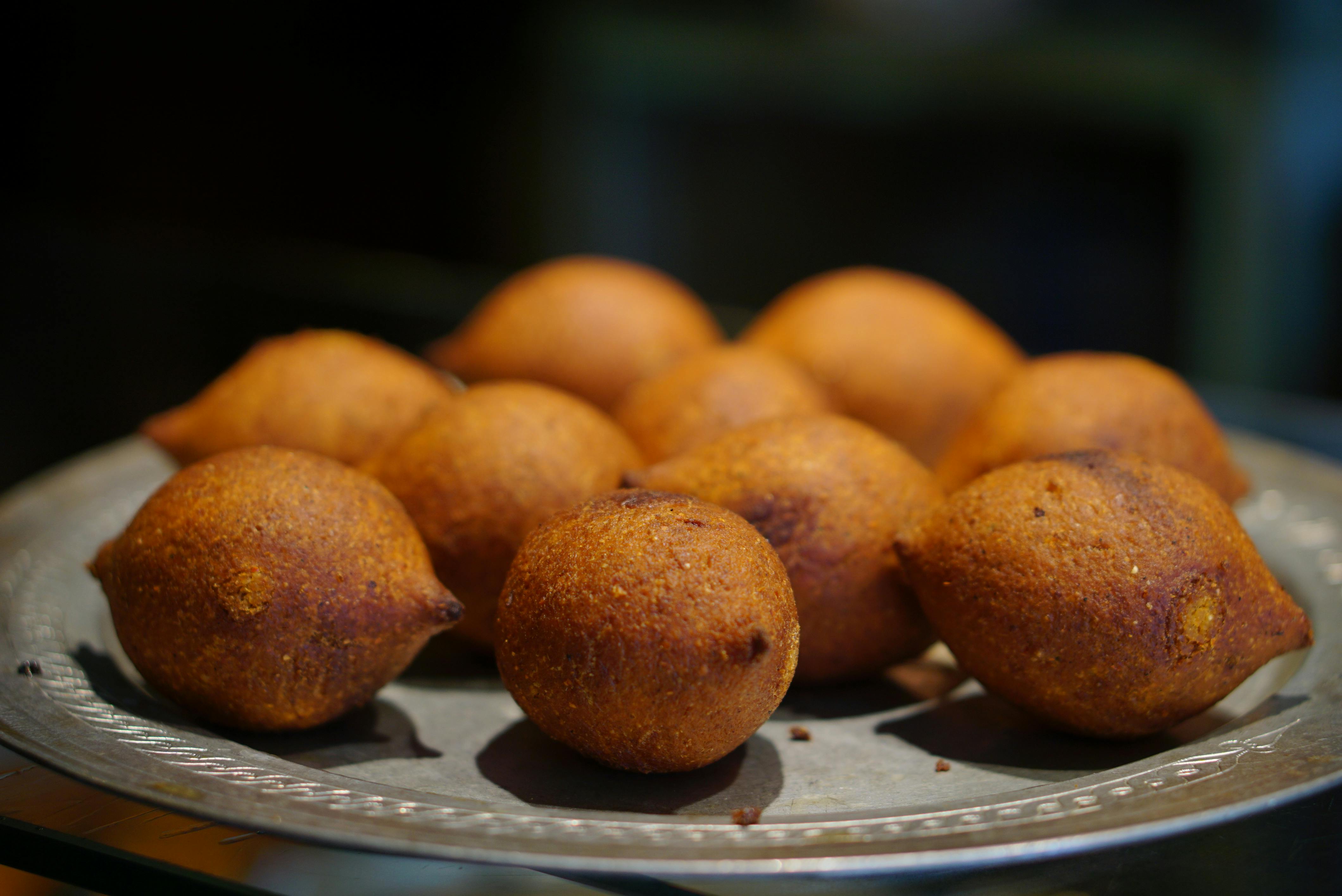
Photo: Hasan Hüseyin TURAN / Pexels
The diets react (see scores below)
Common Ingredients
- rice
- beef
- onion
- almonds
- raisins
- baharat
- turmeric
- vegetable oil
Specific recipes may vary.
Incompatible with 8 of 11 diets
Diet Ratings
Kubba Halab is a traditional Iraqi dish where the outer shell is made from rice, which is a high-starch grain with very high net carbs. A standard serving would contain a substantial amount of rice-based dough alone, easily exceeding the entire daily keto carb limit. Additionally, raisins are a concentrated source of sugar and carbohydrates, further compounding the incompatibility. There is no meaningful way to consume this dish within ketogenic limits without fundamentally changing its core composition.
Kubba Halab contains beef as a primary protein ingredient, which is an animal product and therefore incompatible with a vegan diet. There is no ambiguity here — beef is directly derived from slaughtered cattle. All remaining ingredients (rice, onion, almonds, raisins, baharat, turmeric, vegetable oil) are plant-based, but the presence of beef makes the dish entirely off-limits for vegans.
Kubba Halab contains two major paleo-excluded ingredients: rice (a grain) and vegetable oil (a seed oil). Rice is explicitly off-limits under paleo principles as a grain, and vegetable oil is a processed seed oil that is categorically avoided. These two ingredients are foundational to the dish — rice forms the outer shell of the kubba and vegetable oil is used for frying — making the dish incompatible with paleo at its core. The remaining ingredients (beef, onion, almonds, raisins, baharat, turmeric) are paleo-friendly, but they cannot redeem a dish whose structure depends on non-paleo staples.
Kubba Halab features red meat (beef) as the primary protein, which is limited to a few times per month in Mediterranean diet guidelines. The dish uses white rice as the shell/base rather than whole grains, and is fried in vegetable oil rather than extra virgin olive oil. While some ingredients are Mediterranean-friendly — almonds, onion, raisins, and aromatic spices like baharat and turmeric align well with plant-forward Mediterranean principles — the combination of red meat, refined white rice, and frying in non-EVOO vegetable oil makes this dish problematic overall. The deep-frying preparation method further conflicts with Mediterranean dietary principles, adding significant refined fats. As an occasional snack treat, it is not a staple food to encourage.
Some Mediterranean diet interpreters note that nuts, dried fruits, and spices are hallmarks of Eastern Mediterranean and Levantine cuisines that are fully within the diet's cultural scope. If consumed rarely and in small portions, and if the beef portion is modest, some practitioners might classify this as an occasional indulgence rather than a strict avoid — particularly given the nutritional value of almonds and the aromatic spice profile.
Kubba Halab is almost entirely incompatible with the carnivore diet. The dish is built on a rice shell (a grain and thus a plant food), filled with beef mixed with onions, almonds, raisins, baharat spice blend, and turmeric — all plant-derived ingredients. It is also fried in vegetable oil, a plant-based oil that is explicitly excluded. The only carnivore-compatible element is the beef itself, which is a minor component surrounded by disqualifying ingredients. This dish fails virtually every carnivore rule simultaneously: grains, plant oils, nuts, fruit (raisins), vegetables, and plant-based spices are all present.
Kubba Halab is an Iraqi stuffed dumpling/kibbeh where the outer shell is made from rice, which is a grain and explicitly excluded on Whole30. Rice is listed as a prohibited grain in the official Whole30 rules. The remaining ingredients — beef, onion, almonds, raisins, baharat spice blend, turmeric, and vegetable oil — are generally compliant, but the rice shell is a disqualifying ingredient. There is no workaround here; the rice forms the structural base of the dish and cannot be omitted without fundamentally changing what the dish is.
Kubba Halab contains two high-FODMAP ingredients that make it problematic during the elimination phase. Onion is one of the highest-FODMAP foods tested by Monash University, containing significant fructans even in small amounts, and it is typically mixed throughout the beef filling making it impossible to reduce to a safe portion. Raisins are high-FODMAP due to excess fructose and fructans, becoming problematic at servings above about 1 tablespoon (13g), and they are a standard component of the filling. The remaining ingredients are generally low-FODMAP: rice (shell/casing) is safe, beef is low-FODMAP, almonds are low-FODMAP at a small serving (10 nuts), baharat spices (allspice, cinnamon, cumin, etc.) are generally low-FODMAP in culinary amounts, turmeric is low-FODMAP, and vegetable oil is safe. However, the combination of onion and raisins in a typical serving of this dish makes it unsuitable for the elimination phase.
Monash University clearly lists onion as high-FODMAP at any culinary quantity, but some FODMAP practitioners note that if onion were replaced with the green tops of scallions and raisins were omitted or kept to under 1 tablespoon total per serving, a modified version could be made compliant — however the traditional recipe as described would not meet elimination phase standards.
Kubba Halab is an Iraqi stuffed rice shell dish with a beef and onion filling accented by almonds, raisins, baharat spice blend, and turmeric, fried in vegetable oil. Several ingredients align well with DASH principles: rice provides whole-grain potential (if white rice, it's neutral), onion is a DASH-friendly vegetable, almonds are explicitly encouraged as a DASH nut, raisins contribute potassium and natural sweetness, and turmeric is a benign spice. The main concerns are the use of beef (a red meat DASH recommends limiting), frying in vegetable oil (adds significant calories and fat even if unsaturated), and baharat spice blends which often contain notable sodium. The dish is not inherently high in saturated fat if lean beef is used, and the filling ingredients are otherwise DASH-compatible. As a snack category item, portion size matters significantly. The preparation method (deep or pan frying) is the primary detractor from a DASH perspective, as DASH favors baking, steaming, or grilling. Overall, this dish is acceptable in moderation with mindful portion control and lean beef, but is not a core DASH food.
NIH DASH guidelines explicitly limit red meat and fried foods, placing this dish in the caution category. However, updated clinical interpretations note that lean beef in small amounts within an otherwise plant-rich diet may be acceptable, and vegetable oils (unlike tropical oils) are not restricted by DASH — some DASH-aligned dietitians would rate this more favorably if shallow-fried in a PUFA-rich oil like sunflower or canola and served in a single-serving portion.
Kubba Halab is a traditional Iraqi dish consisting of rice-encased shells filled with spiced ground beef, onions, almonds, and raisins, then fried in vegetable oil. From a Zone Diet perspective, this dish presents multiple challenges. The outer shell is made from rice (white rice typically), which is a high-glycemic carbohydrate that Zone classifies as 'unfavorable.' Raisins are explicitly called out by Dr. Sears as an unfavorable carb due to their concentrated sugar content and high glycemic load. The beef filling may include fattier cuts rather than lean protein. Frying in vegetable oil (likely omega-6-heavy seed oil such as sunflower or canola) conflicts with Zone's anti-inflammatory principles. The macronutrient ratio will be heavily skewed toward carbohydrates and fat, with insufficient lean protein to balance the blocks. Almonds are a Zone-favorable monounsaturated fat, and the spices (baharat, turmeric) have anti-inflammatory polyphenol value, but these positives are overwhelmed by the structural issues of the dish. As a snack category item, it would be very difficult to portion this to hit Zone's 40/30/30 ratio without eating an impractically small amount.
Some Zone practitioners argue that in Sears' later writings (The Anti-Inflammation Zone, The OmegaRx Zone), the framework became more flexible around occasional 'unfavorable' carb choices if polyphenol content is high. The turmeric and baharat spices provide meaningful anti-inflammatory polyphenols, and if lean beef is used and the portion is very small (one piece as a true snack), the block imbalance may be partially acceptable in a broader daily Zone framework. Additionally, if the rice is brown rice or parboiled rice, the glycemic impact is reduced.
Kubba Halab is an Iraqi stuffed dumpling made from a rice shell filled with spiced beef, onions, almonds, and raisins, deep-fried in vegetable oil. The dish has a mixed anti-inflammatory profile. On the positive side, turmeric is one of the most studied anti-inflammatory spices (curcumin), and baharat typically includes black pepper, cinnamon, cumin, coriander, and cloves — all with notable anti-inflammatory properties. Almonds provide vitamin E and healthy monounsaturated fats. Raisins offer some polyphenols and antioxidants. On the negative side, beef is a red meat high in saturated fat and arachidonic acid, both of which can promote inflammation and are advised to be limited under anti-inflammatory guidelines. The dish is deep-fried in vegetable oil, which is a significant concern — most anti-inflammatory protocols flag refined seed/vegetable oils due to high omega-6 content and oxidation potential during frying, which can generate pro-inflammatory compounds. White rice is a refined carbohydrate with a high glycemic index, contributing to blood sugar spikes that can trigger inflammatory cascades. The overall preparation method (deep frying) substantially undermines the beneficial spice profile, placing this dish in the caution zone.
Mainstream nutrition science (including AHA guidelines) considers vegetable oils acceptable or even heart-healthy compared to saturated fats, and would view the spice blend and almond content more favorably. However, most dedicated anti-inflammatory protocols (including Dr. Weil's framework) flag refined vegetable oils used at high frying temperatures as pro-inflammatory due to omega-6 loading and lipid oxidation — a concern not yet fully resolved in the research literature.
Kubba Halab is a deep-fried Iraqi dumpling made from a ground rice shell stuffed with a spiced beef, onion, almond, and raisin filling. The preparation method — deep frying in vegetable oil — is the primary disqualifier for GLP-1 patients. Fried foods are among the worst tolerated foods on GLP-1 medications due to slowed gastric emptying: high-fat, high-oil foods sit in the stomach for extended periods and dramatically worsen nausea, bloating, and reflux. Beyond the frying, the dish has multiple compounding concerns: the rice shell is a refined carbohydrate with low fiber and low protein density; the raisins add concentrated sugar with negligible nutritional benefit in this context; and the almonds, while healthy in isolation, contribute additional fat in a dish already high in fat from frying. The beef filling does provide some protein, but the protein-to-calorie ratio of the overall dish is poor when accounting for the rice shell and frying oil. Baharat and turmeric are generally well-tolerated spices and are not a concern. As a snack category item, the portion is typically small, but even a small serving of a fried, fatty, refined-carb food is likely to cause significant GI distress in GLP-1 patients and delivers poor nutritional value per calorie eaten.
Some GLP-1 nutrition practitioners take a less absolute stance on occasional fried foods, particularly in cultural dietary contexts, arguing that total dietary pattern matters more than any single food and that rigid avoidance can undermine long-term adherence. However, there is broader agreement that fried foods specifically — rather than cultural foods generally — are high-risk triggers for GLP-1 side effects regardless of cultural origin, and that this dish as traditionally prepared does not adapt well to GLP-1 dietary needs without significant modification (baking instead of frying, leaner filling, reduced raisins).
*See how scores were generated at our methodology page.
Nutritional profile
Six traits that cut across every diet.
Fiber & Plants
How much whole-plant food and fiber it delivers.
Healthy Fats
The quality of its fats (unsaturated, omega-3).
Whole / Unprocessed
How close it is to its natural, unprocessed form.
Gut Gentle
How easy it is on digestion (low FODMAP, few irritants).
Low Glycemic
How little it spikes your blood sugar.
Protein Density
How much protein it packs per calorie.
Controversy Index
Higher controversy = more disagreement between diets.
Diet-Specific Tips
 DASH — 5/10
View tips
- Contains red meat (beef) — DASH recommends limiting red meat intake
- Fried preparation adds calories and fat, though vegetable oil is preferable to saturated fats
- Almonds are a DASH-encouraged nut, adding healthy fats and magnesium
- Raisins provide potassium and natural sweetness without added sugar
- Baharat spice blend may contribute moderate sodium depending on preparation
- Rice shell is likely white rice — a neutral to modest DASH food; whole grain would score higher
- Onion and turmeric are DASH-compatible, anti-inflammatory ingredients
- Portion control critical given snack category and fried preparation
 Zone — 5/10
View tips
- Rice outer shell is a high-glycemic 'unfavorable' carbohydrate in Zone terminology
- Raisins are explicitly listed as an unfavorable carb by Dr. Sears due to concentrated sugar
- Fried in vegetable oil, likely omega-6-heavy seed oil — conflicts with Zone's anti-inflammatory focus
- Beef protein quality depends on fat content; fatty ground beef is not ideal Zone protein
- Almonds in the filling are a Zone-favorable monounsaturated fat source
- Turmeric and baharat spices provide anti-inflammatory polyphenols — a Zone positive
- Overall macronutrient ratio will be carbohydrate and fat heavy, making Zone block balancing very difficult
- As a snack, portion size would need to be very small to avoid excessive carb and fat blocks
 Anti-Inflammatory — 4/10
View tips
- Turmeric and baharat spice blend provide meaningful anti-inflammatory polyphenols (curcumin, cinnamaldehyde, etc.)
- Beef (red meat) is pro-inflammatory due to saturated fat and arachidonic acid — advised to limit under anti-inflammatory guidelines
- Deep-frying in vegetable oil introduces high omega-6 fatty acids and potentially oxidized lipids — a significant pro-inflammatory concern
- White rice shell is a refined carbohydrate with high glycemic index, promoting blood sugar spikes and inflammatory response
- Almonds contribute vitamin E and monounsaturated fats — mild anti-inflammatory benefit
- Raisins provide some polyphenols but also concentrated sugar
- Overall preparation method (deep frying) substantially offsets the benefits of the anti-inflammatory spices