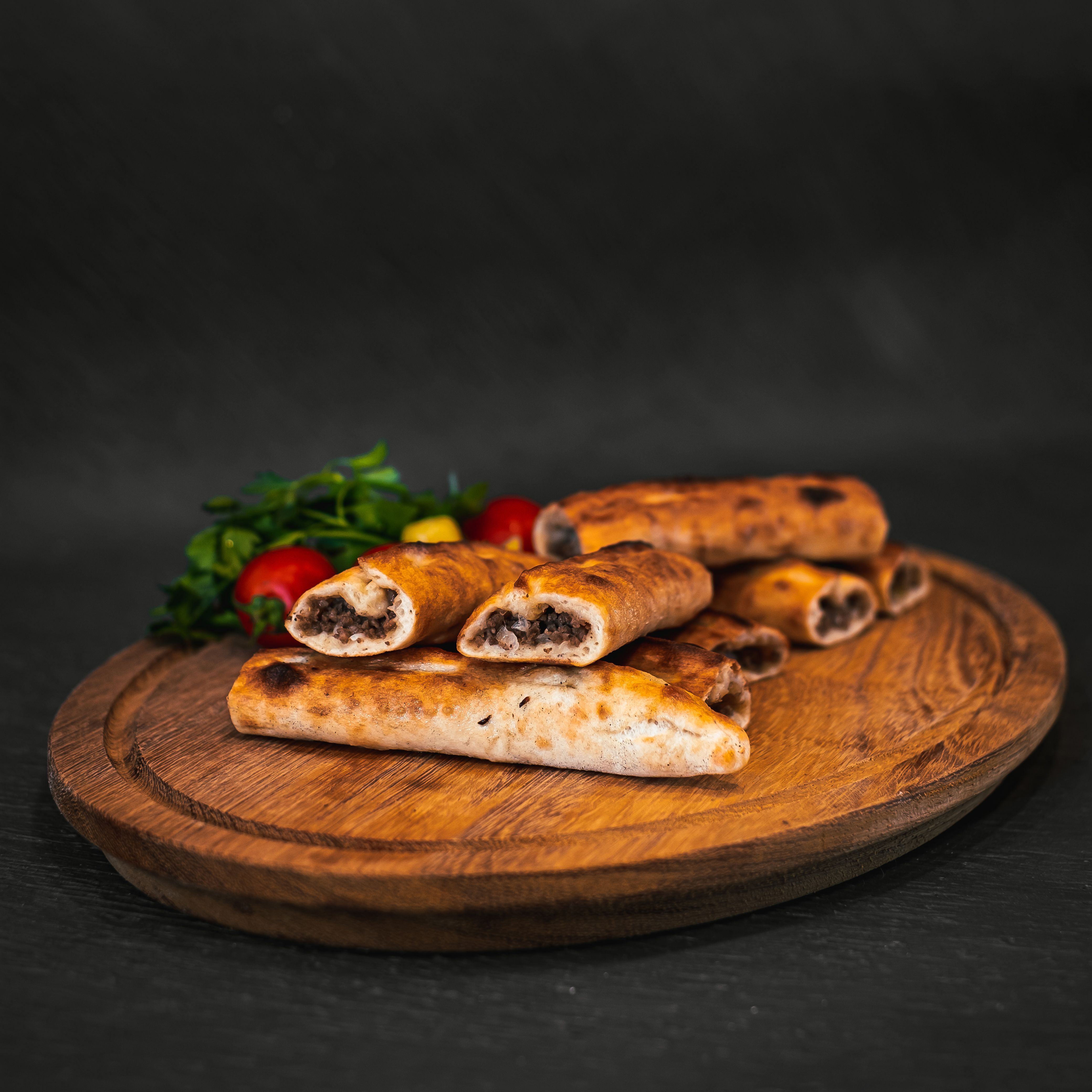
Photo: Furkan Tumer / Pexels
The diets react (see scores below)
Common Ingredients
- bulgur
- beef
- onion
- almonds
- raisins
- baharat
- turmeric
- salt
Specific recipes may vary.
Incompatible with 6 of 11 diets
Diet Ratings
Kubba Mosul is fundamentally incompatible with a ketogenic diet. The primary shell/base ingredient is bulgur (cracked wheat), a grain with extremely high net carbs — roughly 25-30g per 100g cooked. The filling also contains raisins, which are concentrated sugar (dried fruit), adding significant additional carbohydrates. Together, these two ingredients alone would blow through the entire daily keto carb budget in a single serving. The beef, onions, almonds, and spices would otherwise be acceptable or marginally acceptable on keto, but they cannot redeem a dish structurally built around bulgur and raisins.
Kubba Mosul contains ground beef as a primary protein ingredient, making it clearly incompatible with a vegan diet. Beef is an animal product and is unambiguously excluded under all vegan standards. The remaining ingredients — bulgur, onion, almonds, raisins, baharat, turmeric, and salt — are all plant-based, but the presence of beef alone is sufficient to disqualify the dish.
Kubba Mosul is fundamentally incompatible with the paleo diet. The dish's defining ingredient is bulgur, a processed whole wheat grain, which is explicitly excluded from the paleo framework. Grains are among the clearest disqualifiers in paleo, rejected by all major paleo authorities including Loren Cordain, Mark Sisson, and Robb Wolf due to their anti-nutrient content (gluten, lectins, phytic acid) and absence from the Paleolithic diet. Added salt is also excluded under strict paleo rules. The remaining ingredients — beef, onion, almonds, raisins, baharat spices, and turmeric — are largely paleo-compatible, but the grain base makes this dish a clear avoid regardless of those positives.
Kubba Mosul presents a mixed Mediterranean diet profile. The bulgur (whole grain) is a Mediterranean staple and a strong positive, as are the almonds, onions, and spices like turmeric and baharat. Raisins add natural sweetness without refined sugar. However, beef is the primary protein, which the Mediterranean diet limits to a few times per month, making it the main concern. The dish is otherwise whole-food based, minimally processed, and uses plant-forward ingredients that offset some of the red meat concern. As an occasional dish, it fits within the 'caution' range — acceptable but not a dietary staple.
Some Mediterranean diet researchers note that traditional Levantine and Middle Eastern cuisines, which share cultural overlap with Mediterranean eating patterns, incorporate small amounts of red meat mixed with grains as a way to stretch protein — effectively reducing the per-serving meat content. In this interpretation, the bulgur-to-beef ratio in kubba could make it more acceptable than a standalone red meat dish, and some practitioners might score it more favorably as a moderate, whole-food preparation.
Kubba Mosul is fundamentally incompatible with the carnivore diet. The dish is built around bulgur wheat as the primary shell/base ingredient — a grain that is strictly excluded on carnivore. Beyond the bulgur, the filling contains onion (plant), almonds (nuts/plant), raisins (fruit/plant), baharat (plant-based spice blend), and turmeric (plant spice). The only carnivore-compatible ingredient is the beef and salt. With the overwhelming majority of the dish composed of plant-derived foods — grains, nuts, dried fruit, vegetables, and spices — this dish is a clear avoid with high confidence. There is no meaningful version of this dish that could be adapted for carnivore without fundamentally ceasing to be Kubba Mosul.
Kubba Mosul contains bulgur, which is a cracked wheat product and therefore a grain — explicitly excluded on the Whole30 program. Regardless of the other ingredients (beef, onion, almonds, raisins, baharat, turmeric, and salt are all compliant), the bulgur alone disqualifies this dish. There is no compliant substitution that would preserve the authentic character of this dish, as bulgur forms the structural shell/dough of the kubba.
Kubba Mosul contains multiple high-FODMAP ingredients that make it unsuitable during the elimination phase. Bulgur wheat is high in fructans and is a primary FODMAP trigger — it forms the outer shell of the kubba, meaning it is present in substantial quantity. Onion is one of the highest-FODMAP foods tested by Monash University, high in fructans even in small amounts, and it is used in the filling. Raisins are high in fructose and polyols (sorbitol) at typical serving sizes. These three ingredients alone are sufficient to classify the dish as high-FODMAP. Almonds are low-FODMAP at 10 nuts but can become moderate at larger quantities. Beef, baharat spices (if garlic-free), turmeric, and salt are generally low-FODMAP. However, the combination of bulgur, onion, and raisins as core structural and filling ingredients makes this dish clearly unsuitable for the elimination phase regardless of portion size.
Kubba Mosul presents a mixed DASH profile. On the positive side, bulgur is an excellent whole grain rich in fiber, potassium, and magnesium — a core DASH food. Onion, almonds, raisins, turmeric, and baharat spices all align well with DASH principles (nuts and fruits are encouraged). However, the dish uses beef as its primary protein, which DASH guidelines recommend limiting due to saturated fat content — lean beef in small portions is acceptable, but Kubba Mosul typically uses a moderate-to-substantial amount of ground beef both in the shell and filling. Salt is listed as an ingredient and sodium content depends heavily on preparation quantities. The overall dish is not heavily processed, contains no tropical oils, and the combination of whole grains, nuts, and fruit (raisins) adds DASH-favorable nutrients. If prepared with lean ground beef, minimal added salt, and moderate portions, it can fit within DASH guidelines, but standard preparation warrants caution due to red meat content and sodium from salt.
NIH DASH guidelines categorically recommend limiting red meat including beef due to saturated fat concerns. However, updated clinical interpretations note that lean beef (>90% lean) in portions of 3 oz or less, as part of an otherwise nutrient-rich dish like this one with whole grains and nuts, may be acceptable within a balanced DASH eating plan — particularly for non-hypertensive individuals tracking overall saturated fat rather than avoiding red meat categorically.
Kubba Mosul is a traditional Iraqi dish featuring a bulgur shell stuffed with spiced ground beef, onions, almonds, and raisins. From a Zone perspective, it has several positives and negatives that place it firmly in caution territory. Bulgur is a moderately favorable carbohydrate — it is a whole grain with a lower glycemic index than white rice or white bread, but it is still a grain and counts as an 'unfavorable' carb in Zone terminology due to its starch density. Raisins are explicitly flagged as unfavorable in Zone methodology due to their concentrated sugar and high glycemic load. The beef provides protein but may be fattier than lean Zone-approved proteins (skinless chicken, fish), depending on the grind. On the positive side, almonds contribute monounsaturated fat (a Zone-favored fat source), onions are a favorable low-glycemic vegetable, and the anti-inflammatory spices (turmeric, baharat) align well with Sears' polyphenol emphasis. The macronutrient ratio in a standard portion is likely carb-heavy due to the bulgur shell and raisins, pushing it out of the ideal 40/30/30 balance without careful portioning. With portion control — a smaller serving paired with a large vegetable side and perhaps egg whites to boost lean protein — it can fit into a Zone meal plan, but as served it likely skews toward excess carbohydrates and potentially higher saturated fat from the beef filling.
Some Zone practitioners and Sears' later writings take a more flexible view of whole grains like bulgur, noting its fiber content lowers the net carb impact and its glycemic index is meaningfully lower than refined grains. Raisins, while unfavorable, appear in small quantities in this dish primarily for flavor, so their glycemic impact per serving may be modest. A Zone-adapted version using lean ground beef (93%+ lean) and controlling portion size could push this toward a low-end approve rating in practice.
Kubba Mosul presents a genuinely mixed anti-inflammatory profile. On the positive side, bulgur is a whole grain with good fiber content that supports gut health and has a lower glycemic impact than refined grains. Turmeric contains curcumin, one of the most well-researched anti-inflammatory compounds. Baharat is a spice blend typically containing black pepper, cumin, coriander, cinnamon, and cloves — all with meaningful anti-inflammatory properties, and black pepper's piperine also enhances curcumin bioavailability. Almonds provide vitamin E and monounsaturated fats with mild anti-inflammatory benefit. Onions contribute quercetin, a flavonoid with anti-inflammatory activity. Raisins add polyphenols and fiber, though also concentrated natural sugars. The primary concern is the use of beef as the main protein. Anti-inflammatory frameworks place red meat in the 'limit' category due to saturated fat content, arachidonic acid, and association with elevated inflammatory markers like CRP and IL-6 — particularly when consumed regularly. The anti-inflammatory impact will depend significantly on how lean the beef is and portion size. Overall, this dish is a culturally rich, moderately balanced preparation where the whole grain base and spice profile offset but do not fully compensate for the red meat component.
Some integrative nutrition perspectives, including certain paleo-adjacent anti-inflammatory frameworks, would rate this more favorably if the beef is grass-fed, arguing that grass-fed beef has a better omega-6 to omega-3 ratio and lower inflammatory potential than grain-fed. Conversely, strict anti-inflammatory protocols like Dr. Weil's guidelines consistently place all red meat in the 'limit' category regardless of sourcing, which would push this dish toward the lower end of caution.
Kubba Mosul is a stuffed bulgur shell filled with spiced ground beef, onions, almonds, and raisins. It has meaningful strengths for GLP-1 patients: bulgur is a high-fiber whole grain that supports digestion and blood sugar stability, and the beef filling provides moderate protein. However, several factors temper the rating. Ground beef carries moderate-to-high saturated fat depending on the cut used, which can worsen nausea, bloating, and reflux — common GLP-1 side effects. Raisins add simple sugars with minimal fiber benefit in the context of this dish. Almonds contribute healthy unsaturated fats but also add caloric density. The dish is also fairly energy-dense relative to its protein yield per serving, meaning a small GLP-1-appropriate portion may not deliver sufficient protein (15–30g target per meal) without eating a larger serving. Baharat and turmeric are generally well-tolerated spices. Overall, this is an acceptable occasional choice, particularly if made with lean ground beef (90%+ lean), but it is not an optimal GLP-1 meal due to saturated fat content, moderate protein density, and added sugars from raisins.
Some GLP-1-focused dietitians would rate this more favorably, citing bulgur's fiber content and the protein contribution of beef as genuinely useful, and noting that the dish is less processed and more nutrient-dense than many alternatives patients actually eat. Others would flag even moderate saturated fat and simple sugars as problematic given slowed gastric emptying and reduced caloric budget, and would recommend substituting lean turkey or chicken filling to improve the profile.
*See how scores were generated at our methodology page.
Nutritional profile
Six traits that cut across every diet.
Fiber & Plants
How much whole-plant food and fiber it delivers.
Healthy Fats
The quality of its fats (unsaturated, omega-3).
Whole / Unprocessed
How close it is to its natural, unprocessed form.
Gut Gentle
How easy it is on digestion (low FODMAP, few irritants).
Low Glycemic
How little it spikes your blood sugar.
Protein Density
How much protein it packs per calorie.
Controversy Index
Higher controversy = more disagreement between diets.
Diet-Specific Tips
 Mediterranean — 5/10
View tips
- Beef is the primary protein — red meat should be limited to a few times per month on the Mediterranean diet
- Bulgur (whole grain) is a Mediterranean staple and the structural base of the dish
- Almonds add heart-healthy fats and plant protein, aligning well with Mediterranean principles
- Raisins provide natural sweetness — no refined or added sugars
- Spices (baharat, turmeric) are anti-inflammatory and consistent with Mediterranean cooking traditions
- Dish is whole-food, minimally processed — no refined grains, no industrial additives
- Meat-to-grain ratio matters: if beef is used sparingly as a filling, per-serving red meat content is reduced
 DASH — 5/10
View tips
- Bulgur is a DASH-approved whole grain high in fiber and magnesium
- Beef (red meat) is discouraged by DASH guidelines due to saturated fat — leanness and portion size are critical
- Almonds are a DASH-encouraged nut source of healthy fats and magnesium
- Raisins contribute potassium and natural sugars in small amounts — consistent with DASH fruit servings
- Salt is added — sodium content depends on preparation and is a key concern for low-sodium DASH targets
- Baharat and turmeric are sodium-free spices and DASH-compatible flavor alternatives to salt
- No high-sodium sauces, processed ingredients, or tropical oils present
- Dish is nutrient-dense overall but requires portion control and lean beef selection for DASH compatibility
 Zone — 5/10
View tips
- Bulgur is a whole grain with moderate glycemic index — Zone 'unfavorable' carb but better than refined grains
- Raisins are explicitly unfavorable in Zone methodology due to concentrated sugar
- Ground beef protein quality depends on fat content — lean beef is preferable
- Almonds contribute Zone-favorable monounsaturated fat
- Dish is likely carbohydrate-heavy as traditionally prepared, disrupting 40/30/30 ratio
- Anti-inflammatory spices (turmeric, baharat) align with Sears' polyphenol focus
- Onions are a favorable low-glycemic vegetable ingredient
- Portion control and pairing with vegetables could bring into Zone balance
 Anti-Inflammatory — 5/10
View tips
- Beef (red meat) is pro-inflammatory in anti-inflammatory frameworks — associated with saturated fat, arachidonic acid, and elevated CRP markers
- Bulgur (whole grain) provides fiber and has a lower glycemic load than refined grains — anti-inflammatory positive
- Turmeric contains curcumin, a potent anti-inflammatory compound supported by substantial research
- Baharat spice blend (cinnamon, black pepper, cumin, coriander, cloves) contributes multiple anti-inflammatory polyphenols
- Black pepper in baharat enhances curcumin bioavailability via piperine
- Onions provide quercetin, a flavonoid with documented anti-inflammatory properties
- Almonds contribute vitamin E and monounsaturated fats with mild anti-inflammatory benefit
- Raisins add polyphenols but also concentrated natural sugars — modestly mixed
 GLP-1 Friendly — 5/10
View tips
- Bulgur provides meaningful dietary fiber supporting digestion and blood sugar stability
- Ground beef protein content is moderate but saturated fat level depends heavily on meat leanness
- Raisins add simple sugars that are suboptimal for GLP-1 patients with reduced caloric budgets
- Almonds contribute healthy unsaturated fats but increase caloric density
- Moderate protein density per typical serving may fall short of 15–30g per meal target without a larger portion
- Baharat and turmeric are generally well-tolerated and anti-inflammatory
- Dish is minimally processed and nutrient-dense relative to many alternatives
- Portion control is critical — energy density is moderate-to-high for a GLP-1 context