Photo: Shameel mukkath / Pexels
The diets react (see scores below)
Common Ingredients
- carp
- olive oil
- tamarind
- turmeric
- lemon
- onion
- tomato
- salt
Specific recipes may vary.
Incompatible with 4 of 11 diets
Diet Ratings
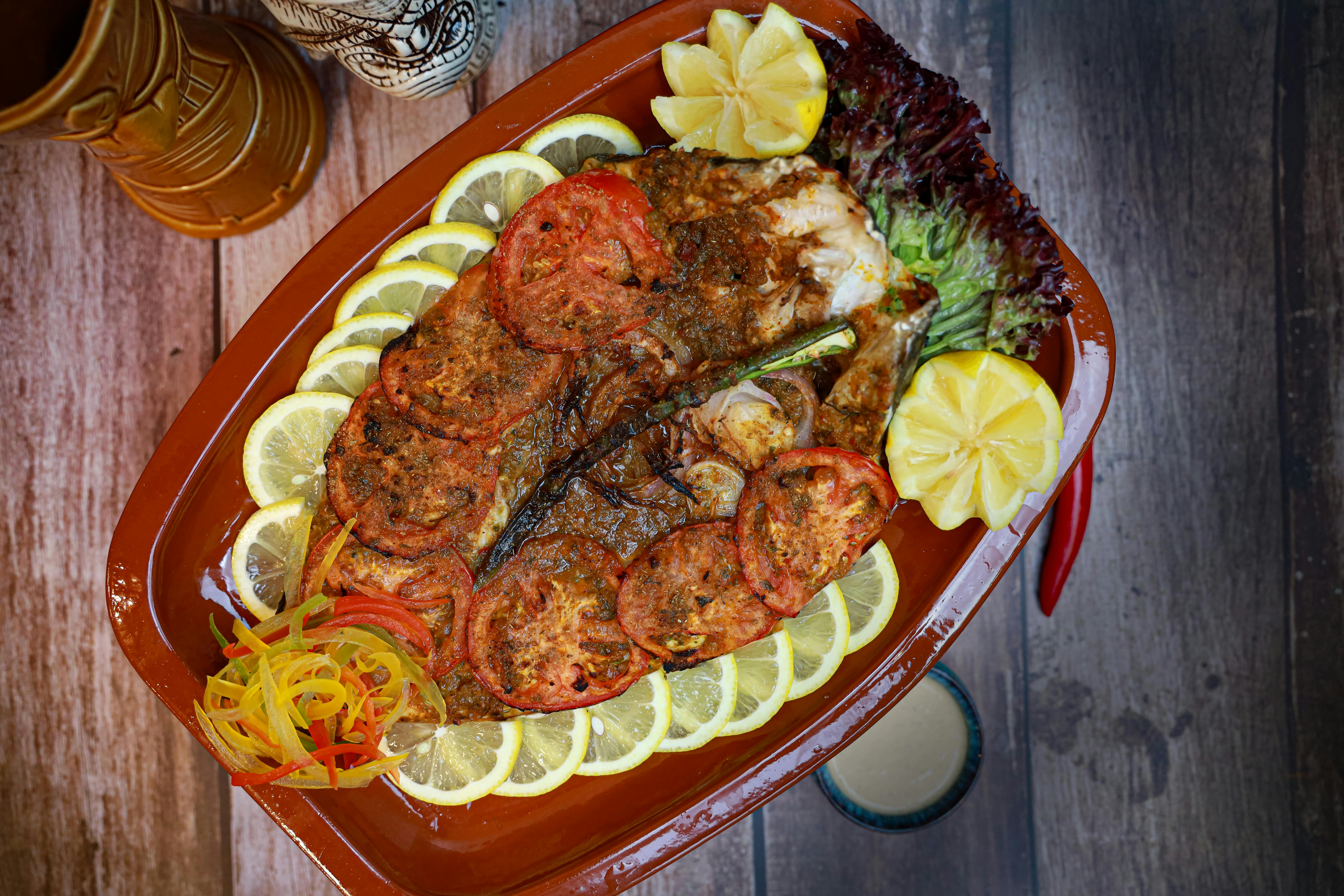
Masgouf is a grilled carp dish with generally keto-friendly components: carp is a lean but acceptable protein, olive oil is excellent for keto, and spices like turmeric and salt are fine. The caution arises from tamarind, which contains notable carbohydrates (roughly 25g net carbs per 100g concentrate), and tomato, which adds moderate carbs. In typical Masgouf preparations, tamarind is used as a marinade/paste in moderate quantities, and tomatoes are used as garnish or light topping. If portions of tamarind are small (a tablespoon or less) and tomato is minimal, the dish can fit within keto macros. However, heavier tamarind use could push net carbs into problematic territory. Onion also contributes a small but non-trivial carb load. The dish is otherwise protein- and fat-forward, making it conditionally compatible with portion awareness.
Some strict keto practitioners would flag tamarind entirely, as even small amounts introduce sugars and some argue any fruit-derived concentrates should be eliminated regardless of quantity. Conversely, lazy keto adherents tracking only daily totals would likely approve this dish freely given the modest carb contribution of each ingredient in realistic serving sizes.
Masgouf is a traditional Iraqi grilled fish dish with carp as its primary ingredient. Fish is an animal product and is explicitly excluded from vegan diets. All other ingredients (olive oil, tamarind, turmeric, lemon, onion, tomato, salt) are plant-based, but the carp alone makes this dish entirely incompatible with veganism. There is no meaningful debate within the vegan community on this point.
Masgouf is a traditional Iraqi grilled carp dish that is almost entirely paleo-compliant — carp is a clean whole fish, olive oil is a preferred paleo fat, and tamarind, turmeric, lemon, onion, and tomato are all natural paleo-approved ingredients. However, the inclusion of added salt is a disqualifying factor under strict paleo rules, which exclude added salt as a processed/non-ancestral additive. Salt is the single ingredient that drops this otherwise excellent dish into 'avoid' territory under strict paleo guidelines. Without salt, this dish would score a 8-9 and receive a clear 'approve.'
Masgouf is an Iraqi grilled fish dish that aligns exceptionally well with Mediterranean diet principles. Carp is a whole, minimally processed fish providing lean protein and omega-3 fatty acids, satisfying the recommendation for fish 2-3 times weekly. Extra virgin olive oil is used as the primary fat, which is the cornerstone of the Mediterranean diet. All remaining ingredients — tamarind, turmeric, lemon, onion, and tomato — are whole plant-based foods with no refined grains, added sugars, or processed components. The preparation method (grilling) is also consistent with healthy Mediterranean cooking techniques. While carp is not a traditional Mediterranean fish, the dietary profile is virtually identical to encouraged Mediterranean fish dishes.
Masgouf is a traditional Iraqi grilled carp dish, and while the carp itself is carnivore-approved, the preparation is heavily plant-laden. The dish includes tamarind (plant-derived fruit), turmeric (plant-derived spice), lemon (fruit), onion (vegetable), tomato (vegetable/fruit), and olive oil (plant-derived fat). These ingredients are all excluded on a carnivore diet. The only carnivore-compatible components are the carp and salt. With the majority of the dish's flavor profile and ingredients derived from plants, this dish as prepared is incompatible with carnivore eating.
Masgouf is a traditional Iraqi grilled fish dish featuring carp marinated with olive oil, tamarind, turmeric, lemon, onion, tomato, and salt. Every ingredient listed is fully compliant with Whole30 guidelines. Carp is a whole fish (animal protein, allowed), olive oil is a natural fat (allowed), tamarind is a fruit-derived souring agent (allowed), turmeric is a spice (allowed), lemon is a fruit (allowed), onion and tomato are vegetables (allowed), and salt is explicitly permitted. There are no excluded ingredients such as grains, legumes, dairy, added sugar, or alcohol. This is a whole, minimally processed meal centered on a clean protein and vegetables, which aligns well with the spirit of the Whole30 program.
Masgouf contains onion as a key ingredient, which is high-FODMAP due to fructans and is problematic even in small amounts during elimination. The remaining ingredients are largely low-FODMAP: carp (plain fish, safe), olive oil (safe), turmeric (safe in culinary amounts), lemon (safe), salt (safe), and tomato (safe at standard serving of ~65g). Tamarind is a moderate concern — Monash data is limited but concentrated tamarind paste at larger amounts may contain excess fructose or polyols, though culinary amounts used as a flavor agent are likely lower risk. The primary FODMAP offender here is onion, which is a foundational aromatic in this dish and cannot reasonably be consumed in low-FODMAP quantities while preserving the dish's character. Because onion is typically used in significant amounts in Masgouf (cooked alongside or stuffed into the fish), this dish is not safe during the elimination phase.
Some clinical FODMAP practitioners note that if onion is cooked separately and only the infused oil or cooking liquid contacts the fish (rather than onion pieces being consumed directly), FODMAP load could theoretically be reduced, since fructans are water-soluble. However, Monash University does not endorse onion-infused oil as low-FODMAP the way garlic-infused oil is, and traditional Masgouf preparation involves eating the onion, making this substitution impractical without significant recipe modification.
Masgouf is a traditional Iraqi grilled carp dish that aligns well with DASH diet principles. The primary protein is fish (carp), which is a lean protein source rich in omega-3 fatty acids and potassium — exactly what DASH emphasizes. Olive oil is a heart-healthy unsaturated fat endorsed by DASH. The remaining ingredients — tamarind, turmeric, lemon, onion, and tomato — are all vegetables/fruits or spices with no sodium concerns and meaningful micronutrient contributions (potassium, antioxidants, vitamin C). The main variable is the amount of added salt, which can push sodium up depending on preparation. As typically prepared at home or in a restaurant, the dish is relatively low in saturated fat, processed ingredients, and added sugars. Carp is not a high-mercury fish, though it is fattier than leaner white fish; however, its fat profile is beneficial. The primary DASH concern is portion-controlling the olive oil and monitoring salt addition.
NIH DASH guidelines broadly endorse fish as a lean protein and olive oil as an acceptable fat, making this dish a strong fit. However, some conservative DASH clinicians note that carp is a higher-fat freshwater fish compared to cod or tilapia, and that restaurant versions of Masgouf may carry significant added salt; these practitioners would rate it 'caution' unless sodium addition is minimized.
Masgouf is a strong Zone-compatible dish. Carp is a lean fish providing quality protein with beneficial omega-3 fatty acids, making it an ideal Zone protein block. Olive oil is the gold standard Zone fat — monounsaturated and anti-inflammatory, fitting perfectly into fat blocks. The remaining ingredients (onion, tomato, lemon, turmeric, tamarind) are all low-glycemic, polyphenol-rich vegetables and flavor agents that Sears would specifically endorse for their anti-inflammatory properties. Turmeric in particular aligns with Sears' later anti-inflammatory writings. The carbohydrate load from the vegetables is modest and low-glycemic. The main Zone consideration is managing total fat quantity, as olive oil used liberally in grilling can push fat blocks high — but the type of fat is ideal. With reasonable portioning of the olive oil, this dish naturally trends toward a favorable Zone ratio of lean protein, monounsaturated fat, and low-glycemic carbs. No high-glycemic carbohydrates, no refined sugars, no saturated fat concerns, and no processed ingredients — this is a whole-food Mediterranean-style preparation that fits the Zone framework well.
Masgouf is Iraq's iconic grilled carp dish, and its ingredient profile aligns well with anti-inflammatory principles. Carp is a freshwater fish providing lean protein and meaningful omega-3 fatty acids — not as concentrated as wild salmon or sardines, but a genuine source nonetheless. Olive oil contributes oleocanthal, a compound with COX-inhibiting properties similar to ibuprofen, and is a cornerstone of anti-inflammatory eating. Turmeric brings curcumin, one of the most well-studied anti-inflammatory phytonutrients. Tamarind offers polyphenols and antioxidant activity. Lemon provides vitamin C and flavonoids. Onion contains quercetin, a potent flavonoid with anti-inflammatory effects. Tomato supplies lycopene, which is particularly bioavailable when cooked or exposed to heat as in traditional Masgouf preparation. Taken together, this is a whole-food dish built almost entirely from anti-inflammatory ingredients with no refined carbohydrates, added sugars, or inflammatory fats. The main consideration is that carp's omega-3 profile is less impressive than fatty cold-water fish, and farmed carp can have higher omega-6 content depending on feed — which slightly tempers the score compared to a salmon or sardine dish.
Confidence is medium primarily due to carp's variable omega-3/omega-6 ratio: farmed carp fed grain-based diets may carry a less favorable fatty acid profile than wild-caught, and some anti-inflammatory protocols (e.g., Dr. Weil's emphasis on cold-water fatty fish) would consider carp a second-tier fish choice. Additionally, nightshade skeptics following AIP-adjacent protocols would flag the tomato as a potential irritant for autoimmune-sensitive individuals, though mainstream anti-inflammatory nutrition regards tomato as a beneficial antioxidant source.
Masgouf is a traditional Iraqi grilled carp dish that aligns well with GLP-1 dietary principles. Carp is a lean-to-moderate protein source delivering roughly 18-20g of protein per 100g serving, supporting the critical muscle-preservation goal. The preparation method — slow grilling or open-fire cooking — avoids frying, keeping fat content manageable. Olive oil is used, providing unsaturated fats in moderate amounts, which is preferred over saturated fats. Tamarind, lemon, turmeric, and tomato add micronutrients, antioxidants, and digestive support without adding significant calories or fat. Onion and tomato contribute modest fiber and water content, supporting hydration and digestion. The dish is not heavily spiced in the irritating sense — turmeric is anti-inflammatory and generally well tolerated. The overall profile is nutrient-dense, protein-forward, low in refined carbohydrates, and easy to digest relative to fatty or fried alternatives. The main caution is portion control around olive oil quantity used in preparation, and that carp has a moderate fat content compared to leaner fish like tilapia or cod, though its fats skew toward beneficial omega-3 and omega-6 profiles.
Some GLP-1-focused dietitians may flag carp as higher in fat than preferred fish choices like cod, tilapia, or flounder, and may note that the tamarind-based marinade can add modest sugar content depending on preparation. Individual tolerance to the acidity of tamarind and lemon may also vary among GLP-1 patients experiencing reflux or nausea.
*See how scores were generated at our methodology page.
Nutritional profile
Six traits that cut across every diet.
Fiber & Plants
How much whole-plant food and fiber it delivers.
Healthy Fats
The quality of its fats (unsaturated, omega-3).
Whole / Unprocessed
How close it is to its natural, unprocessed form.
Gut Gentle
How easy it is on digestion (low FODMAP, few irritants).
Low Glycemic
How little it spikes your blood sugar.
Protein Density
How much protein it packs per calorie.
Controversy Index
Higher controversy = more disagreement between diets.
Diet-Specific Tips
 Keto — 6/10
View tips
- Tamarind is the primary carb concern — net carbs vary significantly by quantity used in marinade
- Carp provides quality protein with moderate fat content, compatible with keto macros
- Olive oil as the cooking fat is ideal for ketogenic eating
- Tomato and onion add minor but cumulative carb load
- Turmeric, lemon juice, and salt are negligible in carb contribution
- Overall dish can be keto-compatible if tamarind and tomato portions are controlled
 Mediterranean — 9/10
View tips
- Whole fish (carp) as primary protein — aligns with Mediterranean fish emphasis
- Extra virgin olive oil used as the cooking fat — core Mediterranean staple
- All ingredients are whole, unprocessed plant foods
- No added sugars, refined grains, or processed ingredients
- Grilling method preserves nutritional integrity
- Tamarind adds a non-Mediterranean flavor profile but does not compromise dietary quality
 Whole30 — 9/10
View tips
- Carp is a compliant whole fish protein
- Olive oil is an approved natural fat
- Tamarind is a fruit-derived ingredient with no added sugar concerns
- Turmeric, lemon, onion, and tomato are all Whole30-approved
- Salt is explicitly allowed on Whole30
- No excluded ingredients present
- Dish is a whole, unprocessed preparation consistent with Whole30 philosophy
 DASH — 8/10
View tips
- Carp is a lean fish protein endorsed by DASH guidelines
- Olive oil provides heart-healthy monounsaturated fats
- Vegetables and spices (onion, tomato, turmeric, tamarind, lemon) are DASH-friendly
- No saturated fat, trans fat, added sugars, or processed ingredients
- Salt addition is a variable — DASH compliance depends on limiting added sodium
- Carp is a moderately fatty fish but with favorable omega-3 profile
- Low-sodium preparation would score a 9; heavy-salted versions would score a 6
 Zone — 8/10
View tips
- Carp is a lean fish — ideal Zone protein source with omega-3 content
- Olive oil is the preferred Zone fat: monounsaturated and anti-inflammatory
- No high-glycemic carbohydrates present in the dish
- Onion, tomato, and lemon provide low-glycemic, polyphenol-rich carb blocks
- Turmeric supports Sears' anti-inflammatory dietary focus
- Tamarind adds minor carbohydrate load but is used in small quantities as a flavoring
- Portion control of olive oil is the only Zone management consideration
- Whole-food, unprocessed ingredients align with Zone's anti-inflammatory philosophy
 Anti-Inflammatory — 8/10
View tips
- Carp provides omega-3 fatty acids and lean protein, though less than cold-water fatty fish
- Extra virgin olive oil is a top-tier anti-inflammatory fat (oleocanthal)
- Turmeric (curcumin) is one of the most researched anti-inflammatory spices
- Tamarind and lemon contribute polyphenols, antioxidants, and vitamin C
- Onion supplies quercetin, a potent anti-inflammatory flavonoid
- Tomato provides lycopene, bioavailability enhanced by heat cooking
- No refined carbohydrates, added sugars, trans fats, or processed ingredients
- Farmed carp may have elevated omega-6 content depending on feed — wild or traditional river carp preferred
 GLP-1 Friendly — 8/10
View tips
- Carp provides solid lean-to-moderate protein (~18-20g per 100g) supporting muscle preservation
- Grilled preparation avoids frying, keeping fat content lower and digestibility higher
- Olive oil use adds unsaturated fats — acceptable in moderate amounts
- Carp contains omega-3 and omega-6 fatty acids, beneficial for GLP-1 patients
- Turmeric is anti-inflammatory and generally well tolerated
- Tamarind and lemon add acidity that may irritate some GLP-1 patients with reflux or nausea
- Tomato and onion contribute modest fiber and water content
- No refined carbohydrates, sugar, or fried components in standard preparation
- Portion-sensitive: olive oil quantity in preparation significantly affects fat load