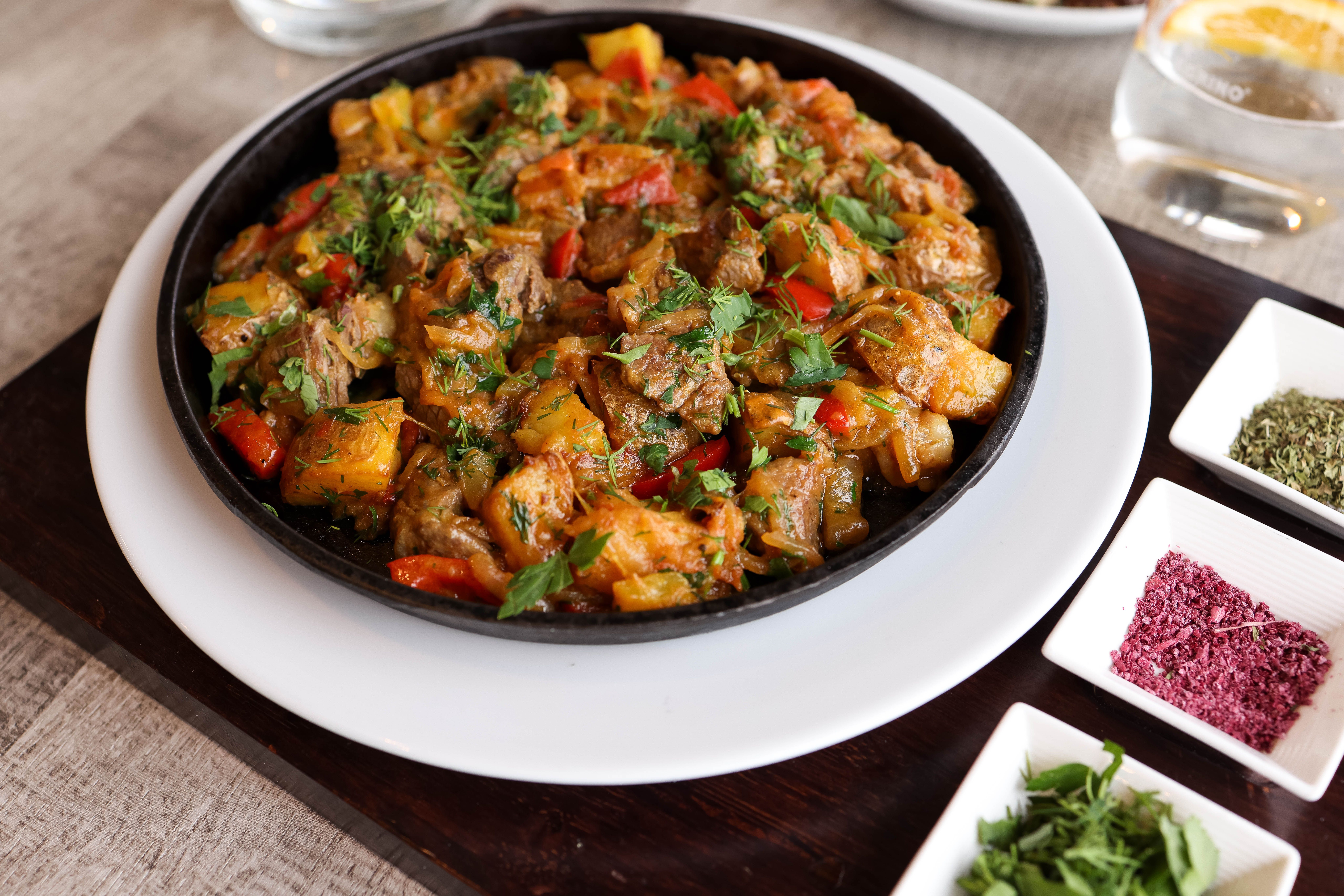
Photo: Valeria Boltneva / Pexels
Iraqi
Tepsi Baytinijan
The diets react (see scores below)
Common Ingredients
- eggplant
- beef
- potato
- tomato
- onion
- garlic
- tomato paste
- baharat
Specific recipes may vary.
Incompatible with 4 of 11 diets
Diet Ratings
Tepsi Baytinijan is an Iraqi baked casserole dish that prominently features potato as a core ingredient, which is a high-starch vegetable that alone can easily exceed the entire daily net carb allowance for keto (a medium potato contains ~30g net carbs). Combined with tomato paste (concentrated sugars/carbs), onions, and tomatoes, the total net carb load of a standard serving is far too high for ketosis. While eggplant and beef are individually keto-compatible, the potato makes this dish fundamentally incompatible with a ketogenic diet without major ingredient substitutions.
Tepsi Baytinijan is an Iraqi baked casserole dish whose primary protein is beef, which is an animal product and strictly excluded from a vegan diet. While the dish contains many plant-based ingredients — eggplant, potato, tomato, onion, garlic, tomato paste, and baharat spice blend — the inclusion of beef makes it entirely incompatible with veganism. There is no ambiguity here; beef is unequivocally an animal product.
Tepsi Baytinijan is an Iraqi baked casserole featuring eggplant, beef, tomato, onion, garlic, tomato paste, and baharat spice blend — all of which are paleo-approved. The primary concern is the potato, which sits in a gray area within the paleo community. Strict Cordain-school paleo excludes white potatoes due to their glycemic index and glycoalkaloid content, while many modern paleo practitioners and frameworks (including Whole30 and Mark Sisson's Primal Blueprint) accept them as whole, unprocessed tubers. The tomato paste is minimally processed and generally accepted. Baharat is a spice blend that is typically paleo-friendly (cumin, coriander, cinnamon, black pepper, cloves, etc.), though commercial blends may contain added salt, which strict paleo excludes. The dish is otherwise clean — no grains, legumes, dairy, seed oils, or refined sugar — making it largely paleo-compatible pending the potato debate and the specific baharat formulation.
Strict Loren Cordain-school paleo (as outlined in 'The Paleo Diet') discourages white potatoes due to their high glycemic load and glycoalkaloid compounds, and also flags tomato paste and spice blends as potentially containing added salt or preservatives, which are excluded under the original framework.
Tepsi Baytinijan is an Iraqi baked casserole featuring eggplant, potato, tomato, onion, and garlic — all Mediterranean diet staples — layered with ground beef. The vegetable-forward profile and whole-food ingredients align well with Mediterranean principles, and the dish is typically baked rather than deep-fried. However, beef as the primary protein is a red meat, which the Mediterranean diet restricts to a few times per month. The vegetable-to-meat ratio matters here: if beef is used in modest amounts relative to the abundant eggplant and tomatoes, the dish leans more acceptable. Baharat spice blend is whole-food flavoring with no dietary concerns. The absence of refined grains, added sugars, or heavy processing is a positive. Overall, this dish sits in the caution zone due to the red meat component, though it is considerably better than many red-meat-centered dishes.
Some Mediterranean diet interpretations, particularly those drawing on Eastern Mediterranean and Levantine traditions (which share culinary overlap with Iraqi cuisine), permit meat-and-vegetable braises and casseroles more liberally when meat serves as a flavoring or minor component rather than the centerpiece. If the beef quantity is small and the dish is consumed occasionally, stricter Mediterranean diet authorities like Oldways or the PREDIMED framework would still flag it as an infrequent-consumption item.
Tepsi Baytinijan is a plant-heavy Iraqi casserole dish. While it contains beef, the protein is entirely overwhelmed by multiple plant-based ingredients: eggplant, potato, tomato, onion, garlic, tomato paste, and baharat (a plant-derived spice blend). Every single non-beef ingredient is excluded on a carnivore diet. The dish is fundamentally a vegetable bake with some beef — the opposite of what carnivore prescribes. There is no version of this dish that could be considered carnivore-compatible without essentially deconstructing it entirely and discarding most of its components.
Tepsi Baytinijan is a traditional Iraqi baked casserole of layered eggplant, beef, potato, tomato, and onion, seasoned with garlic, tomato paste, and baharat spice blend. Every ingredient listed is fully Whole30 compliant: eggplant, potato, tomato, onion, and garlic are all whole vegetables; beef is an approved protein; tomato paste is naturally compliant (assuming no added sugar or non-compliant additives, as is typical of plain tomato paste); and baharat is a Middle Eastern spice blend typically composed of black pepper, cumin, coriander, cinnamon, cloves, cardamom, and nutmeg — all permitted herbs and spices. No grains, legumes, dairy, added sugars, or other excluded ingredients are present. This is exactly the type of whole-food, protein-and-vegetable-forward meal the Whole30 program encourages.
Tepsi Baytinijan contains multiple high-FODMAP ingredients that make it unsuitable during the elimination phase. Onion and garlic are among the highest-FODMAP foods tested by Monash University, both extremely high in fructans with no safe serving size in standard cooking quantities. These two ingredients alone disqualify the dish. Eggplant is moderate-FODMAP — Monash rates it as low-FODMAP only at 75g but it becomes high-FODMAP at larger servings (182g), and in a casserole dish it is typically used in generous quantities. Tomato paste is high-FODMAP at amounts commonly used in cooking (over 28g/2 tablespoons), contributing excess fructose. Standard beef and potato are low-FODMAP, as are whole tomatoes at moderate servings and most spice blends like baharat (provided they contain no onion or garlic powder — a significant caveat). The combination of onion, garlic, tomato paste, and potentially high eggplant portions makes this dish clearly high-FODMAP with no practical modification short of a complete recipe overhaul.
Tepsi Baytinijan is an Iraqi baked casserole featuring eggplant, beef, potato, tomato, onion, garlic, tomato paste, and baharat spice blend. The dish has notable DASH-positive elements: eggplant, tomato, onion, and garlic are excellent DASH vegetables rich in potassium, fiber, and antioxidants; tomatoes and tomato paste contribute lycopene and potassium; the spice-forward baharat blend (cumin, coriander, cinnamon, allspice, pepper) adds flavor without sodium, supporting DASH's approach of using herbs and spices instead of salt. However, the primary protein is beef, which DASH limits due to saturated fat concerns — DASH recommends no more than 6 oz of lean meat daily and emphasizes poultry and fish over red meat. Traditional preparation often involves generous amounts of oil for frying or roasting the eggplant and potatoes, which increases total fat and calorie load. Sodium content depends heavily on preparation — tomato paste and added salt can push sodium higher. If made with lean beef (e.g., 90%+ lean), minimal added salt, and the eggplant roasted rather than fried, this dish moves closer to DASH-compatible. As commonly prepared, it warrants caution due to red meat use and potentially high fat from oil.
NIH DASH guidelines explicitly limit red meat and encourage substituting poultry or fish; however, updated clinical interpretations note that lean cuts of beef in moderate portions (3-4 oz) can fit within DASH calorie and saturated fat targets, and the abundance of vegetables in this dish partially offsets the red meat concern from a cardiovascular standpoint.
Tepsi Baytinijan is an Iraqi baked casserole featuring eggplant, beef, potato, and tomato. From a Zone perspective, the dish has both favorable and unfavorable elements. On the positive side: eggplant is a favorable low-glycemic vegetable, tomatoes are favorable carbs rich in polyphenols, onion and garlic provide polyphenol benefits, and baharat spices are anti-inflammatory. However, potato is a high-glycemic 'unfavorable' carbohydrate that Sears explicitly lists as a food to avoid — it raises insulin significantly. The beef, depending on the cut, may carry more saturated fat than the Zone prefers, and the dish is typically prepared with oil for roasting/frying the eggplant and meat, which could add omega-6 seed oils depending on cooking method. The dish also lacks a clear lean protein structure at Zone-appropriate portions (25g), and the carbohydrate load from potato combined with eggplant and tomato paste could easily exceed the 40% carb target without careful portioning. The casserole format makes block management difficult. With careful modifications — reducing potato quantity significantly or substituting with more eggplant/zucchini, using lean beef, and cooking with olive oil — this dish can be made Zone-compatible, but as traditionally prepared it sits firmly in the caution zone.
Tepsi Baytinijan is an Iraqi baked casserole dish featuring eggplant, beef, potato, tomato, onion, garlic, tomato paste, and baharat spice blend. The dish has a genuinely mixed anti-inflammatory profile. On the positive side: eggplant is rich in nasunin and chlorogenic acid (antioxidants with anti-inflammatory properties); tomatoes and tomato paste provide lycopene, especially potent when cooked; garlic contains allicin and organosulfur compounds with well-documented anti-inflammatory effects; onion provides quercetin; and baharat — a Middle Eastern spice blend typically containing black pepper, cumin, coriander, cinnamon, cloves, and paprika — contributes meaningful anti-inflammatory phytochemicals, particularly from cinnamon and black pepper (piperine). Potatoes contribute resistant starch and potassium but are relatively neutral. The primary concern is red beef, which the anti-inflammatory framework places in the 'limit' category due to saturated fat content and arachidonic acid, which can promote inflammatory eicosanoids. The overall dish, however, is vegetable-forward, and if lean beef is used in modest proportion relative to the vegetables, the impact is moderated. The traditional preparation also typically involves olive oil, which would be a net positive. No refined carbohydrates, added sugars, or processed ingredients are present. The dish earns a moderate score — better than most red meat-centered dishes due to the anti-inflammatory vegetable and spice base, but not approvable given the beef component.
Some anti-inflammatory practitioners, particularly those following autoimmune protocols (AIP) or nightshade-sensitive approaches (e.g., Dr. Tom O'Bryan), would flag the tomato, eggplant, and potato as nightshade vegetables containing solanine and lectins that may exacerbate inflammation in susceptible individuals — potentially pushing the rating lower. Mainstream anti-inflammatory guidance (including Dr. Weil's pyramid) considers these vegetables beneficial due to their high antioxidant content and would not restrict them for the general population.
Tepsi Baytinijan is a baked Iraqi tray dish featuring layers of eggplant, ground beef, potato, and tomato with aromatics and baharat spice blend. Its GLP-1 compatibility is mixed. On the positive side, it contains meaningful vegetables (eggplant, tomato, onion, garlic) that provide fiber, antioxidants, and water content, and the tomato-based sauce is low in saturated fat. The beef provides protein, though ground beef at standard fat ratios (80/20) contributes significant saturated fat — a meaningful drawback. The critical issue is preparation: eggplant is traditionally fried or oiled heavily before baking to prevent bitterness and achieve texture, and potatoes add starchy carbohydrate load with limited protein return per calorie. Together, the fat content from fried eggplant plus fatty beef can worsen nausea, bloating, and reflux — core GLP-1 side effects. Baharat is a warm spice blend (cumin, coriander, cinnamon, pepper) that is generally well-tolerated and not a concern. Protein per serving is moderate but unlikely to hit the 15–30g per meal target without a generous beef portion. The dish is not inherently disqualifying and can be made more GLP-1-compatible with lean ground beef (90/10 or leaner), baked rather than fried eggplant, and a smaller potato portion, but as traditionally prepared it carries meaningful caution flags.
Some GLP-1-focused dietitians would rate this dish more favorably when home-prepared with lean beef and baked eggplant, emphasizing its vegetable density, fiber contribution, and absence of processed ingredients. Others maintain that the combined fat load from eggplant oil absorption and red meat, along with slowed gastric emptying on GLP-1s, makes this dish reliably problematic for GI side effects regardless of preparation tweaks.
*See how scores were generated at our methodology page.
Nutritional profile
Six traits that cut across every diet.
Fiber & Plants
How much whole-plant food and fiber it delivers.
Healthy Fats
The quality of its fats (unsaturated, omega-3).
Whole / Unprocessed
How close it is to its natural, unprocessed form.
Gut Gentle
How easy it is on digestion (low FODMAP, few irritants).
Low Glycemic
How little it spikes your blood sugar.
Protein Density
How much protein it packs per calorie.
Controversy Index
Higher controversy = more disagreement between diets.
Diet-Specific Tips
 Paleo — 5/10
View tips
- White potato is debated in the paleo community — excluded by Cordain, accepted by Sisson and Whole30
- Beef, eggplant, tomato, onion, and garlic are all paleo-approved whole foods
- Tomato paste is minimally processed and generally accepted in paleo
- Baharat spice blend is typically paleo-friendly but commercial versions may contain added salt
- No grains, legumes, dairy, refined sugar, or seed oils present
- Dish is otherwise whole-food based and hunter-gatherer compatible
 Mediterranean — 5/10
View tips
- Beef is a red meat, limited to a few times per month under Mediterranean diet guidelines
- Eggplant, tomato, onion, garlic, and potato are all encouraged whole plant foods
- Dish is baked/roasted rather than fried, minimizing added fats
- No refined grains, added sugars, or heavily processed ingredients
- Baharat is a whole-spice blend with no dietary concerns
- Vegetable-to-meat ratio is favorable, which partially offsets the red meat concern
 Whole30 — 5/10
View tips
- Beef is an approved Whole30 protein
- All vegetables (eggplant, potato, tomato, onion, garlic) are fully compliant
- Baharat is a spice blend of compliant herbs and spices (pepper, cumin, coriander, cinnamon, etc.)
- Plain tomato paste is compliant — label should be checked to confirm no added sugar
- No grains, legumes, dairy, or sweeteners present
- Whole, unprocessed ingredients align with the spirit of the Whole30 program
 DASH — 5/10
View tips
- Red meat (beef) as primary protein — DASH limits red meat in favor of poultry and fish
- Rich in DASH-approved vegetables: eggplant, tomato, onion, garlic — high in potassium and fiber
- Potato contributes potassium and fiber but also raises glycemic load
- Tomato paste can contribute meaningful sodium depending on quantity and brand
- Traditional preparation often uses significant oil for eggplant/potato — increases saturated/total fat
- Baharat spice blend is sodium-free and DASH-friendly as a salt substitute
- Lean beef and low-sodium tomato paste preparation would improve DASH compatibility
- No added sugars, processed ingredients, or high-sodium condiments in base recipe
 Zone — 5/10
View tips
- Potato is a high-glycemic 'unfavorable' carbohydrate explicitly discouraged by Sears; it drives the dish's glycemic load up significantly
- Eggplant and tomatoes are favorable low-glycemic Zone vegetables with polyphenol benefits
- Beef protein depends on cut — lean ground beef or sirloin is more Zone-friendly, but traditional preparations may use fattier cuts
- Baharat spices and garlic align with the Zone's anti-inflammatory focus
- Casserole format makes precise block portioning difficult without recipe modification
- Cooking oil matters: olive oil would be Zone-favorable, but seed oils common in some preparations add unfavorable omega-6 fats
- Can be made more Zone-compatible by reducing or eliminating potato and increasing eggplant/tomato volume
 Anti-Inflammatory — 5/10
View tips
- Red beef is a 'limit' food in anti-inflammatory frameworks due to saturated fat and arachidonic acid content
- Eggplant contributes nasunin and chlorogenic acid — notable antioxidants
- Cooked tomato and tomato paste are high in bioavailable lycopene, a potent anti-inflammatory carotenoid
- Garlic provides allicin and organosulfur compounds with well-established anti-inflammatory effects
- Baharat spice blend (cinnamon, black pepper, cumin, cloves) contributes meaningful anti-inflammatory phytochemicals
- Onion provides quercetin, a flavonoid with anti-inflammatory and antioxidant properties
- Dish is vegetable-forward, which moderates the pro-inflammatory impact of the beef
- No refined carbohydrates, added sugars, or processed ingredients
- Nightshade vegetables (eggplant, tomato, potato) may be a concern for individuals with autoimmune conditions
 GLP-1 Friendly — 5/10
View tips
- Eggplant absorbs significant oil during traditional preparation, increasing fat content and GLP-1 side effect risk
- Ground beef at standard fat ratios contributes saturated fat; lean substitution (90/10+) substantially improves the profile
- Moderate protein per serving — adequate only with a generous beef portion
- Potato adds starchy carbohydrate with low protein density per calorie
- Tomato-based sauce, onion, garlic, and baharat are GLP-1-friendly components
- High vegetable content supports fiber intake and digestive health
- Dish is portion-sensitive — a small serving reduces fat and carbohydrate load meaningfully
- No fried, ultra-processed, high-sugar, or carbonated components