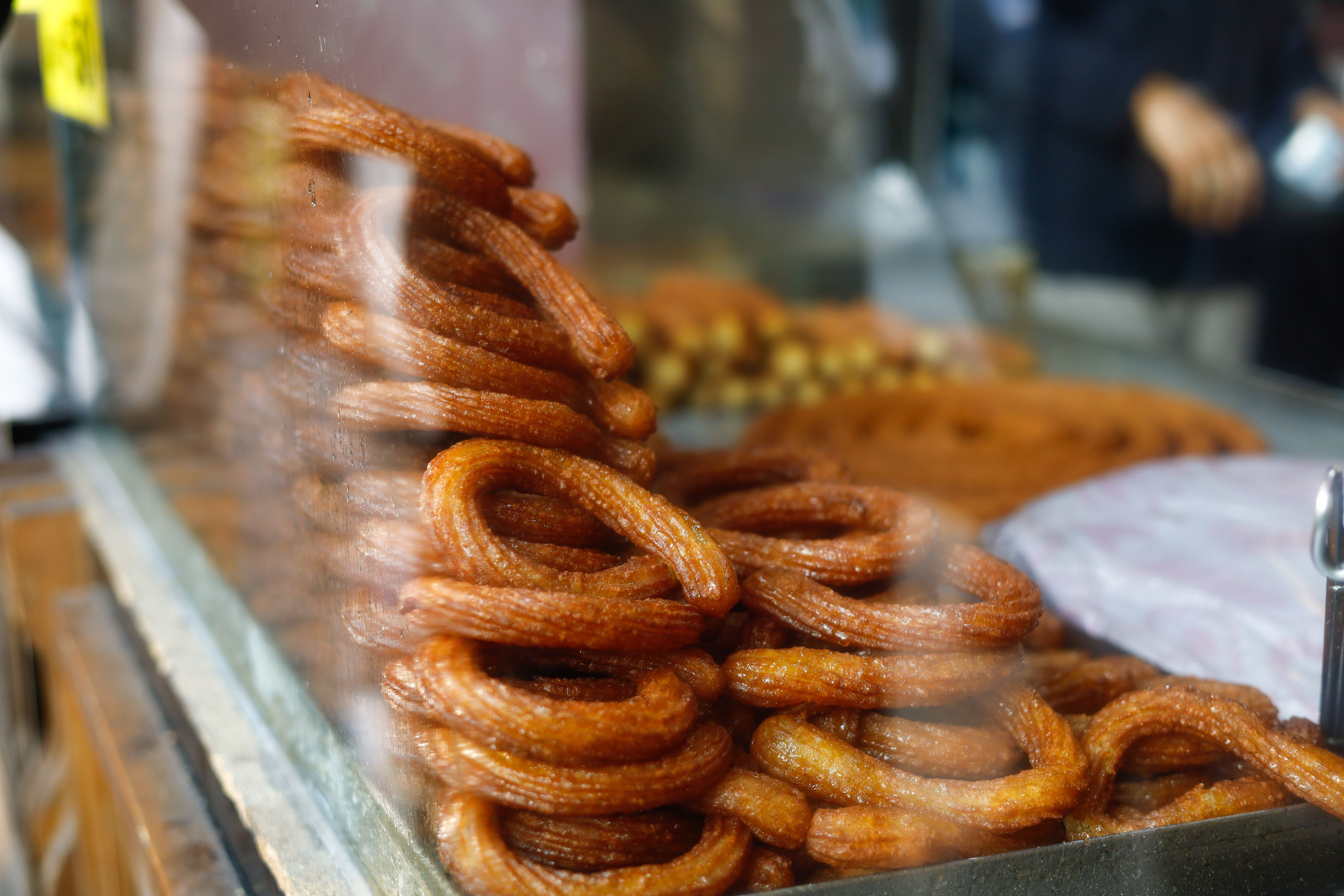
Photo: Esra Erdem / Pexels
The diets react (see scores below)
Common Ingredients
- flour
- yeast
- sugar
- water
- cardamom
- saffron
- lemon juice
- oil
Specific recipes may vary.
Incompatible with 10 of 11 diets
Diet Ratings
Zalabia is a deep-fried Iraqi fritter made primarily from flour, yeast, and sugar — a trifecta of keto-incompatible ingredients. Wheat flour is a high-glycemic grain loaded with net carbs, sugar is explicitly excluded on ketogenic diets, and yeast further confirms this is a grain-based leavened dough. A single serving would easily contain 30-50g or more of net carbs, instantly consuming or exceeding the entire daily keto carb allowance. The spices (cardamom, saffron, lemon juice) are negligible and do not redeem the dish. There is no viable keto adaptation without fundamentally replacing the core ingredients.
Zalabia is an Iraqi fried dough/fritter made entirely from plant-based ingredients: flour, yeast, sugar, water, cardamom, saffron, lemon juice, and oil. All components are clearly vegan with no animal products or animal-derived ingredients present. It is a deep-fried sweet snack, so the score is slightly reduced from a maximum due to the refined flour, added sugar, and frying oil making it a processed/indulgent food rather than a whole-food plant-based option, but it is fully vegan-compliant.
Zalabia is a deep-fried Iraqi fritter made primarily from wheat flour and sugar — two core non-paleo ingredients. Flour is a grain product explicitly excluded from the paleo diet, and refined sugar is among the most categorically avoided ingredients. The frying oil is unspecified but likely a seed oil (canola, sunflower, or vegetable oil), which are also banned under paleo guidelines. While cardamom, saffron, lemon juice, and yeast are individually acceptable or borderline acceptable, the foundational ingredients of this dish make it entirely incompatible with a paleo framework.
Zalabia is a deep-fried sweet dough fritter made primarily from refined white flour and sugar, fried in oil. While it contains some spices (cardamom, saffron) and lemon juice that are Mediterranean-friendly, the core composition — refined grain, added sugar, and deep frying — directly contradicts Mediterranean diet principles. The Mediterranean diet minimizes refined grains, added sugars, and heavily fried foods. The frying oil is unspecified and likely not extra virgin olive oil. This is an occasional treat food, not a diet staple.
Some traditional Mediterranean and Middle Eastern culinary practices do include occasional fried sweets during festivals and celebrations, and the use of fragrant spices aligns with regional cooking traditions. A strict 'foods in context' interpretation might place this in the 'very occasional treat' category rather than a blanket avoid, acknowledging cultural food patterns.
Zalabia is a deep-fried Iraqi pastry made entirely from plant-based ingredients: flour, yeast, sugar, water, cardamom, saffron, lemon juice, and plant oil. There is not a single animal-derived ingredient in this dish. It is essentially a sweetened, spiced dough fried in vegetable oil — the opposite of carnivore-compatible food. Flour and sugar are among the most excluded foods on the carnivore diet, and plant oil (likely vegetable or canola) is explicitly rejected in favor of animal fats like tallow or lard. This dish violates every core carnivore principle simultaneously.
Zalabia is a deep-fried Iraqi fritter/funnel cake made with flour (a grain), yeast, and sugar — all of which are excluded on Whole30. Flour is a grain product and is explicitly prohibited. Sugar is an added sweetener, also explicitly excluded. Even setting aside the excluded ingredients, Zalabia is a fried dough/baked-good-style snack that would fall squarely under the Whole30 rule prohibiting the recreation of junk food, pancakes, fritters, and similar treats with compliant ingredients. There is no compliant version of this dish possible.
Zalabia is a deep-fried Iraqi dough fritter made with wheat flour as its primary ingredient. Wheat flour is high in fructans, which are one of the most problematic FODMAPs. The remaining ingredients — yeast, sugar (low-FODMAP in small amounts), water, cardamom, saffron, lemon juice, and frying oil — are all individually low-FODMAP or FODMAP-free. However, the wheat flour base is the dominant ingredient and makes this dish high-FODMAP at any standard serving size. Unlike sourdough bread, which undergoes extended fermentation that partially breaks down fructans, Zalabia uses a relatively short yeast-leavened process that does not meaningfully reduce fructan content. A standard serving of this fried pastry would contain enough wheat-derived fructans to trigger symptoms in individuals sensitive during the elimination phase.
Zalabia is an Iraqi deep-fried fritter made from a yeast-leavened flour batter, fried in oil and typically sweetened. As commonly consumed, it is a deep-fried sweet snack made from refined white flour with significant added sugar. DASH guidelines explicitly limit sweets, added sugars, and fried foods high in total fat. Deep frying in oil substantially increases total fat and caloric density. The refined flour provides negligible fiber, potassium, magnesium, or calcium — all nutrients DASH emphasizes. While individual ingredients like cardamom, saffron, and lemon juice are DASH-neutral or mildly beneficial, they do not offset the fundamental issues: deep frying, refined carbohydrates, and high added sugar content. DASH allows only 5 or fewer servings of sweets per week (and limited portions), and a deep-fried sweet fritter represents a poor fit for regular consumption. Sodium is not a primary concern here, but the fat and sugar profile places this firmly in the 'avoid' category.
Zalabia is a deep-fried sweet fritter — essentially a fried dough made from white flour, sugar, and oil — that represents one of the most Zone-unfriendly food profiles possible. The macronutrient breakdown is dominated by high-glycemic refined carbohydrates (white flour + sugar), with fat from deep frying (likely omega-6-heavy seed oil), and virtually zero protein. This is essentially the opposite of the Zone's 40/30/30 ratio: it is extremely carbohydrate-heavy, protein-free, and the fat source is unfavorable. White flour and sugar are among the highest-glycemic carbohydrate sources, causing the sharp insulin spike that Zone diet is specifically designed to avoid. The frying oil is almost certainly a refined seed oil (high omega-6), which conflicts with Zone's anti-inflammatory emphasis on monounsaturated and omega-3 fats. There is no meaningful protein block present. While technically a person could eat a tiny piece and compensate with a lean protein and fat source, this food as a standalone snack is antithetical to Zone principles and provides no Zone-compatible building block value.
Zalabia is a deep-fried Iraqi fritter made from a fermented batter of white flour, yeast, sugar, and water, soaked or drizzled with a saffron-cardamom-lemon syrup. While saffron and cardamom offer modest anti-inflammatory phytonutrients, and lemon juice provides vitamin C, these are present in small amounts and cannot offset the dish's core profile. The foundation is refined white flour — a refined carbohydrate that spikes blood glucose and promotes inflammatory signaling. Added sugar is a primary ingredient both in the batter and the syrup, directly linked to elevated CRP and IL-6. The cooking method is deep frying in unspecified oil: if seed oils (sunflower, corn, cottonseed) are used — as is typical in Iraqi street food preparation — this adds a heavy omega-6 load and potential oxidation products from high-heat frying, both pro-inflammatory. Even if a more neutral oil were used, the combination of refined carbs + added sugar + deep frying places this firmly in the avoid category. This is an occasional treat food, not a regular dietary choice for someone following anti-inflammatory principles.
Zalabia is a deep-fried Iraqi fritter made from a yeasted flour batter, soaked or drizzled with a sugar syrup. It is essentially a fried dough confection — high in refined carbohydrates, high in sugar, high in fat from frying, and virtually devoid of protein and fiber. This profile is directly contrary to the core priorities for GLP-1 patients: it contributes empty calories at a time when total caloric intake is severely reduced, provides no meaningful protein to protect muscle mass, contains negligible fiber, and the combination of high fat and high sugar is a known trigger for nausea, reflux, and GI distress in patients on GLP-1 medications. The deep-frying method alone warrants an avoid rating. There are no meaningful redeeming nutritional qualities in a standard serving.
*See how scores were generated at our methodology page.
Nutritional profile
Six traits that cut across every diet.
Fiber & Plants
How much whole-plant food and fiber it delivers.
Healthy Fats
The quality of its fats (unsaturated, omega-3).
Whole / Unprocessed
How close it is to its natural, unprocessed form.
Gut Gentle
How easy it is on digestion (low FODMAP, few irritants).
Low Glycemic
How little it spikes your blood sugar.
Protein Density
How much protein it packs per calorie.
Controversy Index
Higher controversy = more disagreement between diets.
Diet-Specific Tips
 Vegan — 8/10
View tips
- All ingredients are plant-derived
- No dairy, eggs, or other animal products
- Fried dough with refined flour and sugar — not a whole food, reducing score slightly
- Oil type unspecified but plant oils are standard in this recipe
- Lemon juice, saffron, and cardamom are all vegan-friendly flavorings