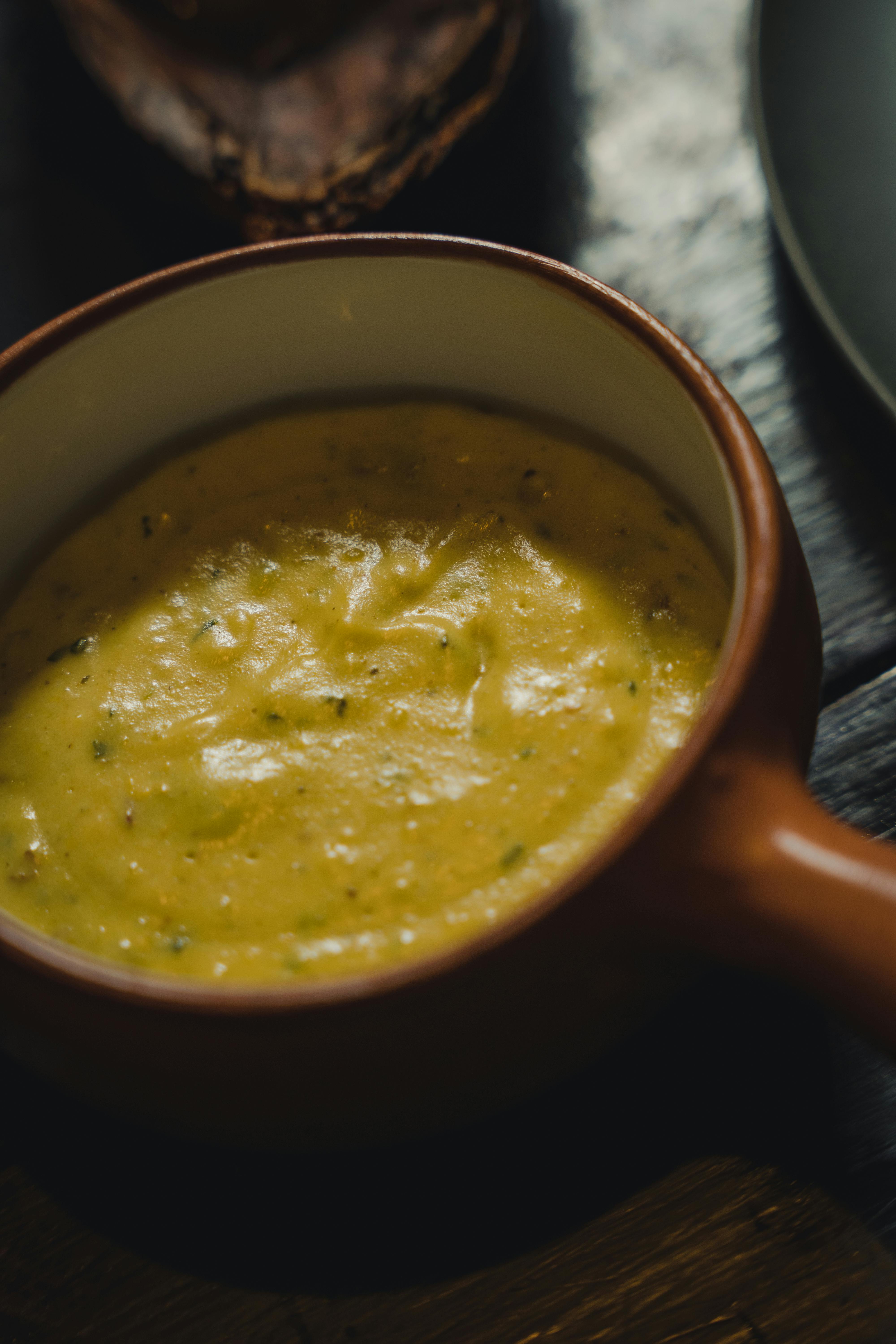
Photo: Jhoel Rojas / Pexels
The diets react (see scores below)
Common Ingredients
- garlic
- anchovies
- olive oil
- butter
- mixed vegetables
Specific recipes may vary.
Incompatible with 4 of 11 diets
Diet Ratings
Bagna Cauda itself — the dipping sauce of garlic, anchovies, olive oil, and butter — is nearly ideal for keto: high in healthy fats, moderate protein from anchovies, and very low in net carbs. The sauce alone would score a 9. However, the dish is traditionally served with a wide array of dipping vegetables, which is where the carb variability lies. Keto-friendly vegetables like celery, bell peppers, fennel, zucchini, and radicchio are common choices and keep net carbs manageable. But traditionally it also includes higher-carb items like potatoes, bread, or carrots. The verdict of 'caution' reflects the mixed vegetable component — if restricted to low-carb vegetables, this dish is fully keto-compatible; if served with starchy dippers, it becomes problematic.
Some strict keto practitioners would flag even the garlic quantity (multiple cloves can add up to 3-5g net carbs) and any inclusion of root vegetables or peppers as too carb-dense, arguing the dish should only be consumed with the most stringent low-carb dippers like cucumber or leafy greens.
Bagna Cauda is a traditional Piedmontese warm dipping sauce that is fundamentally incompatible with a vegan diet. It contains two clear animal-derived ingredients: anchovies (a fish) and butter (a dairy product). Both are unambiguously excluded under all vegan frameworks. While the garlic, olive oil, and mixed vegetables are plant-based, the core identity and flavor of the dish depends entirely on the animal products. There is no meaningful vegan debate about this — anchovies and butter are animal products by any definition.
Bagna Cauda is mostly paleo-compatible but is held back by one key ingredient: butter. Garlic, anchovies, and olive oil are all fully paleo-approved — anchovies provide excellent nutrient-dense protein and omega-3s, garlic is a natural herb/vegetable, and olive oil is a preferred fat. Mixed vegetables for dipping are unambiguously paleo. However, butter is a dairy product, which places it in contested territory. Strict Cordain-school paleo excludes all dairy including butter, while many modern paleo practitioners accept grass-fed butter or at minimum ghee as a substitute. Without substituting the butter, the dish sits in the caution zone. If butter were replaced with additional olive oil or ghee, the dish would move closer to a full approval.
Strict Cordain-school paleo (The Paleo Diet) excludes all dairy derivatives including butter, which would push this dish toward avoid. Conversely, practitioners following Mark Sisson's Primal Blueprint or those using grass-fed butter would likely approve this dish outright, as high-fat dairy from quality sources is widely embraced in primal and modern paleo frameworks.
Bagna Cauda is a traditional Piedmontese Italian dip featuring several Mediterranean-friendly ingredients alongside one that gives pause. Olive oil and anchovies are core Mediterranean staples — olive oil is the primary fat of the diet, and anchovies (small oily fish) are exactly the kind of seafood the diet emphasizes. Garlic is a celebrated Mediterranean aromatic, and serving it with mixed vegetables is perfectly aligned with the plant-forward emphasis of the diet. The complicating factor is butter, which is traditional to this northern Italian recipe but is not a Mediterranean diet staple. Butter is high in saturated fat and is not the preferred fat source — olive oil is. However, butter appears in smaller quantities relative to the olive oil in most authentic recipes, and the overall dish is used as a condiment/dip for vegetables. The balance of Mediterranean-positive ingredients (anchovies, olive oil, garlic, vegetables) largely outweighs the butter concern, but it prevents a full approval.
Some Mediterranean diet purists would flag Bagna Cauda more strongly, noting that butter reflects northern Italian (Piedmontese) culinary tradition rather than the Mediterranean basin's coastal cuisines, where olive oil is exclusive. Conversely, others argue the dish's traditional roots and vegetable-forward serving style make it a legitimate regional Mediterranean preparation worth approving outright.
Bagna Cauda is fundamentally incompatible with the carnivore diet. While it does contain anchovies and butter — both animal-derived — the dish is dominated by plant-based ingredients: garlic, olive oil, and mixed vegetables. Olive oil is a plant-derived fat explicitly excluded from carnivore. Garlic is a plant. The mixed vegetables served as the primary vehicle for dipping make this dish essentially a vegetable platter with a warm dip. Even if the anchovy-butter component were isolated, the garlic renders it non-carnivore. The dish as a whole cannot be adapted to carnivore without being entirely reconstructed into a different dish.
Bagna Cauda as traditionally prepared contains butter, which is excluded on Whole30. Regular butter is dairy and is explicitly not allowed — the only dairy exception is ghee or clarified butter. The other ingredients (garlic, anchovies, olive oil, mixed vegetables) are all Whole30-compliant. However, the presence of regular butter makes this dish non-compliant as described. A compliant version could be made by substituting ghee for the butter.
Bagna Cauda is fundamentally built on garlic as a primary flavoring ingredient, and garlic is one of the highest-FODMAP foods tested by Monash University, containing very high levels of fructans even at tiny quantities (1/8 teaspoon of garlic powder exceeds safe thresholds). There is no realistic way to prepare traditional Bagna Cauda while omitting garlic — it is definitionally a garlic-anchovy sauce. Butter may also contribute small amounts of lactose, though at typical condiment servings this is less concerning. Anchovies and olive oil are low-FODMAP. The 'mixed vegetables' component depends entirely on which vegetables are used — low-FODMAP options like carrots, bell peppers, and cucumber are common dippers, but higher-FODMAP choices like mushrooms or celery in larger quantities could add to the FODMAP load. The garlic alone makes this dish a clear avoid during the elimination phase regardless of serving size.
Bagna Cauda is a warm Italian dipping sauce combining anchovies, garlic, olive oil, and butter, served with mixed vegetables. Its DASH compatibility is mixed. The mixed vegetables component is genuinely excellent for DASH — high in fiber, potassium, magnesium, and micronutrients. Olive oil is the preferred fat in DASH-aligned eating. However, the dish has significant concerns: anchovies are extremely high in sodium (a 2-oz serving can contain 700-1,000mg of sodium), which directly conflicts with DASH's core sodium restriction of <2,300mg/day (or <1,500mg for low-sodium DASH). Butter contributes saturated fat, which DASH limits. As a condiment/dip, portion control is challenging, and sodium from anchovies can accumulate quickly. The net effect is a sauce that undermines DASH's primary sodium-reduction goal despite being served with DASH-friendly vegetables. Scoring at 4 reflects the tension between its beneficial components (vegetables, olive oil, garlic) and its sodium and saturated fat liabilities.
NIH DASH guidelines would flag the high sodium load from anchovies as problematic for hypertension management. However, some updated clinical interpretations note that Bagna Cauda is consumed as a condiment in small amounts alongside large portions of raw vegetables, and that the overall meal pattern — heavy on non-starchy vegetables — may still align reasonably with DASH principles if sodium from other daily sources is tightly controlled.
Bagna cauda is an Italian warm dipping sauce made from garlic, anchovies, olive oil, and butter, traditionally served with raw or lightly cooked mixed vegetables. From a Zone perspective, this dish has several positive attributes alongside some concerns. The olive oil base is an ideal Zone-approved monounsaturated fat. Anchovies are an excellent lean protein source rich in omega-3 fatty acids, strongly aligned with Sears' anti-inflammatory emphasis. Garlic contributes polyphenols. The mixed vegetables used for dipping are ideal low-glycemic Zone carbohydrates. The main concern is the butter component, which adds saturated fat. Early Zone writings by Dr. Sears were stricter about limiting saturated fat, though his later anti-inflammatory work (The OmegaRx Zone) is somewhat more permissive about saturated fat when overall fat quality is good. As a condiment, bagna cauda is used in small portions alongside vegetables, making it a practical Zone dipping sauce — the fat-to-protein ratio is heavy on fat (olive oil + butter) relative to the modest protein from anchovies, so the 30/30 fat-protein balance within the Zone block system requires attention. The vegetable pairing is excellent and essential to keeping this Zone-compatible.
Early Zone methodology (Enter the Zone) would flag the butter content as unfavorable due to saturated fat concerns and the fat-heavy profile relative to protein. However, Sears' later writings on the anti-inflammatory Zone are more tolerant of modest saturated fat when the meal is otherwise omega-3-rich and polyphenol-rich — which bagna cauda arguably is. Some Zone practitioners would simply reduce butter or substitute it entirely with additional olive oil to bring the fat profile into full Zone alignment.
Bagna Cauda is a mixed profile dish from an anti-inflammatory standpoint. On the positive side, it contains several strongly anti-inflammatory ingredients: garlic is rich in allicin and organosulfur compounds that reduce inflammatory markers; anchovies are an excellent source of omega-3 fatty acids (EPA/DHA), among the most potent anti-inflammatory nutrients available; olive oil (ideally extra virgin) provides oleocanthal and monounsaturated fats with well-documented anti-inflammatory effects; and the accompanying mixed vegetables contribute antioxidants, fiber, and polyphenols. However, butter is a source of saturated fat, which anti-inflammatory guidelines consistently recommend limiting. Traditional bagna cauda uses butter in meaningful quantities alongside olive oil, and the butter-to-olive-oil ratio significantly affects the dish's inflammatory profile. The dish is also a condiment consumed in relatively small amounts, which moderates the impact of the butter. Used as a dip with colorful vegetables, the overall meal context skews anti-inflammatory. A version made with all or mostly extra virgin olive oil and minimal butter would rate higher (7-8), while a butter-heavy version rates lower (4-5). Score of 6 reflects the traditional balanced preparation.
Some anti-inflammatory practitioners would rate this more favorably, arguing that the omega-3s from anchovies and polyphenols from garlic and olive oil dominate the dish's biochemical impact, and that the modest saturated fat from butter in a condiment-sized serving is negligible — Dr. Weil's framework permits moderate butter as an occasional ingredient. Conversely, stricter anti-inflammatory protocols would flag the butter as a meaningful concern and recommend replacing it entirely with extra virgin olive oil.
Bagna Cauda is a traditional Italian warm dipping sauce made primarily from olive oil, butter, garlic, and anchovies, served with raw or cooked vegetables for dipping. As a condiment, it is consumed in small amounts, which limits its overall impact. The anchovies contribute modest protein and beneficial omega-3 fatty acids, and the olive oil provides unsaturated fat. The accompanying mixed vegetables add fiber, micronutrients, and water content — all positives for GLP-1 patients. However, the sauce itself is very high in fat per serving (both saturated fat from butter and total fat from olive oil), which is a meaningful concern given that high-fat foods worsen GLP-1 side effects including nausea, bloating, and reflux. The garlic in large amounts can also contribute to GI discomfort in patients already dealing with slowed gastric emptying. The dish is not fried, not high in sugar, and is nutrient-dense relative to many condiments, preventing a full avoid rating. The vegetable dipping component is genuinely beneficial. The verdict hinges heavily on portion size — a small drizzle over vegetables is meaningfully different from liberal dipping. Rated as caution rather than avoid because the fat source is predominantly unsaturated, the serving context is typically small, and the vegetable vehicle is a net positive.
Some GLP-1-focused dietitians would rate this more permissively, arguing that when consumed in realistic condiment portions (1-2 tablespoons of sauce), the total fat load is manageable and the omega-3s from anchovies plus the vegetable delivery mechanism make it a reasonable choice. Others would push toward avoid given that butter-based high-fat sauces are among the most commonly cited triggers for nausea and reflux in GLP-1 patients, and that the fat content is difficult to control in a shared dipping format.
*See how scores were generated at our methodology page.
Nutritional profile
Six traits that cut across every diet.
Fiber & Plants
How much whole-plant food and fiber it delivers.
Healthy Fats
The quality of its fats (unsaturated, omega-3).
Whole / Unprocessed
How close it is to its natural, unprocessed form.
Gut Gentle
How easy it is on digestion (low FODMAP, few irritants).
Low Glycemic
How little it spikes your blood sugar.
Protein Density
How much protein it packs per calorie.
Controversy Index
Higher controversy = more disagreement between diets.
Diet-Specific Tips
 Keto — 6/10
View tips
- Sauce base (olive oil, butter, anchovies) is excellent for keto — high fat, very low carb
- Garlic adds minor net carbs (~1g per clove) but is manageable in sauce quantities
- Mixed vegetables are the critical variable — low-carb options (celery, zucchini) keep it keto; starchy dippers (bread, potatoes) do not
- Traditional Italian service may include higher-carb vegetable options requiring careful selection
- No added sugars or grains in the core sauce
 Paleo — 5/10
View tips
- Butter is a dairy product — excluded by strict paleo, debated in modern interpretations
- Anchovies are paleo-approved and nutrient-dense
- Olive oil is a preferred paleo fat
- Garlic is a fully approved paleo ingredient
- Mixed vegetables for dipping are unambiguously paleo
- Dish could be made fully paleo by substituting butter with ghee or additional olive oil
 Mediterranean — 6/10
View tips
- Anchovies are a core Mediterranean seafood, strongly encouraged
- Extra virgin olive oil is the primary fat, aligning perfectly with Mediterranean principles
- Garlic is a celebrated Mediterranean ingredient with health benefits
- Served with mixed vegetables, supporting plant-forward eating
- Butter is not a Mediterranean diet staple and adds saturated fat
- Used as a condiment in small quantities, limiting the impact of less-ideal ingredients
- Traditional regional dish, though from northern Italy rather than Mediterranean coastal traditions
 DASH — 4/10
View tips
- High sodium content from anchovies (major DASH concern)
- Butter adds saturated fat, which DASH limits
- Olive oil is DASH-preferred fat — positive factor
- Served with mixed vegetables — strong DASH positive
- Difficult portion control as a dipping sauce
- Garlic is a DASH-friendly aromatic with cardiovascular benefits
- Low-sodium anchovy alternatives or reduced anchovy quantity would improve DASH compatibility
 Zone — 6/10
View tips
- Olive oil provides ideal monounsaturated fat — core Zone fat block material
- Anchovies supply omega-3-rich lean protein, strongly anti-inflammatory per Sears' framework
- Butter introduces saturated fat — flagged as unfavorable in early Zone but more accepted in later Sears writings
- Garlic and polyphenol content aligns with Sears' anti-inflammatory dietary goals
- Served with mixed vegetables = ideal low-glycemic Zone carbohydrate pairing
- Fat-to-protein ratio is skewed heavy on fat; portion control of the sauce itself is important for Zone block balance
- As a condiment, small serving size mitigates most macro imbalance concerns
 Anti-Inflammatory — 6/10
View tips
- Anchovies provide highly bioavailable omega-3 fatty acids (EPA/DHA) — strongly anti-inflammatory
- Garlic contains allicin and organosulfur compounds shown to reduce CRP and IL-6
- Olive oil (EVOO) provides oleocanthal and oleic acid with anti-inflammatory properties
- Butter adds saturated fat, which is flagged as pro-inflammatory in anti-inflammatory guidelines
- Mixed vegetables contribute antioxidants, fiber, and polyphenols — strongly positive
- Consumed as a condiment/dip, so portion size limits impact of butter content
- Dish's inflammatory profile is sensitive to butter-to-olive-oil ratio in preparation
 GLP-1 Friendly — 4/10
View tips
- Very high fat content per serving from butter and olive oil — primary concern for GLP-1 side effect worsening
- Butter contributes saturated fat, which is less favorable than unsaturated fat sources
- Olive oil provides unsaturated fat, partially mitigating fat quality concern
- Anchovies provide small amounts of protein and omega-3 fatty acids — modest positive
- Mixed vegetables as the delivery vehicle add fiber, water content, and micronutrients — meaningful positive
- Garlic in quantity may contribute to GI discomfort given slowed gastric emptying
- No added sugar, not fried, not carbonated — avoids several key avoid triggers
- Portion sensitivity is critical — small condiment use is very different from liberal dipping
- Nutrient density of the overall dish (sauce + vegetables) is moderate