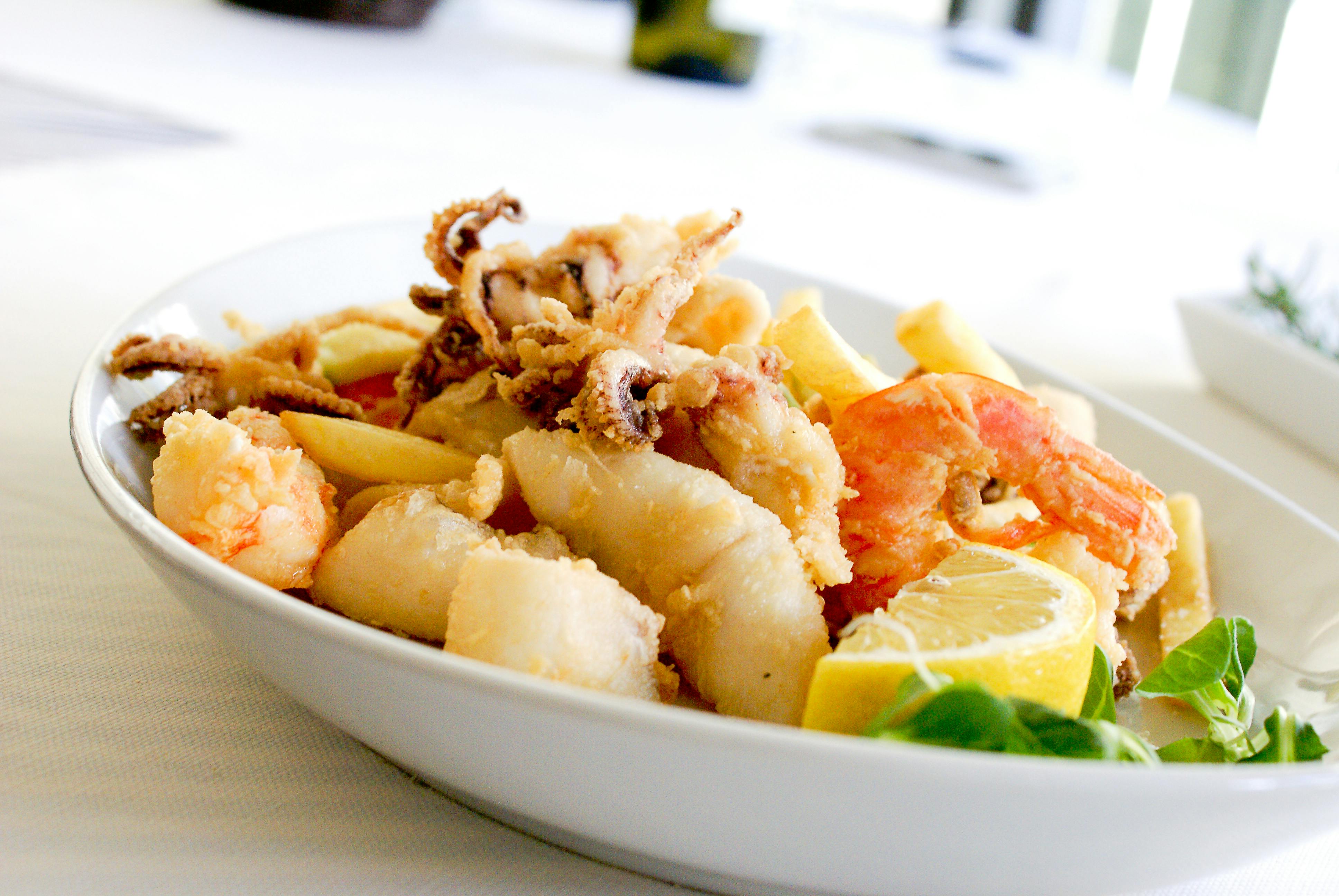
Photo: Alex Favali / Pexels
Italian
Bollito Misto
The diets react (see scores below)
Common Ingredients
- beef
- veal
- chicken
- cotechino sausage
- tongue
- carrot
- celery
- onion
- salsa verde
Specific recipes may vary.
Incompatible with 6 of 11 diets
Diet Ratings
Bollito Misto is a boiled mixed meat dish featuring beef, veal, chicken, tongue, and cotechino sausage — all of which are naturally keto-friendly protein and fat sources. The primary concern is cotechino sausage, which is a traditional Italian sausage made with pork rind and often contains added fillers or breadcrumbs that introduce carbs. The vegetables (carrot, celery, onion) add modest net carbs — carrot being the most problematic (~6g net carbs per medium carrot). Salsa verde is typically made from herbs, olive oil, capers, anchovies, and lemon — largely keto-compatible. In a standard serving, total net carbs may approach 8-12g, which is manageable but not negligible. The dish is high in protein and fat from multiple meat cuts, which strongly aligns with keto. With portion control on carrots, onion, and verification that cotechino contains no breadcrumb fillers, this dish is consumable on keto.
Some strict keto practitioners would flag cotechino sausage as a near-automatic avoid due to its traditional inclusion of breadcrumb binders and the difficulty of verifying carb content at a restaurant. Additionally, carrots are outright excluded by many clinical keto protocols due to their higher glycemic impact relative to other vegetables.
Bollito Misto is an Italian boiled meat dish that is fundamentally built on multiple animal products. It contains beef, veal, chicken, cotechino sausage (a pork-based cured sausage), and tongue (organ meat) — all of which are direct animal flesh. Every primary component of this dish violates vegan dietary rules. The vegetables (carrot, celery, onion) and salsa verde are plant-based, but they serve only as accompaniments and cannot redeem the dish's core composition. There is no vegan-compatible version of this dish as traditionally defined; it would require a complete reformulation.
Bollito Misto is largely paleo-friendly in its core concept — boiled meats (beef, veal, chicken, tongue) and vegetables (carrot, celery, onion) are all fully approved paleo foods. However, cotechino sausage is a heavily processed cured meat that typically contains added salt, nitrates, preservatives, and often cereal binders or fillers, placing it firmly in the avoid category. Salsa verde, in its traditional Italian form, contains anchovies, capers (often packed in brine/salt), and sometimes bread — introducing added salt and potentially non-paleo additives. The dish as a whole cannot be approved due to the cotechino sausage, which is a processed meat product incompatible with paleo principles. A modified version using only the unprocessed meats and a clean herb sauce would score very differently.
Bollito Misto is a northern Italian boiled meat dish centered on multiple red meats and processed sausage. The protein lineup — beef, veal, tongue, and cotechino sausage — is dominated by red and processed meats, which the Mediterranean diet strictly limits to a few times per month. Cotechino is a cured, high-fat pork sausage that falls squarely in the 'avoid' category as a processed meat. While the vegetables (carrot, celery, onion) and herb-based salsa verde are positive elements, they are clearly supporting players in a heavily meat-forward dish. The combination of multiple red meats and processed sausage in a single meal far exceeds Mediterranean diet allowances for these foods.
Bollito Misto is a traditional Italian boiled meat dish that, while rich in carnivore-approved proteins (beef, veal, chicken, tongue, and cotechino sausage), is fundamentally disqualifying due to its core plant-based ingredients and accompaniments. Carrot, celery, and onion are standard vegetables excluded on carnivore. More critically, salsa verde — a sauce made from parsley, capers, garlic, anchovies, olive oil, and vinegar — is predominantly plant-derived and would not be permitted. Cotechino sausage also typically contains spices and may contain fillers or additives. As a complete dish presented in its traditional form, it cannot be approved. A carnivore adaptation stripping the dish to just the boiled meats and tongue, with broth only, would be excellent — but as presented, the dish fails carnivore criteria.
Bollito Misto is a traditional Italian boiled meat dish featuring beef, veal, chicken, tongue, and vegetables — all inherently Whole30-compatible proteins and produce. The salsa verde (typically made with parsley, olive oil, capers, anchovies, garlic, and vinegar) is also generally compliant. The critical concern is the cotechino sausage: this is a cured, seasoned pork sausage that almost universally contains added sugar, wine, and various additives in commercial preparations. Even artisan versions typically include ingredients requiring careful scrutiny. As a processed/cured meat product, cotechino is unlikely to be compliant in its standard form, though a homemade or specialty sugar-free version could theoretically be compliant. The dish as commonly prepared should be approached with caution due to the sausage component.
Some Whole30 practitioners would flag the dish entirely given that cotechino is a processed meat with near-universal non-compliant additives; Melissa Urban's guidance suggests that relying on heavily processed cured meats — even if a compliant version technically exists — runs counter to the whole-food spirit of the program. Conversely, those who source or make compliant cotechino could argue the dish is fully approvable.
Bollito Misto contains multiple high-FODMAP ingredients that make it unsuitable during the elimination phase. Onion is one of the highest-FODMAP foods tested by Monash University, rich in fructans, and is a core aromatic in the broth. Celery becomes high-FODMAP at standard serving sizes (Monash rates it as low-FODMAP only at 10g, roughly 1 small stick). Cotechino sausage is a heavily seasoned pork sausage that typically contains garlic and/or onion powder — both high-FODMAP fructan sources — and may also contain wheat-based fillers. Salsa verde, the traditional accompaniment, standardly includes garlic and sometimes shallots, both high in fructans. The meats themselves (beef, veal, chicken, tongue) are FODMAP-free, and carrot is low-FODMAP at standard servings. However, the combination of onion in the broth (FODMAPs leach into the cooking liquid), garlic in salsa verde and cotechino, and the high-FODMAP potential of celery at normal portions makes this dish very difficult to render low-FODMAP without significant recipe modification.
Bollito Misto is a traditional Italian mixed boiled meat dish that combines multiple high-fat and high-sodium meats — including cotechino sausage and tongue — alongside leaner components like chicken and veal. Cotechino is a cured pork sausage that is very high in sodium (often 800–1,200mg per serving) and saturated fat, both of which DASH guidelines explicitly limit. Beef tongue is high in total fat and saturated fat. The combination of multiple red meats and processed sausage in a single dish creates a significant saturated fat and sodium burden that conflicts directly with DASH principles. The vegetables (carrot, celery, onion) and salsa verde (herb sauce) are DASH-friendly components, but they are minor elements that cannot offset the core protein profile. DASH limits red meat consumption and explicitly excludes processed/cured meats and high-saturated-fat foods. A dish built primarily around these ingredients cannot be considered compatible with the DASH eating plan.
Bollito Misto is a traditional Italian boiled mixed-meat dish that presents a mixed Zone profile. On the positive side, it features multiple lean protein sources (veal, chicken, tongue) that align well with Zone principles, and the boiling preparation method actually renders out some fat, making the proteins leaner than other cooking methods. The vegetables (carrot, celery, onion) provide low-glycemic carbohydrate blocks, and salsa verde — typically made with olive oil, parsley, capers, and anchovies — contributes favorable monounsaturated fat and omega-3s. The primary Zone concern is the cotechino sausage, which is a fatty, processed pork sausage high in saturated fat and sodium, making it an 'unfavorable' Zone protein. Beef tongue is also relatively high in fat. The overall dish is protein-heavy with limited carbohydrate volume relative to Zone's 40% carb target, meaning a Zone practitioner would need to supplement with additional low-glycemic vegetables to balance the macronutrient ratios. Portion control on the fattier meats (cotechino especially) is essential. With selective portioning — emphasizing chicken and veal, minimizing cotechino, and adding more vegetables — this dish can be adapted into a reasonable Zone meal.
Some Zone practitioners would rate this more favorably, noting that Dr. Sears' later anti-inflammatory writings (The Mediterranean Zone) acknowledge that traditional whole-food Mediterranean-style dishes, even with moderate saturated fat, are preferable to processed foods. Cotechino is the primary concern, but if treated as a small flavoring component rather than a primary protein source, the dish's lean protein base and polyphenol-rich salsa verde make it a reasonable Zone option. Conversely, strict early-Zone adherents (Enter the Zone) would flag the multiple fatty meat cuts and lack of sufficient low-glycemic carbohydrates to hit 40%, warranting a lower score.
Bollito Misto is a traditional Italian boiled meat dish featuring a variety of proteins — beef, veal, chicken, cotechino sausage, and tongue — served with aromatic vegetables and salsa verde. The dish is a mixed bag from an anti-inflammatory perspective. On the positive side: the boiling method avoids the pro-inflammatory advanced glycation end products (AGEs) generated by high-heat dry cooking like grilling or frying; the aromatic vegetable base (carrot, celery, onion) contributes fiber, antioxidants, and polyphenols; and the salsa verde — typically made with parsley, capers, garlic, anchovies, and olive oil — is a meaningful anti-inflammatory component, providing omega-3s (anchovies), polyphenols (parsley, capers), and oleocanthal (olive oil). However, the protein profile is the core concern. Cotechino sausage is a processed, high-saturated-fat pork product explicitly in the 'limit to avoid' category; beef tongue and standard beef cuts are red meats that should be limited; veal occupies a middle ground as lean but still red meat. The combination of multiple red meats and a processed sausage in a single dish tips this firmly into the 'limit' territory. Chicken is the most anti-inflammatory protein here (lean poultry = moderate/acceptable). Overall, this dish could be made more compatible by reducing or omitting the cotechino and emphasizing chicken, but as traditionally prepared it is a heavy red-and-processed-meat dish that anti-inflammatory guidelines would classify as an occasional indulgence at best.
Some anti-inflammatory practitioners note that the boiling preparation method and vegetable-rich broth significantly reduce the inflammatory burden compared to roasted or grilled meats, and traditional Italian dietary patterns (Mediterranean diet) — which include occasional cured and organ meats — are associated with lower inflammatory markers in epidemiological studies. Dr. Weil's framework does not absolutely ban red meat or organ meats but recommends limiting frequency rather than strict exclusion, which would permit a dish like this as an infrequent treat.
Bollito Misto is a traditional Italian boiled mixed meat dish, which has genuine strengths and meaningful drawbacks for GLP-1 patients. On the positive side, boiling is one of the most GLP-1-friendly cooking methods — no added fat, no frying, easy digestibility. The lean components (chicken, veal, beef brisket) provide solid high-quality protein, and the vegetable base (carrot, celery, onion) adds fiber and micronutrients. However, the dish typically includes cotechino sausage and tongue, both of which are high in saturated fat — cotechino in particular is a fatty, processed pork sausage that directly conflicts with GLP-1 dietary guidance. The salsa verde condiment (olive oil, herbs, capers, anchovies) contributes unsaturated fat, which is preferable but still adds fat load per serving. The mixed-meat nature means fat content is highly variable depending on which cuts are served and in what proportion. A plate heavy on cotechino and tongue is a very different nutritional profile than one emphasizing chicken and veal. Portion control is also essential — a traditional generous serving of multiple meats may exceed comfortable gastric capacity for GLP-1 patients.
Some GLP-1-focused dietitians would rate the lean-meat portions of this dish more favorably, arguing that boiled preparation and easy digestibility make it one of the better restaurant options available, provided the patient selects around the cotechino and tongue. Others would rate it lower overall because the high-fat components are typically served as part of a single platter, making selective eating at a restaurant or social setting difficult in practice, and because processed sausage content raises concerns regardless of portion.
*See how scores were generated at our methodology page.
Nutritional profile
Six traits that cut across every diet.
Fiber & Plants
How much whole-plant food and fiber it delivers.
Healthy Fats
The quality of its fats (unsaturated, omega-3).
Whole / Unprocessed
How close it is to its natural, unprocessed form.
Gut Gentle
How easy it is on digestion (low FODMAP, few irritants).
Low Glycemic
How little it spikes your blood sugar.
Protein Density
How much protein it packs per calorie.
Controversy Index
Higher controversy = more disagreement between diets.
Diet-Specific Tips
 Keto — 5/10
View tips
- Multiple fatty meats (beef, veal, chicken, tongue) are inherently keto-friendly
- Cotechino sausage may contain breadcrumb fillers — a significant carb risk
- Carrots add meaningful net carbs (~6g per medium carrot) and are borderline on strict keto
- Onion and celery contribute minor additional carbs but are generally acceptable in small amounts
- Salsa verde (herb-based with olive oil) is largely keto-compatible
- Dish is naturally high in protein and fat from diverse meat sources
- Net carb load is portion-dependent — limiting vegetables keeps this within keto limits
 Whole30 — 5/10
View tips
- Cotechino sausage almost always contains added sugar, wine, or other non-compliant additives — must verify ingredients carefully
- Beef, veal, chicken, and tongue are all compliant whole proteins
- Carrot, celery, and onion are compliant vegetables
- Salsa verde is generally compliant (herbs, olive oil, capers, anchovies, vinegar — no excluded ingredients in traditional recipe)
- Processed/cured meats require label scrutiny per Whole30 guidelines
- A compliant version is possible but requires sourcing or making non-sugar, non-wine cotechino
 Zone — 5/10
View tips
- Cotechino sausage is high in saturated fat and is a processed meat — an 'unfavorable' Zone protein source
- Beef tongue contributes additional saturated fat beyond Zone recommendations
- Chicken and veal are lean, Zone-favorable protein sources that dominate the dish
- Boiling preparation reduces overall fat content compared to roasting or frying
- Salsa verde provides monounsaturated fat (olive oil) and polyphenols — Zone-favorable fat block
- Vegetables (carrot, celery, onion) are low-glycemic carbohydrate blocks but insufficient volume for full 40% carb ratio without supplementation
- Dish is protein-dominant; Zone balance requires adding more non-starchy vegetables
- No high-glycemic carbohydrates present — bread or pasta would be needed to reach 40% carbs, creating a Zone challenge
 Anti-Inflammatory — 4/10
View tips
- Cotechino sausage is a processed, high-saturated-fat meat — a clear 'limit/avoid' item
- Multiple red meats (beef, veal, tongue) exceed anti-inflammatory recommendations for single-meal red meat load
- Chicken is the most compatible protein in the dish (lean poultry = moderate/acceptable)
- Boiling method avoids AGE formation from high-heat cooking — a modest positive
- Salsa verde (parsley, capers, anchovies, olive oil) is genuinely anti-inflammatory
- Aromatic vegetable base (carrot, celery, onion) contributes antioxidants and fiber
- No refined carbohydrates, added sugars, or seed oils
- Traditional preparation — not an ultra-processed food
 GLP-1 Friendly — 5/10
View tips
- Boiling method is GLP-1 friendly — no added cooking fat, easy to digest
- Lean components (chicken, veal, lean beef) provide good protein density
- Cotechino sausage is high in saturated fat and is a processed meat — significant drawback
- Tongue is high in fat and cholesterol — another high-fat component
- Fat content of the overall dish is highly variable depending on serving composition
- Salsa verde adds unsaturated fat — moderate concern, not a disqualifier
- Vegetable components (carrot, celery, onion) support fiber intake modestly
- Large traditional portion size may challenge reduced gastric capacity on GLP-1s
- Processed sausage inclusion conflicts with avoid-ultra-processed guidance