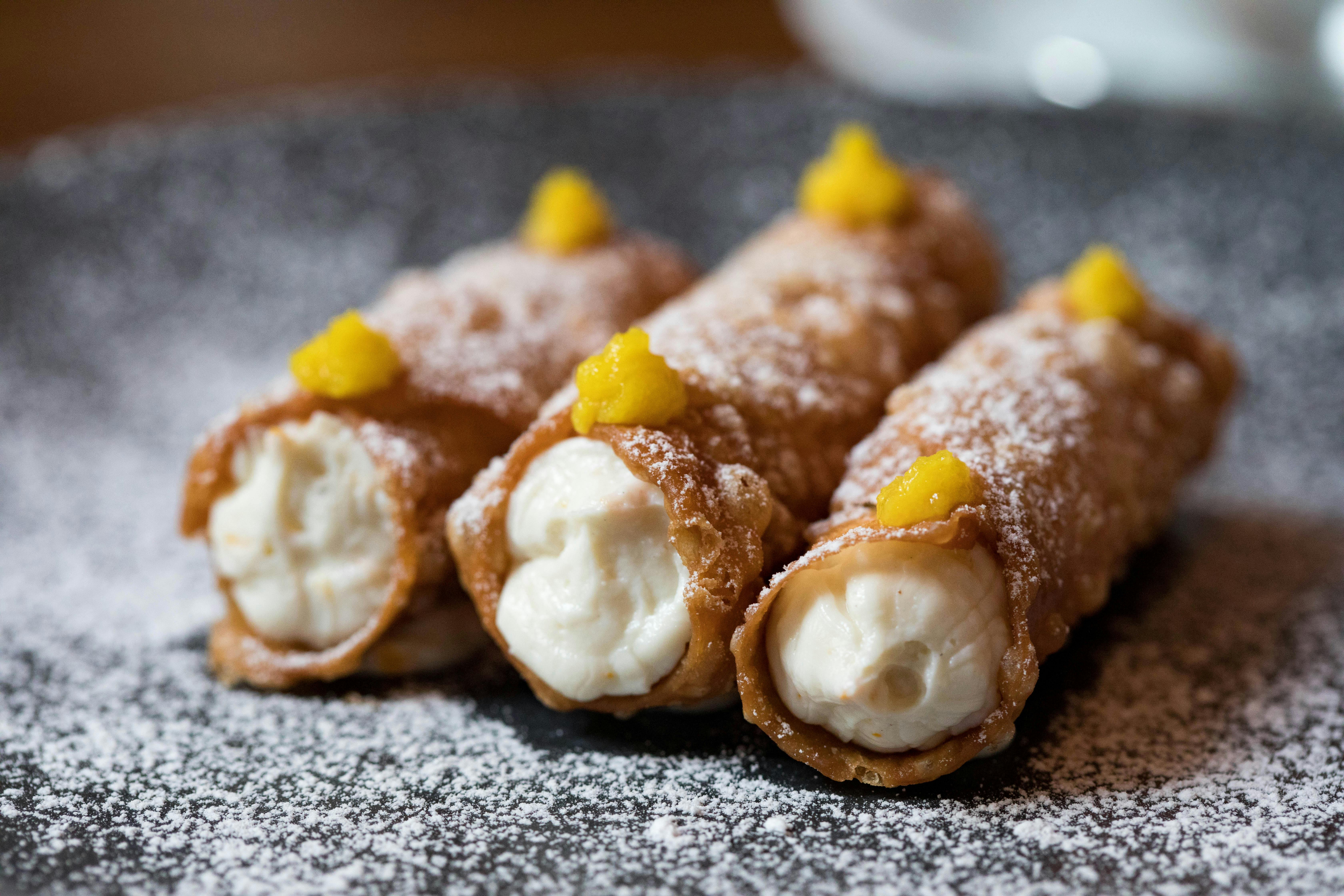
Photo: Valeria Boltneva / Pexels
The diets react (see scores below)
Common Ingredients
- flour
- ricotta
- sugar
- chocolate chips
- candied peel
- marsala wine
- pistachios
- powdered sugar
Specific recipes may vary.
Incompatible with 11 of 11 diets
Diet Ratings
Cannoli is fundamentally incompatible with a ketogenic diet. The shell is made from refined wheat flour, a high-carb grain that alone disqualifies the dish. The filling combines ricotta with large amounts of sugar and powdered sugar, and the toppings include chocolate chips and candied peel — all significant sources of net carbs. A single standard cannoli can contain 30–40g of net carbs, potentially exceeding an entire day's keto carb allowance in one snack. There are no redeeming keto-friendly macros: the fat profile is not favorable, protein is minimal, and virtually every ingredient contributes to a high glycemic load that would disrupt ketosis.
Cannoli contain ricotta, which is a dairy product derived from animal milk. This is a clear disqualifying ingredient under vegan rules. The traditional shell also typically contains lard (though this version lists only flour, it is worth noting), and ricotta is central to the dish — it cannot simply be omitted. The remaining ingredients (flour, sugar, chocolate chips, candied peel, marsala wine, pistachios, powdered sugar) are plant-based or potentially plant-based, but the ricotta alone is sufficient to classify this dish as non-vegan. Vegan versions of cannoli do exist using tofu-based or cashew-based cream fillings and dairy-free chocolate chips, but the dish as described here is not vegan.
Cannoli is fundamentally incompatible with the Paleo diet. The shell is made from refined wheat flour, a grain that is categorically excluded. The filling contains ricotta, a dairy product, and sugar (both granulated and powdered), which are refined sweeteners explicitly prohibited. The chocolate chips typically contain added sugar and dairy. Candied peel is processed with refined sugar. Marsala wine, while alcohol is a gray area, is the least problematic ingredient here. Virtually every core component of this dish violates Paleo principles, making it one of the clearest possible 'avoid' cases.
Cannoli is a Sicilian pastry that conflicts with core Mediterranean diet principles on multiple fronts. The shell is made from refined white flour (a refined grain) and fried, while the filling combines ricotta with significant added sugars (granulated and powdered sugar), chocolate chips, and candied peel. The overall profile is high in refined carbohydrates, added sugars, and saturated fat. Although ricotta and pistachios are individually more acceptable ingredients, they are overshadowed by the dominant sugar and refined grain content. This is an occasional indulgence treat, not a Mediterranean diet staple, and should be consumed very rarely if at all.
Cannoli is entirely incompatible with the carnivore diet. Every component is plant-derived or heavily processed: flour (grain), sugar (plant/processed), chocolate chips (plant + sugar), candied peel (fruit + sugar), marsala wine (fermented plant), pistachios (nuts), and powdered sugar (processed plant). The only remotely animal-derived ingredient is ricotta, but it is buried in a dessert composed almost entirely of prohibited foods. This is a grain-based, sugar-laden, plant-heavy confection with no meaningful animal protein or fat in a carnivore-appropriate form.
Cannoli contains multiple excluded ingredients that make it clearly incompatible with Whole30. Flour is a grain (wheat), sugar and powdered sugar are added sugars, chocolate chips typically contain sugar and dairy, ricotta is a dairy product, and marsala wine is alcohol. Even setting aside the spirit-of-the-program rule against recreating baked goods and desserts, the ingredient list alone disqualifies this dish on multiple fronts. There is no compliant version of a traditional cannoli possible within Whole30 rules.
Cannoli contains multiple high-FODMAP ingredients that make it unsuitable during the elimination phase. The shell is made with wheat flour, which is high in fructans — a primary FODMAP trigger. The filling is ricotta cheese, which is a fresh/soft cheese with significant lactose content, making it high-FODMAP at the quantities used in a typical cannoli filling. Pistachios are high-FODMAP due to GOS and fructans. Candied peel (typically made from citrus rind with added sugars) may contain high-FODMAP sweeteners or excess fructose. Together, these ingredients stack multiple FODMAP categories (fructans from wheat, lactose from ricotta, GOS/fructans from pistachios), making a standard cannoli clearly high-FODMAP with no realistic portion adjustment that would render it safe. Sugar and chocolate chips in small amounts are generally low-FODMAP, and Marsala wine in small quantities is borderline, but the other ingredients overwhelmingly determine the verdict.
Cannoli is a traditional Italian pastry that is incompatible with DASH diet principles across multiple dimensions. The fried flour shell contributes refined carbohydrates and significant fat from frying. The ricotta filling, while providing some protein and calcium, is typically made with whole-milk ricotta high in saturated fat. The dish is loaded with added sugars from granulated sugar, chocolate chips, candied peel, and powdered sugar dusting — directly conflicting with DASH's strict limits on sweets and added sugar. Marsala wine adds negligible nutritional concern but contributes no DASH-positive nutrients. Pistachios are the only genuinely DASH-friendly ingredient, offering healthy fats and magnesium. Overall, this is a high-saturated-fat, high-added-sugar, refined-carbohydrate dessert with minimal potassium, calcium (from DASH-approved low-fat sources), magnesium, or fiber relative to its caloric load. It is categorically the type of sweet treat DASH guidelines explicitly advise limiting to ≤5 servings per week at most, and a single cannoli likely exceeds that allotment's nutritional budget in one serving.
Cannoli is a classic Italian dessert pastry that represents nearly everything the Zone Diet flags as problematic. The shell is made from refined white flour (high-glycemic carb), fried in fat, and the filling combines full-fat ricotta with significant amounts of sugar and powdered sugar. The macronutrient profile is heavily skewed toward high-glycemic carbohydrates and saturated fats, with negligible lean protein. There is no practical way to portion a cannoli into a Zone-balanced block structure — the ratio would be dominated by unfavorable carbs and saturated fat, with almost no contribution to lean protein blocks. While ricotta does provide some protein and the pistachios offer monounsaturated fat, these positives are overwhelmed by the sugar load and refined flour shell. Unlike, say, a food that is high in one macro but can be paired easily, cannoli as a complete food unit cannot be restructured into a Zone-friendly meal component. This is one of the relatively rare foods that genuinely warrants an 'avoid' rating.
Cannoli is a traditional Italian dessert pastry with a profile that is predominantly pro-inflammatory from an anti-inflammatory diet perspective. The shell is made from refined white flour — a refined carbohydrate that spikes blood sugar and promotes inflammatory signaling. It is traditionally fried in lard or shortening, adding saturated fat and potentially trans fats depending on preparation. The filling combines ricotta (full-fat dairy, moderate concern) with substantial added sugar and powdered sugar — two forms of refined sugar that directly elevate inflammatory markers like CRP and IL-6. Candied peel is heavily processed with added sugar. Chocolate chips in standard cannoli are typically low-cacao milk chocolate, not the dark chocolate (>70% cacao) that has anti-inflammatory properties. The pistachios are a genuine bright spot — they contain healthy fats, polyphenols, and fiber with documented anti-inflammatory properties. The small amount of Marsala wine is negligible. Overall, cannoli is a high-sugar, refined-carbohydrate, likely-fried dessert with minimal redeeming anti-inflammatory qualities beyond the pistachios. It is an occasional indulgence at best and would be clearly limited or avoided under virtually all anti-inflammatory dietary frameworks.
Cannoli are a poor fit for GLP-1 patients across nearly every dietary criterion. The fried flour shell is high in refined carbohydrates, low in fiber, and difficult to digest due to the frying process. The ricotta filling, while it contributes a modest amount of protein, is offset by significant fat and sugar content. Additional sugar loads come from powdered sugar, chocolate chips, and candied peel. Marsala wine adds alcohol, which carries empty calories. Pistachios offer some nutritional value but are present in small quantities insufficient to redeem the dish. There is essentially no fiber, no meaningful lean protein, high saturated fat, high simple sugar, and a fried shell — a combination that hits nearly every 'avoid' trigger simultaneously. Even a single cannolo in a small-portion context would deliver primarily empty calories, risk nausea or reflux due to fat and frying, and contribute nothing meaningful toward the protein or fiber targets GLP-1 patients depend on.
*See how scores were generated at our methodology page.
Nutritional profile
Six traits that cut across every diet.
Fiber & Plants
How much whole-plant food and fiber it delivers.
Healthy Fats
The quality of its fats (unsaturated, omega-3).
Whole / Unprocessed
How close it is to its natural, unprocessed form.
Gut Gentle
How easy it is on digestion (low FODMAP, few irritants).
Low Glycemic
How little it spikes your blood sugar.
Protein Density
How much protein it packs per calorie.
Controversy Index
Higher controversy = more disagreement between diets.