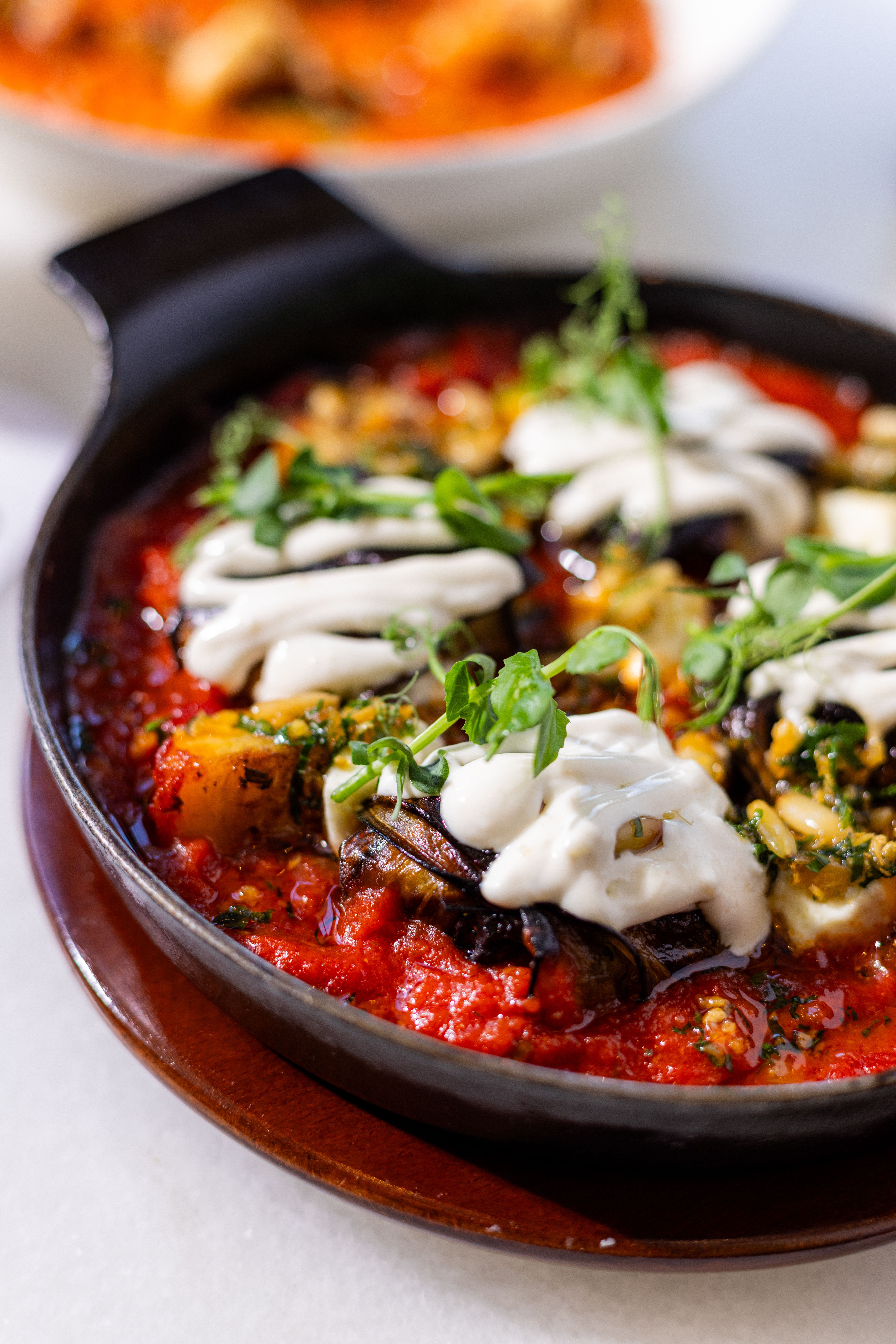
Photo: Anthony Rahayel / Pexels
Italian
Caponata
The diets react (see scores below)
Common Ingredients
- eggplant
- celery
- tomato
- onion
- green olives
- capers
- vinegar
- sugar
- pine nuts
- olive oil
Specific recipes may vary.
Incompatible with 3 of 11 diets
Diet Ratings
Caponata is a Sicilian sweet-and-sour eggplant dish that presents a mixed keto profile. The base ingredients — eggplant, celery, olives, capers, and olive oil — are reasonably keto-friendly with moderate net carbs and healthy fats. However, the traditional recipe explicitly includes added sugar as a defining ingredient for its agrodolce (sweet-sour) character, which is a direct violation of strict keto rules. Tomatoes and onions add further carbs. A standard serving (150-200g) could easily contribute 10-15g net carbs, and the added sugar makes this problematic beyond just the carb count. A modified sugar-free version using a small amount of sweetener substitute could make it more keto-compatible, but as traditionally prepared, it warrants caution rather than approval.
Strict keto practitioners would likely push this toward 'avoid' due to the intentional addition of sugar, arguing that any recipe built around added sugar as a core component is fundamentally incompatible with keto — even in small portions — and that the carb load from tomatoes, onions, and eggplant compounds the issue. Lazy keto followers might approve small portions of a sugar-reduced version, viewing the vegetable base as acceptable.
Caponata is a traditional Sicilian agrodolce (sweet and sour) vegetable dish. Every ingredient listed is fully plant-based: eggplant, celery, tomato, onion, green olives, capers, vinegar, sugar, pine nuts, and olive oil. There are no animal products or animal-derived ingredients present. The dish is built around whole vegetables with minimal processing, earning a high score. Pine nuts and olives contribute healthy fats, and the variety of vegetables provides good nutritional value. This is a textbook example of a whole-food, plant-based dish that is unambiguously vegan.
Caponata is mostly paleo-friendly — eggplant, celery, tomato, onion, olives, pine nuts, and olive oil are all approved paleo foods. However, the dish has two significant issues: (1) refined sugar is a standard ingredient used to balance the sweet-sour agrodolce flavor profile, and refined sugar is explicitly excluded from paleo; (2) capers are typically packed in salt or brine, conflicting with paleo's no-added-salt guideline. Vinegar is a gray area — most modern paleo practitioners accept apple cider or wine vinegar in small amounts, but it is a fermented, processed product. The core vegetable base is sound, but the refined sugar addition is a meaningful violation that prevents a full approval.
Some paleo practitioners would approve a modified caponata where refined sugar is replaced with a paleo-friendly sweetener (honey or dates) and capers are rinsed thoroughly — in that form, strict paleo bloggers and resources like Nom Nom Paleo treat caponata-style dishes as fully compliant. Conversely, purists following Cordain's original framework would flag the vinegar and capers as overly processed additions.
Caponata is a traditional Sicilian agrodolce (sweet-and-sour) vegetable dish that is fundamentally plant-based and olive oil-driven, placing it squarely within Mediterranean diet principles. The core ingredients — eggplant, tomatoes, celery, onion, olives, and capers — are all exemplary Mediterranean foods eaten freely. Olive oil as the cooking fat is ideal. Pine nuts add healthy fats and plant protein. The main concern is the added sugar used to balance the vinegar in the agrodolce preparation; while the quantity is typically small (a tablespoon or two), added sugar is generally discouraged in the Mediterranean diet. Overall, this is a wholesome, traditional dish with only a minor detraction.
Some modern Mediterranean diet clinicians would flag any dish with intentional added sugar, however small, as a habit to minimize, and might suggest substituting raisins or reducing sugar significantly. Traditional Sicilian practice, however, has always included a touch of sugar as inseparable from the authentic agrodolce character of caponata, and most Mediterranean diet practitioners accept it given the overwhelmingly plant-positive ingredient profile.
Caponata is an entirely plant-based Sicilian dish with zero animal-derived ingredients. Every component — eggplant, celery, tomato, onion, green olives, capers, vinegar, sugar, pine nuts, and olive oil — is plant-derived and explicitly excluded from the carnivore diet. There is no animal protein, no animal fat, and no animal product of any kind. Sugar and plant oils (olive oil) make this doubly problematic even by the most lenient carnivore interpretations. This dish is incompatible with the carnivore diet at every tier, including the most permissive 'animal-based' approaches.
Caponata as traditionally prepared contains sugar, which is explicitly excluded on the Whole30 program. Sugar is listed directly in the ingredients and is a core component of the dish's characteristic sweet-and-sour (agrodolce) flavor profile. Without sugar, it would not be authentic caponata. All other ingredients (eggplant, celery, tomato, onion, green olives, capers, vinegar, pine nuts, olive oil) are individually Whole30-compliant — vinegar is explicitly allowed, and olives and capers are whole foods — but the presence of added sugar makes this dish non-compliant as listed.
Caponata contains two major high-FODMAP ingredients that make it unsuitable during the elimination phase: onion (very high in fructans — one of the highest-FODMAP foods tested by Monash) and celery (high in polyols, specifically mannitol, even at moderate servings of around 1.5 stalks). Eggplant is also moderate-to-high in FODMAPs (fructans) at typical serving sizes used in caponata (around 75g+). These three ingredients together make the dish a significant FODMAP load, and onion alone would be enough to classify this as 'avoid' during elimination. The remaining ingredients — tomatoes (low at standard serve), green olives (low-FODMAP), capers (low-FODMAP in small amounts), vinegar (low-FODMAP), sugar (low-FODMAP), pine nuts (low-FODMAP at 1 tbsp), and olive oil — are individually acceptable, but they cannot offset the primary offenders.
Caponata is a Sicilian sweet-and-sour vegetable dish with a strong DASH-friendly foundation — eggplant, tomato, celery, and onion are core DASH vegetables rich in potassium, fiber, and magnesium. Olive oil aligns well with DASH's emphasis on healthy unsaturated fats, and pine nuts add a modest nutrient boost. However, several ingredients push this into 'caution' territory. Green olives and capers are notably high in sodium (olives can contribute 500–700mg per small serving; capers similarly), which conflicts with DASH's sodium limits of 1,500–2,300mg/day. The added sugar, while modest in traditional recipes, represents an unnecessary source of added sweetness that DASH discourages. The vinegar and sugar balance is central to the dish's identity, making substitution difficult without altering the recipe. Portion control is advised, and selecting low-sodium or rinsed olives and capers can meaningfully reduce sodium load.
NIH DASH guidelines flag high-sodium condiments like olives and capers as problematic for sodium-sensitive individuals. However, some DASH-oriented nutritionists note that caponata's overwhelming vegetable base and use of olive oil align closely with Mediterranean dietary patterns, which share significant overlap with DASH, and argue that rinsing capers and olives makes this dish approvable in moderate portions — particularly for non-hypertensive individuals following standard (not low-sodium) DASH.
Caponata is a Sicilian sweet-and-sour vegetable dish that has several Zone-favorable components but also some concerns. On the positive side, eggplant, celery, tomatoes, and onions are all low-glycemic Zone-favorable vegetables rich in polyphenols. Olive oil is an ideal monounsaturated fat, and pine nuts add additional healthy fat. Capers and green olives contribute beneficial monounsaturated fats and flavor with minimal glycemic impact. However, the added sugar (used to create the agrodolce sweet-sour balance) is a Zone red flag — it raises the glycemic load and introduces empty carbohydrate calories. Vinegar partially mitigates this by lowering the overall glycemic response. The dish also lacks protein entirely, meaning it cannot stand alone as a Zone meal component without pairing with a lean protein source. As a side dish, it works well alongside grilled fish or chicken to complete a Zone meal, but the sugar content requires portion awareness. Pine nuts add extra fat that could push the fat block high if portions are generous. Overall, this is a 'caution' food — highly usable in Zone meals as a vegetable side, but the sugar and fat content need to be accounted for in block calculations.
Some Zone practitioners would rate caponata more favorably, arguing that the sugar quantity in a typical serving is small (1-2 teaspoons spread across multiple portions), the vinegar lowers net glycemic impact, and the polyphenol-rich vegetables and monounsaturated fats strongly align with Sears' anti-inflammatory dietary emphasis in his later works. Others would score it lower due to the deliberate addition of sugar violating core Zone carbohydrate quality principles.
Caponata is a Sicilian agrodolce (sweet-sour) vegetable dish with a largely favorable anti-inflammatory profile. Eggplant provides nasunin (an anthocyanin antioxidant) and chlorogenic acid, both associated with reduced oxidative stress. Tomatoes supply lycopene and vitamin C. Celery and onion contribute quercetin and other flavonoids. Green olives and olive oil are core anti-inflammatory ingredients, with olive oil's oleocanthal functioning similarly to ibuprofen as a COX inhibitor. Capers are exceptionally rich in quercetin and rutin. Pine nuts offer a modest amount of healthy fats including some omega-3s (ALA). The main concerns are the added sugar (agrodolce requires a sweetener) and white vinegar, which introduce a small pro-inflammatory element, and the olive oil quantity used in traditional preparations can be substantial. The sugar is typically a modest tablespoon or two for the whole dish, which is diluted across servings — not enough to override the dish's strongly plant-forward, polyphenol-rich base. Overall, this is a vegetable-dominant, olive-oil-based dish with multiple anti-inflammatory compounds, offset only slightly by added sugar.
Eggplant and tomatoes are nightshade vegetables, which mainstream anti-inflammatory nutrition (including Dr. Weil's pyramid) endorses for their antioxidant content. However, Autoimmune Protocol (AIP) practitioners such as Dr. Tom O'Bryan argue that solanine and lectins in nightshades may trigger inflammatory responses in individuals with autoimmune conditions or gut permeability issues — making this dish less suitable for that population despite its otherwise strong profile.
Caponata is a nutrient-dense Sicilian vegetable dish with meaningful fiber from eggplant, celery, tomato, and onion, and useful micronutrients. However, it has no significant protein source, which is the top priority for GLP-1 patients. The added sugar (a traditional ingredient) is a drawback, though quantities per serving are typically modest. Olive oil and pine nuts add unsaturated fat — the healthy kind — but eggplant absorbs oil readily, meaning fat content per serving can vary considerably depending on preparation. The vinegar-based acidity may trigger mild reflux or nausea in some GLP-1 patients with slowed gastric emptying. Capers, olives, and vinegar also contribute sodium and acidity, which can be irritating. As a small side dish paired with a high-protein main, it earns its place on a GLP-1-friendly plate — it should not be a standalone meal.
Some GLP-1-focused dietitians view caponata favorably as a high-fiber, plant-forward side that supports gut motility and blood sugar stability, and accept the small sugar addition as negligible at typical serving sizes. Others flag the oil absorption of eggplant as a hidden fat risk and the vinegar-sugar combination as a potential nausea trigger, particularly in the early weeks of GLP-1 therapy when GI sensitivity is highest.
*See how scores were generated at our methodology page.
Nutritional profile
Six traits that cut across every diet.
Fiber & Plants
How much whole-plant food and fiber it delivers.
Healthy Fats
The quality of its fats (unsaturated, omega-3).
Whole / Unprocessed
How close it is to its natural, unprocessed form.
Gut Gentle
How easy it is on digestion (low FODMAP, few irritants).
Low Glycemic
How little it spikes your blood sugar.
Protein Density
How much protein it packs per calorie.
Controversy Index
Higher controversy = more disagreement between diets.
Diet-Specific Tips
 Keto — 4/10
View tips
- Added sugar is a core, intentional ingredient — a direct keto violation
- Tomatoes, onion, and eggplant collectively contribute moderate net carbs
- Olive oil and green olives provide keto-friendly fats
- Capers are very low carb and fine for keto
- A standard serving (150-200g) likely exceeds 10g net carbs
- Recipe can be modified (omit sugar, reduce onion/tomato) to improve keto compatibility
- Pine nuts are keto-acceptable but add minor carbs in quantity
 Vegan — 9/10
View tips
- All ingredients are 100% plant-based
- Whole food vegetable base — eggplant, celery, tomato, onion
- No hidden animal-derived ingredients (no anchovies, which occasionally appear in non-vegan versions but are not listed here)
- Pine nuts and olive oil provide plant-based fats
- Vinegar and capers are fully vegan
- Sugar listed without specification — standard refined cane sugar is vegan; beet sugar is vegan; no bone-char concern raised by the listed ingredients
 Paleo — 5/10
View tips
- Refined sugar (agrodolce base) — explicitly excluded from paleo
- Capers typically packed in salt/brine — conflicts with no-added-salt guideline
- Olive oil, eggplant, tomato, onion, celery, pine nuts — all paleo-approved
- Vinegar accepted by most modern paleo practitioners in small quantities
- Green olives may contain added salt depending on preparation
- Dish is easily modified to be paleo-compliant by swapping sugar for honey
 Mediterranean — 8/10
View tips
- Predominantly plant-based ingredients (eggplant, tomato, celery, onion)
- Extra virgin olive oil as the primary fat — ideal
- Olives and capers are traditional Mediterranean staples
- Pine nuts contribute healthy fats and plant protein
- Small amount of added sugar is the only meaningful concern
- No animal products, refined grains, or processed ingredients
- Traditional Sicilian dish with deep Mediterranean culinary roots
 DASH — 5/10
View tips
- Strong vegetable base (eggplant, tomato, celery, onion) aligns with DASH vegetable servings
- Olive oil is a DASH-approved healthy fat
- Green olives and capers are high in sodium, conflicting with DASH sodium limits
- Added sugar is discouraged under DASH guidelines
- Pine nuts contribute healthy fats, magnesium, and protein
- Rinsing capers and olives or using low-sodium versions would significantly improve DASH compatibility
- Dish contains no saturated fat sources or red meat, which is positive
 Zone — 6/10
View tips
- Added sugar creates glycemic concern and violates Zone carb quality principles
- Olive oil and pine nuts provide Zone-ideal monounsaturated fats
- Eggplant, celery, tomatoes, and onions are all Zone-favorable low-glycemic vegetables
- No protein source — must be paired with lean protein to form a Zone-balanced meal
- Vinegar partially lowers glycemic response of the dish
- High polyphenol content aligns with Sears' anti-inflammatory dietary emphasis
- Portion control needed to manage fat block contribution from olive oil and pine nuts
 Anti-Inflammatory — 7/10
View tips
- Eggplant provides nasunin (anthocyanin) and chlorogenic acid — potent antioxidants
- Capers are exceptionally high in quercetin and rutin, among the most anti-inflammatory compounds in whole foods
- Extra virgin olive oil contributes oleocanthal with COX-inhibiting anti-inflammatory activity
- Tomatoes supply lycopene and vitamin C; onion and celery provide quercetin and flavonoids
- Green olives add polyphenols and monounsaturated fats consistent with Mediterranean anti-inflammatory principles
- Added sugar (agrodolce base) is a minor pro-inflammatory element, though modest per serving
- Nightshade ingredients (eggplant, tomato) may be a concern for autoimmune-sensitive individuals under AIP protocols
- No processed ingredients, trans fats, refined grains, or inflammatory seed oils present
 GLP-1 Friendly — 5/10
View tips
- No meaningful protein — must be paired with a high-protein main to fit GLP-1 dietary priorities
- Good fiber contribution from eggplant, celery, tomato, and onion — supports GI motility and satiety
- Added sugar is a drawback, though typically small per serving in traditional recipes
- Eggplant absorbs olive oil heavily — fat content is preparation-dependent and can be higher than expected
- Pine nuts and green olives add unsaturated fat, which is acceptable but adds caloric density in a small-appetite context
- Vinegar and acidity may worsen nausea or reflux in GLP-1 patients with delayed gastric emptying
- High water content from vegetables supports hydration — a GLP-1 benefit
- Works well as a small side dish; problematic as a primary dish due to near-zero protein