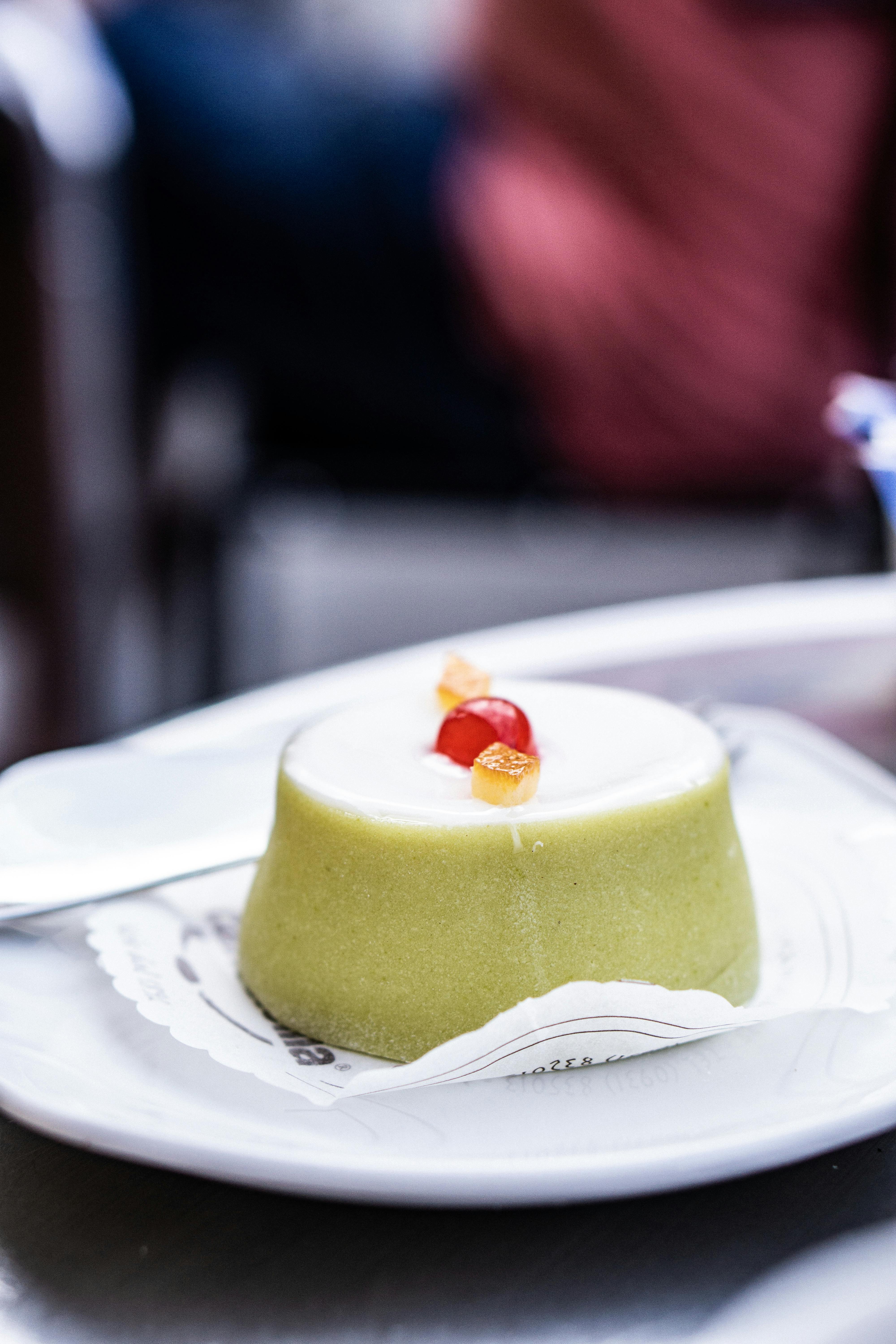
Photo: Anna Guerrero / Pexels
Italian
Cassata Siciliana
The diets react (see scores below)
Common Ingredients
- sponge cake
- ricotta
- sugar
- marzipan
- candied fruit
- chocolate chips
- powdered sugar
- vanilla
Specific recipes may vary.
Incompatible with 11 of 11 diets
Diet Ratings
Cassata Siciliana is one of the most keto-incompatible desserts imaginable. It is built entirely on high-carbohydrate, high-sugar components: sponge cake (flour, sugar, eggs) forms the base, marzipan is ground almonds combined with large amounts of sugar, candied fruit is heavily sugar-laden, powdered sugar is pure sucrose, and the ricotta filling is sweetened with sugar. Every single ingredient either is a grain product, added sugar, or sugar-saturated confection. A single standard serving would deliver well over 60-80g of net carbs, blowing through the entire daily keto carb allowance many times over. There are no redeeming keto-friendly elements in this dish in its traditional form.
Cassata Siciliana contains multiple animal-derived ingredients that disqualify it from a vegan diet. Ricotta is a dairy product made from whey or whole milk. Sponge cake in its traditional form contains eggs and often butter or milk. These are clear, unambiguous animal products with no meaningful debate within the vegan community. The remaining ingredients — marzipan (almonds, sugar), candied fruit, chocolate chips, powdered sugar, and vanilla — can individually be vegan, though commercial chocolate chips and marzipan sometimes contain dairy. The dish as traditionally prepared is fundamentally non-vegan due to ricotta and the egg/dairy-based sponge cake. Vegan adaptations could theoretically be made using plant-based ricotta (e.g., cashew or tofu-based) and an egg-free sponge, but the traditional recipe is not vegan-compatible.
Cassata Siciliana is one of the least paleo-compatible dishes imaginable. Nearly every single ingredient violates core paleo principles. Sponge cake is made from wheat flour and refined sugar — both strictly excluded. Ricotta is a dairy product, entirely off-limits. Sugar and powdered sugar are refined sweeteners, explicitly banned. Marzipan is made from ground almonds and sugar, making it a processed, high-sugar product. Candied fruit is preserved in refined sugar syrup. Chocolate chips typically contain dairy and refined sugar. This dish is essentially a showcase of processed, grain-based, dairy-heavy, refined-sugar-laden ingredients that represent the agricultural and industrial food era that paleo specifically rejects. There are no redeeming paleo-compliant components in this recipe.
Cassata Siciliana is a highly indulgent Sicilian dessert composed almost entirely of ingredients that contradict Mediterranean diet principles: refined sponge cake (refined grain), large amounts of added sugar and powdered sugar, marzipan (almond paste with heavy sugar), and candied fruit (high added sugar). While ricotta is a traditional dairy acceptable in moderation, and almonds in marzipan have plant-based merit, the overall composition is dominated by refined carbohydrates and added sugars. This is the definition of a occasional festive treat, not a regular dietary component. The Mediterranean diet explicitly minimizes added sugars and refined grains.
Some Mediterranean diet frameworks acknowledge that traditional regional sweets like Cassata, consumed very rarely and in small portions during cultural celebrations, are part of the authentic Mediterranean lifestyle and social fabric. The original Sicilian tradition of using ricotta and almonds connects to whole-food ingredients, and strict prohibition of all traditional sweets may misrepresent how the diet is actually lived in Sicily.
Cassata Siciliana is almost entirely plant-derived and heavily processed, making it completely incompatible with the carnivore diet. The dish is built on sponge cake (wheat flour, a grain), marzipan (almond paste, a nut-derived product), candied fruit (plant-derived with added sugar), chocolate chips (plant-derived), powdered sugar, and vanilla — all of which are explicitly excluded from any tier of carnivore eating. The only remotely animal-derived ingredient is ricotta cheese (a dairy product), but it is a minor component buried within a dessert that is fundamentally a sugar-and-plant-foods confection. There is no primary protein, no meaningful animal-sourced nutrition, and the food is loaded with sugar, refined carbohydrates, and plant compounds that the carnivore diet explicitly rejects.
Cassata Siciliana is entirely incompatible with Whole30. It contains multiple excluded ingredients: sponge cake (grains/wheat flour), ricotta (dairy), sugar (added sugar), marzipan (contains sugar and almonds processed into a legume-adjacent paste, plus sugar), powdered sugar (added sugar), and candied fruit (added sugar). Beyond the individual excluded ingredients, this dish is a classic baked/confectionery dessert that falls squarely under the 'no recreating baked goods/junk food' rule. There is not a single compliant pathway for this dish.
Cassata Siciliana contains multiple high-FODMAP ingredients that make it unsuitable during the elimination phase. Sponge cake is typically made with wheat flour, which is high in fructans — a major FODMAP trigger. Ricotta cheese contains significant lactose; while small amounts (2 tbsp) are borderline, the generous ricotta filling in cassata far exceeds safe thresholds. Marzipan is made primarily from almonds and sugar — while almonds are low-FODMAP at 10 nuts, marzipan also commonly contains glucose syrup or honey, and the almond concentration per serving is very high. Candied fruit frequently includes high-FODMAP fruits (apricot, cherry, fig) and may contain polyols or HFCS as preserving agents. Together, these ingredients create a stacking effect of multiple FODMAP classes (fructans, lactose, GOS, polyols) that makes this dish high-FODMAP at any realistic serving size.
Cassata Siciliana is a traditional Sicilian dessert that conflicts with DASH diet principles on multiple fronts. It is built around high-sugar components — sponge cake, granulated sugar, powdered sugar, marzipan (almond paste with heavy sugar), and candied fruit — delivering a substantial added-sugar load in a single serving. Chocolate chips contribute additional saturated fat and sugar. While ricotta can be part of a DASH diet in its low-fat form, in cassata it is typically full-fat and sweetened, making it a high-calorie, high-saturated-fat component. The DASH diet explicitly limits sweets and added sugars to 5 or fewer servings per week, and this dessert alone would likely exhaust or exceed that weekly allowance in one portion. There is virtually no dietary fiber, potassium, magnesium, or calcium benefit relative to the caloric and sugar density. As a snack, it is particularly problematic since DASH snacks are meant to be nutrient-dense (e.g., nuts, fruits, low-fat dairy).
Cassata Siciliana is a traditional Sicilian dessert that is essentially incompatible with Zone Diet principles. The dish is dominated by high-glycemic, sugar-heavy ingredients: sponge cake (refined flour and sugar), marzipan (ground almonds and sugar), candied fruit (heavily sugared), powdered sugar, and chocolate chips — all stacked together in a single preparation. There is virtually no lean protein, and the fat profile (from marzipan's almond base) is mixed but overshadowed by the sugar load. The macronutrient ratio is wildly skewed toward carbohydrates — likely 70-80% or more of calories from carbs, predominantly high-glycemic — with negligible protein and a moderate but unhelpful fat contribution. Even the ricotta, which provides some protein, is present in a quantity that cannot come close to balancing the carbohydrate tsunami from the other ingredients. As a snack, the absence of any meaningful lean protein makes it especially problematic — Zone snacks are designed to be mini-meals maintaining the 40/30/30 ratio. This is precisely the type of high-sugar, refined-carbohydrate dessert the Zone Diet explicitly categorizes as 'unfavorable' and advises avoiding. It would spike insulin dramatically, disrupting the hormonal balance that is the core goal of the Zone approach.
Cassata Siciliana is a traditional Sicilian dessert that is almost entirely composed of pro-inflammatory or nutritionally poor ingredients from an anti-inflammatory standpoint. Sponge cake provides refined flour and sugar with no fiber or meaningful nutrients. The heavy added sugar load appears in multiple forms: granulated sugar in the filling, powdered sugar in the icing, marzipan (almond paste bound with sugar), and candied fruit (fruit preserved in high concentrations of sugar, often with additives). Refined sugar is one of the most consistently identified pro-inflammatory dietary components, driving elevated CRP and insulin response. Ricotta cheese is a moderate dairy product that is not inherently problematic, and the vanilla and any residual almond content in marzipan offer trace antioxidants — but these are overwhelmed by the overall composition. The chocolate chips, unless specified as dark (>70% cacao), are likely milk chocolate with added sugar. There is essentially no anti-inflammatory redeeming quality that offsets the dominant refined carbohydrate and sugar burden. This dish would qualify as a processed, high-sugar confection fitting squarely in the 'limit or avoid' category under all major anti-inflammatory dietary frameworks.
Cassata Siciliana is a traditional Sicilian dessert composed almost entirely of high-sugar, low-protein, nutritionally empty ingredients. Sponge cake and powdered sugar provide refined carbohydrates with negligible fiber. Marzipan and candied fruit add concentrated sugar loads. Chocolate chips and ricotta contribute modest fat. While ricotta does offer a small amount of protein, the overall dish provides virtually no meaningful protein per serving, minimal fiber, and a very high sugar and calorie density. This directly violates the core GLP-1 dietary priorities: it fails on protein density, fiber content, low sugar, and nutrient density per calorie. As a snack category item, it is especially problematic — GLP-1 patients eating smaller meals need every snack to deliver protein and fiber, not empty calories. The high sugar content risks blood sugar spikes and promotes poor satiety despite reduced stomach capacity. Fried or greasy foods are the classic GLP-1 avoidance category.
*See how scores were generated at our methodology page.
Nutritional profile
Six traits that cut across every diet.
Fiber & Plants
How much whole-plant food and fiber it delivers.
Healthy Fats
The quality of its fats (unsaturated, omega-3).
Whole / Unprocessed
How close it is to its natural, unprocessed form.
Gut Gentle
How easy it is on digestion (low FODMAP, few irritants).
Low Glycemic
How little it spikes your blood sugar.
Protein Density
How much protein it packs per calorie.
Controversy Index
Higher controversy = more disagreement between diets.