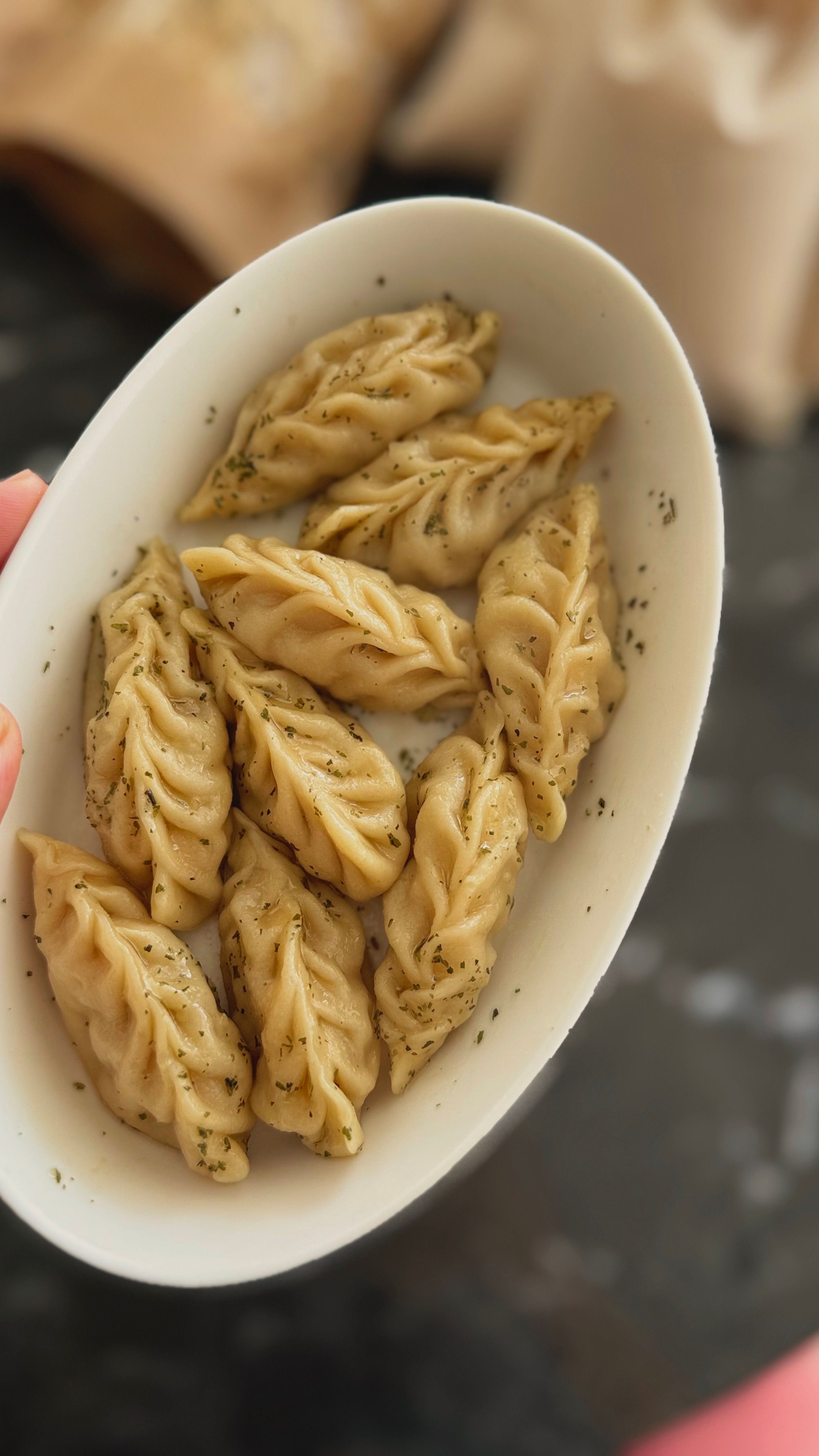
The diets react (see scores below)
Common Ingredients
- pasta dough
- potatoes
- pecorino
- mint
- garlic
- olive oil
- tomato sauce
- salt
Specific recipes may vary.
Incompatible with 6 of 11 diets
Diet Ratings
Culurgiones are a Sardinian stuffed pasta dish that is fundamentally incompatible with a ketogenic diet. The dish contains two major high-carb components: pasta dough (wheat flour, extremely high in net carbs) and potatoes (starchy vegetable, high glycemic). Together, these two ingredients alone would almost certainly exceed an entire day's keto carb budget in a single serving. The addition of tomato sauce adds further carbohydrates. There is no meaningful way to consume this dish in a keto-compliant portion, as the carbohydrates are structural to the dish itself. The only keto-friendly components are pecorino, olive oil, mint, and garlic, which are minor ingredients by proportion.
Culurgiones are traditional Sardinian filled pasta dumplings. This dish contains pecorino, which is a hard cheese made from sheep's milk — a clear animal-derived dairy product excluded by all vegan definitions. The pasta dough listed does not specify eggs, but traditional culurgiones dough is often egg-free (semolina and water), so the primary disqualifying ingredient is the pecorino. No vegan-friendly substitution is present in the listed ingredients.
Culurgiones is a Sardinian stuffed pasta dish that is fundamentally incompatible with the paleo diet. The pasta dough is made from wheat flour — a grain that is categorically excluded from all paleo frameworks. Pecorino is a dairy cheese, also excluded. Salt is listed as an added ingredient, which is discouraged. The dish is essentially a grain-and-dairy vehicle at its core, making avoidance unambiguous regardless of the paleo-friendly status of minor ingredients like potatoes, mint, garlic, and olive oil. There is no meaningful way to make this dish paleo without replacing the two defining components (pasta and cheese) that make it what it is.
Culurgiones are a traditional Sardinian stuffed pasta, representing an authentic Mediterranean culinary heritage. The ingredients are largely wholesome: olive oil is the primary fat (excellent), tomato sauce adds vegetable content, and herbs like mint and garlic are Mediterranean staples. However, the dish is built on refined pasta dough (a processed grain product), and the filling relies heavily on pecorino cheese and potatoes — both moderate-consumption foods in the Mediterranean framework. Dairy (pecorino) is acceptable in moderation, and potatoes are starchy but not inherently problematic. The dish lacks vegetables or legumes as primary components, and the refined grain base keeps it from being a dietary staple. As an occasional traditional dish with olive oil and tomato sauce, it fits within Mediterranean eating patterns but should not be a daily staple.
Traditional Sardinian dietary patterns, which are among the original 'Blue Zone' longevity diets, regularly include pasta and pecorino as cultural staples — some Mediterranean diet scholars argue these traditional dishes should be viewed more favorably as part of an overall plant-rich diet rather than evaluated ingredient by ingredient. Conversely, modern clinical Mediterranean diet guidelines (e.g., PREDIMED protocol) emphasize whole grains over refined pasta and would score this lower.
Culurgiones is a Sardinian stuffed pasta dish that is entirely incompatible with the carnivore diet. Every single component violates carnivore principles: pasta dough is a grain-based product, potatoes are a starchy plant food, mint and garlic are plant-derived aromatics, olive oil is a plant oil, and tomato sauce is a plant-based condiment. Even the pecorino cheese — the only animal-derived ingredient — is surrounded by a dish that is fundamentally plant and grain-based. There is no meaningful animal protein present, and no version of this dish can be adapted to carnivore without completely reconstructing it into an entirely different dish. This is as far from carnivore-compliant as a dish can be.
Culurgiones are a traditional Sardinian stuffed pasta. The dish contains multiple excluded ingredients: (1) pasta dough is made from wheat flour, a grain explicitly excluded on Whole30; (2) pecorino is a dairy cheese, also excluded. Beyond individual ingredients, pasta itself is explicitly listed among the 'no recreating' category items (pasta or noodles). This dish is fundamentally incompatible with Whole30 on multiple levels.
Culurgiones contains multiple high-FODMAP ingredients that make it unsuitable during the elimination phase. The pasta dough is wheat-based, which is high in fructans — a major FODMAP category. Garlic is one of the highest-FODMAP foods tested by Monash University, containing significant fructans even in small amounts. These two ingredients alone are sufficient to classify this dish as high-FODMAP. Additionally, pecorino is generally low-FODMAP in small servings (being an aged hard cheese with low lactose), potatoes are low-FODMAP, mint is low-FODMAP, olive oil is low-FODMAP, and tomato sauce is low-FODMAP at moderate servings (though canned tomato in large quantities can accumulate fructose). The dish cannot be salvaged at a standard serving due to the wheat pasta and garlic combination.
Culurgiones are a Sardinian stuffed pasta featuring a filling of potatoes, pecorino cheese, mint, and garlic, served with tomato sauce. The dish contains several DASH-compatible components: potatoes provide potassium and fiber, olive oil is a heart-healthy unsaturated fat, tomato sauce contributes lycopene and potassium, garlic and mint add flavor without sodium. However, pecorino is a high-sodium, high-saturated-fat aged cheese — a significant DASH concern. Refined pasta dough (typically made with white flour) lacks the fiber profile of whole grains emphasized by DASH. The tomato sauce, depending on preparation, may add considerable sodium. The combination of refined pasta, salty aged cheese, and a sodium-containing sauce pushes this dish into the caution zone. A moderate portion could fit within DASH limits if low-sodium tomato sauce is used and sodium elsewhere in the day is tightly managed, but as commonly prepared this dish presents notable sodium and saturated fat challenges.
NIH DASH guidelines specifically limit high-sodium aged cheeses like pecorino and favor whole grain pasta over refined. However, some updated DASH-aligned Mediterranean diet interpretations note that small amounts of flavorful aged cheese (used as a seasoning rather than a primary protein) can fit within overall dietary patterns — the Mediterranean diet's cardiovascular benefits, which substantially overlap with DASH principles, accommodate modest pecorino use as part of a broader low-sodium, plant-rich eating pattern.
Culurgiones are Sardinian stuffed pasta dumplings with a filling of potatoes, pecorino cheese, mint, and garlic, typically served with tomato sauce. From a Zone Diet perspective, this dish presents significant macronutrient imbalance challenges. The base is pasta dough (refined wheat, high-glycemic) combined with potatoes in the filling — two high-glycemic carbohydrate sources that Sears classifies as 'unfavorable' carbs. This double carb load makes achieving the 40/30/30 ratio extremely difficult. The protein source is pecorino (a fatty, salty sheep's milk cheese), which is a poor Zone protein choice — high in saturated fat and not lean. The olive oil in the preparation is Zone-favorable, as is the tomato sauce and the aromatics (mint, garlic), but these minor positives cannot offset the structural carb-heaviness and poor protein quality. A standard serving would deliver far too many carbohydrate blocks relative to protein blocks, with the protein blocks being saturated-fat-heavy rather than lean. To fit Zone principles, one would need to dramatically reduce portion size, add a lean protein on the side, and treat this as a very small carb block contribution — at which point the dish loses its identity. The score sits at 3 rather than 1-2 because tomato sauce and olive oil are genuinely favorable Zone ingredients, and small portions could theoretically be incorporated into a block-balanced meal.
Some Zone-flexible practitioners argue that traditional whole-food dishes like culurgiones, while carb-heavy, contain no processed ingredients and the pecorino provides some protein and fat that partially offsets the glycemic load. Sears' later anti-inflammatory work acknowledges that polyphenol-rich Mediterranean foods (tomatoes, olive oil, garlic) have value, and a very small portion (2-3 pieces) paired with a large lean protein and vegetable side could technically be Zone-balanced. The dish is 'unfavorable' rather than categorically excluded.
Culurgiones is a traditional Sardinian stuffed pasta with a mixed anti-inflammatory profile. On the positive side, garlic and mint offer meaningful anti-inflammatory phytochemicals, olive oil (likely extra virgin in traditional preparation) provides oleocanthal and monounsaturated fats, tomato sauce delivers lycopene and antioxidants, and potatoes contribute potassium and vitamin C. However, the dish is built on refined pasta dough, a refined carbohydrate that can spike blood glucose and modestly promote inflammation. Pecorino is a full-fat sheep's milk cheese — high in saturated fat, which anti-inflammatory guidelines recommend limiting. The overall dish is carbohydrate-dense with a relatively modest anti-inflammatory ingredient payload. It sits in the moderate/caution zone: traditional Mediterranean in character and far better than processed foods, but not a standout anti-inflammatory choice due to refined flour and full-fat cheese as the dominant components.
Some anti-inflammatory researchers and Mediterranean diet advocates would rate this more favorably, pointing to its traditional Sardinian origins (Sardinia is a Blue Zone), olive oil base, garlic, and tomatoes as genuinely protective. Dr. Weil's pyramid accommodates pasta in moderation and does not exclude full-fat cheese entirely. Conversely, stricter anti-inflammatory and low-glycemic protocols would flag the refined pasta dough and pecorino as meaningful concerns, especially for individuals with metabolic or autoimmune conditions.
Culurgiones are a Sardinian stuffed pasta filled with potatoes, pecorino, and mint, typically served with tomato sauce. For GLP-1 patients, this dish presents a mixed nutritional profile. The primary protein source is pecorino, a high-fat, high-sodium cheese that contributes relatively modest protein per serving compared to lean animal proteins. The pasta dough and potato filling are predominantly refined carbohydrates with low fiber and minimal protein density. Olive oil and pecorino together contribute meaningful saturated and total fat, which can worsen GLP-1 side effects like nausea and reflux. Tomato sauce adds modest lycopene and some fiber. On the positive side, the dish is not fried, not spicy, and is generally easy to digest in small portions. Portion size is critical here — a small serving (3–4 pieces) may be tolerable as part of a balanced meal that includes a lean protein side, but a standard restaurant-sized portion would deliver high carbohydrate load, significant fat, and inadequate protein. It does not meet the 15–30g protein per meal target on its own. The dish scores low on protein density per calorie and nutrient density overall, making it a poor standalone GLP-1 meal, though it is not as problematic as fried or very high-fat foods.
Some GLP-1-focused dietitians allow small portions of pasta dishes if paired with a lean protein source, arguing that palatability and dietary adherence matter, and that the slow gastric emptying from GLP-1 medications naturally limits overconsumption. Others caution that even small portions of refined-carb, high-fat pasta dishes displace nutrient-dense foods that GLP-1 patients critically need given their reduced caloric intake.
*See how scores were generated at our methodology page.
Nutritional profile
Six traits that cut across every diet.
Fiber & Plants
How much whole-plant food and fiber it delivers.
Healthy Fats
The quality of its fats (unsaturated, omega-3).
Whole / Unprocessed
How close it is to its natural, unprocessed form.
Gut Gentle
How easy it is on digestion (low FODMAP, few irritants).
Low Glycemic
How little it spikes your blood sugar.
Protein Density
How much protein it packs per calorie.
Controversy Index
Higher controversy = more disagreement between diets.
Diet-Specific Tips
 Mediterranean — 5/10
View tips
- Authentic Sardinian traditional dish from a Blue Zone cuisine
- Refined pasta dough rather than whole grain — not ideal for daily consumption
- Pecorino and potatoes as primary filling — moderate dairy, starchy carbohydrates
- Olive oil and tomato sauce are strong Mediterranean-positive elements
- No legumes or vegetables in filling reduces nutritional density
- Acceptable as an occasional traditional meal, not a dietary staple
 DASH — 5/10
View tips
- Pecorino is a high-sodium, high-saturated-fat aged cheese — conflicts directly with DASH limits on both sodium and saturated fat
- Refined pasta dough is not a whole grain, missing DASH's emphasis on fiber-rich whole grains
- Potatoes provide DASH-valued potassium, but are starchy and calorie-dense
- Olive oil is DASH-compatible as a heart-healthy fat
- Tomato sauce contributes beneficial potassium and lycopene but adds sodium — low-sodium versions preferred
- Dish sodium load from pecorino plus tomato sauce plus added salt is likely high for a single serving
- Portion control is critical — a small serving could be accommodated within a daily DASH sodium budget
 Zone — 5/10
View tips
- Pasta dough is a high-glycemic refined carbohydrate — 'unfavorable' in Zone terminology
- Potato filling adds a second high-glycemic carb source, compounding the carb load imbalance
- Pecorino is a fatty, high-saturated-fat cheese — not a lean Zone protein source
- Olive oil in preparation is Zone-favorable (monounsaturated fat)
- Tomato sauce contributes low-glycemic carbs and polyphenols — Zone-positive
- Dish is structurally carb-dominant, making 40/30/30 ratio very difficult to achieve
- No lean protein component present to balance protein blocks
- Would require extreme portion restriction and supplemental lean protein to fit Zone framework
 Anti-Inflammatory — 5/10
View tips
- Refined pasta dough — high glycemic, pro-inflammatory at excess intake
- Pecorino — full-fat cheese, higher saturated fat content
- Olive oil — strongly anti-inflammatory (oleocanthal, monounsaturated fats)
- Garlic — anti-inflammatory (allicin, organosulfur compounds)
- Tomato sauce — lycopene and antioxidants
- Mint — modest anti-inflammatory polyphenols
- Overall carbohydrate-dense profile with limited omega-3 or high-fiber content
 GLP-1 Friendly — 4/10
View tips
- Low protein density — pecorino and potato filling do not meet the 15–30g per meal protein target
- High refined carbohydrate load from pasta dough and potato filling with minimal fiber
- Pecorino contributes saturated fat, which may worsen nausea and reflux on GLP-1 medications
- Not fried and not spicy — easier to digest than many other caution-category foods
- Olive oil is a preferred unsaturated fat, a mild positive
- Tomato sauce adds modest nutritional value but does not offset the overall profile
- Portion-sensitive: small servings are more tolerable but must be paired with a lean protein source
- Poor nutrient density per calorie relative to GLP-1 patients' reduced appetite and caloric budget