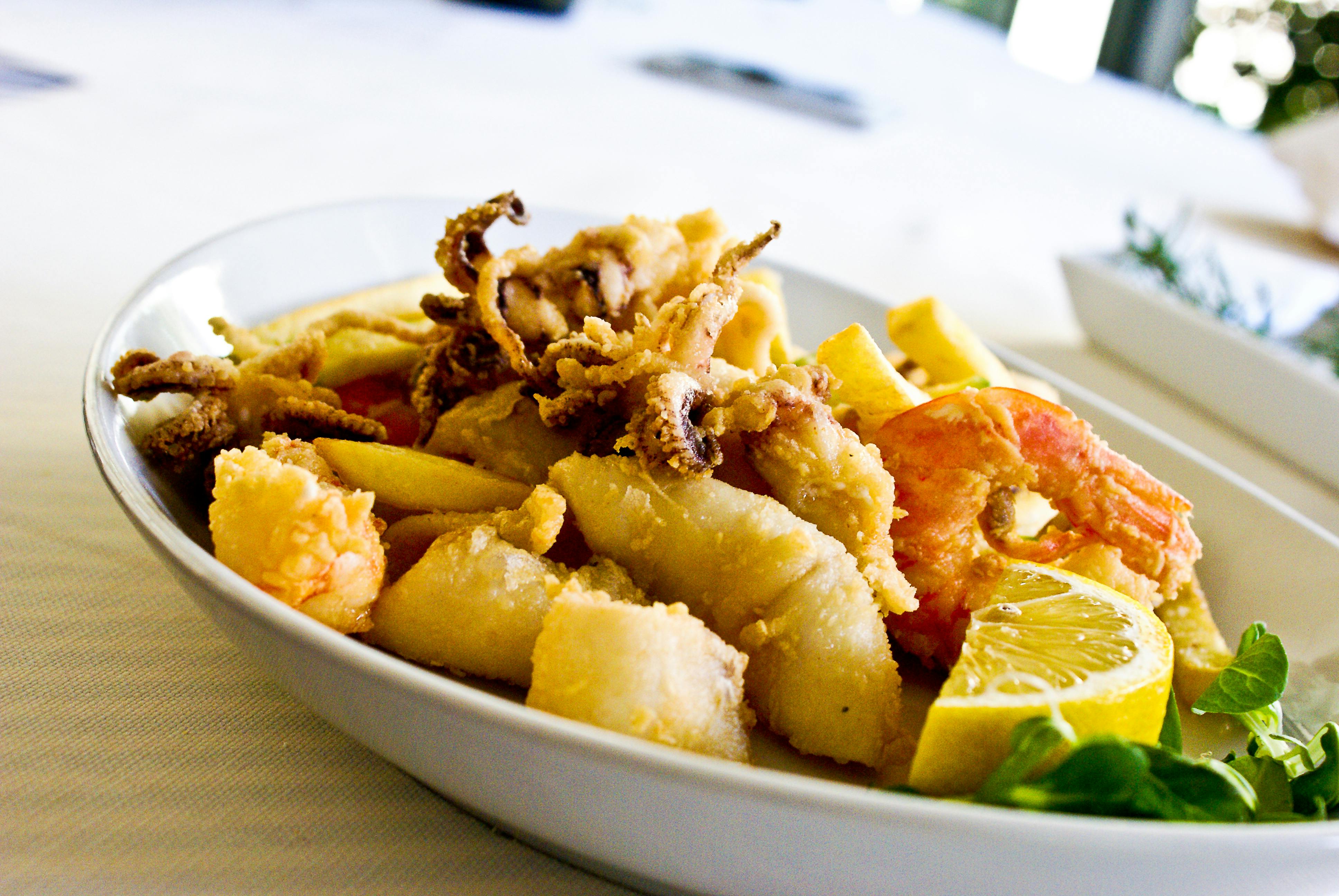
Photo: Alex Favali / Pexels
The diets react (see scores below)
Common Ingredients
- shrimp
- calamari
- small fish
- flour
- olive oil
- lemon
- parsley
- salt
Specific recipes may vary.
Incompatible with 7 of 11 diets
Diet Ratings
Fritto Misto is a deep-fried mixed seafood dish that relies heavily on wheat flour as the coating/batter. While the protein base (shrimp, calamari, small fish) is inherently keto-friendly and the frying oil (olive oil) is acceptable, the flour coating is the critical disqualifier. Standard wheat flour contains roughly 76g net carbs per 100g, and a typical serving of fritto misto uses a substantial dusting or batter of flour on each piece. This easily pushes net carbs well beyond the 20-50g daily keto limit in a single snack serving. The dish cannot be made keto-compatible without fundamentally replacing the flour with almond flour, coconut flour, or pork rinds — at which point it is a different dish entirely.
Fritto Misto contains multiple animal products — shrimp, calamari, and small fish — all of which are seafood and explicitly excluded under vegan dietary rules. There is no ambiguity here: these are animal-derived ingredients, making this dish completely incompatible with a vegan diet.
Fritto Misto is fundamentally disqualified by two core non-paleo elements: wheat flour (a grain used as the batter coating) and added salt. While the protein base — shrimp, calamari, and small fish — is excellent paleo fare, and olive oil is one of the preferred paleo cooking fats, the flour coating is a clear grain violation that is central to the dish's identity, not incidental. Salt is also explicitly excluded under strict paleo rules. Without the flour batter, this would simply be pan-fried seafood, which is a different dish entirely. The lemon and parsley are paleo-approved, but they cannot offset the structural grain component.
Fritto Misto is a traditional Italian coastal dish built on seafood (shrimp, calamari, small fish), which is a core Mediterranean diet component encouraged 2-3 times weekly. The use of olive oil and lemon aligns well with Mediterranean principles. However, the deep-frying method adds significant fat absorption beyond what olive oil used as a dressing or light sauté would provide, and the refined white flour coating adds refined grain content. The seafood base is excellent, but the frying technique and refined flour push it away from the optimal Mediterranean pattern, which favors grilled, baked, or lightly sautéed preparations.
Traditional Mediterranean coastal communities, particularly in southern Italy and along the Adriatic and Tyrrhenian coasts, have long included fritto misto as a regular part of their culinary heritage. Some Mediterranean diet authorities argue that when fried in high-quality extra virgin olive oil with a light coating, it remains an acceptable expression of the diet's regional diversity rather than a departure from it.
Fritto Misto is fundamentally incompatible with the carnivore diet despite containing carnivore-approved proteins (shrimp, calamari, small fish). The dish is defined by its flour-based batter coating, which is a grain-derived plant food explicitly excluded from all tiers of carnivore eating. Additionally, it is fried in olive oil (a plant-derived fat), and garnished with lemon (fruit) and parsley (herb/plant). While the core proteins themselves would be perfectly acceptable on carnivore, the preparation method introduces multiple plant-based disqualifying ingredients. The animal proteins could be consumed if simply cooked in animal fat with salt, but as prepared here, this dish cannot be recommended.
Fritto Misto is a classic Italian fried seafood dish where the defining cooking method involves coating shrimp, calamari, and small fish in flour before deep-frying. Flour is a grain product and is explicitly excluded on the Whole30. Without the flour coating, this dish ceases to be Fritto Misto in any meaningful sense. All other ingredients (shrimp, calamari, small fish, olive oil, lemon, parsley, salt) are fully Whole30-compliant, but the flour batter is a non-negotiable component of this dish as it is commonly prepared and understood.
Fritto Misto's primary FODMAP concern is the wheat flour coating used for frying. Shrimp, calamari, small fish, olive oil, lemon, parsley, and salt are all low-FODMAP and safe during elimination. However, the wheat flour batter introduces fructans, which are a key FODMAP trigger. The amount of flour adhering to each piece after frying is relatively small compared to, say, a breaded cutlet, and some FODMAP practitioners consider light wheat flour dustings as potentially tolerable in small portions. Monash University has tested wheat flour and rates it as high-FODMAP at typical serving sizes (3/4 cup or more), but a light fry-coating may involve considerably less per serving. The dish does not contain garlic, onion, or other common high-FODMAP Italian aromatics, which is a positive factor. Overall, the dish is borderline — safe if the flour coating is minimal and portions are controlled, but risky if batter is thick or the serving is generous.
Monash University rates wheat flour as high-FODMAP at standard amounts, and clinical FODMAP practitioners generally advise avoiding all wheat-based coatings during the strict elimination phase regardless of quantity, since fructan load is difficult to estimate in restaurant or home-cooked preparations. A gluten-free flour substitute (rice flour, cornstarch) would make this dish fully approved.
Fritto Misto presents a mixed DASH profile. The protein sources — shrimp, calamari, and small fish — are lean seafood that DASH actively encourages. Olive oil is the preferred fat in the Mediterranean tradition and is compatible with DASH. However, the deep-frying preparation significantly increases total fat content and caloric density, and the refined white flour coating adds little nutritional value. Salt is listed as an ingredient, and fried seafood dishes typically accumulate moderate-to-high sodium. The frying process also negates much of the cardiovascular benefit of the lean seafood. DASH guidelines do not explicitly address deep-fried dishes, but the protocol limits total fat and emphasizes preparation methods that preserve nutrient integrity. As a snack portion with minimal added salt and light frying in olive oil, this can be acceptable occasionally, but it does not align well with DASH's core emphasis on minimally processed, lower-fat preparations.
NIH DASH guidelines emphasize lean fish and seafood as core proteins and do not categorically prohibit frying, so some DASH-oriented clinicians argue that occasional lightly fried seafood in olive oil — especially with lemon rather than heavy sauces — can fit within DASH if sodium is controlled. However, more conservative DASH interpretations flag deep-frying as inconsistent with the diet's fat-reduction goals regardless of the oil used.
Fritto Misto has a genuinely mixed Zone profile. The proteins — shrimp, calamari, and small fish — are excellent lean Zone protein sources, high in omega-3s and very low in saturated fat, which aligns well with Sears' anti-inflammatory emphasis. Olive oil, the frying medium, is the ideal Zone fat (monounsaturated). Lemon and parsley add polyphenols with negligible macro impact. The problematic element is the white flour coating used for frying, which is a high-glycemic refined carbohydrate — an 'unfavorable' carb in Zone terminology. A typical serving will carry a meaningful flour-derived carb load with no fiber to offset it, disrupting the 40/30/30 ratio unless carefully balanced. Deep-frying also absorbs significantly more fat than the recipe's olive oil suggests, pushing fat calories above the 30% Zone target for the meal. As a snack component, it could theoretically be portioned small and paired with a low-glycemic vegetable side to rebalance the block ratio, but as typically served, the flour coating and excess absorbed fat make it difficult to stay in Zone without significant modification.
Some Zone practitioners argue that when the protein quality is this high (seafood rich in EPA/DHA) and the fat source is olive oil, the anti-inflammatory benefit partially offsets the refined carb concern. Dr. Sears' later writings in 'The Zone Diet' and 'The Anti-Inflammation Zone' emphasize omega-3 and polyphenol content alongside macro ratios, which would favor seafood dishes even when preparation is imperfect. A small fritto misto portion (~3-4 oz seafood) with minimal batter could plausibly fit as a 2-3 block protein/fat unit if the meal's carb blocks come from vegetables instead.
Fritto Misto presents a genuinely mixed anti-inflammatory profile. On the positive side, its core proteins — shrimp, calamari, and small fish — are lean seafood sources that provide omega-3 fatty acids, selenium, and zinc, all associated with reduced inflammatory markers. Olive oil (presumably extra virgin) is a cornerstone anti-inflammatory fat rich in oleocanthal and monounsaturated fatty acids. Lemon and parsley contribute antioxidants and vitamin C. However, the dish is deep-fried, which introduces meaningful concerns: high-heat frying can oxidize oils and generate advanced glycation end products (AGEs) and acrolein, both of which promote inflammation. The refined white flour coating adds negligible nutrition and refined carbohydrates. The frying method substantially undermines the anti-inflammatory quality of otherwise excellent ingredients. Traditional Italian fritto misto uses a light batter and high-quality olive oil, which is better than using seed oils, but the fundamental cooking method remains a limiting factor. As an occasional dish using quality olive oil and fresh seafood, it sits in caution territory rather than avoid — but it cannot be considered a therapeutic anti-inflammatory meal.
Some anti-inflammatory practitioners (aligned with Dr. Weil's Mediterranean-leaning framework) would give this more credit, arguing that the seafood omega-3 content, olive oil, and lemon collectively outweigh concerns about the frying method when prepared traditionally. Critics aligned with stricter protocols (e.g., Wahls Protocol, AIP-adjacent approaches) would push it toward avoid, citing AGE formation from frying and refined flour as reliable drivers of inflammatory signaling.
Fritto Misto is a classic Italian fried seafood dish. Despite the protein-rich base ingredients (shrimp, calamari, small fish), the preparation method — deep-frying in oil with a flour batter — makes this a poor choice for GLP-1 patients. The frying process dramatically increases fat content, adds empty refined-carbohydrate calories from the batter, and is among the most problematic food preparations for GLP-1 side effects. High dietary fat significantly worsens nausea, bloating, reflux, and gastroparesis-like symptoms that GLP-1 medications already induce by slowing gastric emptying. The flour coating adds refined carbohydrates with negligible fiber. Although olive oil is the preferred frying medium in Italian cooking and provides unsaturated fat, the total fat load per serving after frying is still very high. The underlying seafood proteins are excellent, but the preparation method disqualifies this dish.
*See how scores were generated at our methodology page.
Nutritional profile
Six traits that cut across every diet.
Fiber & Plants
How much whole-plant food and fiber it delivers.
Healthy Fats
The quality of its fats (unsaturated, omega-3).
Whole / Unprocessed
How close it is to its natural, unprocessed form.
Gut Gentle
How easy it is on digestion (low FODMAP, few irritants).
Low Glycemic
How little it spikes your blood sugar.
Protein Density
How much protein it packs per calorie.
Controversy Index
Higher controversy = more disagreement between diets.
Diet-Specific Tips
 Mediterranean — 5/10
View tips
- Seafood base (shrimp, calamari, small fish) strongly aligns with Mediterranean protein guidelines
- Deep-frying increases caloric density and fat absorption beyond typical Mediterranean cooking methods
- Refined white flour coating conflicts with whole grain preference
- Olive oil as frying medium is more aligned than other oils, but quantity absorbed is high
- Lemon and parsley garnish add Mediterranean authenticity
- Traditional Italian coastal preparation with genuine regional roots
 DASH — 4/10
View tips
- Deep-frying increases total fat content significantly, conflicting with DASH fat-reduction goals
- Shrimp, calamari, and small fish are DASH-approved lean seafood proteins
- Olive oil is DASH-compatible but frying uses it in excess quantities
- Refined flour coating adds processed carbohydrates with minimal fiber or nutrients
- Salt in preparation raises sodium concerns — sodium should be minimized for DASH compliance
- Lemon and parsley are DASH-positive flavor additions that do not add sodium
- As a snack, portion size is critical — small portions reduce overall fat and sodium load
 Zone — 5/10
View tips
- Shrimp, calamari, and small fish are lean, omega-3-rich Zone-favorable proteins
- Olive oil frying medium is ideal monounsaturated fat for Zone
- White flour coating is a high-glycemic, fiber-free 'unfavorable' carbohydrate
- Deep-frying absorbs excess fat, likely pushing fat ratio above 30% of calories
- No vegetable carbohydrates present to fulfill Zone's 8 daily veggie servings goal
- Lemon and parsley contribute polyphenols consistent with Sears' anti-inflammatory focus
- Portioning down to a small snack and pairing with low-GI vegetables could partially rehabilitate the Zone balance
 Anti-Inflammatory — 5/10
View tips
- Seafood base (shrimp, calamari, small fish) provides anti-inflammatory omega-3s and lean protein
- Olive oil is preferable to seed oils for frying, but high-heat use reduces its anti-inflammatory benefits
- Deep-frying generates AGEs and oxidized lipids, which promote inflammatory responses
- Refined white flour coating adds refined carbohydrates with no anti-inflammatory value
- Lemon and parsley contribute modest antioxidants and vitamin C
- Preparation method is the primary concern, not the core ingredients