Italian
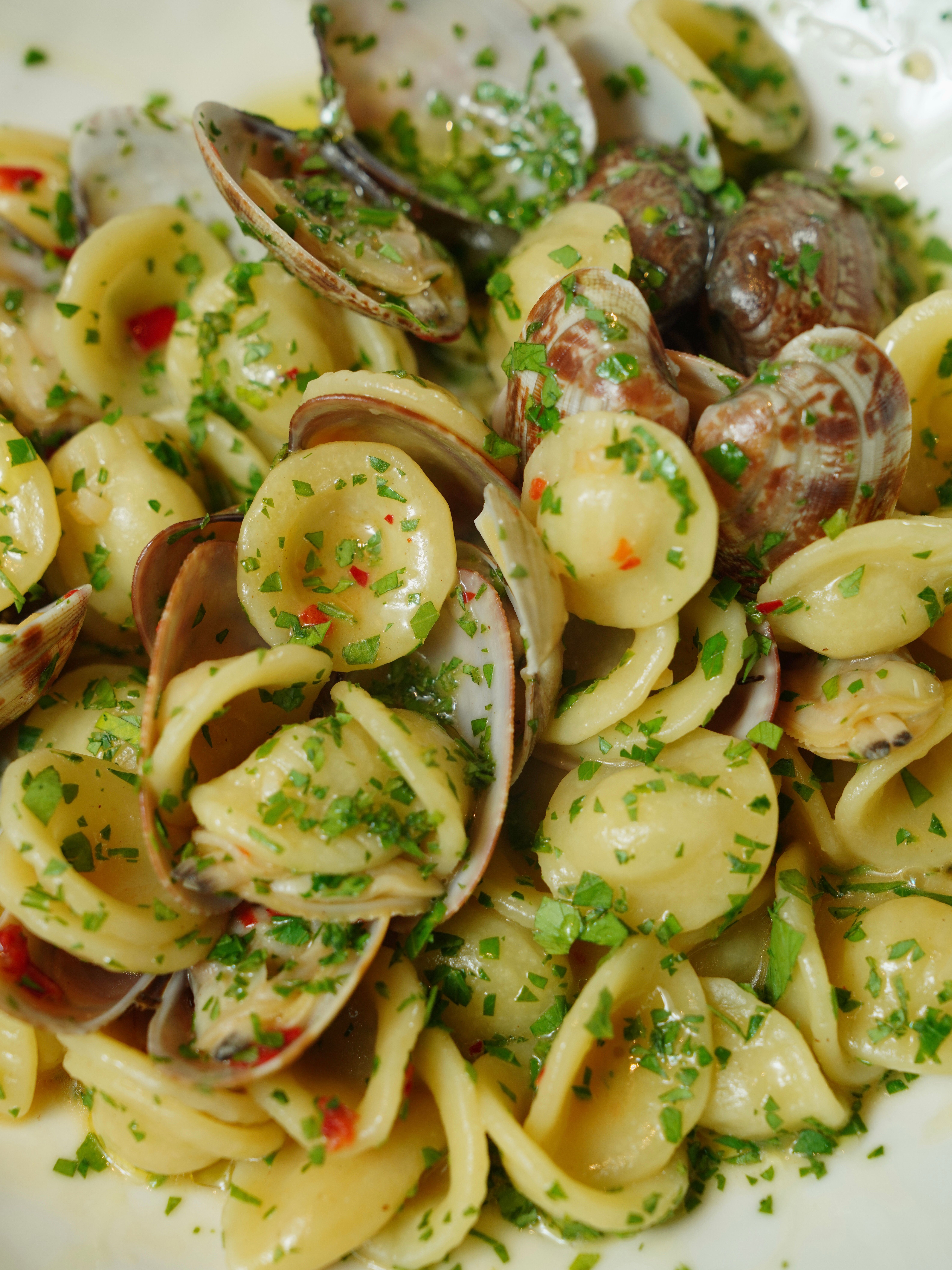
Orecchiette con Cime di Rapa
The diets react (see scores below)
Common Ingredients
- orecchiette
- turnip greens
- garlic
- olive oil
- anchovies
- chili flakes
- pecorino
- salt
Specific recipes may vary.
Incompatible with 6 of 11 diets
Diet Ratings
Orecchiette is a wheat-based pasta and the dominant ingredient in this dish. A typical serving (roughly 80-100g dry) contains approximately 60-70g of net carbs, which alone far exceeds the entire daily keto carb budget of 20-50g. The remaining ingredients — turnip greens, garlic, olive oil, anchovies, chili flakes, and pecorino — are largely keto-friendly, but they cannot redeem the dish because the pasta is non-negotiable to the recipe's identity. Orecchiette con Cime di Rapa is fundamentally a pasta dish, and no portion adjustment can make it compatible with ketosis without replacing the orecchiette entirely, at which point it becomes a different dish.
This dish contains multiple animal-derived ingredients that disqualify it from a vegan diet. Anchovies are fish (a clear animal product), and pecorino is a hard cheese made from sheep's milk (dairy). Either ingredient alone would make this dish non-vegan; together they make it doubly disqualifying. The base components — orecchiette pasta, turnip greens, garlic, olive oil, chili flakes, and salt — are all plant-based, but the dish as traditionally prepared cannot be considered vegan in any interpretation.
Orecchiette con Cime di Rapa is fundamentally incompatible with the paleo diet. The base ingredient, orecchiette, is a wheat-based pasta — a grain that is categorically excluded from paleo. Beyond the pasta, pecorino is a dairy product (sheep's milk cheese), and added salt is also excluded. While several ingredients are paleo-approved (turnip greens, garlic, olive oil, anchovies, chili flakes), the dish cannot be considered paleo in any interpretation due to its grain and dairy foundations. The non-compliant ingredients are structural to the dish, not optional additions.
Orecchiette con Cime di Rapa is a traditional Puglian dish and a genuine staple of Southern Italian Mediterranean cooking. It features abundant turnip greens (a nutrient-dense leafy vegetable), extra virgin olive oil as the primary fat, garlic, and anchovies — all core Mediterranean ingredients. The anchovies provide healthy omega-3 fatty acids and count toward the diet's seafood recommendations. Chili flakes and garlic add anti-inflammatory phytonutrients. The main reservation is the pasta: orecchiette is made from refined semolina flour, which is not a whole grain. However, pasta in moderate portions is a traditional Mediterranean staple consumed regularly in Southern Italy, and the dish's vegetable-to-pasta ratio is favorable. Pecorino is used in a small finishing quantity, consistent with moderate dairy use. Overall, this dish is a highly authentic Mediterranean meal.
Modern clinical Mediterranean diet guidelines (e.g., PREDIMED protocol) emphasize whole grains over refined pasta; strict adherents may prefer whole-wheat orecchiette or reduce portion size. Traditional Southern Italian Mediterranean practice, however, embraces semolina pasta as a dietary staple without qualification, particularly when paired with abundant vegetables.
Orecchiette con Cime di Rapa is almost entirely plant-based and directly violates every principle of the carnivore diet. The dish is dominated by orecchiette (wheat pasta — a grain), turnip greens (a leafy vegetable), garlic (plant), olive oil (plant oil), chili flakes (plant spice), and pecorino (dairy, debated but minor here). The only carnivore-compatible ingredient is anchovies, which appear as a minor flavoring component rather than the primary protein. There is no meaningful animal-based nutrition in this dish from a carnivore perspective. Grains and vegetables are the two most universally rejected food categories across all carnivore tiers, from the strictest Lion Diet to the most permissive animal-based approaches.
Orecchiette con Cime di Rapa contains multiple excluded ingredients. Orecchiette is a wheat-based pasta, which is both a grain and explicitly listed as a type of pasta/noodle — both of which are excluded on Whole30. Pecorino is a dairy cheese, also excluded. The remaining ingredients (turnip greens, garlic, olive oil, anchovies, chili flakes, salt) are all Whole30-compliant, but the dish cannot be salvaged as presented due to the pasta and cheese.
This classic Pugliese dish contains two major high-FODMAP ingredients that make it unsuitable during the elimination phase. Orecchiette is made from durum wheat semolina, which is high in fructans — the primary FODMAP concern with wheat-based pasta. Garlic is one of the highest-FODMAP foods tested by Monash University, containing very high levels of fructans even in tiny amounts. Together, these two ingredients make the dish a clear avoid. Turnip greens (cime di rapa) have limited Monash data but are generally considered low-FODMAP in moderate servings. Anchovies, olive oil, chili flakes, and salt are all low-FODMAP. Pecorino is a hard aged cheese and is low-FODMAP at typical serving sizes. However, the wheat pasta and garlic are disqualifying on their own, and this dish is structurally built around both.
Orecchiette con Cime di Rapa has several DASH-friendly elements — turnip greens are an excellent source of potassium, calcium, magnesium, and fiber; olive oil aligns with DASH's allowance of heart-healthy vegetable oils; garlic adds flavor without sodium. However, the dish has meaningful concerns. Anchovies are very high in sodium (a few fillets can contribute 400-700mg), pecorino is a high-sodium, full-fat cheese, and added salt compounds the sodium burden — together these could push a single serving well above 700-1,000mg sodium, a significant fraction of the DASH sodium ceiling. Orecchiette is refined pasta rather than a whole grain, which is not preferred under DASH. On the positive side, portions of anchovies and pecorino are typically modest in this dish, and the vegetable-to-pasta ratio can be favorable. Overall, the dish is acceptable in moderate portions with careful sodium management, but is not a core DASH recommendation.
NIH DASH guidelines emphasize low-sodium foods and whole grains, which would flag anchovies, pecorino, and refined pasta as concerns. However, updated clinical interpretations note that small amounts of high-flavor, high-sodium ingredients like anchovies and aged cheese can facilitate overall dietary adherence, and some DASH-aligned clinicians allow refined pasta occasionally if the rest of the dish is nutrient-dense — this dish's rich vegetable content partially offsets its refined-grain and sodium liabilities.
Orecchiette con Cime di Rapa is a classic Southern Italian dish with a mixed Zone profile. The turnip greens (cime di rapa) are excellent — a low-glycemic, polyphenol-rich vegetable that Zone strongly favors, and they appear in substantial quantity in this dish. Olive oil is an ideal Zone fat (monounsaturated). Anchovies provide a small but meaningful lean protein contribution with anti-inflammatory omega-3s, which aligns well with Sears' later anti-inflammatory focus. Garlic and chili flakes add polyphenols. However, the dominant macronutrient issue is orecchiette pasta — a refined wheat carbohydrate with a moderate-to-high glycemic load that skews the meal heavily carbohydrate-forward. With no designated primary protein listed, the anchovy contribution is insufficient to balance the 40/30/30 ratio. Pecorino adds some protein but also saturated fat. As served traditionally (pasta-dominant), this dish is carbohydrate-heavy and protein-light relative to Zone targets. With significant portion reduction of the pasta, addition of a lean protein (e.g., more anchovies or a side protein), and generous turnip greens, it can be brought closer to Zone ratios — but as a standalone traditional preparation, it requires substantial modification.
In Sears' later writings (The OmegaRx Zone, The Anti-Inflammation Zone), the emphasis on polyphenols and omega-3s elevates dishes like this above their carbohydrate content alone. The anchovy-olive oil-turnip green combination is nearly an ideal anti-inflammatory trifecta. Some Zone practitioners argue that small portions of whole-grain or lower-GI pasta can be incorporated as a single carb block, making this dish workable with careful portioning — particularly if the greens-to-pasta ratio is inverted from the traditional recipe.
Orecchiette con Cime di Rapa is a traditional Puglian dish with a strong anti-inflammatory profile overall. Turnip greens (cime di rapa) are a cruciferous vegetable rich in glucosinolates, vitamins K and C, carotenoids, and fiber — all well-established anti-inflammatory compounds. Olive oil provides oleocanthal and monounsaturated fats, both central to anti-inflammatory eating. Garlic and chili flakes are emphasized herbs/spices with documented anti-inflammatory properties (allicin, capsaicin). Anchovies deliver a modest but meaningful dose of omega-3 fatty acids (EPA/DHA), elevating the dish's anti-inflammatory score meaningfully given the absence of other protein. Pecorino is a full-fat sheep's milk cheese, which falls in the 'limit' category (saturated fat, full-fat dairy), but appears in a modest garnish quantity typical of this dish — its impact is limited. The primary concern is the orecchiette pasta: a refined white pasta contributes refined carbohydrates, which are flagged as pro-inflammatory. Whole-grain pasta would be preferred, but traditional orecchiette is semolina-based with a lower glycemic impact than typical refined pasta, partially mitigating the concern. The net balance — antioxidant-rich greens, olive oil, omega-3s from anchovies, anti-inflammatory spices — outweighs the modest negatives of refined pasta and small amounts of full-fat cheese.
Some anti-inflammatory practitioners following stricter protocols (e.g., autoimmune-focused approaches) would flag the refined semolina pasta as a significant source of refined carbohydrates that can spike blood sugar and promote inflammatory markers like CRP; they would recommend substituting legume-based or whole-grain pasta. Additionally, pecorino's saturated fat content, even in small amounts, is cautioned against by practitioners who strictly limit all full-fat dairy.
Orecchiette con Cime di Rapa is a traditional Italian pasta dish with genuine nutritional merit but meaningful limitations for GLP-1 patients. On the positive side, turnip greens (cime di rapa) are highly nutrient-dense — rich in fiber, vitamins K, C, and A, calcium, and folate — and easy to digest when cooked. Anchovies contribute a small but meaningful protein boost along with beneficial omega-3 fatty acids. Olive oil provides unsaturated fat in line with GLP-1 dietary preferences. The garlic adds anti-inflammatory benefit with negligible caloric cost. However, the dish's primary macronutrient is refined pasta (orecchiette), which is a refined carbohydrate with moderate glycemic impact, low protein density per calorie, and only modest fiber unless made from whole wheat. The protein content of a standard serving is low — anchovies and pecorino contribute perhaps 8–12g combined, well below the 15–30g per meal target. Pecorino adds saturated fat, and chili flakes may trigger or worsen reflux or nausea in GLP-1 patients who are already prone to GI side effects. The olive oil quantity used in a traditional preparation can push fat content higher than ideal. As a standalone main dish, this falls short on protein and may cause GI discomfort. It becomes more acceptable if portion size is reduced, paired with a lean protein (e.g., grilled chicken or white fish), or prepared with whole wheat orecchiette to boost fiber.
Some GLP-1-focused dietitians would rate this more favorably, noting that the turnip greens provide meaningful fiber and micronutrient density, anchovies supply omega-3s and umami-driven satiety, and the Mediterranean fat profile (olive oil) is preferable to saturated-fat-heavy dishes. Others would rate it lower due to the refined pasta base driving the macronutrient profile toward carbohydrates with insufficient protein per calorie to meet GLP-1 patient targets — particularly given reduced meal volume.
*See how scores were generated at our methodology page.
Nutritional profile
Six traits that cut across every diet.
Fiber & Plants
How much whole-plant food and fiber it delivers.
Healthy Fats
The quality of its fats (unsaturated, omega-3).
Whole / Unprocessed
How close it is to its natural, unprocessed form.
Gut Gentle
How easy it is on digestion (low FODMAP, few irritants).
Low Glycemic
How little it spikes your blood sugar.
Protein Density
How much protein it packs per calorie.
Controversy Index
Higher controversy = more disagreement between diets.
Diet-Specific Tips
 Mediterranean — 8/10
View tips
- Turnip greens are a nutrient-dense, plant-forward vegetable — Mediterranean core food
- Extra virgin olive oil is the primary fat — ideal
- Anchovies provide omega-3s and count toward weekly seafood servings
- Garlic and chili flakes contribute anti-inflammatory phytonutrients
- Orecchiette is refined semolina pasta, not whole grain — minor concern under strict guidelines
- Pecorino used in small amounts — consistent with moderate dairy
- Dish is an authentic Puglian traditional recipe with strong Mediterranean provenance
 DASH — 5/10
View tips
- Turnip greens are rich in DASH-favored nutrients: potassium, calcium, magnesium, and fiber
- Olive oil is a DASH-approved heart-healthy fat
- Anchovies are very high in sodium; even a small amount adds 400-700mg per serving
- Pecorino is a full-fat, high-sodium cheese — DASH specifies low-fat dairy
- Added salt further elevates already high sodium load
- Orecchiette is refined pasta, not a whole grain — DASH prefers whole grain alternatives
- Sodium can be reduced by omitting added salt, using less cheese, or rinsing anchovies
 Zone — 5/10
View tips
- Orecchiette (refined wheat pasta) is a high-glycemic-load carbohydrate that Zone classifies as 'unfavorable' — dominates the dish's macros
- Turnip greens (cime di rapa) are an excellent Zone-favorable low-glycemic vegetable rich in polyphenols
- Olive oil is the ideal Zone fat — monounsaturated and anti-inflammatory
- Anchovies provide lean protein and anti-inflammatory omega-3 fatty acids, a Zone plus
- No primary protein source means the dish lacks sufficient protein blocks to achieve 30% protein by calories
- Pecorino adds protein but also saturated fat — a caution in Zone terminology
- Dish can approach Zone compliance only if pasta portion is sharply reduced and protein is supplemented
 Anti-Inflammatory — 7/10
View tips
- Turnip greens: cruciferous vegetable rich in glucosinolates, carotenoids, vitamin K and C — strongly anti-inflammatory
- Olive oil: oleocanthal and MUFAs are foundational to anti-inflammatory eating
- Anchovies: omega-3 fatty acids (EPA/DHA) add meaningful anti-inflammatory value
- Garlic and chili flakes: anti-inflammatory herbs/spices with allicin and capsaicin
- Orecchiette (semolina pasta): refined carbohydrate — pro-inflammatory concern, though semolina has moderate glycemic impact vs. highly refined pasta
- Pecorino: full-fat dairy in small garnish quantity — minor pro-inflammatory concern from saturated fat
 GLP-1 Friendly — 5/10
View tips
- Refined pasta is the dominant macronutrient — low protein density per calorie
- Protein content per standard serving is insufficient for GLP-1 meal targets (est. 8–12g, target is 15–30g)
- Turnip greens are highly nutrient-dense with good fiber content — a genuine positive
- Anchovies provide omega-3 fatty acids and modest protein — a positive but small volume
- Olive oil is an appropriate fat source but quantity in traditional preparation may be high
- Pecorino adds saturated fat; should be used as a light garnish only
- Chili flakes may worsen GLP-1-related nausea or reflux in sensitive patients
- Dish works better as a side or appetizer portion paired with additional lean protein
- Whole wheat orecchiette substitution would meaningfully improve fiber and glycemic profile