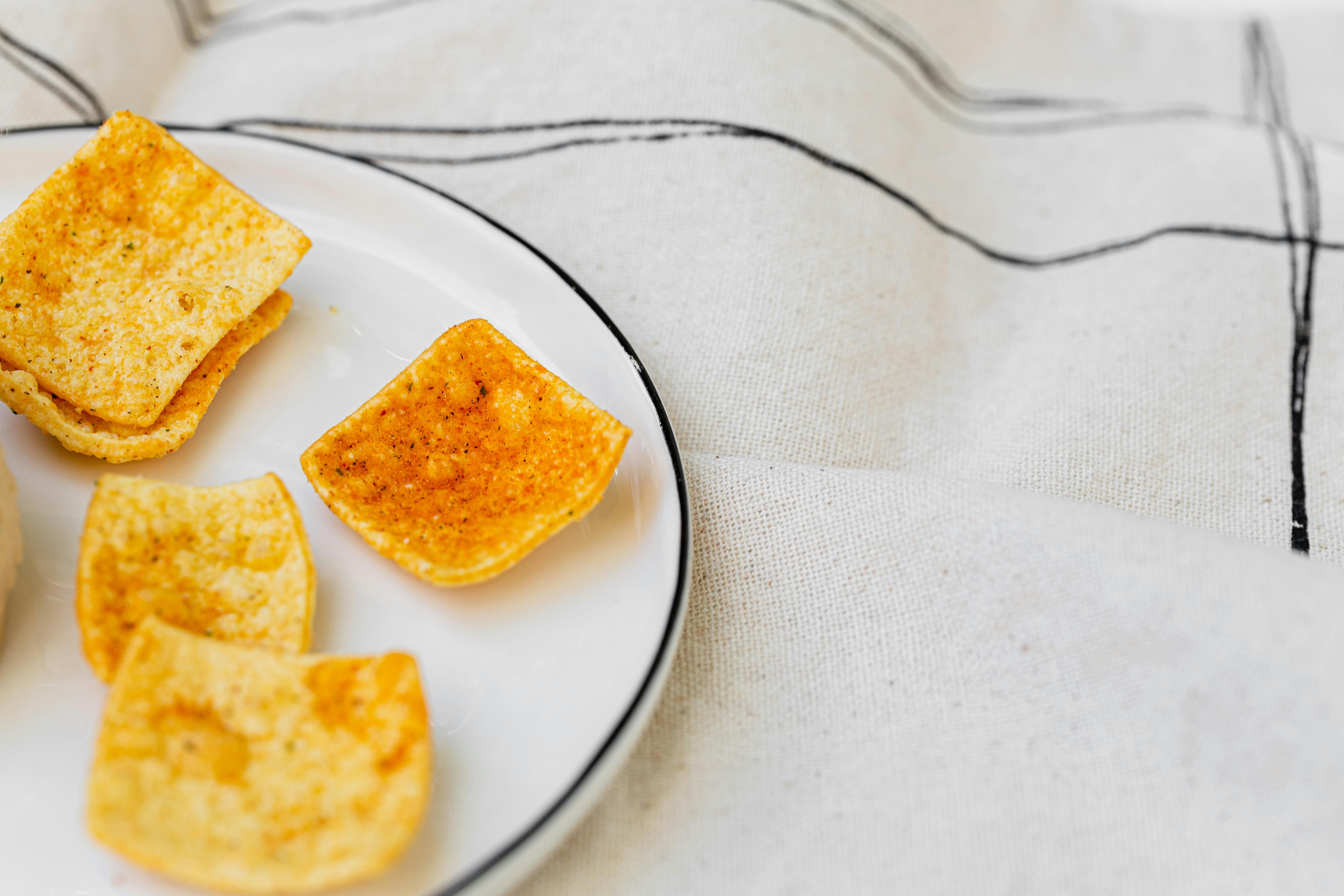
Photo: https://kaboompics.com/ / Pexels
The diets react (see scores below)
Common Ingredients
- chickpea flour
- water
- parsley
- salt
- pepper
- olive oil
Specific recipes may vary.
Incompatible with 4 of 11 diets
Diet Ratings
Panelle is a Sicilian fritter made primarily from chickpea flour, which is very high in net carbohydrates. Chickpea flour contains approximately 44-50g of net carbs per 100g (total carbs ~57g minus ~10g fiber). A standard serving of panelle (2-3 pieces, ~80-100g of chickpea flour used) would deliver well over 30-40g of net carbs on its own, easily exceeding or maxing out an entire day's keto carb budget in a single snack. While olive oil and parsley are keto-friendly, the chickpea flour base is fundamentally incompatible with ketosis. This is not a portion-control situation — even a small serving would be problematic.
Panelle is a traditional Sicilian street food made entirely from whole plant-based ingredients. Chickpea flour forms the base, cooked with water and seasoned with parsley, salt, and pepper, then fried in olive oil. Every ingredient is unambiguously plant-derived with no animal products, by-products, or contested ingredients present. The dish is also relatively whole-food in nature — chickpea flour retains significant protein and fiber from the legume source — earning a high score within the approve range.
Panelle is a Sicilian fried chickpea flour fritter, and its primary ingredient — chickpea flour — is derived from chickpeas, which are a legume. Legumes are explicitly excluded from the paleo diet due to their lectin and phytate content, which are considered anti-nutrients that Paleolithic humans would not have consumed in significant quantities. Additionally, the dish calls for added salt, which is also excluded under strict paleo guidelines. Olive oil and parsley are paleo-compliant, and black pepper is acceptable, but the foundational ingredient (chickpea flour) makes this dish incompatible with paleo principles regardless of the other components.
Panelle is a traditional Sicilian street food made from chickpea flour, water, herbs, and olive oil — all staple Mediterranean ingredients. Chickpea flour is a legume-based product, placing it firmly in the plant-forward, high-fiber category that the Mediterranean diet strongly emphasizes. Olive oil is the canonical fat of the diet and is used here appropriately. The dish is minimally processed with no added sugars, refined grains, or animal products. The main consideration is that panelle are traditionally fried, which can significantly increase the olive oil content and calorie density. If pan-fried or baked with moderate olive oil, this is an excellent Mediterranean snack.
Traditional Sicilian panelle are deep-fried in abundant olive oil and often served in white bread rolls (pane e panelle), which would lower the score due to the refined grain component and high fat load from frying. Modern Mediterranean diet guidelines would favor baking or pan-frying over deep-frying to keep the dish aligned with heart-health principles.
Panelle is a Sicilian street food made entirely from plant-based ingredients. Chickpea flour is a legume product, parsley is a herb, and olive oil is a plant-derived fat — all of which are explicitly excluded from the carnivore diet. There are zero animal-derived ingredients in this dish. This is one of the clearest possible 'avoid' cases on a carnivore diet.
Panelle are Sicilian chickpea flour fritters — a street food made by cooking chickpea flour into a thick paste, slicing it, and frying it into flat cakes or chips. Chickpea flour is derived from chickpeas, which are legumes, a category explicitly excluded on Whole30. There is no exception for chickpea flour as there is for green beans or sugar snap peas. Beyond the legume ingredient issue, Panelle are also a fried snack/fritter that falls squarely into the 'chips/crackers/fried snack' category that Whole30 Rule 4 prohibits even when made with compliant ingredients — they recreate the experience of junk food snacking. Both the primary ingredient (chickpea flour = legume) and the form factor (fried snack chip/fritter) independently disqualify this dish.
Panelle is a Sicilian street food made from chickpea flour (farina di ceci), which is the primary concern for FODMAP status. Chickpea flour is high in GOS (galacto-oligosaccharides) and fructans at larger servings. Monash University has tested chickpea flour and rates it as low-FODMAP only at very small quantities (around 2 tablespoons / 16g per serve). A typical panelle serving — several fried slices — would likely involve considerably more chickpea flour than this threshold, pushing the dish into high-FODMAP territory for most real-world portions. The remaining ingredients (water, parsley, salt, black pepper, olive oil) are all low-FODMAP and pose no concern. The dish itself is not inherently unsafe, but portion control must be strict, and most standard servings will exceed the safe FODMAP threshold for chickpea flour.
Monash University rates chickpea flour as low-FODMAP at ≤2 tablespoons (16g), but many clinical FODMAP practitioners recommend avoiding chickpea flour-based dishes during the elimination phase entirely, as the practical serving size of snacks like panelle typically far exceeds this threshold, making compliance and symptom control difficult to predict.
Panelle is a Sicilian street food made from chickpea flour (a legume-based ingredient strongly aligned with DASH), water, parsley, and olive oil — all individually DASH-friendly components. Chickpea flour provides plant-based protein, fiber, potassium, magnesium, and folate, making it an excellent DASH ingredient. Olive oil is a recommended unsaturated fat. However, the preparation method is critical: panelle are traditionally shallow- or deep-fried, which significantly increases total fat content beyond DASH's fat-limiting guidance, and the added salt can push sodium into problematic ranges depending on quantity. The frying aspect and sodium addition bump this from an 'approve' to a 'caution.' If baked with minimal oil and salt-controlled, the score would rise to 7-8. As commonly consumed (fried, salted), it warrants moderation.
NIH DASH guidelines broadly encourage legumes including chickpea-based foods as a core food group. Some DASH-oriented clinicians would argue that when prepared by baking or pan-cooking with a small amount of olive oil and moderate salt, panelle closely aligns with DASH principles — the legume base and olive oil profile outweigh concerns. The traditional fried preparation is the main distinguishing factor in this assessment.
Panelle are Sicilian chickpea fritters made primarily from chickpea flour (besan), water, and olive oil. From a Zone perspective, chickpea flour is a moderate-glycemic carbohydrate source with a meaningful protein content (roughly 20g protein and 53g net carbs per 100g dry), making it somewhat self-balancing but not ideal. The carbohydrate load is significant and moderately glycemic — chickpea flour has a lower GI than wheat flour but is not in the same favorable category as non-starchy vegetables. The use of olive oil is a positive factor, providing Zone-approved monounsaturated fat. However, the dish lacks a dedicated lean protein source, creating an imbalanced block profile skewed heavily toward carbohydrates with some incidental protein from the chickpea flour. As a snack, a small portion could be made to approximate Zone balance by pairing with lean protein (e.g., a piece of chicken or low-fat cheese), but standalone it does not hit the 40/30/30 target. The frying in olive oil adds favorable fat but also increases caloric density, making portion control critical.
Some Zone practitioners would note that chickpea flour's relatively high protein content (compared to grain flours) and lower glycemic index make panelle more Zone-compatible than typical fried snacks. Dr. Sears' later writings on polyphenols would also view the chickpea's flavonoid content favorably. Conversely, strict Zone followers would classify chickpea-based foods as 'unfavorable' carbs due to their starchy nature and would require careful portioning to stay within a single carb block serving.
Panelle is a Sicilian street food made from chickpea flour (farina di ceci) pan-fried or shallow-fried in olive oil. The ingredient profile is quite favorable from an anti-inflammatory standpoint. Chickpea flour is a legume-based whole food, rich in plant protein, fiber, and polyphenols — legumes are explicitly emphasized in anti-inflammatory frameworks including Dr. Weil's pyramid. Olive oil is the fat of choice (extra virgin olive oil is a cornerstone anti-inflammatory fat due to oleocanthal and oleic acid). Parsley contributes flavonoids, vitamin C, and apigenin. Salt and pepper are benign at cooking quantities. The main consideration is the frying method: if shallow-fried in generous olive oil at moderate temperature, the dish remains anti-inflammatory. However, if deep-fried or cooked at very high heat, olive oil's polyphenols can degrade and oxidation increases. Traditional panelle are pan-fried in a moderate amount of oil, which keeps this concern manageable. No refined grains, sugars, seed oils, or additives are present. Overall, this is a clean, legume-based snack consistent with Mediterranean anti-inflammatory eating patterns.
Some anti-inflammatory practitioners raise concerns about frying any food due to oxidation of fats at high heat, even with olive oil — the AIP and some functional medicine approaches prefer baked or steamed preparations. Additionally, while chickpea flour is generally well-tolerated, individuals with legume sensitivities or leaky gut concerns (as flagged in some integrative medicine circles) may experience inflammatory responses to lectins in chickpea-based foods, though mainstream anti-inflammatory nutrition considers legumes strongly beneficial.
Panelle are Sicilian fritters made from chickpea flour that is cooked into a polenta-like paste, then sliced and traditionally fried. The base ingredient — chickpea flour — is genuinely nutritious for a GLP-1 patient: it provides moderate plant-based protein (roughly 5-6g per 100g cooked), meaningful fiber (~5g per 100g), and a lower glycemic load than refined wheat flour. However, the traditional preparation involves shallow- or deep-frying in oil, which significantly increases fat content and pushes this dish toward GLP-1 side effect territory — nausea, bloating, and reflux are all worsened by fried, high-fat foods. If prepared in a baked or pan-seared version with minimal olive oil, the rating improves meaningfully. The olive oil listed suggests some fat is present even in a lighter preparation. As a snack, it also lacks substantial protein to anchor satiety, which is the #1 GLP-1 dietary priority. Portion sensitivity is high — a small serving of a baked version is an acceptable occasional snack; a standard fried serving is problematic.
Some GLP-1-focused dietitians may view chickpea-based foods favorably given their fiber and plant protein content, and would approve a baked version as a fiber-rich, nutrient-dense snack. Others would flag the fried preparation as a categorical concern regardless of the base ingredient, particularly for patients in early GLP-1 dose escalation when GI side effects are most pronounced.
*See how scores were generated at our methodology page.
Nutritional profile
Six traits that cut across every diet.
Fiber & Plants
How much whole-plant food and fiber it delivers.
Healthy Fats
The quality of its fats (unsaturated, omega-3).
Whole / Unprocessed
How close it is to its natural, unprocessed form.
Gut Gentle
How easy it is on digestion (low FODMAP, few irritants).
Low Glycemic
How little it spikes your blood sugar.
Protein Density
How much protein it packs per calorie.
Controversy Index
Higher controversy = more disagreement between diets.
Diet-Specific Tips
 Vegan — 9/10
View tips
- Chickpea flour is a whole-food legume ingredient, high in plant protein and fiber
- Water, parsley, salt, and pepper are universally plant-based and uncontested
- Olive oil is fully plant-derived with no vegan community debate
- No animal products, dairy, eggs, or animal-derived additives present
- Traditional preparation involves no hidden animal ingredients (e.g., lard), unlike some fried street foods
 Mediterranean — 8/10
View tips
- Chickpea flour is a legume-based ingredient, strongly encouraged in the Mediterranean diet
- Extra virgin olive oil is the primary fat, consistent with Mediterranean principles
- No animal products, added sugars, or refined grains in the base recipe
- Traditionally deep-fried, which increases calorie density and may concern some practitioners
- Whole, minimally processed ingredients with fresh herbs
- Authentic Sicilian tradition — genuinely rooted in Mediterranean culinary heritage
 Low-FODMAP — 4/10
View tips
- Chickpea flour is high in GOS and fructans at standard servings
- Monash rates chickpea flour as low-FODMAP only at ≤16g (approx. 2 tbsp)
- Typical panelle portion likely exceeds safe FODMAP threshold
- Olive oil, parsley, salt, and pepper are all low-FODMAP
- Verdict is highly portion-dependent
 DASH — 5/10
View tips
- Chickpea flour is a DASH-approved legume ingredient rich in fiber, potassium, and magnesium
- Olive oil is a DASH-recommended unsaturated fat
- Traditional deep- or shallow-frying substantially increases total fat content
- Salt is added and sodium quantity depends on preparation — can be reduced
- No saturated fat, cholesterol, added sugar, or refined grains
- Baked version with controlled salt would score significantly higher (7-8)
 Zone — 5/10
View tips
- Chickpea flour is moderate-glycemic — lower than wheat but not a favorable low-GI vegetable carb
- No dedicated lean protein source; relies on incidental protein from chickpea flour, leaving macro ratio carb-heavy
- Olive oil is Zone-ideal monounsaturated fat — a clear positive
- As a standalone snack, macros skew heavily toward carbohydrates without hitting 40/30/30
- Small portions (1-2 pieces) paired with lean protein could fit into a Zone snack block
- Fried preparation increases caloric density, making portion discipline essential
 Anti-Inflammatory — 7/10
View tips
- Chickpea flour: legume-based, high fiber, plant protein, polyphenols — strongly anti-inflammatory
- Olive oil: primary fat aligns with anti-inflammatory diet principles (oleocanthal, oleic acid)
- Parsley: flavonoids and apigenin contribute antioxidant activity
- No refined grains, added sugars, seed oils, or processed additives
- Frying method matters: moderate-heat pan-frying in olive oil is acceptable; high-heat deep-frying reduces quality
- Mediterranean dietary pattern alignment supports approval
 GLP-1 Friendly — 5/10
View tips
- Chickpea flour base provides moderate plant protein (~5-6g per serving) and meaningful fiber — both GLP-1 priorities
- Traditional preparation is fried, significantly increasing fat content and risk of nausea, bloating, and reflux
- Olive oil used in preparation adds unsaturated fat — acceptable in small amounts, but portion-sensitive
- No primary protein source — insufficient to meet the 15-30g per meal protein target as a standalone snack
- Baked or pan-seared preparation substantially improves the rating; fried version warrants 'avoid'
- Small portion of baked panelle is digestible and nutrient-reasonable; standard fried serving is not GLP-1 friendly