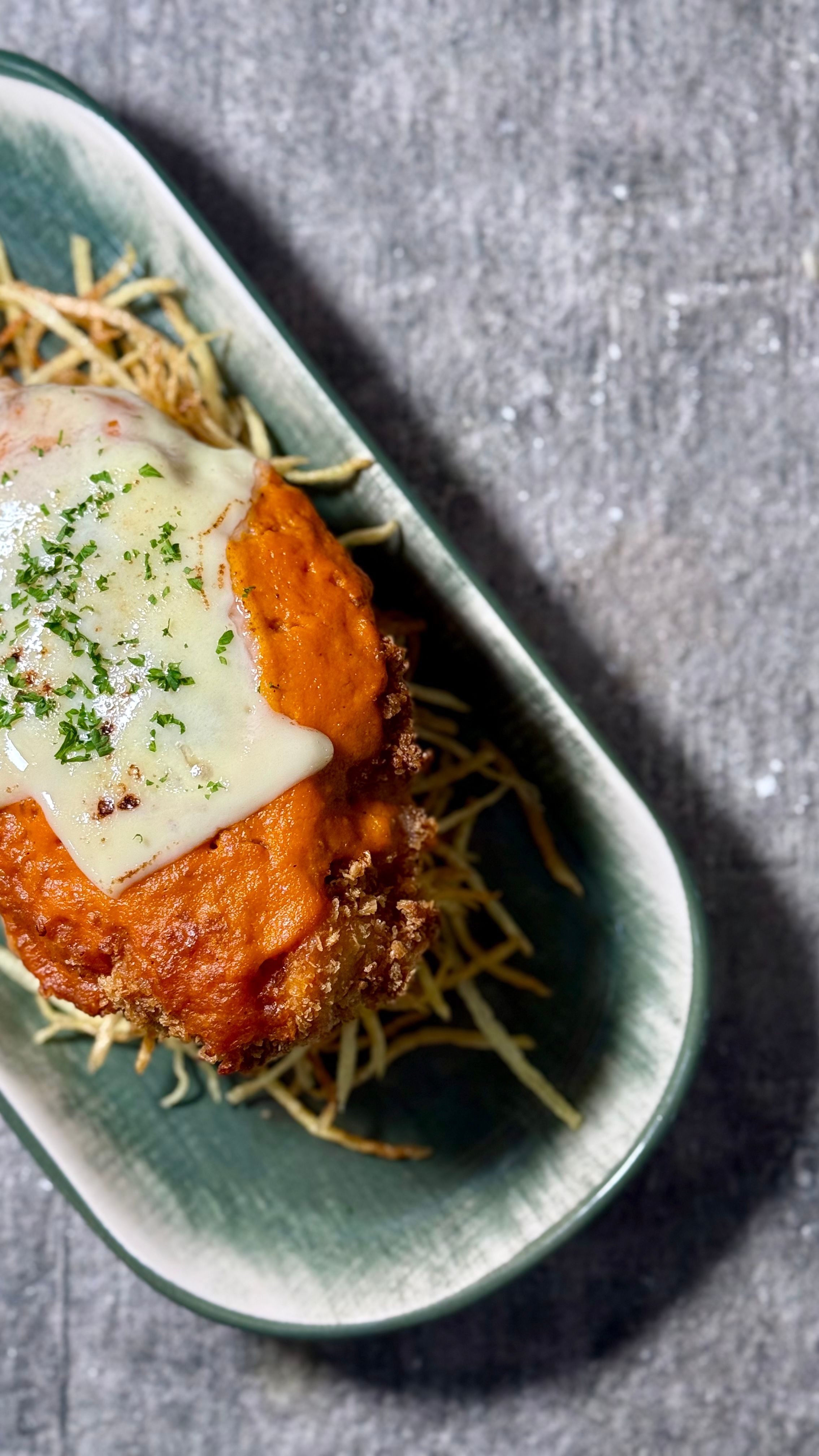
Photo: Merve Gülhan / Pexels
The diets react (see scores below)
Common Ingredients
- veal
- prosciutto
- sage
- white wine
- butter
- flour
- salt
- pepper
Specific recipes may vary.
Incompatible with 6 of 11 diets
Diet Ratings
Saltimbocca is largely keto-friendly — veal, prosciutto, sage, butter, and white wine are all low-carb or moderate-carb components. The critical problem is the flour used to dredge the veal before searing, which adds refined grain carbs and disqualifies the dish in its traditional form. White wine also contributes a small amount of residual sugar and carbs (roughly 1-2g per typical cooking quantity per serving), though this is usually negligible. The dish can be made fully keto-compatible with a simple substitution: almond flour or no dredging at all. As traditionally prepared with wheat flour, it warrants caution rather than approval.
Some lazy keto practitioners argue the small amount of flour used for a light dredge (perhaps 1-2 tsp per serving after cooking off) results in under 3-5g net carbs per serving and is within daily limits, effectively treating it as an approve. Strict keto adherents counter that any wheat flour is a non-starter due to the grain content and glycemic impact.
Saltimbocca contains multiple animal products that are strictly excluded from a vegan diet. Veal is the flesh of a calf, prosciutto is cured pork meat, and butter is a dairy product derived from cow's milk. Three distinct animal-derived ingredients make this dish entirely incompatible with vegan principles. There is no ambiguity here.
Saltimbocca contains multiple non-paleo ingredients that disqualify it from paleo compliance. Flour is a grain-based ingredient used for dredging the veal, which is strictly excluded. Butter is a dairy product, also excluded. Prosciutto, while pork-based, is a processed, cured meat with added salt and preservatives. Salt is listed as an added ingredient, which is discouraged. White wine, while a gray-area item on its own, is a minor concern compared to the other violations. The only clearly paleo-compliant ingredients are veal, sage, and pepper. The dish would require significant reformulation — eliminating flour, butter, processed prosciutto, and added salt — to be considered paleo-compatible.
Saltimbocca combines veal (red meat, limited to a few times per month in Mediterranean guidelines), prosciutto (processed/cured meat high in sodium and saturated fat), and butter as the cooking fat rather than olive oil. The refined flour coating and absence of vegetables further distance this dish from Mediterranean principles. The combination of two animal proteins—red meat plus cured processed meat—in one dish is particularly problematic. While sage, white wine, and the Italian origin suggest a Mediterranean cultural context, the ingredient profile contradicts the diet's core principles around fat sources, meat frequency, and processed meat avoidance.
Some traditional Roman and Central Italian culinary traditions consider veal a lighter, leaner alternative to beef, and the dish's modest portion sizes in authentic Italian practice may make it an occasional indulgence compatible with a broadly Mediterranean lifestyle. Additionally, a small amount of butter is used in some traditional Italian regional cooking, though olive oil remains the canonical Mediterranean fat.
Saltimbocca contains several carnivore-incompatible ingredients that disqualify it entirely. Flour is a grain-based ingredient and a clear carnivore violation. Sage is a plant-based herb, also excluded. White wine is a plant-derived fermented beverage with sugars and compounds incompatible with the carnivore framework. Black pepper is a plant spice. While the core animal components — veal, prosciutto, and butter — are carnivore-friendly, the dish as traditionally prepared cannot be approved due to the flour coating, sage, and white wine sauce, which are foundational to the recipe rather than optional garnishes.
Saltimbocca contains two clearly excluded ingredients: butter (dairy, not ghee/clarified butter) and flour (a grain). The pan sauce traditionally uses regular butter for mounting, and the veal is dredged in wheat flour before cooking. While veal, prosciutto, sage, white wine, salt, and pepper are all Whole30-compliant, the presence of both butter and flour make this dish non-compliant as traditionally prepared.
Saltimbocca is largely low-FODMAP, with veal, prosciutto, sage, butter, salt, and pepper all being safe on the elimination phase. White wine is low-FODMAP in small quantities (up to ~150ml). The main concern is flour: wheat flour is high in fructans and is used to dredge the veal before pan-frying. In this preparation, the amount of flour coating per serving is relatively small (a light dusting), and some FODMAP practitioners consider such trace amounts unlikely to trigger symptoms. However, Monash University guidelines flag wheat flour as high-FODMAP, and during strict elimination even small amounts are technically non-compliant. The dish can be made low-FODMAP by substituting rice flour or cornstarch for the wheat flour dredge, which is a simple swap.
Monash University rates wheat flour as high-FODMAP due to fructans, which would technically make this dish a caution or avoid. However, many clinical FODMAP practitioners consider the small amount of flour used as a light dredge (typically 1-2 teaspoons per serving after excess is shaken off) to be below the threshold that triggers symptoms, and may permit it during elimination — though strict adherents should substitute rice flour or cornstarch to be safe.
Saltimbocca is fundamentally incompatible with DASH diet principles due to multiple high-risk ingredients. Prosciutto is a salt-cured meat with extremely high sodium content (approximately 1,000–1,500mg per 2oz serving), which alone could exceed the low-sodium DASH daily limit. Butter adds saturated fat, which DASH explicitly limits. The dish also combines red/processed meat (veal + cured prosciutto) — both categories DASH recommends minimizing. Added salt further compounds the sodium burden. While veal itself is a lean protein, the overall preparation method and ingredient combination make this dish a poor DASH choice even in moderate portions.
Saltimbocca presents a mixed Zone Diet profile. The protein base — veal — is relatively lean compared to other red meats and is a reasonable Zone protein source, providing quality protein that can be portioned to the ~25g per meal target. Prosciutto adds additional protein but also saturated fat and sodium, which the Zone discourages in excess. The primary fat concern is butter, a saturated fat that conflicts with the Zone's preference for monounsaturated fats like olive oil. Flour is used as a light dredge, contributing a small amount of high-glycemic carbohydrate, but in typical saltimbocca preparation the amount is minimal and not a major macro disruptor. White wine reduces down and contributes negligible carbohydrates. Sage is negligible macronutritionally but aligns with the Zone's polyphenol-positive philosophy. The dish lacks the required low-glycemic carbohydrate component entirely — no vegetables, no fruit — meaning it cannot stand alone as a balanced Zone meal. However, paired with a large serving of low-glycemic vegetables (e.g., steamed spinach, roasted asparagus), a small portion of saltimbocca can fit into a Zone-compliant meal with careful portioning. The butter is the most Zone-unfavorable element, but substituting or reducing it brings the dish closer to Zone ideals.
Early Zone Diet writings by Dr. Sears were relatively strict about limiting saturated fat, which would push saltimbocca toward a lower score given butter and prosciutto fat content. However, Sears' later anti-inflammatory framework (notably in 'Toxic Fat' and updated editions) acknowledges that saturated fat from animal sources is less problematic than omega-6-heavy seed oils or trans fats. Some Zone practitioners would view small amounts of butter and prosciutto as acceptable, especially if the veal portion is controlled and the meal is balanced with abundant low-GI vegetables on the side.
Saltimbocca presents a mixed anti-inflammatory profile. On the positive side, sage is a notable anti-inflammatory herb containing rosmarinic acid and flavonoids that have demonstrated anti-inflammatory activity, and white wine in small cooking quantities is relatively benign. However, the dish's foundation is largely pro-inflammatory: veal is red meat (though leaner than most), and while it has a more favorable fat profile than beef, it still contributes saturated fat and arachidonic acid. Prosciutto is a processed cured meat — high in sodium and containing preservatives — which falls squarely in the 'limit' category. Butter is a saturated fat to be limited on an anti-inflammatory diet, and refined white flour adds negligible nutrition. The cooking method (pan-sautéed in butter) adds further saturated fat load. The dish has no meaningful omega-3 sources, antioxidant-rich vegetables, or polyphenol-dense components beyond the sage. It is not aggressively pro-inflammatory in the way that fried or heavily processed foods are, but it lacks the hallmarks of an anti-inflammatory meal and contains several ingredients that should be limited or avoided in frequency.
Saltimbocca features veal (lean protein) as its base, which is a positive for GLP-1 patients, but the preparation introduces several concerns. Prosciutto adds saturated fat and sodium on top of the meat. The dish is finished in butter — a saturated fat that can worsen nausea, reflux, and bloating, which are common GLP-1 side effects. A flour dredge adds refined carbohydrates with minimal nutritional value. White wine contributes alcohol, which is flagged as a category to avoid due to empty calories, though much of it reduces during cooking. The overall fat load per serving — from prosciutto, butter, and the pan sauce — is the primary concern. The dish offers moderate protein (veal is lean) but lacks fiber entirely, and the saturated fat content makes it a poor fit for someone managing GLP-1 side effects. Portion size matters: a small serving may be tolerable, but the fat-heavy preparation makes this a conditional choice at best.
Some GLP-1-focused RDs would note that veal is one of the leanest red meats available and that a restaurant portion of saltimbocca, while buttery, may be acceptable in a controlled serving for patients who tolerate dietary fat reasonably well — particularly those further along in treatment when acute GI side effects have stabilized. Others would flag the butter-prosciutto combination as reliably problematic for nausea-prone patients regardless of tolerance timeline.
*See how scores were generated at our methodology page.
Nutritional profile
Six traits that cut across every diet.
Fiber & Plants
How much whole-plant food and fiber it delivers.
Healthy Fats
The quality of its fats (unsaturated, omega-3).
Whole / Unprocessed
How close it is to its natural, unprocessed form.
Gut Gentle
How easy it is on digestion (low FODMAP, few irritants).
Low Glycemic
How little it spikes your blood sugar.
Protein Density
How much protein it packs per calorie.
Controversy Index
Higher controversy = more disagreement between diets.
Diet-Specific Tips
 Keto — 5/10
View tips
- Flour dredging introduces wheat/grain carbs — the primary keto concern
- Veal is an excellent high-protein, moderate-fat keto base
- Prosciutto adds fat and flavor with negligible carbs
- Butter is ideal for keto cooking
- White wine contributes minimal carbs in cooking quantities
- Easy keto modification: substitute almond flour or skip dredging entirely
- Traditional preparation scores lower; modified version would score 8-9
 Low-FODMAP — 6/10
View tips
- Veal is a plain protein — fully low-FODMAP
- Prosciutto (cured ham) is low-FODMAP
- Sage is a low-FODMAP herb
- Butter is low-FODMAP (fat, negligible lactose)
- White wine is low-FODMAP at standard cooking quantities
- Wheat flour dredge is the primary FODMAP concern (fructans), though quantity per serving is small
- Easy to make fully low-FODMAP by swapping wheat flour for rice flour or cornstarch
 Zone — 5/10
View tips
- Veal is a relatively lean protein and Zone-compatible in appropriate portions (~25g protein per meal)
- Butter is a saturated fat — conflicts with Zone's preference for monounsaturated fats; substituting olive oil would improve Zone alignment
- Prosciutto adds saturated fat and sodium, requiring portion control
- Flour dredge is minimal and contributes only a small glycemic load in typical preparation
- Dish is entirely carbohydrate-deficient as served — must be paired with low-GI vegetables to form a Zone-balanced meal
- White wine contribution is negligible after reduction
- Sage contributes polyphenols consistent with Zone's anti-inflammatory emphasis
- Cannot stand alone as a Zone meal; requires deliberate pairing and portioning
 Anti-Inflammatory — 4/10
View tips
- Veal is red meat — limit on anti-inflammatory diets due to saturated fat and arachidonic acid content
- Prosciutto is a processed cured meat with high sodium and preservatives — generally flagged as limit/avoid
- Butter contributes saturated fat — Dr. Weil's pyramid places saturated fat in the 'minimize' category
- Sage provides rosmarinic acid and anti-inflammatory flavonoids — a genuine positive
- White wine used in cooking is relatively neutral at small quantities
- Refined flour adds pro-inflammatory refined carbohydrates with no nutritional benefit
- No omega-3 sources, colorful vegetables, or significant antioxidant components in the dish
 GLP-1 Friendly — 4/10
View tips
- Veal is a lean protein source — positive for GLP-1 patients
- Prosciutto adds saturated fat and high sodium
- Butter-based pan sauce increases total fat load and saturates fat content
- White wine contributes alcohol, though much cooks off
- Flour dredge adds refined carbohydrates with no fiber or nutritional benefit
- Zero dietary fiber in the dish
- Rich, fatty preparation is likely to worsen GLP-1 GI side effects (nausea, reflux, bloating)
- Small portions may reduce but not eliminate the concerns