Photo: Stefan Popescu / Pexels
Italian
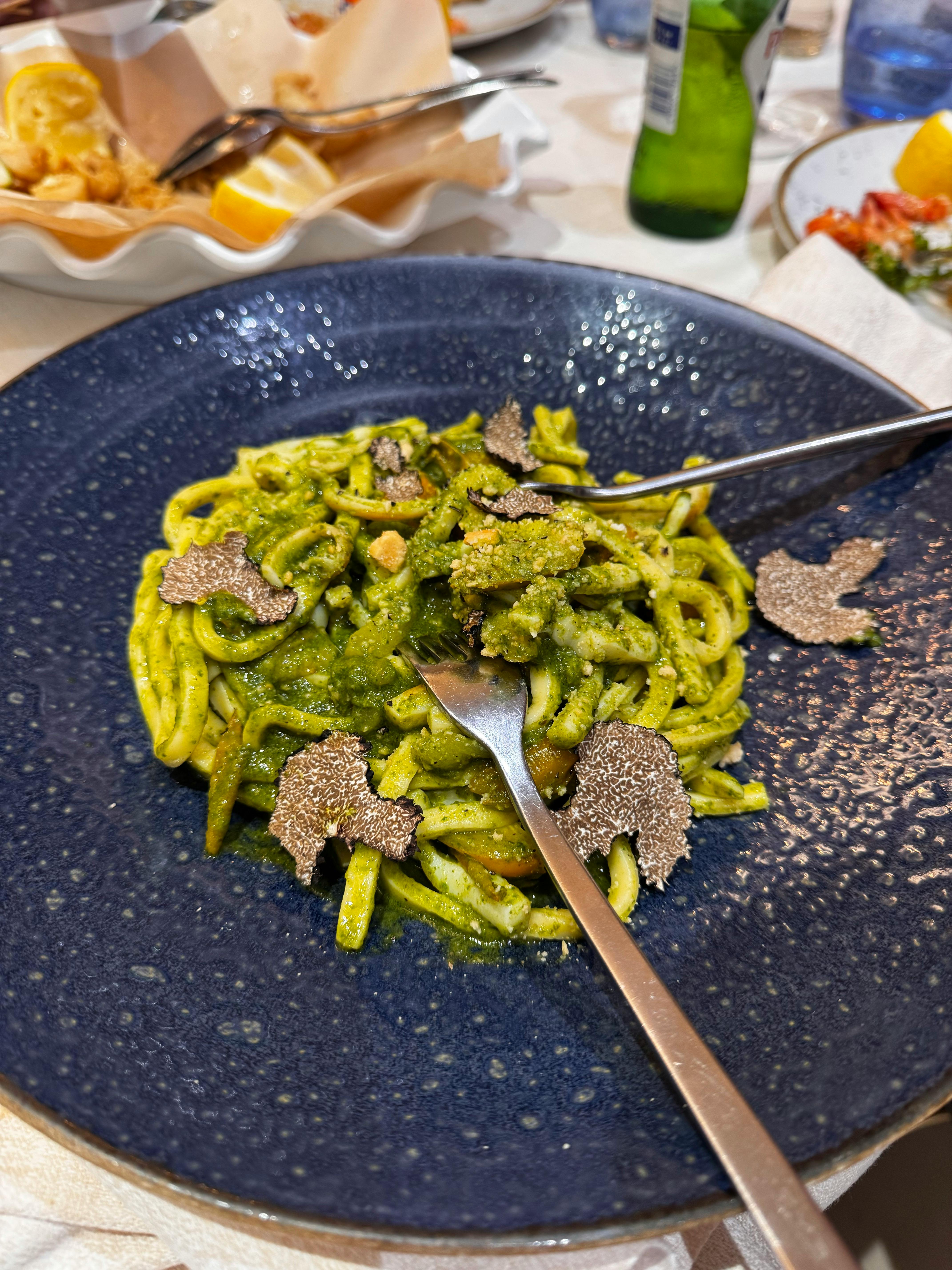
Trofie al Pesto
The diets react (see scores below)
Common Ingredients
- trofie pasta
- basil
- pine nuts
- parmesan
- pecorino
- garlic
- olive oil
- potatoes
- green beans
Specific recipes may vary.
Incompatible with 6 of 11 diets
Diet Ratings
Trofie al Pesto is fundamentally incompatible with a ketogenic diet. The dish is built around trofie pasta, a refined wheat-based pasta that delivers roughly 60-70g of net carbs per standard serving — already exceeding the entire daily keto carb limit on its own. Compounding this, the traditional Ligurian recipe also includes boiled potatoes, another high-starch ingredient adding another 15-20g of net carbs. Green beans are the only relatively keto-friendly ingredient. While the pesto sauce itself (basil, pine nuts, parmesan, pecorino, garlic, olive oil) is largely keto-compatible and high in healthy fats, it cannot redeem the dish. A single serving would likely deliver 80-100g+ of net carbs, completely destroying ketosis.
Trofie al Pesto in its traditional Ligurian form contains two animal-derived dairy cheeses: Parmigiano-Reggiano (parmesan) and Pecorino Romano, both of which are made from animal milk and are unambiguously non-vegan. These are not trace ingredients or cross-contamination concerns — they are core, named components of the dish. The trofie pasta itself may also contain eggs depending on the recipe, adding a further potential animal product. The remaining ingredients (basil, pine nuts, garlic, olive oil, potatoes, green beans) are fully plant-based, but the presence of two dairy cheeses makes this dish clearly non-vegan as described. A vegan version is achievable by substituting both cheeses with nutritional yeast or a plant-based cheese alternative and ensuring the pasta is egg-free.
Trofie al Pesto is fundamentally incompatible with the paleo diet. The dish's base ingredient — trofie pasta — is a wheat-based grain product, which is explicitly excluded from paleo. Beyond the pasta, parmesan and pecorino are both dairy products (also excluded), and green beans are legumes, likewise banned under paleo rules. The dish contains three distinct categories of avoid-listed ingredients, making this one of the clearest possible rejections. The paleo-friendly elements — basil, pine nuts, garlic, and olive oil — are vastly outnumbered and structurally peripheral to the dish. Even with substitutions (e.g., zucchini noodles), this would be a fundamentally different dish, not Trofie al Pesto.
Trofie al Pesto is a traditional Ligurian dish with strong Mediterranean credentials in many respects: extra virgin olive oil is the base of the pesto, and basil, garlic, pine nuts, potatoes, and green beans are all wholesome, plant-based Mediterranean ingredients. However, the pasta is refined white pasta (trofie is made from white flour), and the dish includes moderate amounts of aged cheeses (parmesan and pecorino). Refined grains are discouraged in modern Mediterranean diet guidelines, and while dairy is acceptable in moderation, two cheese varieties in one dish is notable. The dish has no primary protein and is largely plant-forward in spirit, but the refined flour base tempers the score. Overall it is acceptable and culturally authentic, but not an ideal everyday staple under strict modern interpretations.
Traditional Ligurian cuisine considers this dish a wholesome, plant-based staple, and some Mediterranean diet authorities note that pasta consumption in moderate portions—even refined—has historically been associated with health benefits in Italian and broader Mediterranean populations. The small amounts of cheese used in pesto are consistent with modest dairy use, and the dish's olive oil, nut, and vegetable components are strongly aligned with Mediterranean principles.
Trofie al Pesto is entirely plant-based and grain-based, containing zero animal products. Every single ingredient — trofie pasta (wheat), basil, pine nuts, garlic, olive oil, potatoes, and green beans — is explicitly excluded from the carnivore diet. The only marginally animal-derived ingredients are parmesan and pecorino (both aged cheeses), but they are minor components in an otherwise completely non-carnivore dish. This dish represents the antithesis of carnivore eating: grains, plant oils, nuts, vegetables, herbs, and legumes all in one bowl.
Trofie al Pesto contains multiple Whole30-excluded ingredients. Trofie pasta is a wheat-based grain product, which is explicitly excluded on Whole30. Parmesan and pecorino are both dairy cheeses, also explicitly excluded. These are fundamental, non-negotiable exclusions with no compliant substitutes that would preserve the dish as 'Trofie al Pesto.' The remaining ingredients — basil, pine nuts, garlic, olive oil, potatoes, and green beans — are all individually Whole30-compliant, but they cannot redeem a dish built around pasta and cheese.
Trofie al Pesto contains two major high-FODMAP ingredients that make it unsuitable during the elimination phase. First, trofie pasta is a traditional wheat-based pasta, making it high in fructans — a primary FODMAP trigger. Second, garlic is one of the highest-FODMAP foods tested by Monash University and is a core ingredient in authentic pesto. Even small amounts of garlic significantly elevate FODMAP load. The combination of wheat pasta and garlic alone is enough to rate this dish 'avoid.' Pine nuts are low-FODMAP at a standard serving (up to 1 tablespoon/14g). Parmesan and pecorino are both aged hard cheeses and low-FODMAP (minimal lactose). Basil and olive oil are low-FODMAP. Potatoes (plain, boiled) are low-FODMAP. Green beans are low-FODMAP at standard servings (up to 75g). Despite several safe ingredients, the wheat pasta and garlic create an unavoidable high-FODMAP dish as traditionally prepared.
Trofie al Pesto contains several DASH-friendly ingredients — olive oil (a recommended vegetable oil), garlic, basil, potatoes, and green beans — but is tempered by notable concerns. Parmesan and pecorino are aged, high-sodium, high-saturated-fat cheeses; traditional pesto uses them generously, contributing significant sodium (potentially 400–700mg+ per serving from cheese alone). Pine nuts are DASH-acceptable in moderation (unsalted, nutrient-dense). The refined pasta (trofie) lacks the fiber of whole grains preferred by DASH. Potatoes and green beans are genuinely DASH-positive additions. Overall, this dish sits in 'caution' territory: it incorporates good Mediterranean elements aligned with DASH's spirit, but the sodium load from aged cheeses and refined pasta work against full approval. Portion size and cheese quantity are critical variables.
NIH DASH guidelines emphasize limiting sodium and saturated fat, which aged Italian cheeses like parmesan and pecorino clearly challenge. However, some updated DASH-aligned clinicians note that the Mediterranean dietary pattern — of which this dish is emblematic — has strong cardiovascular outcome data, and that moderate use of aged cheeses alongside abundant vegetables, olive oil, and plant foods may be acceptable within a broader DASH-compatible eating pattern, especially if total daily sodium is managed elsewhere.
Trofie al Pesto is a challenging dish for the Zone Diet on multiple fronts. The macronutrient profile is severely imbalanced: it is dominated by carbohydrates (trofie pasta, potatoes) and fat (olive oil, pine nuts, parmesan, pecorino), with virtually no lean protein — a fundamental requirement for every Zone meal. The pasta is a refined, high-glycemic carbohydrate that Zone classifies as 'unfavorable.' Worse, the traditional Ligurian preparation includes boiled potatoes, which Dr. Sears explicitly lists among the highest-glycemic carbs to avoid. The fat content, while partly monounsaturated (olive oil, pine nuts), is heavily skewed by saturated fat from two aged cheeses (parmesan and pecorino). Green beans are the one genuinely Zone-favorable ingredient — a low-glycemic vegetable. However, with no lean protein source and a carb load stacked with two 'avoid' items (pasta and potatoes), this dish cannot be easily rebalanced into Zone ratios without a fundamental reformulation. It scores a 3 rather than 1-2 because olive oil and green beans are legitimate Zone components, and a small portion with a large added protein source could theoretically be worked into a Zone meal — but as served, it is a poor Zone choice.
Trofie al Pesto is a classic Ligurian dish with a genuinely mixed anti-inflammatory profile. On the positive side, the dish contains several notable anti-inflammatory components: extra virgin olive oil is one of the most celebrated anti-inflammatory foods (rich in oleocanthal and monounsaturated fats); fresh basil provides flavonoids and volatile oils with anti-inflammatory properties; garlic contains allicin and organosulfur compounds that reduce inflammatory markers; pine nuts offer monounsaturated fats and some omega-3s (though with a high omega-6:3 ratio); and green beans contribute fiber, vitamins, and antioxidants. The real friction comes from the pasta and dairy. Trofie is a refined white pasta — a refined carbohydrate that can spike blood sugar and promote low-grade inflammation, especially in large portions. Parmesan and pecorino are high-fat, full-fat aged cheeses (saturated fat, pro-inflammatory in anti-inflammatory frameworks). Traditional pesto portions also tend to be calorically dense. The potatoes are neutral — whole, unprocessed, and containing resistant starch, but starchy and moderate on the glycemic index. If the dish is made with whole-grain trofie or portion-controlled, the score improves meaningfully. As-is with refined pasta and two full-fat cheeses, it sits squarely in the caution zone — enjoyable and containing real anti-inflammatory ingredients, but offset by refined carbs and saturated fat load.
A Mediterranean diet lens (which strongly overlaps with anti-inflammatory principles) would view this dish more favorably — traditional Ligurian pasta dishes are considered part of a healthy Mediterranean eating pattern, and the olive oil and herb base are emphasized as protective. Some anti-inflammatory practitioners (including Dr. Weil's broader framework) allow moderate pasta and full-fat dairy as part of an overall pattern rather than penalizing individual dishes. The stricter anti-inflammatory view flags refined pasta as a glycemic load contributor and aged full-fat cheeses as saturated fat sources to limit.
Trofie al Pesto is a traditional Ligurian dish built around refined pasta, olive oil-heavy pesto, and starchy potatoes — a combination that presents several challenges for GLP-1 patients. The dish is carbohydrate-dominant with minimal protein (pine nuts and cheese contribute small amounts, but nowhere near the 15-30g per meal target). The pesto sauce is calorie-dense from olive oil and pine nuts, and while these are unsaturated fats, the fat load per serving is high enough to risk worsening nausea, bloating, or reflux — common GLP-1 side effects tied to high-fat meals. The addition of potatoes further increases the glycemic and starchy load. On the positive side, the ingredients are whole and minimally processed, olive oil provides beneficial unsaturated fats, green beans add some fiber and micronutrients, and basil and garlic are well-tolerated digestively. The dish is not fried or ultra-processed, and portions can be kept small. However, for a GLP-1 patient eating only small volumes, this dish delivers mostly refined carbohydrates and fat rather than protein or fiber — poor nutrient density per calorie given the reduced appetite context. It could be made more suitable by reducing pasta portion, adding a lean protein (grilled chicken, shrimp), using a lighter hand with pesto, and leaning on the green beans component.
Some GLP-1-focused dietitians accept small portions of traditional pasta dishes as part of a balanced Mediterranean-style eating pattern, arguing that food satisfaction and dietary adherence matter for long-term outcomes, and that the olive oil and pine nuts provide quality unsaturated fats. Others flag the high fat-per-serving from pesto as a meaningful GI risk and point to the near-zero protein density as a significant concern given muscle preservation goals during GLP-1-driven weight loss.
*See how scores were generated at our methodology page.
Nutritional profile
Six traits that cut across every diet.
Fiber & Plants
How much whole-plant food and fiber it delivers.
Healthy Fats
The quality of its fats (unsaturated, omega-3).
Whole / Unprocessed
How close it is to its natural, unprocessed form.
Gut Gentle
How easy it is on digestion (low FODMAP, few irritants).
Low Glycemic
How little it spikes your blood sugar.
Protein Density
How much protein it packs per calorie.
Controversy Index
Higher controversy = more disagreement between diets.
Diet-Specific Tips
 Mediterranean — 6/10
View tips
- Extra virgin olive oil is the primary fat — strongly Mediterranean
- Basil, garlic, pine nuts, potatoes, and green beans are excellent plant-based ingredients
- Trofie is refined white pasta — modern guidelines prefer whole grains
- Two aged cheeses (parmesan, pecorino) represent moderate but notable dairy content
- No red meat, processed foods, or added sugars
- Culturally authentic Ligurian dish with deep Mediterranean roots
 DASH — 5/10
View tips
- Parmesan and pecorino are high-sodium, high-saturated-fat aged cheeses — significant DASH concern
- Traditional pesto can deliver 400–700mg+ sodium per serving from cheese alone
- Olive oil is a DASH-recommended fat source
- Green beans and potatoes are DASH-positive vegetables adding fiber and potassium
- Trofie is refined (white) pasta — whole grain pasta would be preferred under DASH
- Pine nuts are DASH-acceptable in moderate, unsalted portions
- No lean protein source — dish may be difficult to balance macronutrients within DASH servings
- Dish is caution-level but improvable: reduced cheese, whole grain pasta, and portion control shift it closer to DASH-compatible
 Zone — 5/10
View tips
- No lean protein source — violates the core 40/30/30 Zone block requirement for every meal
- Trofie pasta is a refined, high-glycemic carbohydrate classified as 'unfavorable' in Zone terminology
- Potatoes are explicitly listed by Dr. Sears as a high-glycemic carb to avoid
- Double-cheese base (parmesan + pecorino) adds significant saturated fat, conflicting with Zone's preference for monounsaturated fats
- Olive oil and pine nuts are Zone-favorable monounsaturated fats
- Green beans are a Zone-approved low-glycemic vegetable
- Carbohydrate blocks would be dominated by unfavorable, high-GI sources with minimal fiber offset
 Anti-Inflammatory — 5/10
View tips
- Extra virgin olive oil — strong anti-inflammatory base (oleocanthal, polyphenols)
- Fresh basil — anti-inflammatory flavonoids and volatile oils
- Garlic — allicin and organosulfur compounds reduce CRP and IL-6
- Refined white pasta (trofie) — refined carbohydrate, moderate glycemic load, pro-inflammatory in excess
- Parmesan + pecorino — full-fat aged cheeses, meaningful saturated fat load
- Pine nuts — monounsaturated fats but high omega-6:omega-3 ratio
- Green beans — positive contribution, fiber and antioxidants
- Potatoes — neutral starchy vegetable, not a concern in moderation
 GLP-1 Friendly — 4/10
View tips
- Very low protein — no primary protein source; cheese and pine nuts contribute minimally, well below the 15-30g per meal target
- High carbohydrate load from refined pasta and potatoes — poor nutrient density per calorie
- Pesto is calorie-dense and high in fat per serving, increasing risk of nausea and bloating on GLP-1 medications
- Unsaturated fats from olive oil and pine nuts are preferred fat type, a mild positive
- Green beans add modest fiber and micronutrients
- Whole, minimally processed ingredients — not fried or ultra-processed
- Small portions reduce harm but also reduce already-low protein and fiber yield
- Easily improved with lean protein addition and reduced pesto quantity