Italian
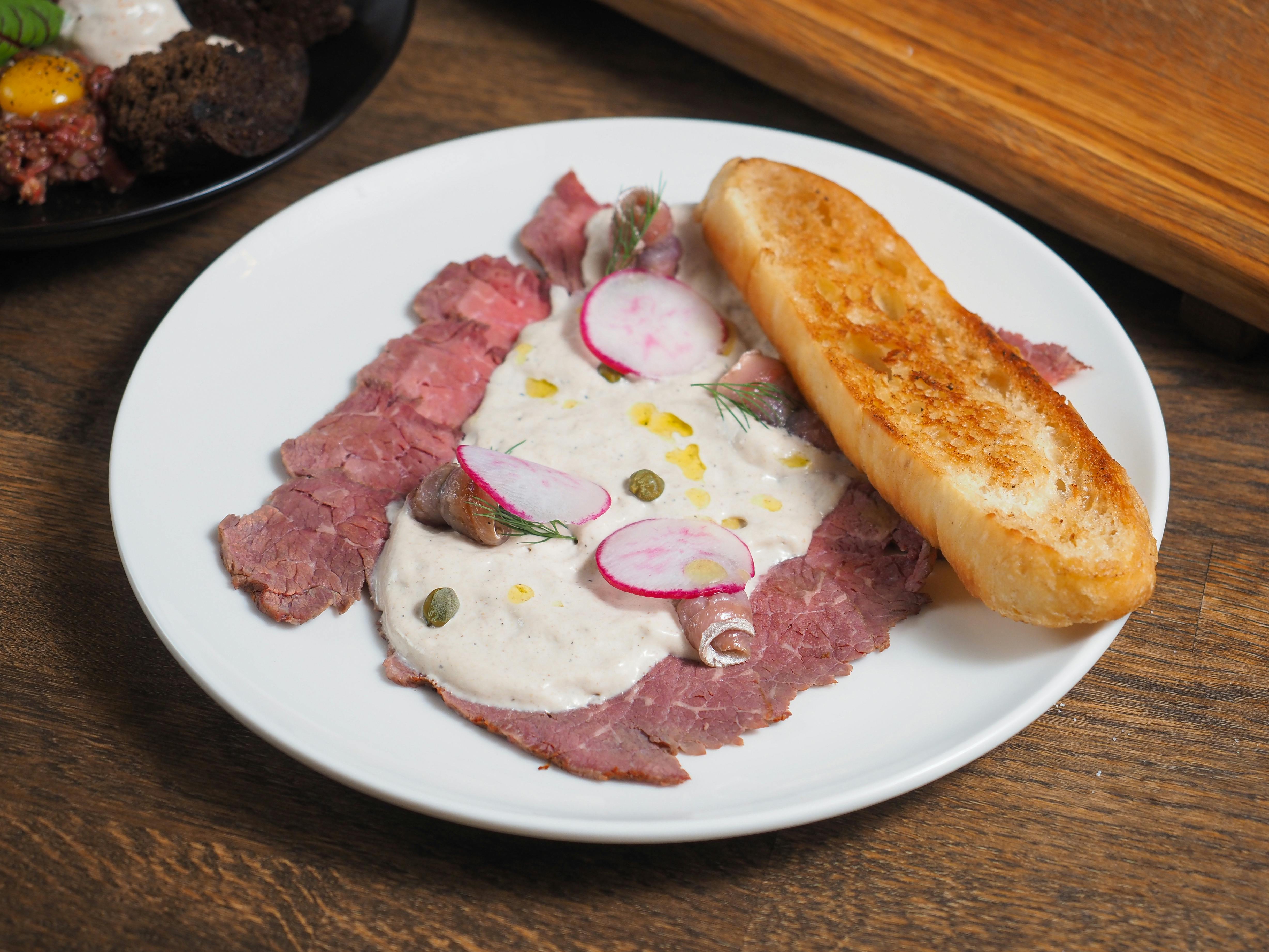
Vitello Tonnato
The diets react (see scores below)
Common Ingredients
- veal
- tuna
- anchovies
- capers
- egg yolks
- olive oil
- lemon
- white wine
Specific recipes may vary.
Incompatible with 2 of 11 diets
Diet Ratings
Vitello Tonnato is a naturally keto-friendly dish. The base is thinly sliced veal (lean protein) topped with a rich tonnato sauce made from tuna, anchovies, capers, egg yolks, and olive oil — essentially a high-fat, protein-rich aioli-style sauce. Net carbs are minimal: capers and lemon juice contribute negligible carbs, and the other core ingredients are essentially zero-carb. The white wine used in cooking largely evaporates and leaves trace amounts. The olive oil and egg yolk base pushes fat content high, aligning well with keto macros. The dish is whole-food, unprocessed, and free from grains or added sugars in its traditional form.
Some stricter keto practitioners flag the white wine as a concern, as even small residual amounts contribute trace sugars and alcohol metabolites that may subtly affect ketosis in highly sensitive individuals. Additionally, restaurant versions may include added sugar or starch as a sauce thickener, making home preparation preferable.
Vitello Tonnato is entirely incompatible with a vegan diet. It contains multiple animal products: veal (baby cow meat), tuna (fish), anchovies (fish), and egg yolks. There is not a single animal-product-free path to this dish in its traditional form. Every core component of both the meat and the tonnato sauce violates vegan principles.
Vitello Tonnato is largely paleo-compatible in its core ingredients. Veal, tuna, anchovies, egg yolks, olive oil, and lemon are all clean paleo foods — unprocessed animal proteins, a hunter-gatherer-approved fat, and a whole fruit acid. Capers are also acceptable. The primary concern is white wine: alcohol is a gray area in paleo (generally discouraged but tolerated by many practitioners in moderation), and wine also contains trace sulfites and additives. Anchovies are typically canned and may contain added salt, which is excluded under strict paleo rules. The egg yolk and olive oil tonnato sauce is a reasonable paleo alternative to mayonnaise made with seed oils, but commercial preparations might introduce non-compliant ingredients. Evaluated in its traditional homemade form, the dish sits solidly in caution territory rather than avoid — it's close to paleo but has enough gray-area elements to warrant scrutiny.
Strict paleo purists following Loren Cordain's original framework would flag the white wine (alcohol, even fermented, is discouraged) and the salt in canned anchovies as disqualifying. However, practitioners like Mark Sisson and the broader ancestral health community widely accept moderate wine consumption and minimally processed canned fish, which would push this dish closer to an approve rating.
Vitello Tonnato is a classic Northern Italian dish that sits in an interesting middle ground for Mediterranean diet evaluation. The primary protein is veal, which is red/processed meat and should be limited to a few times per month under Mediterranean guidelines — this is the main concern. However, the dish is redeemed significantly by its tuna-anchovy sauce made with olive oil, which introduces heart-healthy omega-3 fatty acids, monounsaturated fats, and traditional Mediterranean flavors. Capers and lemon add plant-based, antioxidant-rich elements. The egg yolk-based mayo component adds saturated fat but in modest quantities per serving. Overall, the dish is not a Mediterranean staple but is an occasional, culturally authentic Italian preparation that can be consumed in moderation, especially given the beneficial fish-based sauce counterbalancing the veal.
Some Mediterranean diet authorities would rate this more favorably, noting that veal is leaner than beef and was historically consumed in Italian and broader Mediterranean coastal traditions; the rich tuna-anchovy sauce effectively makes fish the dominant nutritional and flavor element. Conversely, stricter modern clinical interpretations (such as those from the Harvard T.H. Chan School of Public Health) would score it lower, classifying any red meat — including veal — as a food to limit regardless of accompanying ingredients.
Vitello Tonnato contains multiple carnivore-incompatible ingredients despite having a strong animal protein base. While veal, tuna, anchovies, and egg yolks are all carnivore-approved, the dish critically includes capers (plant-derived), lemon (fruit), white wine (fermented plant product), and olive oil (plant oil). These plant-based components are firmly excluded on any tier of the carnivore diet. The dish cannot be approved in its traditional form — it is fundamentally a mixed dish where plant ingredients are structurally integral to the sauce, not optional garnishes.
Vitello Tonnato's core ingredients — veal, tuna, anchovies, capers, egg yolks, olive oil, and lemon — are all individually Whole30-compliant. The homemade tonnato sauce is essentially a compliant aioli (egg yolks + olive oil + lemon) blended with tuna and anchovies, which is a legitimate use of whole-food ingredients rather than a recreation of a junk food. White wine used in cooking is generally accepted as the alcohol largely cooks off and it functions as a flavoring agent rather than a beverage. However, caution is warranted for a few reasons: (1) commercially prepared anchovies and canned tuna should be label-checked for added sugar, sulfites (now allowed per 2024 rules), or soy-based additives; (2) capers in brine are generally fine but should be verified as free of added sugar or non-compliant preservatives; (3) the white wine technically contains alcohol — while cooking wine is a gray area, the program excludes alcohol and some practitioners flag any wine use regardless of cooking method.
Official Whole30 guidelines exclude alcohol in all forms, and while cooking wine is debated, some practitioners argue that any wine inclusion — even in a marinade or braise — violates the letter of the rule. The community is divided: Melissa Urban's guidance focuses on drinking alcohol, but strict interpreters flag cooking wine as non-compliant.
Vitello Tonnato is composed primarily of low-FODMAP ingredients. Veal (plain cooked meat) is FODMAP-free. Tuna and anchovies are also FODMAP-free protein sources. Capers are low-FODMAP in typical serving sizes (1 tablespoon per Monash). Egg yolks and olive oil are low-FODMAP. Lemon juice is low-FODMAP at standard quantities. White wine used in cooking is generally considered low-FODMAP as alcohol does not contain FODMAPs, and small amounts used in cooking evaporate significantly. The tonnato sauce is essentially a homemade aioli-style emulsion with tuna, which contains no high-FODMAP ingredients. The dish does not contain onion, garlic, wheat, lactose, or other common FODMAP triggers in its traditional ingredient list. The primary concern is whether garlic or onion are added to the braising liquid or sauce — many recipes include these, so preparation details matter.
Many traditional Vitello Tonnato recipes include garlic and/or onion in the braising liquid for the veal, which would make the dish high-FODMAP due to fructans. Clinical FODMAP practitioners would advise confirming the recipe is garlic- and onion-free, as restaurant versions frequently include these aromatics without listing them explicitly.
Vitello Tonnato is a complex dish from a DASH perspective. Veal is a lean meat and acceptable in moderation on DASH. Tuna provides heart-healthy omega-3 fatty acids and lean protein, both DASH-positive. Olive oil aligns well with DASH's emphasis on healthy unsaturated fats. However, anchovies and capers are notably high in sodium — anchovies in particular can contribute several hundred milligrams of sodium per small serving, which conflicts with DASH's sodium limits (<2,300mg/day standard, <1,500mg/day low-sodium). The egg yolk-based tonnato sauce is essentially a mayonnaise-style preparation, adding saturated fat and dietary cholesterol. The overall dish can be sodium-dense as traditionally prepared, placing it in 'caution' territory rather than 'avoid,' since the lean proteins and olive oil are genuinely DASH-compatible elements. Portion size and preparation matter significantly.
NIH DASH guidelines explicitly limit sodium and saturated fat, which anchovies and the egg yolk-rich sauce both challenge. However, updated clinical interpretations note that the 2020-2025 Dietary Guidelines removed the strict dietary cholesterol cap, and some DASH-oriented clinicians now view egg yolks in moderation as acceptable — in this framing, the primary concern shifts almost entirely to the high sodium load from anchovies and capers, which remains problematic under all versions of DASH.
Vitello Tonnato is a classic Italian dish of cold sliced veal topped with a tuna-based sauce (tonnato) made from tuna, anchovies, capers, egg yolks, and olive oil. From a Zone perspective, the protein profile is quite favorable: veal is a relatively lean meat, tuna provides excellent lean protein and omega-3 fatty acids, and anchovies contribute additional omega-3s and anti-inflammatory value — all strongly aligned with Zone principles. The fat component is primarily from olive oil (monounsaturated, ideal for Zone) and egg yolks (mixed fat profile with some saturated fat). The dish is essentially a protein-and-fat combination with very minimal carbohydrate content (capers and lemon juice contribute negligible carbs). This is where the Zone challenge lies: the dish as served is very high in protein and fat with almost no carbohydrate block to achieve the 40/30/30 ratio. A Zone practitioner would need to pair it deliberately with a substantial low-glycemic carbohydrate source (e.g., a large mixed vegetable salad or steamed vegetables) to balance the meal. The egg yolk-based sauce also raises the fat content significantly, potentially pushing fat above the 30% target. White wine used in cooking burns off mostly, contributing little. Overall, the ingredients are Zone-quality, but the macro imbalance (very low carb, high protein and fat) means it requires careful meal construction.
Some Zone practitioners following Sears' later anti-inflammatory writings (e.g., 'The Zone Diet' updated materials and 'The OmegaRx Zone') may view this dish more favorably, noting that the omega-3-rich proteins (tuna, anchovies, veal) combined with olive oil represent an excellent anti-inflammatory protein-fat core. In this context, the dish could score higher (7) as a protein-fat foundation to which low-glycemic carbs are added. Conversely, stricter Zone block counters may note that the richness of the tonnato sauce makes fat portion control difficult, potentially pushing it to a 5.
Vitello Tonnato is a mixed dish from an anti-inflammatory perspective. On the positive side, it contains several genuinely anti-inflammatory components: tuna and anchovies are rich in omega-3 fatty acids (EPA and DHA), olive oil provides oleocanthal and monounsaturated fats, capers are exceptionally high in quercetin and kaempferol (potent anti-inflammatory flavonoids), and lemon contributes vitamin C and polyphenols. White wine in cooking leaves minimal residue and is a minor concern. The problematic element is veal itself — as a red meat (technically a calf), it sits in the 'limit' category of anti-inflammatory frameworks, containing arachidonic acid and saturated fat that can promote inflammatory pathways. The egg yolk-based tonnato sauce is relatively high in saturated fat, though egg yolks also provide choline and selenium. Critically, the omega-3-rich tuna and anchovy component significantly offsets the veal's pro-inflammatory profile — this is not a burger or a fatty steak. Veal is lean compared to most red meats, which moderates the saturated fat concern. Overall, this dish is a nutritional compromise: meaningful anti-inflammatory contributors (oily fish, olive oil, capers) paired with a modestly pro-inflammatory protein base (veal). Suitable occasionally rather than regularly.
Some anti-inflammatory practitioners, particularly those following stricter protocols like the Autoimmune Protocol (AIP) or Dr. Wahls Protocol, would rate this lower, flagging veal's arachidonic acid content and the egg yolk aioli base as meaningfully pro-inflammatory, especially for individuals with autoimmune conditions. Conversely, Mediterranean diet researchers like those in the PREDIMED study might view this dish more favorably given the olive oil, fish, and caper content — arguing the omega-3 load from tuna and anchovies substantially dominates the inflammatory profile.
Vitello Tonnato is a cold Italian dish of thinly sliced braised veal topped with a creamy tuna-based sauce made from tuna, anchovies, capers, egg yolks, olive oil, and lemon. The protein profile is actually a strength: veal is a lean red meat, and the tuna-anchovy sauce adds additional high-quality protein, meaning a standard serving can deliver 25-35g of protein. Anchovies and tuna also contribute beneficial omega-3 fatty acids. However, the tonnato sauce is essentially a mayonnaise-style emulsion built on egg yolks and olive oil, making it calorie-dense and moderately high in fat per serving. While the fats are predominantly unsaturated (olive oil) rather than saturated, the fat load and richness of the sauce can worsen GLP-1 side effects such as nausea, bloating, and delayed gastric emptying. The dish is served cold and in thin slices, which is portion-friendly and easy to eat in small amounts — a genuine positive. Capers and lemon add negligible calories. Fiber content is essentially zero. White wine used in braising largely cooks off and is not a meaningful concern in the finished dish. Overall, this is a nutritionally mixed dish: good protein sources, beneficial fats, but a rich sauce that could trigger GI discomfort, and no fiber contribution.
Some GLP-1-focused dietitians would view veal as a lean, high-quality protein and accept the olive-oil-based sauce in small portions as consistent with unsaturated fat guidance, potentially rating this higher. Others would flag the egg-yolk-heavy emulsion as too rich and calorie-dense for patients with active nausea or gastroparesis-like symptoms, particularly in the early dose-escalation phase.
*See how scores were generated at our methodology page.
Nutritional profile
Six traits that cut across every diet.
Fiber & Plants
How much whole-plant food and fiber it delivers.
Healthy Fats
The quality of its fats (unsaturated, omega-3).
Whole / Unprocessed
How close it is to its natural, unprocessed form.
Gut Gentle
How easy it is on digestion (low FODMAP, few irritants).
Low Glycemic
How little it spikes your blood sugar.
Protein Density
How much protein it packs per calorie.
Controversy Index
Higher controversy = more disagreement between diets.
Diet-Specific Tips
 Keto — 8/10
View tips
- Veal is a lean but keto-compatible protein source
- Tonnato sauce is high in fat from olive oil and egg yolks
- Tuna and anchovies add healthy fats and protein with zero carbs
- Capers and lemon contribute negligible net carbs
- White wine largely cooks off but may leave trace residuals
- No grains, starches, or added sugars in the traditional recipe
- Restaurant versions may contain hidden thickeners or sugar — homemade preferred
 Paleo — 6/10
View tips
- Veal is an unprocessed, lean animal protein — fully paleo approved
- Tuna and anchovies are clean paleo proteins, though canned anchovies often contain added salt
- Egg yolks and olive oil form a compliant, seed-oil-free sauce base
- White wine is a gray-area ingredient — alcohol is debated in paleo
- Capers are a whole, minimally processed food compatible with paleo
- Lemon juice is a fully approved paleo ingredient
- No grains, legumes, dairy, or refined sugars present
 Mediterranean — 5/10
View tips
- Veal is red meat, limited to a few times per month in Mediterranean diet guidelines
- Tuna and anchovies introduce beneficial omega-3 fatty acids and align with Mediterranean fish emphasis
- Extra virgin olive oil is the fat base, consistent with Mediterranean principles
- Capers and lemon are traditional, plant-based Mediterranean ingredients
- Egg yolk mayo adds saturated fat but in moderate quantity
- Dish is an authentic Northern Italian preparation with cultural Mediterranean roots
- No refined grains, added sugars, or highly processed ingredients present
 Whole30 — 6/10
View tips
- Veal is a compliant whole protein
- Tuna and anchovies are compliant but require label checks for added sugar or soy
- Egg yolk + olive oil + lemon forms a compliant aioli base
- Capers generally compliant but verify brine ingredients
- White wine used in cooking is a gray area — alcohol is officially excluded
- No grains, dairy, legumes, or added sugars in the base recipe
 Low-FODMAP — 8/10
View tips
- Veal is a plain protein — FODMAP-free
- Tuna and anchovies contain no FODMAPs
- Capers are low-FODMAP at typical serving sizes (≤1 tbsp)
- Egg yolks and olive oil are low-FODMAP
- Lemon juice is low-FODMAP at standard quantities
- White wine in cooking is generally low-FODMAP
- Risk factor: many recipes include garlic/onion in braising liquid — must verify recipe is free of these
- Homemade preparation recommended to ensure no hidden high-FODMAP aromatics
 DASH — 4/10
View tips
- Anchovies are high in sodium, conflicting with DASH sodium limits
- Capers add additional sodium load
- Egg yolk-based sauce contributes saturated fat and cholesterol
- Veal is a lean protein, generally acceptable on DASH
- Tuna provides heart-healthy omega-3 fatty acids
- Olive oil is a DASH-approved healthy fat
- Lemon and white wine are low-concern ingredients
- Sodium content could be partially mitigated by reducing anchovy quantity or using low-sodium alternatives
 Zone — 6/10
View tips
- Veal is a lean protein, well-suited to Zone protein blocks
- Tuna and anchovies provide omega-3 fatty acids, strongly anti-inflammatory and Zone-favorable
- Olive oil is the ideal Zone monounsaturated fat source
- Egg yolks in the sauce add saturated fat and increase overall fat content, requiring portion awareness
- Dish is nearly carbohydrate-free, creating a significant macro imbalance — must be paired with low-glycemic vegetables to achieve 40/30/30
- Capers and lemon contribute negligible carbs but add polyphenols (Zone bonus)
- White wine used in cooking contributes minimal residual carbs or calories
- Overall ingredient quality is high; the Zone challenge is structural (carb deficit) rather than ingredient quality
 Anti-Inflammatory — 5/10
View tips
- Tuna and anchovies are rich in omega-3 fatty acids (EPA/DHA) — strongly anti-inflammatory
- Anchovies specifically are among the highest omega-3 density foods per serving
- Capers contain exceptionally high levels of quercetin and kaempferol — potent anti-inflammatory flavonoids
- Olive oil provides oleocanthal with COX-inhibiting anti-inflammatory properties
- Veal is a red meat and falls in the 'limit' category due to arachidonic acid and saturated fat
- Veal is relatively lean compared to other red meats, moderating saturated fat concern
- Egg yolk-based tonnato sauce adds cholesterol and some saturated fat
- Lemon juice contributes vitamin C and anti-inflammatory polyphenols
- White wine quantity in cooking is minimal and not a significant concern
- Net profile is mixed but slightly positive due to dominant omega-3 and polyphenol contributors
 GLP-1 Friendly — 5/10
View tips
- Good combined protein from veal and tuna-anchovy sauce (~25-35g per serving)
- Omega-3 fatty acids from tuna and anchovies are beneficial
- Tonnato sauce is a rich egg-yolk-and-olive-oil emulsion — moderate-to-high fat load per serving
- Fat content and sauce richness risk worsening nausea, bloating, and reflux on GLP-1s
- Predominantly unsaturated fats (olive oil) rather than saturated — partially mitigating concern
- Zero dietary fiber — no contribution to the 25-30g daily fiber target
- Served cold and thinly sliced — portion-friendly and easy to eat in small amounts
- No carbonation, no added sugars, no fried components