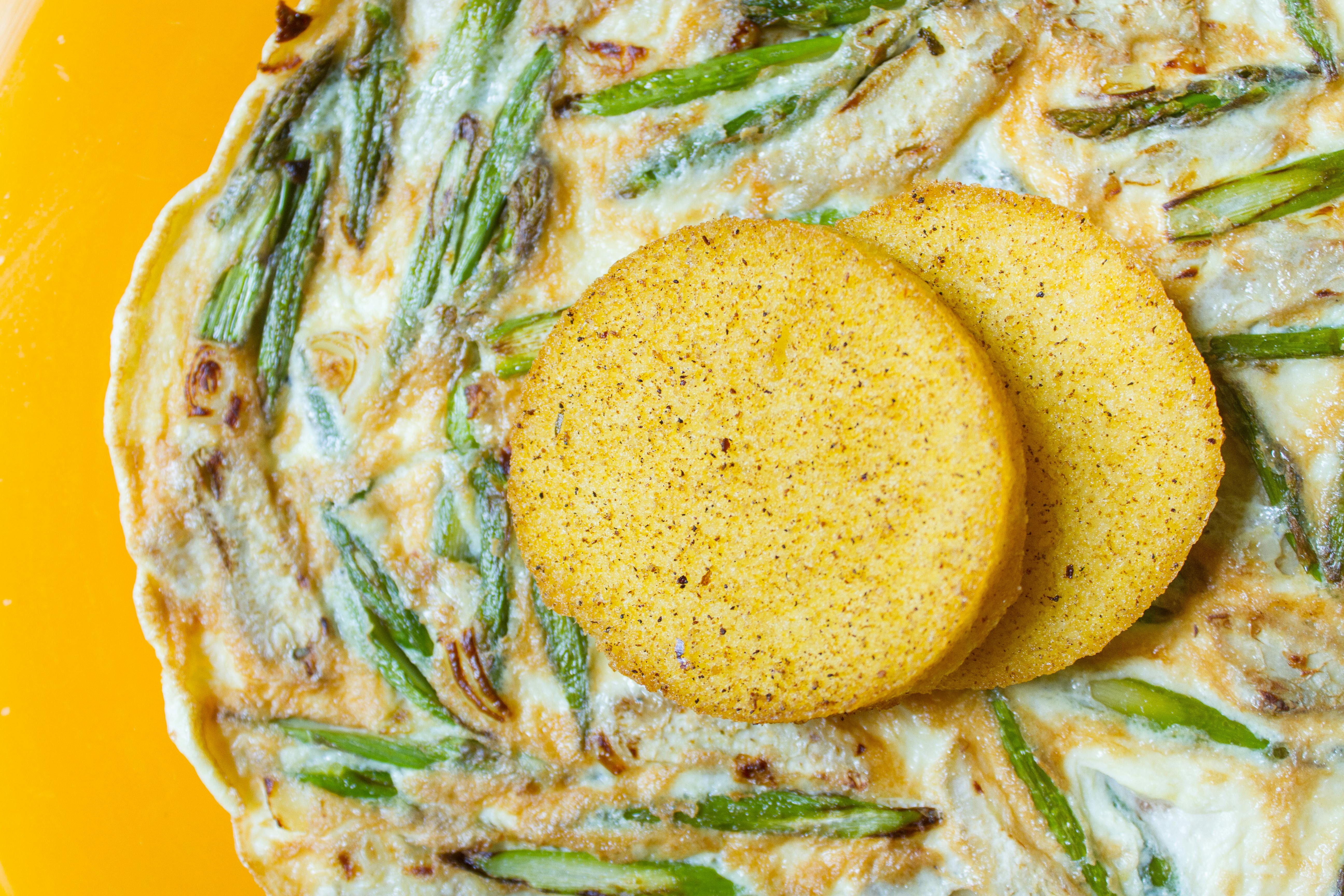
Photo: Ederik Palencia Ferreira / Pexels
The diets react (see scores below)
Common Ingredients
- cassava
- coconut milk
- salt
- oil
- water
Specific recipes may vary.
Incompatible with 4 of 11 diets
Diet Ratings
Bammy is a traditional Jamaican flatbread made primarily from cassava (yuca), which is an extremely high-carb root vegetable. Cassava contains approximately 38g of net carbs per 100g, making it one of the highest-carb starches available. A single serving of bammy (typically 100-150g) would almost certainly exceed the entire daily net carb allowance for a ketogenic diet in one sitting. While coconut milk is keto-friendly, it cannot offset the massive carbohydrate load from the cassava base. This dish is fundamentally incompatible with ketosis.
Bammy is a traditional Jamaican flatbread made from grated cassava (a starchy root vegetable), soaked or prepared with coconut milk, salt, oil, and water. Every ingredient is entirely plant-based with no animal products or animal-derived ingredients present. Cassava is a whole food staple, coconut milk is a plant-based liquid, and the remaining ingredients (salt, oil, water) are universally vegan. This is a minimally processed whole-food dish, which places it at the higher end of the approval score range.
Bammy is a Jamaican flatbread made from cassava (yuca), which is itself a paleo-accepted tuber. However, the dish as prepared introduces two significant problems: added salt and unspecified oil. Salt is explicitly excluded under paleo rules as an 'added salt' prohibition, and the generic 'oil' listing is highly likely to refer to a seed or vegetable oil (e.g., coconut oil would be fine, but canola, vegetable, or sunflower oil would not). Additionally, Bammy is a processed flatbread product — the cassava is grated, pressed, fermented, and cooked into a cake — which contradicts the whole-food philosophy of paleo even if the base ingredients were otherwise compliant. Coconut milk is paleo-approved, and cassava on its own would be fine, but the combination of added salt and ambiguous processed oil, plus the heavily processed flatbread form, pushes this into avoid territory.
Some modern paleo practitioners, particularly those following the Primal Blueprint (Mark Sisson) or AIP-adjacent protocols, would argue that if coconut oil is used and salt is minimized or omitted, a cassava-based flatbread is an acceptable starch source — cassava flour and cassava-based products appear in many paleo recipe communities as grain-free alternatives.
Bammy is a traditional Jamaican flatbread made from cassava (a starchy root vegetable), prepared with coconut milk, salt, oil, and water. From a Mediterranean diet perspective, this dish is a mixed case. Cassava is a whole, plant-based food with no added sugars and is minimally processed, which aligns with Mediterranean principles. However, cassava is a high-glycemic refined starch with little fiber compared to whole grains like farro, barley, or whole wheat that the Mediterranean diet emphasizes. The use of coconut milk introduces significant saturated fat, which is not a traditional Mediterranean fat — extra virgin olive oil is the canonical fat source. The oil used is unspecified, and if it is coconut or palm oil, this further conflicts with Mediterranean principles. Overall, bammy is an acceptable occasional side dish as a whole plant-based food with no processed ingredients or added sugars, but it falls short of being a Mediterranean staple due to its high-GI starch base and coconut milk fat profile.
Some modern Mediterranean diet interpreters emphasize the broader principle of minimally processed, plant-based whole foods, under which cassava-based dishes with natural ingredients could be viewed more favorably — particularly if prepared with olive oil rather than coconut milk. Traditional Mediterranean diets also varied regionally and included starchy staples beyond whole grains in moderation.
Bammy is a traditional Jamaican flatbread made entirely from cassava (a starchy root vegetable), coconut milk (plant-derived), salt, oil (likely plant-based), and water. Every substantive ingredient is plant-derived. There are no animal products whatsoever in this dish. Cassava is a high-carbohydrate tuber that is completely excluded on the carnivore diet, and coconut milk is a plant-based liquid. This dish is fundamentally incompatible with the carnivore diet at every level.
Bammy is a traditional Jamaican flatbread made from cassava (yuca), which is a Whole30-compliant root vegetable. The ingredients — cassava, coconut milk, salt, oil, and water — are all individually Whole30-compliant. However, bammy is explicitly a flatbread/cake product, and Whole30 Rule 4 prohibits recreating baked goods, breads, tortillas, wraps, and similar items even when made with compliant ingredients. Bammy functions as a bread substitute, which places it squarely in the category of 'recreating baked goods or junk food' that the program discourages. The spirit of Whole30 is to move away from grain-based comfort foods, and bammy mimics that role even if made from cassava rather than wheat.
Some community members argue that cassava-based bammies are a culturally traditional whole food preparation — not a recreation of a non-compliant item — since bammy predates modern processed bread and is simply a method of preparing cassava root. However, official Whole30 guidelines (Melissa Urban) explicitly list 'tortillas, wraps, crackers, biscuits' and similar flatbreads as off-limits even with compliant ingredients, and bammy functions similarly as a starchy flatbread substitute.
Bammy is a traditional Jamaican flatbread made from cassava (also called yuca). The FODMAP status of this dish hinges primarily on two ingredients: cassava and coconut milk. Cassava/yuca is a starchy root that Monash University has tested and found to be low-FODMAP at a moderate serving (around 100g), but it does contain some polyols at larger servings, and the data is less robust than for staple grains. Coconut milk is the other variable — canned coconut milk is high-FODMAP at standard serving sizes (over 60ml), containing excess fructose and polyols, while smaller amounts (around 60ml or less) may be tolerable. In a bammy recipe, coconut milk is used for soaking/moistening, so the amount absorbed per serving matters significantly. Salt and oil are FODMAP-free. If the coconut milk quantity per serving is modest (≤60ml), the dish may remain low-FODMAP, but standard preparation often involves soaking the bammy generously in coconut milk, potentially pushing it into high-FODMAP territory. The combination of cassava portion size and coconut milk quantity makes this a caution-level food requiring portion control.
Monash University rates cassava as low-FODMAP at around 100g but has limited data on larger servings; some clinical FODMAP practitioners advise caution with cassava-based products due to variability in preparation and portion. Additionally, coconut milk is rated high-FODMAP at amounts above 60ml per serve by Monash, and many bammy recipes use it liberally for soaking, which practicing dietitians would flag as a risk during strict elimination.
Bammy is a traditional Jamaican flatbread made from cassava (yuca), typically soaked in coconut milk and pan-fried or baked. While cassava itself is a starchy root vegetable with some fiber and potassium, the dish presents two DASH concerns: (1) coconut milk is high in saturated fat from tropical oils, which DASH guidelines explicitly limit, and (2) frying in oil adds additional fat and calories. Cassava is a refined starchy carbohydrate (low fiber compared to whole grains DASH emphasizes), and coconut milk's saturated fat content conflicts with DASH's emphasis on limiting saturated fat and tropical oils. Salt is added, contributing to sodium load. The dish is not inherently high-sodium if prepared carefully, and it contains no added sugar or processed ingredients, which keeps it from the 'avoid' category. Occasional, portion-controlled consumption is acceptable, but it is not a DASH-emphasized food.
NIH DASH guidelines explicitly restrict tropical oils including coconut products due to saturated fat content, placing coconut milk-based dishes in a cautionary category. However, some updated clinical interpretations note that coconut milk's medium-chain triglycerides (MCTs) may have a different metabolic profile than long-chain saturated fats, and some DASH-aligned dietitians permit small amounts of coconut milk when used as a flavoring rather than a base — reducing the concern modestly if portion size is controlled.
Bammy is a traditional Jamaican flatbread made from cassava (yuca), soaked in coconut milk and fried or baked. From a Zone Diet perspective, it presents several challenges. Cassava is a very high-glycemic, starchy root vegetable — it is dense in net carbs (roughly 35-40g net carbs per 100g) and lacks significant fiber to offset its glycemic load. Dr. Sears classifies starchy root vegetables as 'unfavorable' carbohydrates. Coconut milk adds saturated fat rather than the preferred monounsaturated fat. The oil used for frying introduces additional fat that is often saturated or omega-6 heavy depending on type. There is no protein component whatsoever, making this a nearly pure carbohydrate-plus-saturated-fat combination — the opposite of Zone balance. A typical bammy serving could represent 3-4 carb blocks with minimal protein and predominantly unfavorable fat blocks. While it could theoretically be consumed in a very small portion alongside a lean protein and monounsaturated fat to approximate Zone ratios, the high glycemic density and saturated fat profile make it genuinely difficult to incorporate. It scores at the low end of caution rather than avoid only because it is a real food (not processed junk) and could serve as a small carb block component in a carefully constructed Zone meal.
Some Zone practitioners in later Sears anti-inflammatory frameworks note that cassava contains resistant starch depending on preparation, which can moderate glycemic impact somewhat. Additionally, coconut milk's medium-chain triglycerides (MCTs) are handled differently metabolically than long-chain saturated fats. A very small portion of bammy (half a piece) paired deliberately with lean fish — common in Jamaican cuisine — could approximate Zone ratios, making the 'caution' classification appropriate rather than 'avoid' for flexible Zone practitioners.
Bammy is a traditional Jamaican flatbread made from cassava (bitter cassava, pressed and dried to remove toxins), typically soaked in coconut milk and pan-fried or baked. From an anti-inflammatory perspective, this dish has a mixed profile. Cassava is a starchy root vegetable that is naturally gluten-free and provides some resistant starch, which can support gut microbiome diversity — a meaningful anti-inflammatory benefit. However, cassava has a high glycemic index, and refined starch without significant fiber (much of the fiber is lost in traditional bammy processing) can promote blood sugar spikes, which are mildly pro-inflammatory over time. Coconut milk contributes medium-chain triglycerides (MCTs), particularly lauric acid, which has some anti-inflammatory and antimicrobial properties, but also adds saturated fat — a component that anti-inflammatory frameworks generally recommend limiting. The type of oil used for frying is a significant variable: if a refined seed oil (corn, sunflower) is used, this shifts the dish toward pro-inflammatory due to omega-6 load and oxidation potential; if coconut oil or olive oil is used, the profile is more neutral. Salt is nutritionally neutral in context. Overall, bammy is a minimally processed traditional starch with modest nutritional benefits but no strong anti-inflammatory drivers — landing it squarely in the 'caution/moderate' range, acceptable occasionally but not a dietary staple on an anti-inflammatory protocol.
Some functional nutrition practitioners (e.g., those following AIP or low-glycemic anti-inflammatory protocols) would rate bammy more harshly given cassava's high glycemic load and the saturated fat from coconut milk, arguing these can promote insulin resistance and inflammatory cascades. Conversely, proponents of traditional whole-food diets and gut-health-focused practitioners note that cassava's resistant starch and the antimicrobial properties of coconut milk's lauric acid offer meaningful anti-inflammatory support, particularly for gut microbiome health.
Bammy is a traditional Jamaican flatbread made from cassava (tapioca), soaked and fried or steamed in coconut milk. It is almost entirely refined starch — cassava is a high-glycemic, low-fiber, low-protein carbohydrate source. When prepared in coconut milk and oil (typically pan-fried), the fat content rises significantly. For GLP-1 patients, this food fails on nearly every priority: negligible protein (no meaningful amino acids), very low fiber (cassava loses most of its fiber during processing into bammy), high glycemic load, and moderate-to-high fat from coconut milk and frying oil. The combination of starchy carbohydrates and fat with no protein or fiber anchor is counterproductive on a GLP-1 regimen — it delivers calories with minimal nutritional return, may spike blood sugar, and contributes nothing toward the 100–120g daily protein target. The coconut milk adds saturated fat, which can worsen nausea and GI side effects. As a side dish with no protein, it also displaces the opportunity to eat something more nutrient-dense in a meal where stomach capacity is already severely limited.
Some GLP-1-aware dietitians may allow small portions of traditional cultural staples like bammy on an occasional basis for patient adherence and quality of life, arguing that rigid elimination increases dropout from dietary guidance. However, the nutritional profile — high starch, high saturated fat, negligible protein and fiber — makes it genuinely difficult to justify even in moderation from a clinical nutrition standpoint on GLP-1 therapy.
*See how scores were generated at our methodology page.
Nutritional profile
Six traits that cut across every diet.
Fiber & Plants
How much whole-plant food and fiber it delivers.
Healthy Fats
The quality of its fats (unsaturated, omega-3).
Whole / Unprocessed
How close it is to its natural, unprocessed form.
Gut Gentle
How easy it is on digestion (low FODMAP, few irritants).
Low Glycemic
How little it spikes your blood sugar.
Protein Density
How much protein it packs per calorie.
Controversy Index
Higher controversy = more disagreement between diets.
Diet-Specific Tips
 Vegan — 9/10
View tips
- Cassava is a whole plant food — no animal concerns
- Coconut milk is fully plant-based
- Salt, oil, and water are universally vegan
- No animal-derived additives, stabilizers, or processing agents
- Minimally processed traditional preparation earns a high score within the approve range
 Mediterranean — 5/10
View tips
- Cassava is a whole, unprocessed plant food with no added sugars
- High glycemic index starch, lower fiber than Mediterranean-preferred whole grains like barley or farro
- Coconut milk is high in saturated fat, not aligned with Mediterranean fat principles (olive oil preferred)
- No protein or legume component — limited nutritional completeness
- Minimally processed preparation with simple, natural ingredients
- Oil type unspecified — if olive oil, more compatible; if coconut oil, less so
 Whole30 — 5/10
View tips
- All individual ingredients (cassava, coconut milk, salt, oil, water) are Whole30-compliant
- Bammy is a flatbread — a category explicitly excluded by Whole30's 'no recreating baked goods/bread' rule
- Cassava flour/cassava-based breads are commonly flagged as non-compliant under Rule 4
- Cultural and traditional context of the dish does not override Whole30's structural food rules
- Coconut milk should be verified to have no non-compliant additives
 Low-FODMAP — 4/10
View tips
- Cassava is low-FODMAP at ~100g per Monash but data is limited for larger portions
- Coconut milk is high-FODMAP above 60ml per serve — a key risk ingredient in bammy preparation
- Traditional bammy involves soaking in coconut milk, which may push total FODMAP load above threshold
- Oil and salt are FODMAP-free and not a concern
- Portion size of both cassava and coconut milk are critical determinants of overall FODMAP safety
 DASH — 4/10
View tips
- Cassava is a high-starch, low-fiber carbohydrate — less preferred than whole grains in DASH
- Coconut milk is high in saturated fat from a tropical oil, explicitly limited by DASH guidelines
- Frying or pan-cooking in oil adds additional fat
- Added salt contributes to sodium intake — severity depends on amount used
- No added sugar, lean protein, or highly processed ingredients — keeps score from falling lower
- Portion control can mitigate concerns; small servings as a side are more acceptable
 Zone — 5/10
View tips
- Cassava is a high-glycemic starchy root — classified as 'unfavorable' carbohydrate in Zone terminology
- Very high net carbohydrate density (~35-40g per 100g) makes portion control critical and difficult
- Coconut milk contributes saturated fat, not preferred monounsaturated fat
- No protein present — completely unbalanced as a Zone food on its own
- Frying oil may add omega-6 heavy fat depending on oil type, working against Zone's anti-inflammatory goals
- As a side dish, it would need to be paired with substantial lean protein and monounsaturated fat to approach Zone ratios
- Traditional serving sizes are too large to fit within a single carb block allowance
 Anti-Inflammatory — 5/10
View tips
- Cassava is gluten-free and provides resistant starch with gut microbiome benefits
- High glycemic index of cassava can cause blood sugar spikes — mildly pro-inflammatory
- Coconut milk adds lauric acid (MCT) with some anti-inflammatory properties but also saturated fat
- Frying oil type is a critical variable — seed oils shift toward pro-inflammatory
- Minimal processing compared to conventional bread products
- No significant anti-inflammatory drivers (omega-3s, polyphenols, antioxidants) present
- Acceptable as an occasional side but not an anti-inflammatory staple