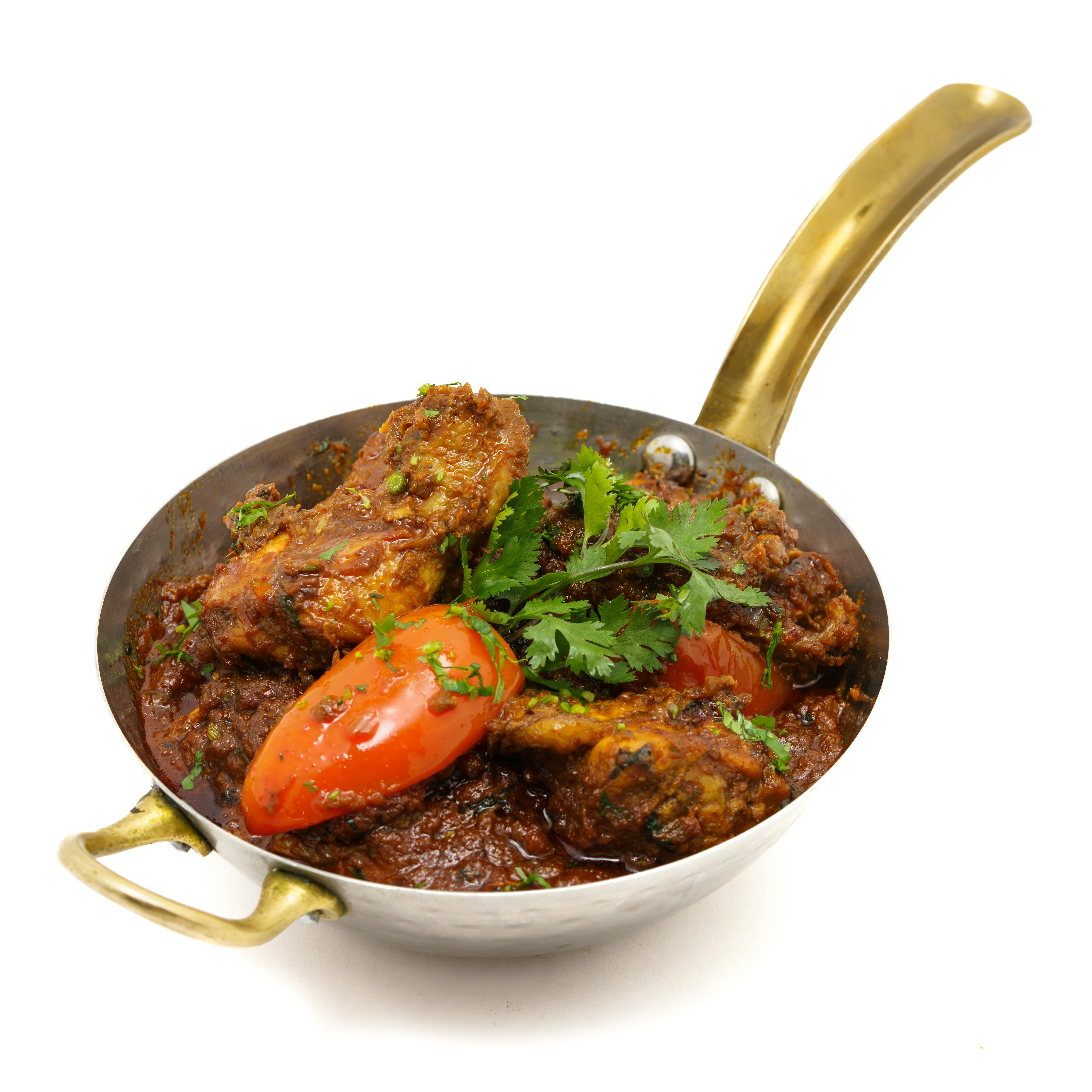
Photo: Kunal Lakhotia / Pexels
Jamaican
Brown Stew Chicken
The diets react (see scores below)
Common Ingredients
- chicken
- browning sauce
- onion
- garlic
- thyme
- scallion
- scotch bonnet
- tomato
- allspice
Specific recipes may vary.
Incompatible with 3 of 11 diets
Diet Ratings
Brown Stew Chicken is primarily chicken-based, making it protein-friendly for keto. The aromatics (garlic, onion, scallion, thyme, scotch bonnet, allspice) and tomato add modest carbs but are manageable in typical recipe quantities. The main concern is browning sauce, which traditionally contains caramel color and sometimes added sugars — this is the primary keto risk factor. If a sugar-free browning sauce or homemade alternative is used, the dish becomes much more keto-compatible. With standard browning sauce, the added sugars push this into caution territory rather than a clear approve. Portion control and sauce scrutiny are key.
Some strict keto practitioners would avoid this dish entirely due to the near-universal presence of sugar in commercial browning sauce products, arguing that any added sugar, even in small amounts, has no place in a ketogenic protocol. Conversely, lazy keto adherents who track only approximate carbs may approve this freely, noting that the sugar content from browning sauce in a single serving is likely under 3-5g net carbs.
Brown Stew Chicken contains chicken as its primary protein, which is poultry — a direct animal product explicitly excluded under all vegan frameworks. There is no ambiguity here: no vegan organization or school of thought permits the consumption of slaughtered animal flesh. The remaining ingredients (browning sauce, onion, garlic, thyme, scallion, scotch bonnet, tomato, allspice) are all plant-based, but the presence of chicken alone is sufficient to render this dish entirely incompatible with a vegan diet.
Brown Stew Chicken is built on a strong paleo foundation — chicken, onion, garlic, thyme, scallion, scotch bonnet, tomato, and allspice are all whole, unprocessed ingredients fully compatible with paleo principles. The critical issue is browning sauce (such as Grace or Browning by Caribbean brands), which is a processed condiment typically made from caramelized sugar, water, salt, and sometimes preservatives or additives. The refined sugar and added salt place browning sauce in conflict with strict paleo guidelines. Without the browning sauce, this dish would comfortably earn an approve rating. With it, the dish falls into caution territory — the violation is real but limited to a small-quantity flavoring agent rather than a core ingredient.
Some paleo practitioners, particularly those following a more flexible 80/20 approach as advocated by Mark Sisson in 'The Primal Blueprint,' would argue that trace amounts of caramelized sugar used as a flavoring in an otherwise clean dish are negligible and the dish can be considered effectively paleo. A strict Cordain-school interpretation, however, would flag any refined sugar or added salt, however minor, as non-compliant.
Brown Stew Chicken is built around chicken (poultry), which the Mediterranean diet places in the moderate/acceptable category — a few servings per week rather than a daily staple. The aromatic base of onion, garlic, thyme, tomato, and scallion is very Mediterranean-friendly, and the dish is rich in anti-inflammatory herbs and vegetables. The main concern is browning sauce, a processed condiment typically containing caramel color, added sugars, and sodium, which nudges this dish slightly away from Mediterranean principles. The scotch bonnet and allspice are non-traditional but nutritionally neutral. Overall, this is a reasonable moderate-frequency meal if the browning sauce is used sparingly or substituted with a less processed alternative.
Some Mediterranean diet practitioners would rate this more favorably, arguing that poultry-based dishes with abundant aromatics, herbs, and tomatoes closely mirror traditional Greek and Turkish braised chicken preparations (e.g., kokkinisto), and that a small amount of browning sauce is a minor concession that does not undermine an otherwise whole-food dish.
Brown Stew Chicken is fundamentally incompatible with the carnivore diet. While chicken itself is an acceptable animal protein, this dish is heavily reliant on plant-based ingredients: onion, garlic, thyme, scallion, scotch bonnet pepper, tomato, and allspice are all plant-derived and explicitly excluded from carnivore. Browning sauce (typically caramel color, browning agents, and often sugar or molasses) adds further non-carnivore processed and plant-derived components. The chicken accounts for perhaps one ingredient out of nine — the dish is essentially a plant-forward marinade and stew with chicken as a vehicle. Even the most liberal carnivore practitioners who permit occasional spices would draw the line at this density of plant ingredients, including whole vegetables like tomato, scallion, and scotch bonnet as structural components of the dish.
Most ingredients in Brown Stew Chicken are straightforwardly Whole30-compliant: chicken, onion, garlic, thyme, scallion, scotch bonnet pepper, tomato, and allspice are all approved whole foods. The critical variable is the browning sauce. Commercial browning sauces (e.g., Grace Browning, Kitchen Bouquet, Gravy Master) almost universally contain caramel color made from burnt sugar, and many formulations include added sugars, sulfites (now allowed per 2024 rules), or other additives. Added sugar remains excluded on Whole30. A home-made browning using compliant ingredients (e.g., coconut aminos, compliant spices, no sugar) would make the dish fully approvable, but the standard store-bought product makes this dish non-compliant as typically prepared. Label reading is essential.
Some Whole30 practitioners argue that the tiny quantity of caramel coloring or trace sugar in browning sauce is functionally negligible and that the dish's whole-food spirit is sound; however, official Whole30 guidelines (Melissa Urban) are clear that added sugar in any amount — including in sauces and condiments — is excluded, so the official position would flag standard browning sauce as non-compliant.
Brown Stew Chicken contains multiple high-FODMAP ingredients that are foundational to the dish and cannot be reduced to safe serving sizes without fundamentally altering the recipe. Garlic and onion are among the highest-FODMAP foods tested by Monash University, both rich in fructans, and they are used as primary aromatics in this dish. Scallion bulbs (white parts) are also high in fructans, though the green tops are low-FODMAP. Browning sauce (e.g., Grace or similar Caribbean brands) typically contains onion extract, caramel, and sometimes other FODMAP-containing additives. The chicken itself, thyme, scotch bonnet pepper, allspice, and tomato (in typical culinary quantities) are low-FODMAP. However, the garlic and onion alone make this dish unsuitable during the elimination phase — these are cooked into the dish, meaning their fructans leach into the sauce and permeate the entire meal, making it impossible to simply remove them before eating.
Brown Stew Chicken is built around lean chicken with DASH-friendly aromatics (onion, garlic, thyme, scallion, scotch bonnet, tomato, allspice) — a strong foundation. However, the browning sauce (e.g., Grace or Kitchen Bouquet) is the key concern: commercial browning sauces contain significant sodium and often added sugar or caramel coloring, which DASH discourages. The dish also typically uses skin-on chicken pieces, adding saturated fat. Preparation method matters greatly — skin-on vs. skinless chicken and the amount of browning sauce used can swing this dish from caution toward approve or avoid. The vegetable and herb profile is genuinely DASH-positive, but the sodium load from browning sauce and possible added salt during marination prevents a full approval.
NIH DASH guidelines would flag browning sauce and skin-on chicken as limiting factors due to sodium and saturated fat concerns. However, an updated clinical interpretation notes that if prepared with skinless chicken thighs or breasts, minimal or low-sodium browning sauce, and no added salt, this dish's herb-and-vegetable base aligns well with DASH principles — some DASH-oriented dietitians would approve a modified version.
Brown Stew Chicken is fundamentally a lean protein dish built around chicken, which is a cornerstone Zone protein. The aromatics — onion, garlic, thyme, scallion, scotch bonnet, tomato, and allspice — are all low-glycemic, polyphenol-rich vegetables and spices that align well with Zone anti-inflammatory principles. The main concern is the browning sauce, which typically contains caramel color, sugar, and sodium. While it is used in small quantities (primarily for color and flavor), it does add a minor glycemic load and some processed ingredients. If the skin is removed from the chicken, the dish is lean and fits cleanly into a Zone meal when paired with a non-starchy vegetable side. The dish lacks a dedicated fat component, so adding a small serving of monounsaturated fat (olive oil drizzle, avocado on the side) would complete the 40/30/30 ratio. Overall, this is a Zone-friendly main course protein with minor caveats around the browning sauce and skin.
Some Zone practitioners would rate this higher (8-9) if the chicken is skinless and the browning sauce is used sparingly or replaced with a homemade version without added sugar, arguing the dish is essentially a lean protein with anti-inflammatory aromatics. Others may flag the browning sauce more seriously if a commercial product with significant sugar content is used, keeping this firmly at caution rather than approve.
Brown Stew Chicken is built on a generally favorable anti-inflammatory foundation. The protein base is chicken (lean poultry), which falls in the 'moderate' category of anti-inflammatory eating. The spice and aromatics profile is genuinely impressive from an anti-inflammatory standpoint: garlic and onion contain quercetin, allicin, and organosulfur compounds with well-documented anti-inflammatory effects; thyme provides rosmarinic acid and flavonoids; allspice contains eugenol, a COX-2 inhibitor similar in action to compounds in cloves; scotch bonnet peppers are rich in capsaicin, a potent anti-inflammatory agent; and tomatoes contribute lycopene and other carotenoids. Scallions add additional flavonoids. The main point of caution is browning sauce — a processed condiment that typically contains caramel coloring, molasses, sugar, and sodium, with some brands including preservatives or additives. While used in small quantities and not inherently disqualifying, it introduces refined sugar and processed additives that nudge the dish toward the 'limit/caution' zone. The preparation method (stewing) retains nutrients well and doesn't introduce seed oils or harmful fats, assuming no significant added oil beyond what the recipe requires. Overall, this is a moderately anti-inflammatory dish whose rich spice and allium profile offsets the lean protein and the modest processed condiment concern.
Some anti-inflammatory practitioners, particularly those following Autoimmune Protocol (AIP) or nightshade-sensitive frameworks, would flag the scotch bonnet pepper and tomato as potentially inflammatory for individuals with autoimmune conditions or leaky gut due to capsaicin irritation and nightshade solanines/lectins — Dr. Tom O'Bryan and AIP protocols exclude these ingredients. Mainstream anti-inflammatory authorities like Dr. Andrew Weil, however, actively recommend colorful peppers and tomatoes for their antioxidant content.
Brown Stew Chicken is a protein-forward dish built around chicken, which is a strong GLP-1-friendly foundation. The aromatics — onion, garlic, thyme, scallion, tomato, allspice — are nutrient-dense, low-calorie, and digestively benign in typical quantities. The primary concern is the scotch bonnet pepper, which is one of the hottest commonly used chilies and a meaningful reflux and nausea risk for GLP-1 patients given slowed gastric emptying. Browning sauce adds minimal nutritional concern but contributes sodium and small amounts of sugar. The dish is typically braised rather than fried, which keeps fat moderate — a positive. However, the cut of chicken matters significantly: bone-in, skin-on thighs are traditional and increase saturated fat considerably compared to skinless breast. The stewing liquid can also become fatty if skin is left on during cooking. When made with skinless chicken (breast or thigh) and scotch bonnet used sparingly or omitted, this dish rates closer to 7-8. As traditionally prepared with skin-on pieces and full scotch bonnet heat, caution is warranted for GLP-1 patients sensitive to spice or fat.
Some GLP-1-focused dietitians would approve this dish outright, arguing that the braising method, vegetable-rich base, and high protein content outweigh the spice concern — particularly for patients with established spice tolerance. Others would flag the scotch bonnet as a firm disqualifier, noting that GLP-1-induced delayed gastric emptying significantly amplifies capsaicin-related GI irritation even in patients who previously tolerated high-heat foods well.
*See how scores were generated at our methodology page.
Nutritional profile
Six traits that cut across every diet.
Fiber & Plants
How much whole-plant food and fiber it delivers.
Healthy Fats
The quality of its fats (unsaturated, omega-3).
Whole / Unprocessed
How close it is to its natural, unprocessed form.
Gut Gentle
How easy it is on digestion (low FODMAP, few irritants).
Low Glycemic
How little it spikes your blood sugar.
Protein Density
How much protein it packs per calorie.
Controversy Index
Higher controversy = more disagreement between diets.
Diet-Specific Tips
 Keto — 5/10
View tips
- Browning sauce typically contains caramel/added sugar — the primary keto concern
- Chicken is a keto-friendly high-protein base
- Onion, tomato, and scallion contribute moderate carbs but are manageable in small portions
- Garlic, thyme, scotch bonnet, and allspice are low-carb aromatics
- Dish is keto-adaptable with sugar-free browning sauce substitution
- Net carbs per serving estimated 5-10g depending on sauce and vegetable quantities
 Paleo — 5/10
View tips
- Chicken is fully paleo-approved as the primary protein
- Onion, garlic, thyme, scallion, scotch bonnet, tomato, and allspice are all whole paleo-compatible ingredients
- Browning sauce contains refined/caramelized sugar — excluded under strict paleo rules
- Browning sauce typically contains added salt — also excluded under strict paleo rules
- Browning sauce may contain preservatives or additives — non-paleo
- Small quantity of browning sauce limits the severity of the violation
- A paleo-compliant version is easily achievable by substituting browning sauce with coconut aminos and caramelized onion
 Mediterranean — 5/10
View tips
- Chicken is acceptable poultry — moderate consumption aligns with Mediterranean guidelines
- Onion, garlic, tomato, thyme, scallion are core Mediterranean aromatics
- Browning sauce is a processed ingredient with added sugar and sodium — not Mediterranean
- Scotch bonnet and allspice are nutritionally neutral, non-traditional spices
- No red meat, no refined grains, no heavy saturated fats — structurally sound
- Dish would score higher if browning sauce were replaced with olive oil-based browning method
 Whole30 — 5/10
View tips
- Browning sauce is the pivotal ingredient — most commercial versions contain added sugar (caramelized/burnt sugar) which is excluded on Whole30
- All other ingredients (chicken, allspice, scotch bonnet, tomato, thyme, scallion, onion, garlic) are fully Whole30-compliant
- A compliant homemade or label-verified sugar-free browning substitute would elevate this to an 'approve'
- Careful label reading of any store-bought browning sauce is mandatory before consuming on Whole30
- 2024 rule changes removed sulfites from the excluded list, so that concern no longer applies to commercial browning sauces
 DASH — 5/10
View tips
- Lean chicken is a DASH-approved protein, but skin-on preparation adds saturated fat
- Browning sauce contributes meaningful sodium and often added sugar — the primary DASH concern
- Aromatics (garlic, onion, thyme, scallion, tomato, scotch bonnet, allspice) are DASH-positive and add flavor without sodium
- Sodium load can vary widely depending on brand and quantity of browning sauce used
- Skinless chicken and low-sodium or homemade browning sauce would significantly improve DASH compatibility
- No added dairy, tropical oils, or heavily processed ingredients otherwise
 Zone — 7/10
View tips
- Chicken is an ideal Zone lean protein — skinless preparation is essential
- Browning sauce contains small amounts of caramel/sugar which adds minor glycemic concern
- Onion, garlic, tomato, scallion, scotch bonnet are all favorable low-glycemic Zone carb sources
- Allspice and thyme contribute polyphenols consistent with Sears' anti-inflammatory focus
- Dish is low in fat — would need monounsaturated fat addition to balance the 40/30/30 ratio
- No high-glycemic carbohydrates in the recipe itself
- Traditional preparation may include skin-on chicken, which increases saturated fat
 Anti-Inflammatory — 6/10
View tips
- Chicken (lean poultry) is in the 'moderate' anti-inflammatory category
- Rich spice profile: scotch bonnet (capsaicin), allspice (eugenol), thyme (rosmarinic acid) — all with anti-inflammatory properties
- Garlic and onion provide quercetin, allicin, and organosulfur compounds that reduce inflammatory markers
- Tomato contributes lycopene and carotenoids
- Browning sauce introduces processed additives, caramel coloring, and added sugar — a meaningful caution
- Stewing method is a nutrient-preserving cooking technique with no added seed oils implied
- Nightshade ingredients (scotch bonnet, tomato) may be a concern for autoimmune-sensitive individuals
 GLP-1 Friendly — 6/10
View tips
- High protein from chicken — strong GLP-1 priority alignment
- Scotch bonnet is extremely high in capsaicin — significant reflux and nausea risk with slowed gastric emptying
- Braised preparation avoids frying — favorable for fat content and digestibility
- Skin-on, bone-in chicken (traditional) increases saturated fat — skinless preparation strongly preferred
- Aromatic vegetable base adds micronutrients and fiber with minimal caloric cost
- Browning sauce adds sodium and trace sugar — not a major concern at typical amounts
- Small-portion friendly as a braised dish — aligns well with reduced appetite on GLP-1s
- Spice tolerance is highly individual and may worsen on GLP-1 medications