Photo: Anthony Rahayel / Pexels
The diets react (see scores below)
Common Ingredients
- coconut
- sugar
- flour
- butter
- nutmeg
- ginger
- vanilla
Specific recipes may vary.
Incompatible with 10 of 11 diets
Diet Ratings
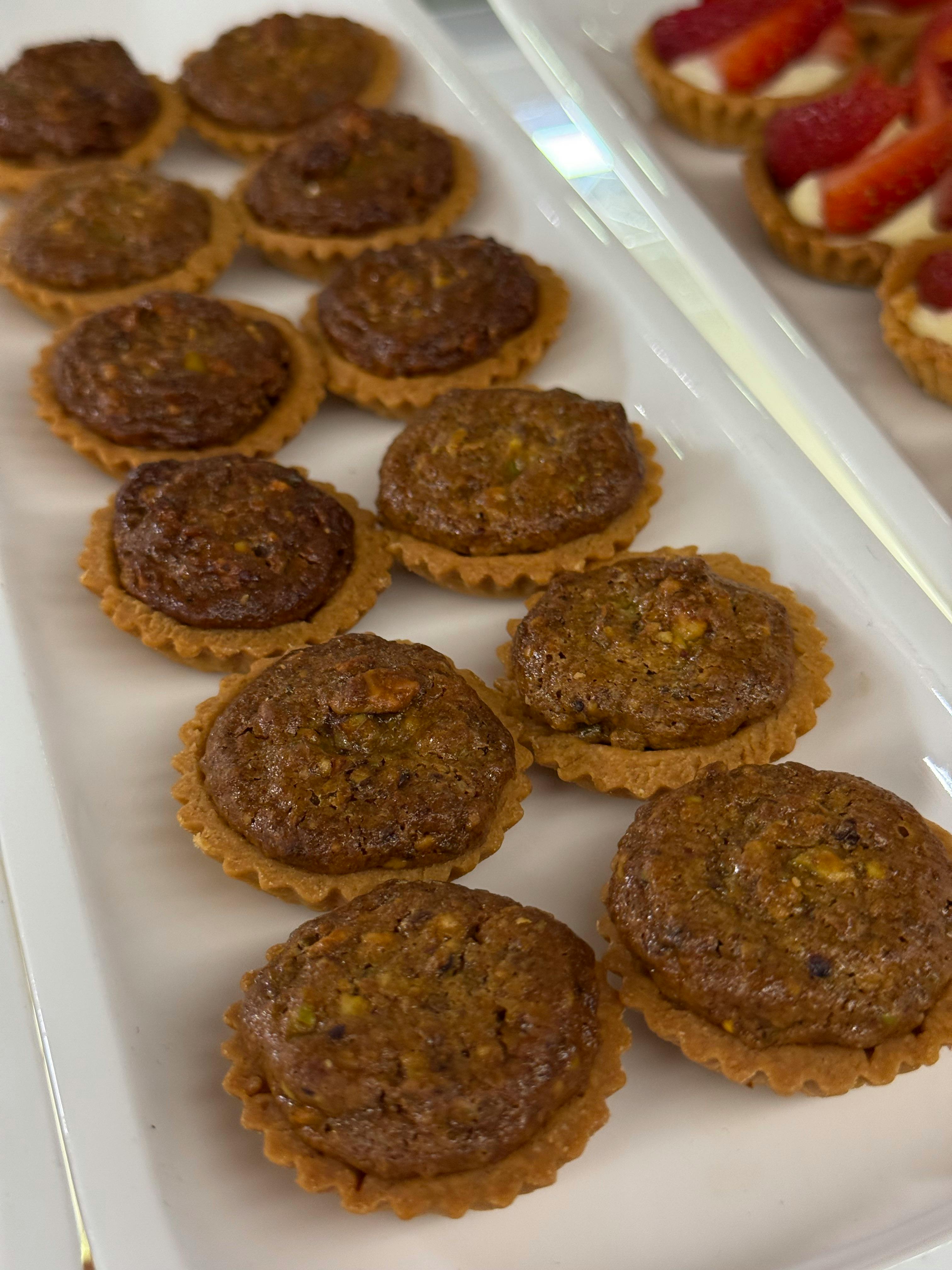
Gizzada is a Jamaican pastry shell filled with sweetened coconut. It contains two major keto-incompatible ingredients: flour (wheat-based pastry shell) and sugar (used heavily in the coconut filling). The flour alone provides substantial net carbs from refined grain starch, and the added sugar makes this a high-glycemic dessert snack. While coconut itself has some keto-friendly fat content, the overall macronutrient profile of this dish is dominated by refined carbohydrates and sugar, making it completely incompatible with ketosis. There is no meaningful portion size that would allow this to fit within a 20-50g daily net carb budget.
Gizzada is a traditional Jamaican coconut tart featuring a shortcrust pastry shell filled with spiced coconut. As listed, the recipe includes butter, which is a dairy product derived from cow's milk and is therefore not vegan. The pastry shell is made with butter (and possibly contains eggs in some traditional versions, though not listed here). All other ingredients — coconut, sugar, flour, nutmeg, ginger, and vanilla — are fully plant-based. The dish can be made vegan by substituting the butter with a plant-based alternative such as coconut oil or vegan margarine, in which case it would score highly as a relatively whole-food snack.
Gizzada is a Jamaican pastry shell filled with sweetened spiced coconut. It contains multiple non-paleo ingredients that disqualify it clearly. Flour (wheat-based) forms the pastry shell and is a grain — strictly excluded from all paleo frameworks. Refined sugar is explicitly prohibited as a processed, non-ancestral sweetener. Butter is a dairy product, excluded under core paleo rules. While coconut, nutmeg, ginger, and vanilla are paleo-approved ingredients, the foundational components of this dish — wheat flour, refined sugar, and butter — are all hard exclusions with high consensus across all paleo authorities. There is no meaningful paleo version of this dish without fundamentally reconstructing it.
Gizzada is a Jamaican coconut tart that conflicts with Mediterranean diet principles on multiple fronts. The pastry shell is made with refined white flour and butter (a saturated fat), directly contradicting the emphasis on whole grains and extra virgin olive oil as the primary fat. Added sugar is a primary ingredient in the coconut filling, which Mediterranean diet guidelines explicitly minimize. While coconut does provide some fiber and is a plant-based ingredient, it is high in saturated fat and is not a traditional Mediterranean food. This dish is essentially a sweet pastry — a category the Mediterranean diet strongly discourages. The spices (nutmeg, ginger, vanilla) are benign, but they cannot offset the refined flour, butter, and added sugar that define this snack.
Gizzada is a Jamaican coconut tart that is entirely plant-based and heavily processed with sugar. It contains flour (grain), coconut (plant), sugar (refined carbohydrate), nutmeg (spice), ginger (plant), and vanilla (plant extract). The only potentially animal-derived ingredient is butter, but even that is debated in strict carnivore. Every core ingredient violates carnivore principles: grains, plant fats, sugar, and plant spices are all explicitly excluded. This dish has no meaningful animal protein or animal fat content and is essentially a dessert pastry — the antithesis of a carnivore-compatible food.
Gizzada is a Jamaican coconut tart that contains multiple Whole30-excluded ingredients. Sugar is explicitly excluded as an added sugar. Flour (wheat-based) is a grain and explicitly excluded. Butter is dairy and excluded (only ghee/clarified butter is permitted). Additionally, gizzada is a pastry/tart — a baked good that falls squarely within the 'no recreating baked goods' rule even if ingredients could somehow be made compliant. This dish fails on at least three separate Whole30 rules simultaneously.
Gizzada is a Jamaican coconut tart with a wheat flour pastry shell filled with sweetened, spiced coconut. The primary FODMAP concern is the wheat flour pastry crust, which contains fructans and is high-FODMAP at any standard serving size during the elimination phase. The coconut filling also presents challenges: desiccated or fresh coconut is low-FODMAP at small amounts (Monash approves ~1/4 cup desiccated coconut), but a gizzada contains a generous coconut filling that likely exceeds this threshold, pushing it into moderate-to-high FODMAP territory. Combined with the wheat-based shell, the dish is not suitable during elimination. The spices (nutmeg, ginger, vanilla) and sugar are low-FODMAP in typical culinary amounts and are not a concern.
Monash University has not specifically tested gizzada as a dish. Some FODMAP practitioners might argue that if the pastry were made with gluten-free flour and coconut portions were controlled, a modified version could be made low-FODMAP — but the traditional recipe as described cannot be considered safe during elimination due to the wheat flour crust.
Gizzada is a Jamaican pastry tart filled with sweetened coconut. It contains multiple ingredients that directly conflict with DASH diet principles: coconut is a tropical oil/fat that DASH explicitly limits due to its high saturated fat content; butter contributes additional saturated fat; and sugar is a primary ingredient, adding significant added sugars which DASH restricts. The pastry shell made from refined flour and butter provides little nutritional benefit. This combination of high saturated fat (from coconut and butter), high added sugar, and refined carbohydrates with minimal fiber, potassium, calcium, or magnesium makes it incompatible with DASH guidelines. While spices like nutmeg, ginger, and vanilla are DASH-friendly, they do not offset the dominant problematic ingredients.
Gizzada is a Jamaican coconut tart consisting of a shortcrust pastry shell (white flour + butter) filled with a sweetened shredded coconut mixture (coconut + sugar). From a Zone perspective, this is a problematic combination on multiple fronts: (1) The primary carbohydrate sources are refined white flour and added sugar — both high-glycemic and explicitly 'unfavorable' in Zone methodology — with no meaningful fiber or low-GI carbs to offset the glycemic load. (2) There is no lean protein present whatsoever, making it impossible to achieve the 30% protein target without a completely separate protein source. (3) The fat profile combines saturated fat from both butter and coconut, with no monounsaturated fat. While coconut contains medium-chain triglycerides (MCTs), it is still high in saturated fat, which Zone limits. (4) The macro ratio is approximately 50-55% carbs (high-GI), 35-40% fat (saturated), and near-zero protein — essentially the opposite of a Zone-balanced snack. As a standalone snack, there is no practical way to portion this into Zone compliance. It would require pairing with substantial lean protein and replacing its carb contribution almost entirely, at which point you're not eating Gizzada as a food — you're dismantling it. This falls firmly in the 'avoid' category alongside other sugar-flour-fat confections.
Gizzada is a Jamaican pastry shell filled with spiced coconut. The ingredient profile presents a mixed inflammatory picture. On the pro-inflammatory side: refined flour forms the pastry shell (refined carbohydrates), added sugar is a central ingredient in the coconut filling (pro-inflammatory at typical serving amounts), and butter contributes saturated fat. Together, these three ingredients create a high-glycemic, saturated-fat-containing snack that would raise concern in any anti-inflammatory framework. On the anti-inflammatory side: coconut itself contains medium-chain triglycerides (MCTs) and lauric acid, which have some immune-modulating properties, though its saturated fat content remains debated; nutmeg and ginger are genuine anti-inflammatory spices with bioactive compounds (gingerols, myristicin); vanilla contains small amounts of vanillin with antioxidant activity. However, the spices appear in small quantities relative to the sugar and refined flour, so their benefit is marginal in the context of this dish. This is essentially a sweet pastry — an occasional treat rather than an anti-inflammatory food. It scores in the caution range rather than avoid because it lacks trans fats, artificial additives, seed oils, or HFCS, and has some genuinely beneficial spice components.
Gizzada is a Jamaican pastry tart with a buttery shortcrust shell filled with sweetened, spiced coconut. It is essentially a high-sugar, high-saturated-fat dessert snack with negligible protein and minimal fiber. The combination of refined flour pastry crust (butter-based) and a sugar-dense coconut filling represents nearly everything GLP-1 patients should minimize: empty calories, saturated fat, refined carbohydrates, and high sugar content. Coconut itself is high in saturated fat. The slow gastric emptying caused by GLP-1 medications means this heavy, fatty, sugary combination is likely to worsen nausea, bloating, and reflux. With no meaningful protein and very little fiber relative to its calorie load, it offers poor nutrient density per calorie — directly counter to the core dietary priority of making every bite count.
*See how scores were generated at our methodology page.
Nutritional profile
Six traits that cut across every diet.
Fiber & Plants
How much whole-plant food and fiber it delivers.
Healthy Fats
The quality of its fats (unsaturated, omega-3).
Whole / Unprocessed
How close it is to its natural, unprocessed form.
Gut Gentle
How easy it is on digestion (low FODMAP, few irritants).
Low Glycemic
How little it spikes your blood sugar.
Protein Density
How much protein it packs per calorie.
Controversy Index
Higher controversy = more disagreement between diets.
Diet-Specific Tips
 Anti-Inflammatory — 4/10
View tips
- High added sugar content in coconut filling is pro-inflammatory
- Refined white flour pastry shell contributes to glycemic load
- Butter adds saturated fat, which is limited in anti-inflammatory frameworks
- Coconut provides MCTs but also significant saturated fat — a debated ingredient
- Ginger and nutmeg offer genuine anti-inflammatory bioactives but in small amounts
- No trans fats, artificial additives, seed oils, or HFCS — avoids the worst offenders
- Best treated as an occasional indulgence rather than a regular snack