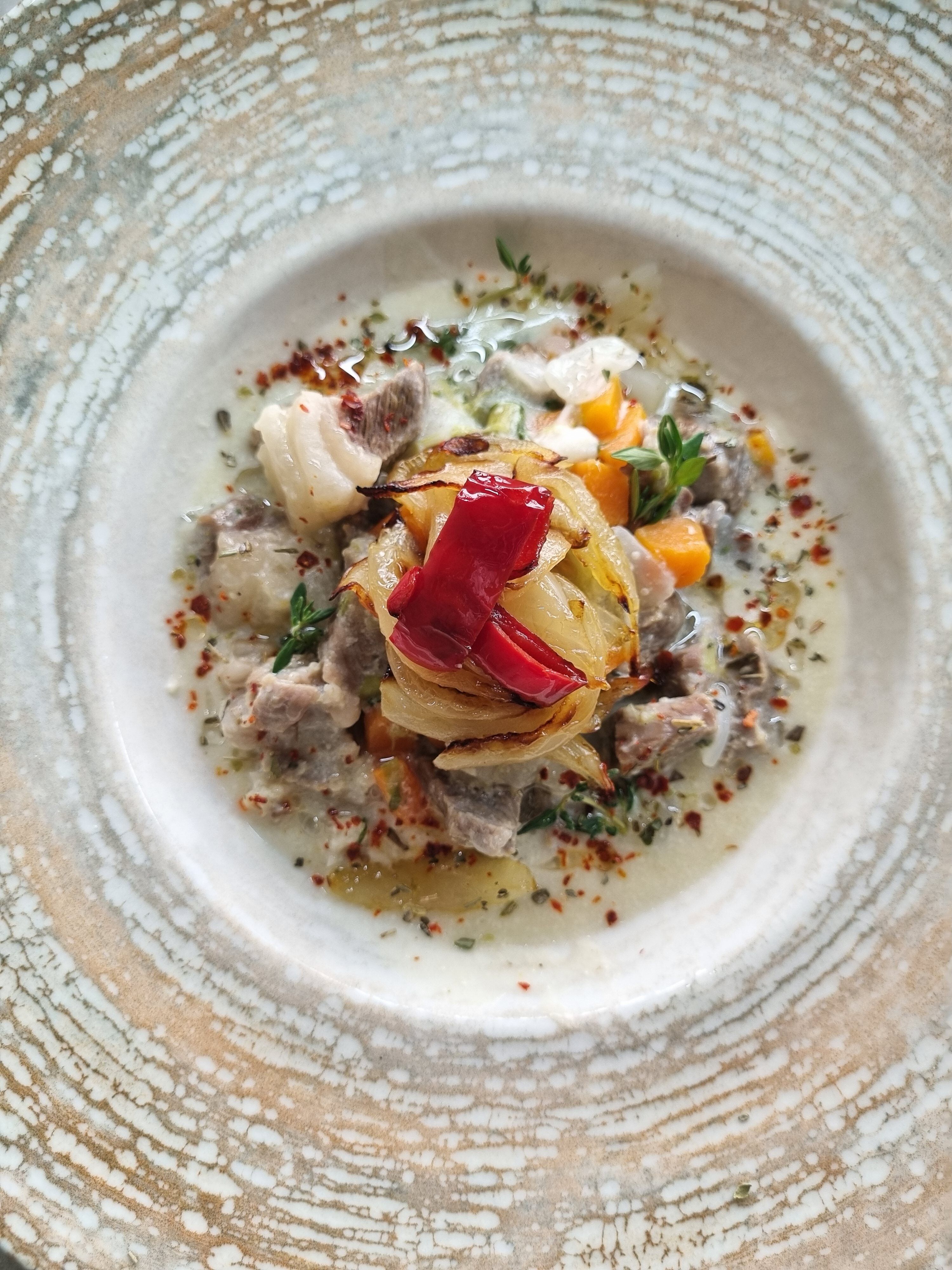
Photo: Talha Kuğu / Pexels
The diets react (see scores below)
Common Ingredients
- mackerel
- coconut milk
- onion
- tomato
- garlic
- thyme
- scotch bonnet
- scallion
Specific recipes may vary.
Incompatible with 3 of 11 diets
Diet Ratings
Run Down is a Jamaican coconut milk-braised fish dish that aligns well with ketogenic principles. Mackerel is an excellent keto protein — fatty, nutrient-dense, and zero-carb. Full-fat coconut milk provides substantial healthy fats (MCTs) that actively support ketosis. The aromatics (garlic, onion, scallion, thyme, scotch bonnet, tomato) contribute minimal net carbs in typical cooking quantities. A standard serving likely yields 5-10g net carbs depending on portion size of the sauce, well within daily keto limits. The dish is whole, unprocessed, and naturally grain- and sugar-free. The primary concern is portion control on the coconut milk sauce and onion/tomato content, which add up if servings are large.
Some strict keto practitioners flag full-fat coconut milk for its naturally occurring carbohydrate content (~3-4g net carbs per 100ml), cautioning that generous sauce portions in restaurant-style servings can push totals higher than assumed. Additionally, a minority within strict protocols question whether the combined onion, tomato, and scallion load warrants more careful measurement rather than free consumption.
Run Down is a traditional Jamaican fish stew built around mackerel as its primary protein. Fish is an animal product and is unequivocally excluded from a vegan diet. While several other ingredients — coconut milk, onion, tomato, garlic, thyme, scotch bonnet, and scallion — are fully plant-based and would be vegan-compatible on their own, the mackerel makes the dish non-vegan. There is no ambiguity here; fish is an animal, and consuming fish is incompatible with veganism by any mainstream vegan definition.
Run Down is a traditional Jamaican fish stew built entirely from paleo-approved whole foods. Mackerel is a nutrient-dense, omega-3-rich fish well within the hunter-gatherer diet. Coconut milk is a widely accepted paleo staple used as a cooking fat and liquid base. Onion, tomato, garlic, thyme, scotch bonnet pepper, and scallion are all unprocessed vegetables and herbs with no paleo objections. There are no grains, legumes, dairy, seed oils, refined sugars, or processed additives present. The dish is essentially a whole-food fish and vegetable stew cooked in coconut milk — a preparation style fully consistent with paleo principles.
Run Down is a nutrient-dense Jamaican dish built around mackerel (an oily, omega-3-rich fish highly valued in Mediterranean eating) and aromatic vegetables including onion, tomato, garlic, thyme, and scallion — all staples of Mediterranean cuisine. The primary concern is coconut milk, which is the cooking fat here rather than extra virgin olive oil. Coconut milk is high in saturated fat and is entirely absent from traditional Mediterranean culinary tradition. However, the overall dish profile — fish-forward, vegetable-rich, whole ingredients, no refined grains or added sugars — aligns well with Mediterranean principles. The scotch bonnet pepper, while not Mediterranean, is simply a spicy whole ingredient with no dietary downside. The dish earns a solid 'caution' rather than 'avoid' because the problematic element is a natural plant fat used in a whole-food context, not a processed or sugar-laden ingredient, and the fish base is strongly encouraged.
Some modern Mediterranean diet interpretations, particularly those focused on whole-food plant fats, argue that unprocessed coconut milk in moderate amounts is preferable to many processed alternatives and can be accommodated occasionally. Conversely, strict Mediterranean diet authorities (e.g., traditional Greek or Spanish dietary models) would flag coconut milk as a non-traditional saturated fat that should be replaced with olive oil whenever possible.
Run Down is a Jamaican fish stew where mackerel is the only carnivore-compatible ingredient. The dish is built around coconut milk (plant-derived) and contains multiple plant foods: onion, tomato, garlic, thyme, scotch bonnet pepper, and scallion. While mackerel itself is fully approved on the carnivore diet, the overwhelming majority of ingredients are plant-derived, making this dish fundamentally incompatible with carnivore principles. The dish cannot be adapted without completely reconstructing it — removing the plant ingredients would eliminate the defining character of Run Down entirely.
Run Down is a traditional Jamaican fish stew made by simmering mackerel in coconut milk with aromatics. Every ingredient in this dish is explicitly Whole30-compliant: mackerel is a permitted seafood, coconut milk is an allowed natural fat, and onion, tomato, garlic, thyme, scotch bonnet pepper, and scallion are all whole vegetables and herbs. There are no grains, legumes, dairy, added sugars, or any other excluded ingredients present. This is a clean, whole-food preparation that aligns well with the spirit of the Whole30 program.
Run Down contains multiple high-FODMAP ingredients that make it unsuitable during the elimination phase. Garlic is one of the highest-FODMAP foods known, rich in fructans, and must be avoided entirely. Onion is similarly high in fructans and a major FODMAP trigger. Coconut milk is dose-dependent — Monash rates it as low-FODMAP at 1/2 cup (125ml) but high-FODMAP at larger amounts, and traditional Run Down typically uses generous quantities. Scallion (spring onion) is low-FODMAP when only the green tops are used, but if the white bulb is included (common in traditional cooking), it becomes high-FODMAP due to fructans. Mackerel (fish), thyme, tomato, and scotch bonnet pepper are low-FODMAP and safe. However, the presence of both garlic and onion — both staple, non-negotiable ingredients in this dish — means Run Down cannot be made FODMAP-safe in its traditional form without fundamentally altering the recipe.
Run Down presents a mixed DASH profile. On the positive side, mackerel is an excellent lean protein and omega-3 fatty acid source, and the vegetable aromatics (onion, tomato, garlic, thyme, scallion, scotch bonnet) are strongly DASH-aligned, contributing potassium, fiber, and antioxidants. However, coconut milk is high in saturated fat from a tropical oil — a category DASH explicitly limits — and it forms the base of this dish, meaning saturated fat content is substantial per serving. Mackerel itself is nutritionally excellent for DASH (rich in potassium, omega-3s, and lean protein), but can be moderately high in sodium depending on whether canned or fresh mackerel is used. The overall dish is a step above heavily processed or red-meat-based meals but the coconut milk base is a meaningful DASH concern.
NIH DASH guidelines explicitly restrict tropical oils including coconut milk due to high saturated fat content, placing this dish outside core DASH recommendations. However, some updated clinical interpretations note that the saturated fat in coconut milk (primarily medium-chain triglycerides) may not adversely affect cardiovascular outcomes in the same way as long-chain saturated fats, and some DASH-oriented nutritionists permit modest coconut milk use when the overall dietary pattern is otherwise compliant.
Run Down is a Jamaican dish featuring mackerel simmered in coconut milk with vegetables and aromatics. The protein component (mackerel) is actually excellent from a Zone perspective — it's a fatty fish rich in omega-3s, which aligns perfectly with Dr. Sears' anti-inflammatory emphasis. The vegetable components (onion, tomato, garlic, thyme, scotch bonnet, scallion) are all favorable low-glycemic Zone carbohydrates. The primary concern is coconut milk, which is high in saturated fat (lauric acid) and relatively calorie-dense, making it challenging to hit the 30% fat target without overshooting calories and skewing the macronutrient ratio. A typical serving of Run Down will likely be disproportionately high in fat calories from coconut milk and somewhat low in carbohydrates relative to the 40/30/30 target. However, the dish is salvageable in Zone terms: using light coconut milk, controlling portion size, and pairing with additional low-glycemic vegetables (e.g., a side salad) can bring the ratios closer to Zone balance. The omega-3 richness of mackerel partially offsets concerns about saturated fat per Sears' later anti-inflammatory writings.
In Sears' earlier Zone books (Enter the Zone), coconut milk would be flagged as a significant source of unfavorable saturated fat, warranting a lower score. However, in his later anti-inflammatory work, Sears acknowledged that not all saturated fats are equally harmful, and the high omega-3 content of mackerel combined with polyphenol-rich aromatics (garlic, thyme, scotch bonnet) gives this dish meaningful anti-inflammatory credentials. Some Zone practitioners would score this higher (6-7) if made with reduced-fat coconut milk, while purists following classic Zone fat guidelines would keep it at a 4.
Run Down is a traditional Jamaican dish that braises mackerel in coconut milk with a robust base of anti-inflammatory aromatics and vegetables. Mackerel is one of the richest sources of omega-3 fatty acids (EPA and DHA) available, placing it firmly in the 'emphasize' category of anti-inflammatory eating — it's consistently associated with reduced CRP and IL-6 in research. Garlic, thyme, scallion, and scotch bonnet pepper all contribute meaningful anti-inflammatory polyphenols and sulfur compounds. Tomato and onion add quercetin and lycopene. The primary concern is coconut milk, which is high in saturated fat (lauric acid). The anti-inflammatory framework generally limits saturated fat, and full-fat coconut milk used generously raises the dish's saturated fat load considerably. However, coconut milk's saturated fat profile (medium-chain triglycerides, particularly lauric acid) is debated — some researchers argue MCTs are metabolized differently and don't carry the same inflammatory risk as long-chain saturated fats. The strength of the omega-3-rich mackerel and the density of anti-inflammatory herbs and spices outweigh the coconut milk concern for most people, making this a net anti-inflammatory dish.
Dr. Andrew Weil's anti-inflammatory pyramid limits coconut milk and full-fat coconut products due to saturated fat content, and mainstream anti-inflammatory guidance generally flags high saturated fat as pro-inflammatory. However, researchers like Dr. Mary Newport and proponents of Mediterranean-adjacent whole food diets note that lauric acid and MCTs in coconut products may have a neutral or even beneficial effect on inflammation markers compared to other saturated fats, and many integrative nutrition practitioners consider coconut milk acceptable in moderate culinary use.
Run Down is a traditional Jamaican dish with meaningful nutritional strengths and notable concerns for GLP-1 patients. Mackerel is an excellent omega-3 fatty acid source with strong protein density, supporting the #1 priority. Aromatics (onion, garlic, tomato, thyme, scallion) add micronutrients and fiber with minimal caloric cost. However, coconut milk — the dish's defining ingredient — is high in saturated fat, which can worsen GLP-1 side effects including nausea, bloating, and reflux. A typical serving of Run Down uses full-fat coconut milk in significant volume, pushing total fat per serving high. Scotch bonnet pepper is a further concern: it is among the hottest commonly used culinary peppers and may aggravate reflux and GI discomfort, which are already elevated on GLP-1 medications. The dish is not fried and is built around a genuinely beneficial protein source, which prevents an 'avoid' rating, but the saturated fat load from coconut milk and the heat level from scotch bonnet create real risk of side effect amplification in GLP-1 patients.
Some GLP-1-focused dietitians would rate this more favorably, noting that mackerel's omega-3 content and protein density are clinically valuable and that coconut milk can be used in reduced quantities or substituted with light coconut milk without destroying the dish. Individual tolerance to capsaicin and dietary saturated fat varies considerably among GLP-1 patients, and those without significant GI side effects may handle this dish well in moderate portions.
*See how scores were generated at our methodology page.
Nutritional profile
Six traits that cut across every diet.
Fiber & Plants
How much whole-plant food and fiber it delivers.
Healthy Fats
The quality of its fats (unsaturated, omega-3).
Whole / Unprocessed
How close it is to its natural, unprocessed form.
Gut Gentle
How easy it is on digestion (low FODMAP, few irritants).
Low Glycemic
How little it spikes your blood sugar.
Protein Density
How much protein it packs per calorie.
Controversy Index
Higher controversy = more disagreement between diets.
Diet-Specific Tips
 Keto — 8/10
View tips
- Mackerel is high-fat, zero-carb — ideal keto protein source
- Coconut milk provides keto-friendly MCT fats but contributes ~3-4g net carbs per 100ml
- Aromatics (onion, tomato, scallion) add modest net carbs — manageable in standard portions
- No grains, added sugars, or starchy ingredients present
- Whole, unprocessed ingredients throughout
- Portion size of coconut milk sauce is the primary carb variable to monitor
 Paleo — 9/10
View tips
- Mackerel is an excellent paleo protein source, rich in omega-3 fatty acids
- Coconut milk is a universally accepted paleo fat and cooking liquid
- All aromatics (onion, garlic, scallion, scotch bonnet) are unprocessed vegetables approved on paleo
- Thyme is a paleo-approved herb with no restrictions
- No grains, legumes, dairy, seed oils, or refined sugars present
- Minimal processing — a simple whole-food stew consistent with hunter-gatherer eating patterns
 Mediterranean — 6/10
View tips
- Mackerel is an oily fish rich in omega-3s, strongly encouraged 2-3 times weekly
- Coconut milk replaces olive oil as the primary fat — high in saturated fat and non-Mediterranean
- All vegetable aromatics (onion, tomato, garlic, thyme, scallion) are Mediterranean-compatible
- No refined grains, added sugars, or processed ingredients
- Whole-food preparation with no ultra-processed components
- Dish is fish-forward, which aligns with Mediterranean protein priorities
 Whole30 — 9/10
View tips
- Mackerel is a compliant whole seafood
- Coconut milk is an allowed natural fat on Whole30
- All aromatics (onion, tomato, garlic, thyme, scotch bonnet, scallion) are compliant vegetables and herbs
- No excluded ingredients present
- Whole, unprocessed preparation consistent with Whole30 spirit
- No grains, dairy, legumes, or added sugars
 DASH — 5/10
View tips
- Coconut milk base is high in saturated fat from a tropical oil — explicitly limited on DASH
- Mackerel is an excellent DASH-approved lean protein rich in omega-3 fatty acids and potassium
- Fresh mackerel is preferred; canned mackerel can be high in sodium and would lower the score
- Vegetable aromatics (onion, tomato, garlic, scallion) strongly support DASH nutrient targets
- No added salt, sweets, or heavily processed ingredients in the ingredient list
- Portion size of coconut milk determines overall saturated fat load — smaller portions improve DASH compatibility
- Substituting light coconut milk or reducing coconut milk volume would significantly improve DASH score
 Zone — 5/10
View tips
- Mackerel is rich in omega-3 fatty acids, strongly aligned with Zone anti-inflammatory principles
- Coconut milk is high in saturated fat, making it difficult to balance the 30% fat block without excess calories
- All vegetable/aromatic ingredients (tomato, onion, garlic, scotch bonnet, scallion, thyme) are favorable low-glycemic Zone carbohydrates
- Dish is naturally low in carbohydrates, requiring a side of low-GI vegetables to reach the 40% carb target
- Can be modified with light coconut milk to reduce saturated fat and better fit Zone macros
- No high-glycemic starches or sugars present, which is a positive Zone attribute
 Anti-Inflammatory — 8/10
View tips
- Mackerel is very high in omega-3 fatty acids (EPA/DHA), a cornerstone anti-inflammatory food
- Garlic contains allicin and organosulfur compounds with documented anti-inflammatory effects
- Scotch bonnet and chili peppers contribute capsaicin, which inhibits NF-κB inflammatory signaling
- Thyme and scallion provide polyphenols and flavonoids with antioxidant properties
- Tomato contributes lycopene and quercetin, both associated with reduced inflammatory markers
- Coconut milk is high in saturated fat, which is generally limited in anti-inflammatory frameworks — this is the primary concern
- No refined carbohydrates, added sugars, seed oils, or processed ingredients present
- Whole food, minimally processed preparation method preserves nutrient integrity
 GLP-1 Friendly — 5/10
View tips
- Mackerel is a high-quality omega-3 and protein source — strongly positive for GLP-1 patients
- Coconut milk is high in saturated fat, which can worsen nausea, bloating, and reflux on GLP-1 medications
- Scotch bonnet is extremely spicy and may aggravate GI side effects including reflux and nausea
- Dish is not fried and contains no refined grains or added sugars — positive
- Aromatics contribute fiber and micronutrients with low caloric cost
- Portion sensitivity: a smaller serving with reduced coconut milk significantly improves the profile
- Light or reduced-fat coconut milk substitution would meaningfully raise the score