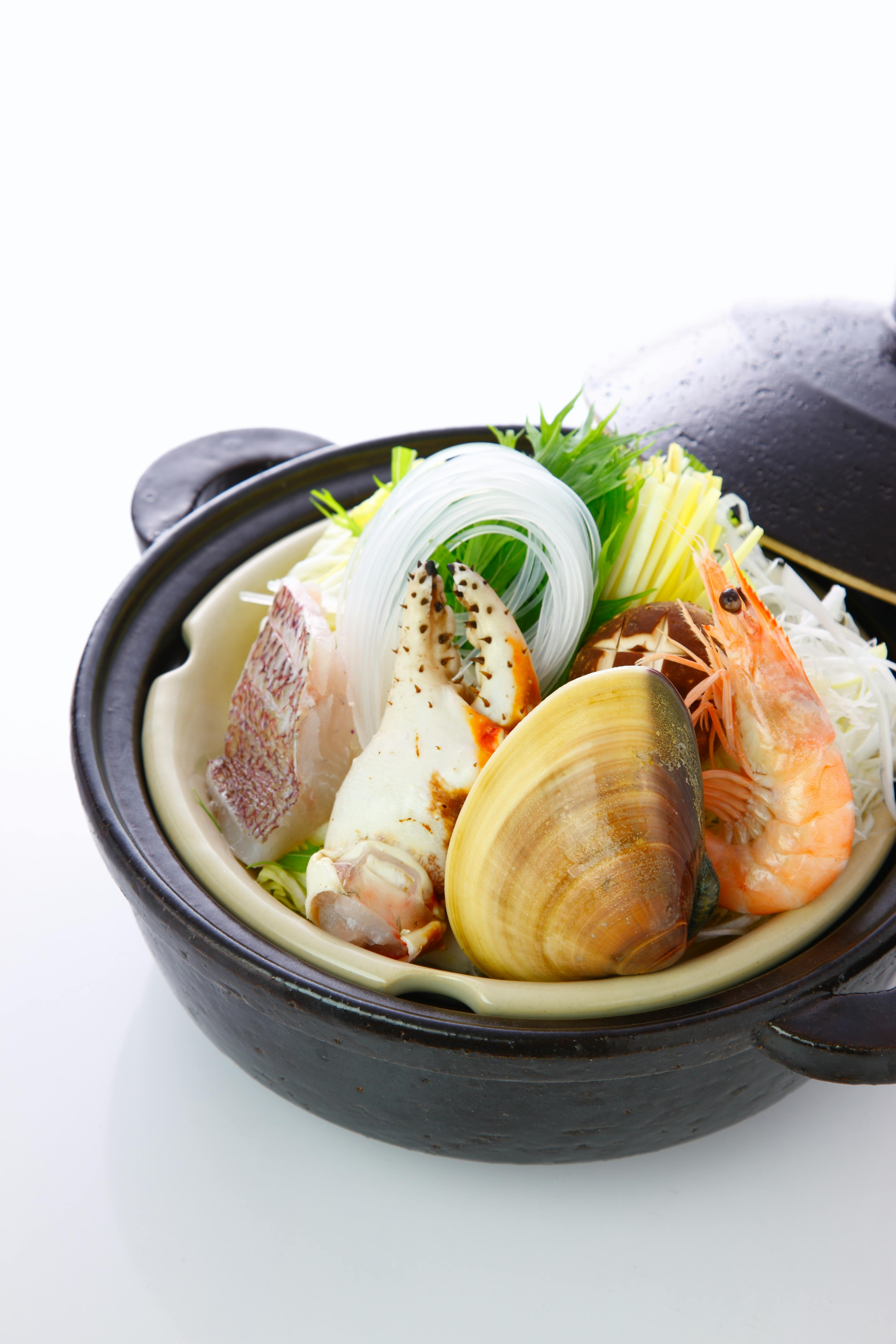
Photo: Zak Chapman / Pexels
Japanese
Chanko Nabe
The diets react (see scores below)
Common Ingredients
- chicken
- fish
- tofu
- cabbage
- mushrooms
- daikon
- dashi
- soy sauce
Specific recipes may vary.
Incompatible with 4 of 11 diets
Diet Ratings
Chanko Nabe is a Japanese hot pot dish whose core ingredients — chicken, fish, tofu, cabbage, mushrooms, and daikon — are largely keto-compatible. Protein sources are solid, and the vegetables are low-carb leafy/root options. However, several factors introduce caution: (1) Daikon contains moderate carbs (~3-4g net per 100g) and is typically used in generous quantities in hot pot. (2) Dashi is generally low-carb but some commercial dashi stocks contain added sugars or starches. (3) Soy sauce contributes small amounts of carbs and some versions contain wheat. (4) Traditional Chanko Nabe is often served with rice or noodles on the side, and the broth may be sweetened with mirin or sake in many restaurant preparations — these additions would push it firmly toward avoid. The base recipe as listed is manageable with portion control, but real-world preparation frequently includes hidden carb additions.
Stricter keto practitioners may flag tofu (soy) for its potential insulin-mimicking phytoestrogens and mild carb content, and would scrutinize soy sauce for wheat content, recommending tamari substitution. Some clean/strict keto adherents would avoid this dish entirely due to uncertainty about broth preparation and hidden sugars common in Japanese cuisine.
Chanko Nabe as described contains multiple animal products that disqualify it from a vegan diet. Chicken is a direct animal product (poultry), fish is an animal product (seafood), and dashi is a Japanese stock typically made from katsuobushi (dried bonito/fish flakes) and/or niboshi (dried sardines), making it animal-derived. The presence of three distinct animal-derived ingredients — chicken, fish, and dashi — makes this dish clearly incompatible with veganism. While some ingredients like tofu, cabbage, mushrooms, daikon, and soy sauce are fully plant-based, the dish as a whole cannot be considered vegan.
Chanko Nabe contains multiple non-paleo ingredients that disqualify it outright. Tofu is a soy-based legume product, which is explicitly excluded from the paleo diet. Soy sauce is a fermented grain-and-legume product (wheat and soybeans), making it doubly non-paleo. Dashi, while often made from fish (kombu and bonito), typically contains added salt and sometimes MSG or other additives. The paleo-approved ingredients — chicken, fish, cabbage, mushrooms, and daikon — are solid, but the foundational flavoring agents (soy sauce, processed dashi) and the tofu make this dish incompatible with paleo principles. A paleo-adapted version could be made by substituting coconut aminos for soy sauce, using homemade bone broth instead of commercial dashi, and omitting tofu entirely.
Chanko Nabe is a Japanese hot pot dish that aligns reasonably well with Mediterranean diet principles despite not being from the Mediterranean tradition. The dish is rich in plant-based ingredients (cabbage, mushrooms, daikon, tofu) and includes both fish and chicken as proteins, fitting the Mediterranean emphasis on lean proteins and abundant vegetables. Tofu provides plant-based protein and healthy fats. However, the dish lacks olive oil as the primary fat, relies on dashi (typically made from fish and kombu) and soy sauce rather than Mediterranean flavor bases, and chicken as the primary protein is a moderate rather than core component. The high sodium content from soy sauce and dashi is also a minor concern. Overall, this is a nutrient-dense, whole-food soup with no red meat or processed ingredients, making it compatible in moderation but not a Mediterranean staple.
Some Mediterranean diet interpreters might rate this more favorably, arguing that the core principles — abundant vegetables, legumes (tofu/soy), fish, and minimal processed ingredients — are well represented, and that the specific cooking tradition matters less than the nutritional profile. Conversely, strict traditionalists would note the absence of olive oil and Mediterranean herbs as disqualifying factors for a high approval rating.
Chanko Nabe is fundamentally incompatible with the carnivore diet. While it does contain animal proteins (chicken and fish), the dish is heavily loaded with plant-based ingredients that are strictly excluded: tofu (soy-based legume product), cabbage (vegetable), mushrooms (fungi), daikon (root vegetable), and dashi (typically made with kombu seaweed). Soy sauce is also a fermented plant product (wheat and soy) with no place on a carnivore diet. The plant components are not minor seasonings — they are core, structural ingredients of the dish. This is a classic mixed hot pot that cannot be adapted to carnivore without fundamentally changing what the dish is.
Chanko Nabe as listed contains two excluded ingredients: tofu (soy-based, and soy is an excluded legume) and soy sauce (also soy-derived). These are both explicitly prohibited on Whole30. Dashi, while often compliant when made from kombu and bonito flakes, can also contain soy or MSG depending on the preparation, though the latter is now allowed per 2024 rule changes. The chicken, fish, cabbage, mushrooms, and daikon are all fully compliant. However, the tofu and soy sauce alone are sufficient to disqualify the dish as written. A compliant version could be made by substituting coconut aminos for soy sauce and omitting tofu entirely, but the dish as described cannot be approved.
Chanko Nabe contains several ingredients that require careful evaluation. Chicken and fish are low-FODMAP proteins and safe. Firm tofu is low-FODMAP at standard servings (up to 170g per Monash). Cabbage (common/green) is low-FODMAP at up to 75g but becomes moderate-high at larger serves — hot pot dishes often include generous portions. Mushrooms are the primary concern: most mushrooms (shiitake, button, etc.) are high in polyols (mannitol) and are high-FODMAP at typical serving sizes. Daikon radish is low-FODMAP at small serves (up to 100g). Dashi (kombu/bonito-based) is generally considered low-FODMAP. Soy sauce is low-FODMAP at standard amounts (up to 2 tablespoons). The mushrooms are the critical problem ingredient in this dish — in a traditional chanko nabe, mushrooms are used in meaningful quantities and cannot realistically be eaten in a FODMAP-safe portion within the context of a shared hot pot. Without knowing the exact mushroom variety or quantity, this dish warrants caution rather than avoidance, since a modified version with mushrooms removed or drastically reduced could be made low-FODMAP. Additionally, cabbage portions in a hot pot context may exceed the low-FODMAP threshold.
Monash University rates some mushrooms differently — oyster mushrooms, for example, are low-FODMAP at 75g, while shiitake and button mushrooms are high-FODMAP at typical serving sizes. Clinical FODMAP practitioners would generally advise avoiding this dish during strict elimination unless mushrooms are omitted entirely, as restaurant or traditional preparations rarely use FODMAP-safe mushroom varieties or quantities.
Chanko Nabe contains many DASH-friendly ingredients — lean chicken, fish, tofu, cabbage, mushrooms, and daikon are all excellent choices rich in potassium, fiber, and lean protein. However, the dish as commonly prepared relies heavily on soy sauce and dashi (often made with kombu and bonito or packaged dashi stock), both of which are high in sodium. A typical serving of chanko nabe can easily contain 1,000–2,000mg of sodium, which is a significant portion of the DASH daily limit of 2,300mg (and potentially exceeds the low-sodium DASH target of 1,500mg in a single bowl). The underlying ingredients are DASH-aligned, but the sodium load from the broth preparation is a real concern. Reducing soy sauce, using low-sodium soy sauce, or making dashi from scratch with no added salt would substantially improve compatibility.
NIH DASH guidelines flag sodium as a primary concern and would caution against standard soy-sauce-heavy broths. However, updated clinical interpretations note that the vegetable and lean protein profile of chanko nabe is highly consistent with DASH principles — some DASH-oriented dietitians would approve a modified version with reduced-sodium soy sauce and homemade dashi as a strong DASH meal, arguing the nutrient density outweighs concerns when sodium is controlled.
Chanko Nabe is an excellent fit for the Zone Diet framework. The dish provides multiple lean protein sources (chicken, fish, tofu) that together can be portioned to hit the ~25g protein target per meal. The carbohydrate sources — cabbage, mushrooms, and daikon — are all low-glycemic, fiber-rich vegetables that score as 'favorable' carbs in Zone terminology, contributing minimal net carbs with high micronutrient density. Dashi is a low-calorie, low-carb broth base, and soy sauce adds negligible carbs in typical quantities. The fat content is naturally low across these ingredients, which may require supplementing with a small amount of monounsaturated fat (e.g., a drizzle of sesame oil or a few almonds on the side) to hit the 30% fat target. Tofu contributes modest fat that trends polyunsaturated, which is acceptable though not as ideal as monounsaturated sources. Overall, this dish is naturally structured around Zone-favorable macros — lean protein, low-GI vegetables, low saturated fat — and requires minimal modification to balance into proper Zone blocks. It is also inherently anti-inflammatory, aligning with Sears' broader dietary philosophy around polyphenols (from vegetables) and omega-3 potential from fish.
Chanko Nabe is a Japanese hot pot dish with a strongly anti-inflammatory ingredient profile. Chicken (lean protein, low in saturated fat) is the primary protein, supported by fish which contributes omega-3 fatty acids. Tofu is a whole soy food explicitly emphasized in anti-inflammatory frameworks like Dr. Weil's pyramid for its isoflavones and plant-based protein. Cabbage is a cruciferous vegetable rich in vitamin C, glucosinolates, and antioxidants with well-documented anti-inflammatory properties. Mushrooms (likely shiitake or similar Asian varieties given the cuisine context) are highlighted in anti-inflammatory guidelines for their beta-glucans and immune-modulating compounds. Daikon radish provides additional antioxidants and digestive enzymes. Dashi (typically kombu and bonito-based) contributes iodine, glutamates, and minerals from seaweed. Soy sauce is high in sodium, which is the primary nutritional concern in this dish — excessive sodium can contribute to inflammation and cardiovascular stress — but in typical culinary quantities it does not override the dish's overall anti-inflammatory character. The cooking method (gentle simmering) preserves nutrients without adding inflammatory fats. This dish is a near-ideal example of the Japanese dietary pattern, which is consistently associated with reduced systemic inflammation and longevity in epidemiological research.
Chanko Nabe is an exceptionally GLP-1-friendly dish. The combination of chicken, fish, and tofu delivers a high-protein, multi-source protein profile that strongly supports the 100-120g daily target. Tofu and fish contribute lean, easy-to-digest protein with favorable fat profiles (unsaturated and omega-3 fats). The vegetable base — cabbage, mushrooms, and daikon — provides meaningful fiber, micronutrients, and high water content, directly supporting digestion and hydration, both critical on GLP-1 medications. Dashi is a light, low-fat broth that is gentle on the stomach and aids gastric emptying tolerance. Soy sauce adds sodium, which can support electrolyte balance, though patients should be mindful of total sodium intake. The broth-based format is inherently portion-friendly and easy to digest — the soup format slows eating pace naturally and the high water content promotes satiety without volume stress on a slowed GI tract. There are no fried components, no high-fat ingredients, no refined carbohydrates, no added sugars, and no carbonation. This dish is nutrient-dense per calorie and works well in small servings, making it nearly ideal for GLP-1 patients.
*See how scores were generated at our methodology page.
Nutritional profile
Six traits that cut across every diet.
Fiber & Plants
How much whole-plant food and fiber it delivers.
Healthy Fats
The quality of its fats (unsaturated, omega-3).
Whole / Unprocessed
How close it is to its natural, unprocessed form.
Gut Gentle
How easy it is on digestion (low FODMAP, few irritants).
Low Glycemic
How little it spikes your blood sugar.
Protein Density
How much protein it packs per calorie.
Controversy Index
Higher controversy = more disagreement between diets.
Diet-Specific Tips
 Keto — 5/10
View tips
- Chicken and fish provide clean, keto-appropriate protein
- Tofu is low-carb but adds minor carbs (~1-2g net per 100g)
- Daikon contributes moderate net carbs at typical hot pot serving sizes
- Dashi broth is generally low-carb but commercial versions may contain sugar
- Soy sauce may contain wheat; tamari is a better keto substitute
- Traditional preparations often include mirin or sake which add sugars
- No grains or starchy vegetables in the listed ingredients
- Dish is protein-forward with moderate fat — not naturally high-fat
 Mediterranean — 6/10
View tips
- Abundant vegetables (cabbage, mushrooms, daikon) align with plant-forward Mediterranean principles
- Tofu provides plant-based protein consistent with legume emphasis
- Includes fish alongside chicken, supporting Mediterranean protein variety
- No red meat or processed ingredients
- Lacks olive oil as primary fat source — a core Mediterranean requirement
- High sodium from soy sauce and dashi is a minor concern
- Non-Mediterranean culinary tradition, but nutritional profile is broadly compatible
 Low-FODMAP — 5/10
View tips
- Mushrooms are typically high-FODMAP due to mannitol (polyol) content — a significant ingredient in chanko nabe
- Firm tofu is low-FODMAP at standard servings (up to 170g)
- Cabbage is low-FODMAP only up to ~75g — hot pot servings may exceed this
- Chicken and fish are safe, low-FODMAP proteins
- Dashi broth is generally low-FODMAP
- Soy sauce is low-FODMAP at standard serving sizes (up to 2 tbsp)
- Daikon is low-FODMAP at up to 100g per serve
- Mushroom variety matters — oyster mushrooms are safer than shiitake or button
 DASH — 5/10
View tips
- High sodium from soy sauce and dashi broth — the primary DASH concern
- Lean proteins (chicken, fish, tofu) are DASH-approved
- Vegetables (cabbage, mushrooms, daikon) are excellent DASH foods rich in potassium, fiber, and magnesium
- No saturated fat concerns — no red meat, full-fat dairy, or tropical oils
- Low-sodium soy sauce and homemade dashi would improve score to 7-8
- Portion size matters — large sumo-style servings increase total sodium intake significantly
 Zone — 8/10
View tips
- Multiple lean protein sources (chicken, fish, tofu) align well with Zone protein block targets
- Cabbage, mushrooms, and daikon are low-glycemic, favorable Zone carbohydrates
- Dashi broth is very low in calories, carbs, and fat — a neutral Zone-friendly base
- Naturally low in saturated fat, supporting Zone's anti-inflammatory goals
- Fat content may be insufficient for 30% fat ratio — a small addition of monounsaturated fat may be needed
- Tofu provides vegetarian protein with modest polyunsaturated fat; fat block accounting should reflect vegetarian protein rules (3g fat per block)
- No high-glycemic ingredients, processed foods, or added sugars
 Anti-Inflammatory — 8/10
View tips
- Lean chicken protein — low saturated fat, no significant pro-inflammatory burden
- Fish provides omega-3 fatty acids (EPA/DHA)
- Tofu is a whole soy food emphasized in anti-inflammatory frameworks
- Asian mushrooms contain beta-glucans with immune-modulating and anti-inflammatory effects
- Cabbage is a cruciferous vegetable with glucosinolates and antioxidants
- Daikon provides antioxidants and digestive support
- Dashi from kombu adds beneficial minerals and iodine from seaweed
- Soy sauce adds sodium — the only meaningful nutritional caution, manageable in normal portions
- No refined carbohydrates, seed oils, trans fats, or added sugars
- Aligns with Japanese dietary patterns linked to reduced inflammation in epidemiological studies
 GLP-1 Friendly — 9/10
View tips
- High multi-source protein from chicken, fish, and tofu
- Fiber and micronutrients from cabbage, mushrooms, and daikon
- Broth-based format supports hydration and easy digestibility
- Low fat profile with favorable unsaturated and omega-3 fats
- No fried, high-sugar, or ultra-processed components
- High water content supports GLP-1-related reduced thirst
- Small-portion friendly — broth soups work well with reduced appetite
- Sodium from soy sauce warrants mindfulness but is not a disqualifier