Photo: FOX ^.ᆽ.^= ∫ / Pexels
Japanese
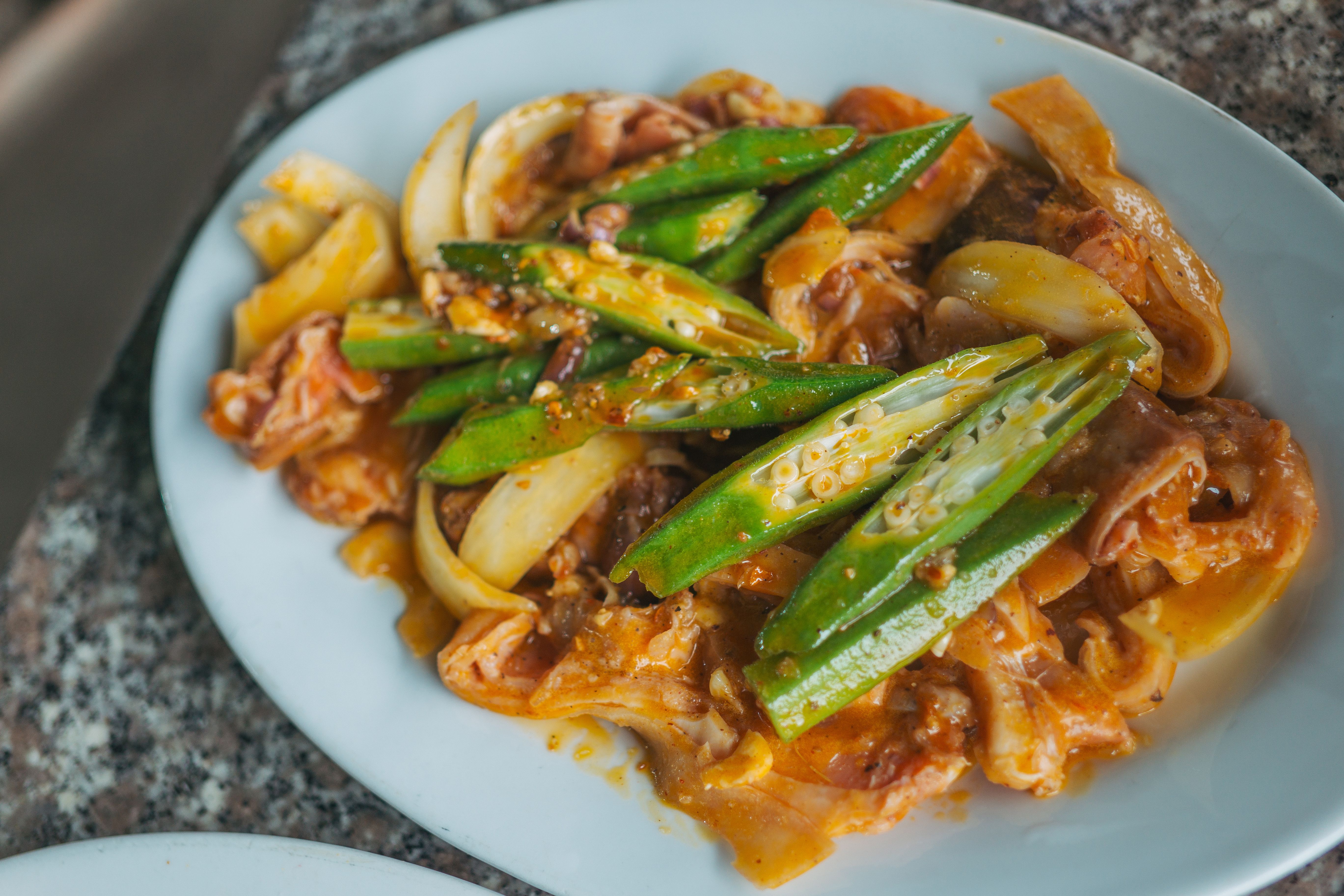
Goya Champuru
The diets react (see scores below)
Common Ingredients
- bitter melon
- tofu
- pork belly
- egg
- soy sauce
- bonito flakes
- onion
- sesame oil
Specific recipes may vary.
Incompatible with 6 of 11 diets
Diet Ratings
Goya Champuru is a stir-fry dish with several keto-friendly components — pork belly is high in fat, eggs are excellent, tofu provides moderate protein with low net carbs, sesame oil is a healthy fat, and bonito flakes are negligible. The main concerns are bitter melon (roughly 2-3g net carbs per 100g, manageable in small portions), onion (adds moderate carbs, ~4-5g net per half onion), and soy sauce (small amounts of carbs but generally fine in typical quantities). In a standard serving, net carbs likely land in the 6-12g range depending on portion sizes, which is workable within a daily keto budget but requires mindful portioning. The dish is not inherently keto-optimized but can fit with portion control, making it a reasonable occasional choice rather than a staple.
Strict keto practitioners may flag tofu (some soy products are debated for phytoestrogen effects and certain brands contain fillers) and soy sauce (some strict protocols avoid due to trace carbs, gluten in traditional versions, and potential insulin response). These practitioners would recommend substituting tamari or coconut aminos and being cautious with tofu frequency.
Goya Champuru contains multiple animal-derived ingredients that make it entirely incompatible with a vegan diet. Pork belly is a direct animal flesh product, egg is an animal product excluded by all vegan standards, and bonito flakes (katsuobushi) are dried fermented fish — all three independently disqualify this dish. Even setting aside the primary protein, the egg and bonito flakes alone would render it non-vegan. The plant-based components (bitter melon, tofu, onion, soy sauce, sesame oil) are vegan-friendly, but they cannot offset the multiple animal ingredients present.
Goya Champuru contains multiple non-paleo ingredients that disqualify it outright. Tofu is a soy-based legume product — strictly excluded from paleo. Soy sauce contains both soy (legume) and wheat (grain), making it doubly non-compliant. Sesame oil is a seed oil, which is excluded in favor of animal fats, olive oil, coconut oil, or avocado oil. While bitter melon, pork belly, egg, onion, and bonito flakes are individually paleo-compliant, the dish as traditionally prepared cannot be considered paleo due to these foundational violations.
Goya Champuru is a traditional Okinawan stir-fry that contains several Mediterranean diet-friendly ingredients — bitter melon (vegetable), tofu (legume-based), egg, and onion are all compatible or acceptable. However, pork belly is the primary protein and is a fatty red/processed meat that the Mediterranean diet restricts to a few times per month. Sesame oil, while a plant-based fat, is not the recommended fat source (extra virgin olive oil is canonical). Soy sauce is a highly processed, high-sodium condiment not part of traditional Mediterranean eating. The dish is also stir-fried rather than prepared with olive oil. The combination of pork belly as the featured protein with sesame oil and soy sauce collectively places this dish in conflict with Mediterranean principles, despite its vegetable and tofu content.
Some modern Mediterranean diet interpreters emphasize the plant-forward, whole-food nature of this dish — the bitter melon, tofu, and egg are core-compatible ingredients, and if pork belly were reduced to a minor flavoring rather than a primary protein (as sometimes occurs in traditional Okinawan preparation), the dish could arguably be rated 'caution.' The Okinawan diet itself is often cited alongside the Mediterranean diet as a longevity-promoting dietary pattern, lending some credibility to a more lenient interpretation.
Goya Champuru is fundamentally incompatible with the carnivore diet. The dish is built around bitter melon (a plant vegetable), tofu (a soy-based legume product), and onion (a plant), which are all strictly excluded plant foods. Soy sauce is a fermented grain/legume product, and sesame oil is a plant-derived oil — both explicitly forbidden. While pork belly, egg, and bonito flakes are carnivore-approved animal ingredients, they are entirely outweighed by the multiple plant-based components that form the structural and flavor foundation of this dish. This is a classic Okinawan stir-fry that cannot be modified into a carnivore meal without removing the majority of its ingredients.
Goya Champuru contains two excluded ingredients: soy sauce (which contains soy, an excluded legume, and often wheat, an excluded grain) and tofu (made from soybeans, a legume explicitly excluded on Whole30). Both are core, non-optional components of this dish. The remaining ingredients — bitter melon, pork belly, egg, bonito flakes, onion, and sesame oil — are all Whole30-compliant, but the dish cannot be made authentic without the excluded ingredients. A modified version could substitute coconut aminos for soy sauce and omit tofu, but that would fundamentally change the dish.
Goya Champuru contains two significant high-FODMAP ingredients that make it unsuitable during the elimination phase. Onion is one of the highest-FODMAP foods tested by Monash University, containing large amounts of fructans at any serving size — there is no safe portion of onion during elimination. Bitter melon (goya) has limited Monash testing data, but is generally considered moderate-to-high in FODMAPs. The remaining ingredients are mostly low-FODMAP: firm tofu is low-FODMAP at standard servings (silken tofu is higher due to GOS), pork belly is FODMAP-free as a plain meat, eggs are FODMAP-free, soy sauce is low-FODMAP in small amounts (1-2 tbsp), bonito flakes are FODMAP-free, and sesame oil is FODMAP-free. However, onion alone is sufficient to render this dish a clear 'avoid' during elimination, as it permeates the dish during cooking and cannot simply be reduced in portion.
Goya Champuru contains several DASH-positive ingredients (bitter melon, tofu, egg, onion) alongside problematic ones. Bitter melon is a nutrient-dense vegetable rich in potassium and fiber, strongly aligned with DASH principles. Tofu provides lean plant protein and calcium. However, pork belly is a fatty, high-saturated-fat red meat — exactly the type DASH limits — and soy sauce adds significant sodium (one tablespoon contains ~900mg), which can push a serving close to or beyond the standard DASH daily sodium limit. Bonito flakes also contribute additional sodium. Sesame oil is a vegetable oil acceptable in DASH, but adds caloric density. The dish as traditionally prepared likely exceeds 1,000–1,500mg sodium per serving from soy sauce and bonito flakes alone, and pork belly's saturated fat content conflicts with DASH's emphasis on lean proteins. The dish could be modified (low-sodium soy sauce, substituting pork belly with lean pork loin or chicken) to become more DASH-compatible, but as commonly prepared it sits in 'caution' territory rather than 'avoid' because of the substantial vegetable and tofu content that partially offsets concerns.
NIH DASH guidelines explicitly limit both high-sodium condiments like soy sauce and high-saturated-fat meats like pork belly, placing this dish under scrutiny. However, updated clinical interpretations note that the overall dish includes significant amounts of vegetables and plant protein (tofu), and some DASH-oriented dietitians apply a 'dietary pattern' lens — arguing that a vegetable-forward stir-fry with moderate portions of pork belly can fit within a DASH framework if sodium from soy sauce is reduced using low-sodium alternatives and portion size is controlled.
Goya Champuru has several Zone-friendly elements but requires modification to fit the 40/30/30 framework cleanly. Bitter melon is an excellent low-glycemic, polyphenol-rich vegetable that Sears would enthusiastically endorse. Tofu provides vegetarian protein blocks. Egg adds lean protein. Onion is a favorable carb source. However, pork belly is the primary Zone concern — it is high in saturated fat, making it an 'unfavorable' protein source. Zone protocol prefers lean proteins like skinless chicken, fish, or egg whites, and limits fatty red/processed meats. Sesame oil is predominantly polyunsaturated (omega-6 heavy), not the monounsaturated fat Sears prefers (olive oil, avocado, almonds). The combination of pork belly fat plus sesame oil pushes the fat profile toward saturated and omega-6, which conflicts with Zone's anti-inflammatory emphasis. The dish is carb-light (mostly vegetables and tofu), which means the carb block ratio may need supplementation. With substitutions — lean pork loin instead of belly, small portion of sesame oil or replaced with macadamia nut oil — this dish could score higher. As traditionally prepared, it's usable in Zone with careful portioning but not ideal.
Some Zone practitioners, particularly those following Sears' later anti-inflammatory writings, note that traditional Okinawan dietary patterns (from which Goya Champuru originates) align well with Zone anti-inflammatory principles overall — high vegetable intake, moderate protein, polyphenol-rich foods. The small amount of pork belly used in the dish (more as a flavoring than a primary protein source) and the bitter melon's potent polyphenol content could offset the saturated fat concerns for practitioners who prioritize food-pattern thinking over strict macro ratios.
Goya Champuru is an Okinawan stir-fry with a genuinely mixed anti-inflammatory profile. On the positive side: bitter melon (goya) is a standout anti-inflammatory ingredient — rich in antioxidants, vitamin C, and bioactive compounds like charantin and momordicin that have shown anti-inflammatory and blood sugar-regulating effects in research. Tofu (whole soy) is explicitly emphasized in anti-inflammatory frameworks including Dr. Weil's pyramid, providing isoflavones and plant protein. Egg contributes choline and selenium. Bonito flakes add a small amount of omega-3s. Sesame oil contains sesamin and sesamolin, lignans with modest anti-inflammatory properties — though it is moderately high in omega-6 (linoleic acid), which at high intake can be pro-inflammatory. The problematic element is pork belly, which is a fatty cut of red meat high in saturated fat — a clear 'limit' food in anti-inflammatory guidelines. Soy sauce in typical cooking quantities is generally neutral. Onion provides quercetin, an anti-inflammatory flavonoid. The dish is not inherently unhealthy and features several genuinely beneficial ingredients, but the pork belly drags the profile toward caution. Substituting pork loin or tofu-only would substantially improve the rating.
Some anti-inflammatory practitioners, particularly those following AIP (Autoimmune Protocol) frameworks, would rate this more negatively due to soy (tofu, soy sauce) being excluded from AIP as a potential gut irritant, and eggs being flagged for arachidonic acid. Conversely, Okinawa diet researchers (notably the work of Willcox et al.) would view this dish quite favorably, as Okinawan dietary patterns including regular consumption of bitter melon, tofu, and modest pork are associated with exceptional longevity and low inflammatory disease rates — suggesting the dish's overall pattern matters as much as individual ingredients.
Goya Champuru is a traditional Okinawan stir-fry with genuinely mixed GLP-1 compatibility. On the positive side, it combines tofu (plant protein, easy to digest), egg (high-quality complete protein), and bitter melon (very high fiber and water content, low calorie, and notably may have mild blood-sugar-stabilizing properties). Bonito flakes add a small protein boost with negligible fat. However, pork belly is the primary protein source and is a high-fat, high-saturated-fat cut — exactly the type of fatty meat that worsens GLP-1 side effects including nausea, bloating, and delayed gastric emptying. Sesame oil, while a healthy unsaturated fat, adds caloric density in a meal that already has significant fat from the pork belly. The overall dish is nutrient-dense and not fried in a heavy batter, but the pork belly component meaningfully undermines the fat rule and digestibility rule. A GLP-1-friendly adaptation swapping pork belly for pork tenderloin or chicken breast would push this into approve territory. As prepared traditionally, it lands in caution.
Some GLP-1-focused RDs would note that the tofu and egg provide sufficient quality protein and that the dish's overall volume and fiber content from bitter melon make it reasonably well-tolerated — particularly for patients who are past the acute nausea phase. Others would more strictly flag pork belly as categorically problematic due to its fat content slowing gastric emptying further, warranting a stronger caution or soft avoid for patients still experiencing GI side effects.
*See how scores were generated at our methodology page.
Nutritional profile
Six traits that cut across every diet.
Fiber & Plants
How much whole-plant food and fiber it delivers.
Healthy Fats
The quality of its fats (unsaturated, omega-3).
Whole / Unprocessed
How close it is to its natural, unprocessed form.
Gut Gentle
How easy it is on digestion (low FODMAP, few irritants).
Low Glycemic
How little it spikes your blood sugar.
Protein Density
How much protein it packs per calorie.
Controversy Index
Higher controversy = more disagreement between diets.
Diet-Specific Tips
 Keto — 5/10
View tips
- Pork belly is high-fat and keto-ideal as the primary protein
- Eggs are fully keto-compatible
- Bitter melon is relatively low net carb (~2-3g/100g) but portion-dependent
- Onion adds meaningful carbs; smaller quantities preferred
- Tofu is low-carb but debated among stricter keto adherents
- Soy sauce contributes minimal carbs in typical cooking amounts
- Sesame oil is a healthy fat and keto-friendly
- Overall net carbs per serving are moderate — fits keto with portion control
 DASH — 5/10
View tips
- Pork belly is high in saturated fat — a key DASH-limited food
- Soy sauce contributes very high sodium (~900mg/tbsp), potentially exceeding DASH thresholds per serving
- Bonito flakes add additional sodium load
- Bitter melon is a DASH-positive vegetable rich in fiber and potassium
- Tofu provides lean plant-based protein and calcium, well-aligned with DASH
- Sesame oil is an acceptable vegetable oil within DASH
- Low-sodium soy sauce substitution and swapping pork belly for lean pork loin would significantly improve DASH compatibility
 Zone — 5/10
View tips
- Bitter melon is an ideal Zone carbohydrate: very low glycemic, high in polyphenols and fiber
- Pork belly is high in saturated fat, making it an 'unfavorable' Zone protein — lean pork or more tofu/egg would be preferred
- Tofu and egg provide quality protein blocks that align with Zone guidelines
- Sesame oil is omega-6 dominant, conflicting with Zone's preference for monounsaturated fats and anti-inflammatory omega-3 emphasis
- Dish is naturally low in carbohydrates, which may require supplemental Zone-favorable carbs to hit the 40% carb block target
- Bonito flakes add omega-3 fatty acids, supporting Zone's anti-inflammatory goals
- Overall dish is minimally processed with whole-food ingredients, consistent with Zone philosophy
 Anti-Inflammatory — 5/10
View tips
- Bitter melon: potent anti-inflammatory antioxidants, charantin, vitamin C — strong positive
- Tofu: whole soy food, emphasized in anti-inflammatory frameworks, isoflavones — positive
- Pork belly: high-fat red meat, elevated saturated fat — anti-inflammatory 'limit' food, negative
- Egg: mixed in anti-inflammatory literature; choline and selenium are beneficial, arachidonic acid is a minor concern
- Sesame oil: contains anti-inflammatory lignans but moderate omega-6 content — neutral to mildly positive
- Onion: quercetin and other flavonoids — positive
- Bonito flakes: small omega-3 contribution — mildly positive
- Overall dish: beneficial ingredients partially offset by pork belly's saturated fat load
 GLP-1 Friendly — 5/10
View tips
- Pork belly is high in saturated fat and worsens GLP-1 side effects including nausea and delayed gastric emptying
- Tofu and egg provide quality protein but total protein per serving may be modest depending on portion ratio
- Bitter melon is high in fiber and water content — strongly supportive for GLP-1 patients
- Sesame oil adds healthy unsaturated fat but also caloric density
- Not fried in batter — stir-fried preparation is more GLP-1 compatible than deep-frying
- Dish is nutrient-dense overall but fat content is the primary concern
- Easily adapted to be GLP-1 friendly by substituting a lean protein for pork belly