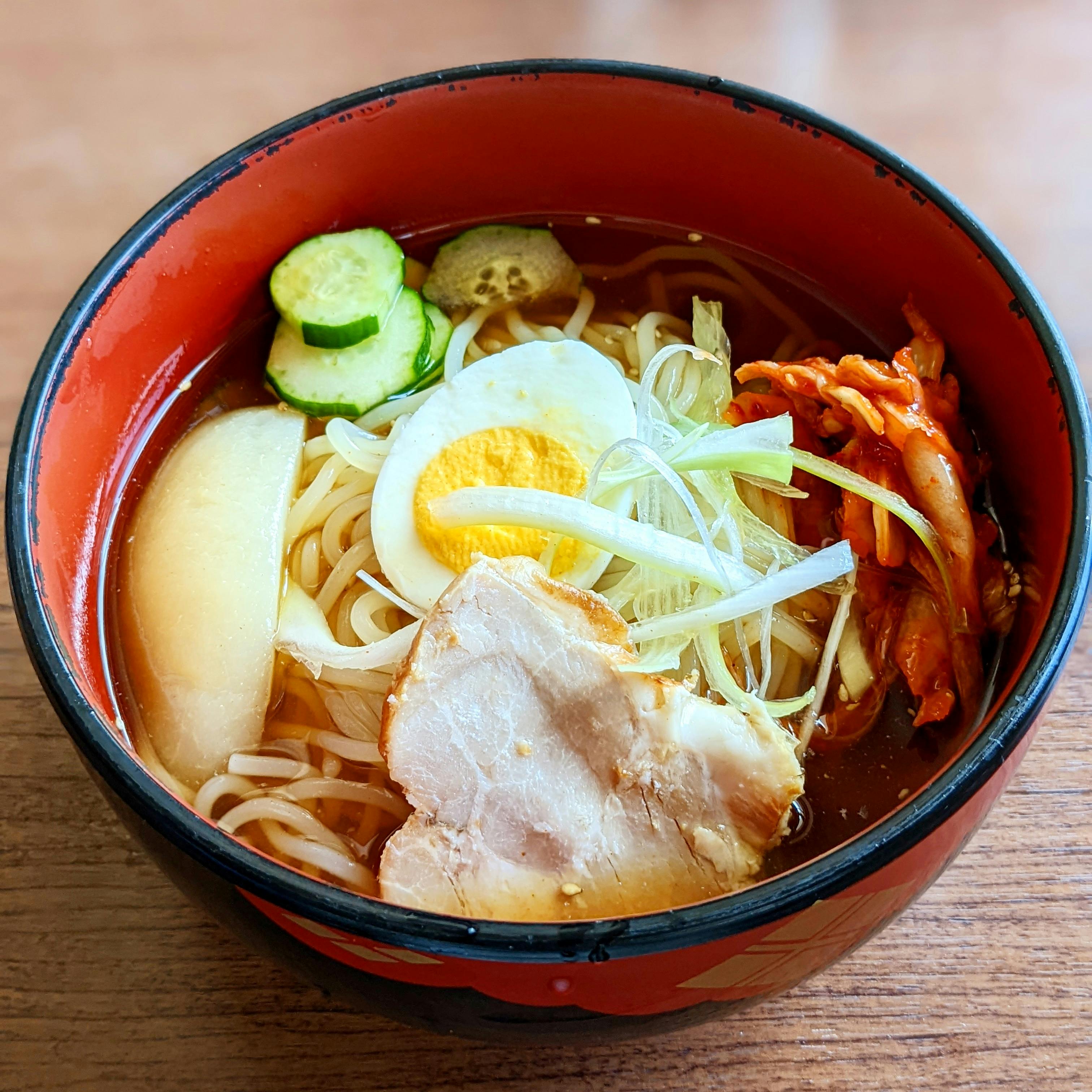
Photo: Kenzo Okuma / Pexels
The diets react (see scores below)
Common Ingredients
- flat wheat noodles
- dashi
- soy sauce
- mirin
- green onion
- bonito flakes
- fish cake
- spinach
Specific recipes may vary.
Incompatible with 6 of 11 diets
Diet Ratings
Kishimen is a traditional Japanese flat wheat noodle soup that is fundamentally incompatible with ketogenic eating. The primary ingredient — flat wheat noodles — is a high-carbohydrate grain product, typically contributing 40-60g of net carbs per serving on its own, far exceeding the entire daily keto carb budget of 20-50g. Mirin adds additional sugar, and the fish cake (narutomaki/kamaboko) typically contains starch fillers. There is no meaningful way to consume a standard serving of kishimen while maintaining ketosis. The broth components (dashi, soy sauce, green onion, bonito flakes, spinach) are relatively keto-friendly in isolation, but the dish as a whole is defined by its wheat noodles and cannot be separated from them.
Kishimen as described contains multiple animal-derived ingredients that disqualify it from a vegan diet. Dashi is traditionally made from katsuobushi (bonito fish flakes) and/or kombu; the bonito flakes are also listed explicitly as a separate topping. Fish cake (narutomaki or kamaboko) is a processed fish product. These are clear animal-product violations with no ambiguity. The base ingredients — flat wheat noodles, soy sauce, mirin, green onion, and spinach — are plant-based, but the dish as presented cannot be considered vegan in any form.
Kishimen is fundamentally incompatible with the paleo diet. The dish's base is flat wheat noodles, a grain product that is strictly excluded from paleo eating. Soy sauce contains wheat and soy (both a grain and a legume derivative), making it doubly non-paleo. Mirin is a sweetened rice wine, introducing another grain-based ingredient along with refined sugar. Fish cake (narutomaki/kamaboko) is a processed food typically containing starch fillers, additives, and preservatives. Nearly every core component of this dish violates paleo principles. The only paleo-compliant ingredients are dashi (if made from kombu and bonito), green onion, bonito flakes, and spinach — all minor supporting ingredients that cannot redeem the dish as a whole.
Kishimen is a Japanese flat wheat noodle soup with several Mediterranean-compatible elements alongside some concerns. Positives include dashi (fish-based broth providing seafood-derived nutrients), bonito flakes (fish), spinach (leafy green vegetable), and green onion. Fish cake is a minimally to moderately processed fish product. However, the primary base is refined wheat noodles (not whole grain), which Mediterranean guidelines discourage in favor of whole grains. Soy sauce and mirin add sodium and sugar respectively, and the dish lacks olive oil entirely. The overall profile is a light, vegetable- and fish-adjacent soup, but refined noodles and processed condiments keep it from a full approval.
Some Mediterranean diet practitioners take a broader, pattern-based view and would note that the fish-forward broth, leafy greens, and low saturated fat content make this dish broadly compatible with Mediterranean principles — similar to how white pasta is accepted in traditional Italian Mediterranean cuisine when consumed in moderate portions as part of a balanced meal.
Kishimen is a Japanese flat wheat noodle soup that is fundamentally incompatible with the carnivore diet. The primary base is wheat noodles — a grain product that is entirely excluded from carnivore. The broth contains soy sauce (fermented soy, a legume) and mirin (a sweet rice-based condiment with sugar), both plant-derived and processed. Green onion and spinach are vegetables, further disqualifying the dish. While bonito flakes and dashi (fish stock) are animal-derived and would be acceptable, and fish cake has some animal content, they are minor components in an otherwise entirely plant-heavy dish. No amount of carnivore-friendly ingredients can redeem a dish built on wheat noodles, soy, and vegetables.
Kishimen contains multiple excluded ingredients that make it clearly non-compliant with Whole30. The most fundamental violation is the flat wheat noodles, which are a grain-based product explicitly excluded from the program. Additionally, soy sauce contains soy (a legume) and wheat (a grain), both of which are excluded. Mirin is a sweet rice wine that contains both alcohol and rice (a grain), making it doubly excluded. Fish cake (narutomaki or kamaboko) typically contains added starch (often corn or potato starch) and sometimes sugar or other non-compliant additives. The remaining ingredients — dashi, green onion, bonito flakes, and spinach — are generally Whole30-compliant, but the core structural ingredients of this dish are firmly excluded.
Kishimen contains flat wheat noodles as its primary base ingredient, which are high in fructans — one of the most significant FODMAP triggers. Wheat-based noodles are clearly rated high-FODMAP by Monash University at any standard serving size. Additionally, green onion (spring onion bulb/white part) is high in fructans, though the green tops are low-FODMAP. Fish cake (kamaboko) often contains wheat starch as a binder, adding further fructan load. Dashi (kombu/bonito-based), soy sauce in small amounts, mirin in small amounts, bonito flakes, and spinach are generally low-FODMAP or acceptable at typical serving sizes. However, the wheat noodle base makes this dish unsuitable during the FODMAP elimination phase at any standard portion.
Kishimen is a Japanese flat wheat noodle soup with several DASH-friendly components — spinach is a potassium and magnesium powerhouse, dashi is a relatively light broth, and bonito flakes provide lean protein. However, the dish as commonly prepared presents significant sodium concerns. The combination of soy sauce (typically 900–1,000mg sodium per tablespoon), mirin, dashi, and fish cake (a processed product with added sodium) results in a broth that commonly exceeds 800–1,200mg sodium per serving, representing roughly 35–80% of the DASH daily sodium target in a single dish. The flat wheat noodles are typically refined (not whole grain), missing an opportunity for fiber and nutrients. Fish cake is a processed ingredient that DASH guidelines would flag. On the positive side, there is no saturated fat concern, no red meat, and vegetables like spinach and green onion align well with DASH principles. The dish can be made DASH-compatible with low-sodium soy sauce, reduced soy sauce quantity, and increased vegetables, but as standardly prepared it warrants caution due to sodium load.
NIH DASH guidelines explicitly flag high-sodium condiments like soy sauce and processed foods like fish cake as problematic. However, some DASH-oriented dietitians working with Japanese dietary patterns note that traditional dashi-based broths are lower in sodium than Western soups and that soy sauce quantities can be modulated — a modified version with low-sodium soy sauce could reasonably score 6–7.
Kishimen is a traditional Japanese flat wheat noodle soup from Nagoya. While it contains several Zone-favorable components — dashi broth (essentially calorie-free), soy sauce (minimal impact), green onions (favorable low-GI vegetable), spinach (excellent Zone vegetable), bonito flakes (lean protein), and fish cake (moderate lean protein) — the foundation of the dish is flat wheat noodles, which are a high-glycemic, refined carbohydrate. Wheat noodles are classified as an 'unfavorable' carbohydrate in Zone terminology due to their high glycemic load and rapid insulin response. The dish as traditionally served would be heavily carbohydrate-dominant with the majority of those carbs coming from unfavorable sources, making it difficult to achieve the 40/30/30 ratio without significant modification. The protein content from bonito flakes and fish cake is modest and would likely fall short of the ~25g per meal target without supplementation. The fat content is minimal, which would require additional monounsaturated fat sources to balance. A Zone-adapted version could use a smaller noodle portion, add more protein, and incorporate healthy fat — but as traditionally prepared, the dish skews heavily toward unfavorable carbs with inadequate protein and fat.
Kishimen is a traditional Nagoya-style flat wheat noodle soup with a generally moderate anti-inflammatory profile. On the positive side, dashi (typically made from kombu and bonito) provides umami with minimal inflammatory load and some beneficial minerals; bonito flakes contribute small amounts of omega-3s and protein; spinach is a genuinely anti-inflammatory ingredient rich in folate, vitamin K, and carotenoids; green onion adds flavonoids and quercetin; and soy sauce and mirin, used in modest culinary quantities, are not significantly problematic. Fish cake (narutomaki or kamaboko) is a processed product that typically contains additives, starch fillers, and elevated sodium, which nudges the dish in a less favorable direction. The primary concern is the refined wheat noodles, which are made from white flour — a refined carbohydrate with a higher glycemic impact and none of the fiber or phytonutrients of whole grains. The anti-inflammatory framework consistently emphasizes whole grains over refined ones. The dish is also relatively high in sodium overall (soy sauce, mirin, fish cake, dashi), and chronically high sodium intake is associated with increased inflammatory markers. There are no strongly pro-inflammatory ingredients like trans fats, seed oils, or added sugars in significant quantities, so this is not an 'avoid' — but the refined noodles and processed fish cake prevent a full approval. As an occasional dish within a broadly anti-inflammatory diet, it is acceptable.
Some anti-inflammatory practitioners would rate traditional Japanese cuisine more favorably overall, noting that the dietary pattern as a whole — not individual dishes — is what matters, and that Japan's traditional diet is associated with low inflammation and longevity. Others following stricter protocols (such as AIP or gluten-sensitive individuals) would flag wheat noodles more harshly, potentially pushing this to a low score due to gluten's role in intestinal permeability and inflammation in susceptible individuals.
Kishimen is a Japanese flat wheat noodle soup served in a dashi-based broth with soy sauce and mirin. It has genuine strengths for GLP-1 patients: the dashi broth provides high hydration support, the soup format is easy to digest and gentle on a slowed gastric system, spinach adds fiber and micronutrients, and bonito flakes contribute small amounts of protein. Fish cake (narutomaki or kamaboko) adds modest protein as well. However, the dish is fundamentally noodle-forward — flat wheat noodles are a refined carbohydrate with low fiber and minimal protein, making the overall protein density per serving quite low (likely 8–14g depending on fish cake quantity), well short of the 15–30g per meal target. Mirin adds sugar. The soy sauce contributes significant sodium, which can be a concern for fluid retention. The dish is low in fat, easy to digest, and portion-friendly, but the caloric composition skews heavily toward refined carbohydrate with insufficient protein to qualify as an approve. Best consumed as a light meal supplemented with additional protein (e.g., a side of edamame, tofu, or a boiled egg added to the bowl).
Some GLP-1-focused dietitians may rate this more favorably given its broth-heavy, low-fat, easy-to-digest profile — particularly for patients in early medication phases experiencing significant nausea, where palatability and hydration take temporary precedence over protein targets. Others would flag the refined noodle base and low protein density as disqualifying for the core muscle-preservation goal, especially at higher doses of GLP-1 medication where appetite suppression is most severe.
*See how scores were generated at our methodology page.
Nutritional profile
Six traits that cut across every diet.
Fiber & Plants
How much whole-plant food and fiber it delivers.
Healthy Fats
The quality of its fats (unsaturated, omega-3).
Whole / Unprocessed
How close it is to its natural, unprocessed form.
Gut Gentle
How easy it is on digestion (low FODMAP, few irritants).
Low Glycemic
How little it spikes your blood sugar.
Protein Density
How much protein it packs per calorie.
Controversy Index
Higher controversy = more disagreement between diets.
Diet-Specific Tips
 Mediterranean — 5/10
View tips
- Refined flat wheat noodles rather than whole grain — a notable drawback
- Dashi and bonito flakes provide fish-derived nutrients consistent with Mediterranean seafood emphasis
- Spinach and green onion add plant-based vegetable value
- Fish cake is moderately processed fish product — acceptable but not ideal
- No olive oil present — primary fat source of Mediterranean diet is absent
- Mirin adds refined sugar; soy sauce adds high sodium — both are minimally processed food concerns
 DASH — 4/10
View tips
- High sodium from soy sauce, mirin, and fish cake combination
- Fish cake is a processed ingredient flagged under DASH limits
- Spinach provides DASH-valued potassium and magnesium
- Dashi is a relatively clean, low-fat broth base
- Refined wheat noodles lack whole-grain fiber benefits
- Bonito flakes offer lean protein aligned with DASH
- Broth likely exceeds 800mg sodium per serving as standardly prepared
- Low-sodium soy sauce substitution would significantly improve DASH compatibility
 Zone — 4/10
View tips
- Flat wheat noodles are 'unfavorable' high-glycemic carbohydrates in Zone methodology
- Noodle-heavy composition creates carbohydrate imbalance far exceeding 40% carb target by ratio
- Spinach and green onions are Zone-favorable low-GI vegetables
- Bonito flakes and fish cake provide lean protein but in quantities insufficient for a full Zone meal
- Dashi broth is Zone-neutral (minimal macronutrient impact)
- Very low fat content requires supplementation with monounsaturated fats to balance
- Portion control of noodles (reducing to 1-2 carb blocks) would be essential for Zone compliance
 Anti-Inflammatory — 5/10
View tips
- Refined wheat noodles are a processed carbohydrate with no fiber benefit — the primary anti-inflammatory concern
- Spinach is a genuine anti-inflammatory ingredient (carotenoids, folate, vitamin K)
- Bonito flakes and dashi provide small omega-3 contributions and are minimally processed
- Fish cake (kamaboko) is a processed ingredient with additives and elevated sodium
- High overall sodium content from soy sauce, mirin, dashi, and fish cake
- No trans fats, seed oils, or high-fructose corn syrup present
- Acceptable as an occasional dish within a broadly anti-inflammatory dietary pattern
 GLP-1 Friendly — 5/10
View tips
- Low protein density — noodle-dominant dish falls short of 15–30g per meal target
- Refined wheat noodles are low-fiber, low-nutrient-density carbohydrates
- Broth base (dashi) provides excellent hydration support
- Low fat content — favorable for GLP-1 GI side effect profile
- Easy to digest — well-suited for slowed gastric emptying
- Spinach adds micronutrients and some fiber
- Bonito flakes and fish cake contribute modest protein but insufficient volume
- High sodium from soy sauce — worth noting for fluid balance
- Improvable with protein additions (egg, tofu, edamame)