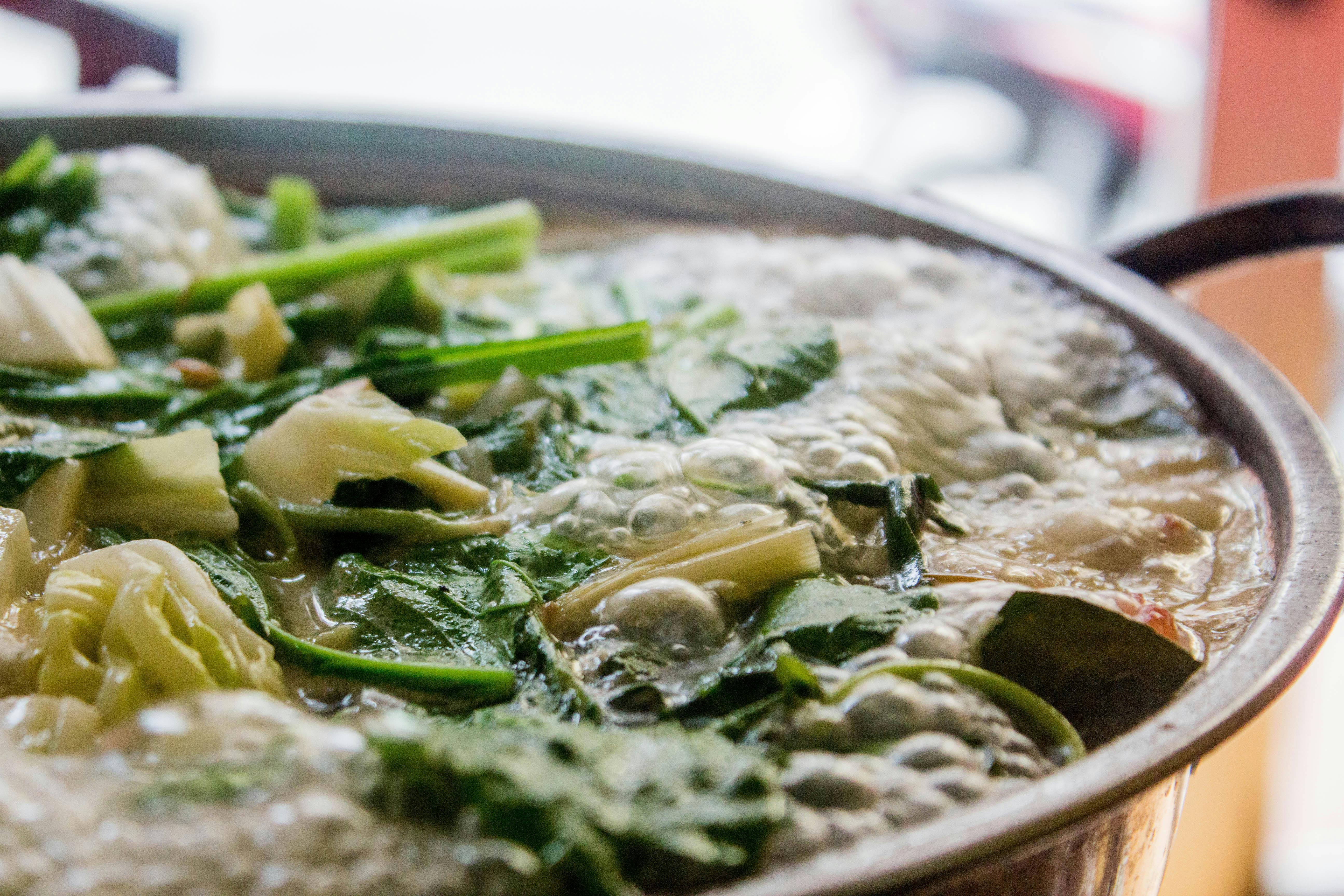
The diets react (see scores below)
Common Ingredients
- beef offal
- cabbage
- garlic chives
- garlic
- soy sauce
- miso
- chili
- tofu
Specific recipes may vary.
Incompatible with 6 of 11 diets
Diet Ratings
Motsunabe is a Japanese offal hot pot that has a mixed keto profile. The primary protein—beef offal (intestines, tripe, etc.)—is high in protein and fat with minimal carbs, making it keto-friendly in principle. Cabbage and garlic chives add fiber-rich vegetables with modest net carbs. However, the broth base is a significant concern: miso paste contains fermented soybeans with moderate carbohydrates (~8g net carbs per 2 tbsp), and soy sauce adds small amounts of carbs and sodium. Tofu is relatively low in net carbs and acceptable in moderation. The combination of miso and soy sauce in a restaurant-style portion could push the broth's carb content into a cautionary range. Garlic adds minimal carbs in typical cooking quantities. Overall, a home-prepared version with reduced miso and careful portioning can fit keto, but a standard restaurant serving likely contains 10-20g net carbs per bowl, requiring budget awareness for the day.
Strict keto practitioners often flag miso entirely due to its carbohydrate content and potential glycemic response from fermented grains/legumes, arguing that soy-based fermented products should be avoided even in small quantities. Conversely, lazy keto adherents may approve the dish outright, treating offal-heavy soups as inherently keto regardless of broth composition.
Motsunabe is a Japanese offal hot pot whose defining ingredient is beef offal (motsu), which is animal flesh. This is an unambiguous animal product and completely incompatible with a vegan diet regardless of the plant-based accompaniments (cabbage, garlic chives, garlic, tofu) in the dish. The presence of vegetables and tofu does not mitigate the core animal ingredient.
Motsunabe contains multiple non-paleo ingredients that disqualify it. Soy sauce is a fermented soy-and-wheat product — containing both a legume derivative and a grain. Miso is a fermented soybean paste, firmly in the legume category. Tofu is processed soy, another legume product. These three ingredients alone are clear paleo violations with strong community consensus against them. The base ingredients — beef offal, cabbage, garlic chives, garlic, and chili — are all paleo-approved, but the dish as traditionally prepared cannot be considered paleo-compatible due to the soy sauce, miso, and tofu.
Motsunabe is a Japanese offal hot pot built around beef intestines and other organ meats, which are still red/processed meat and fall into the most limited category of the Mediterranean diet (a few times per month at most). While the dish contains several genuinely Mediterranean-friendly ingredients — cabbage, garlic, tofu (legume-derived), garlic chives, and chili — the primary protein is beef offal, which is high in saturated fat and contradicts the plant-forward, seafood-centric protein philosophy of the Mediterranean pattern. The seasoning base (soy sauce, miso) is high in sodium and entirely outside the Mediterranean flavor tradition, though not inherently incompatible with health. The vegetable and tofu content provide some redeeming nutritional value, but the core protein ingredient pushes this firmly into the 'avoid' category for regular consumption.
Some Mediterranean diet interpreters note that organ meats, while red meat, are nutrient-dense (rich in iron, B12, zinc) and were historically consumed in traditional Mediterranean cuisines (e.g., Italian trippa, Greek kokoretsi) in small, infrequent amounts; under this view, a modest portion of offal soup with abundant vegetables could be tolerated occasionally, nudging the score toward the low end of 'caution'.
Motsunabe is fundamentally incompatible with the carnivore diet despite containing carnivore-approved beef offal as its base. The dish is heavily laden with plant-based ingredients: cabbage, garlic chives, garlic, soy sauce (fermented soy/wheat), miso (fermented soy), chili, and tofu (soy protein). While beef offal is among the most prized carnivore foods for its exceptional micronutrient density, the majority of this dish's ingredient list consists of plant foods that are strictly excluded. Soy sauce and miso are processed fermented plant products, tofu is a legume-derived protein, and the vegetables add further plant matter. The carnivore community is unanimous in excluding all of these components. The dish cannot be adapted without completely reconstructing it.
Motsunabe contains multiple Whole30-excluded ingredients. Soy sauce is soy-based and therefore excluded (soy is a legume). Miso is also soy-based and excluded for the same reason. Tofu is made from soy and is likewise excluded. These are not edge cases — soy in all forms is explicitly prohibited on Whole30. The beef offal, cabbage, garlic chives, garlic, and chili are all compliant, but the dish as traditionally prepared cannot be made Whole30-compatible without fundamentally altering its core flavor profile. Coconut aminos could substitute for soy sauce, but miso and tofu have no direct compliant substitutes that would preserve the dish's identity.
Motsunabe contains multiple high-FODMAP ingredients that make it unsuitable during the elimination phase. Garlic is one of the highest-FODMAP foods tested by Monash University, containing significant fructans even in tiny amounts. Miso paste, while fermented, is made from soybeans and contains GOS and fructans — it is rated high-FODMAP at typical cooking quantities. Garlic chives (nira) contain fructans and are high-FODMAP at standard serving sizes. Tofu in its silken or regular form can be moderate-to-high FODMAP depending on type and quantity (firm tofu is lower due to reduced GOS, but soft/silken tofu is high-FODMAP). Beef offal itself is protein and generally low-FODMAP, and cabbage is low-FODMAP at small servings (75g) but can become high at larger portions. Soy sauce is low-FODMAP in small amounts (2 tablespoons). Chili is low-FODMAP. However, the combination of garlic, miso, and garlic chives as structural flavor components of this dish — not optional additions — makes it essentially impossible to prepare in a low-FODMAP compliant way without fundamentally altering the recipe.
Motsunabe is a Japanese offal hot pot that presents a mixed nutritional profile from a DASH perspective. On the positive side, it contains DASH-friendly vegetables (cabbage, garlic chives, garlic) and tofu, which contribute fiber, potassium, magnesium, and plant protein. However, several factors push it toward caution: (1) Beef offal (intestines/tripe) is high in saturated fat and cholesterol, which DASH limits — organ meats are not recommended in standard DASH guidelines. (2) The broth is heavily seasoned with soy sauce and miso, both of which are high-sodium ingredients; a typical motsunabe serving can easily exceed 1,000–1,500mg sodium per bowl, making it difficult to fit within DASH's 1,500–2,300mg/day limit. (3) Offal is classified as red meat, which DASH advises limiting. The vegetable and tofu components are DASH-positive, but the high sodium from the seasoning base and the saturated fat from beef offal make this dish problematic for regular DASH diet adherence.
NIH DASH guidelines broadly limit red and organ meats due to saturated fat content; however, some DASH-oriented clinicians note that offal cuts like tripe are relatively lower in fat than fatty red meat cuts, and that the vegetable-rich, broth-based format of hot pot dishes can be compatible with DASH if low-sodium soy sauce and miso are substituted and portion size is controlled.
Motsunabe (Japanese offal hot pot) presents a mixed Zone Diet picture. The dish has genuinely favorable elements — cabbage and garlic chives are excellent low-glycemic vegetables, tofu provides vegetarian protein, garlic is a polyphenol-rich anti-inflammatory ingredient, and the broth-based format is naturally low-calorie. However, beef offal (primarily intestines, tripe, and similar cuts) is the primary protein, and this is where Zone complexity arises. Offal varies significantly in fat content and saturated fat levels — beef intestines in particular can be quite high in saturated fat, which the Zone Diet discourages. The 40/30/30 macro balance is achievable in principle, as the vegetables and broth provide low-glycemic carbs, the offal and tofu supply protein, and the fat content largely comes from the offal itself. However, the saturated fat profile of offal makes this a 'use with caution' protein source rather than an ideal lean protein. Soy sauce and miso contribute sodium and small amounts of carbohydrates but are not Zone concerns at typical serving levels. The dish could be Zone-compatible with portion control on the offal and emphasis on the vegetable and tofu components, but it does not represent an ideal Zone meal construction.
Some Zone practitioners following Sears' later anti-inflammatory work (Toxic Fat, The Mediterranean Zone) may be more accepting of organ meats, noting that offal is rich in micronutrients, omega-3s (particularly liver), and has been a traditional food for millennia. Sears' later writings soften the strict anti-saturated-fat position somewhat in favor of a broader anti-inflammatory framework, under which nutrient-dense organ meats in moderate portions might be considered acceptable. Conversely, strict classic Zone followers would flag offal as an unfavorable high-saturated-fat protein source to be minimized.
Motsunabe is a Japanese hot pot centered on beef offal (intestines and other organ meats) simmered with vegetables and seasonings. The dish presents a genuinely mixed inflammatory profile. On the positive side, it contains several strongly anti-inflammatory ingredients: garlic and garlic chives provide allicin and organosulfur compounds with well-documented anti-inflammatory effects; cabbage is rich in vitamin C, glucosinolates, and antioxidants; tofu contributes as a whole soy food, which Dr. Weil's pyramid emphasizes; miso adds beneficial fermented compounds and probiotics; and chili contributes capsaicin, a notable anti-inflammatory compound. However, the primary protein — beef offal — is the significant limiting factor. Organ meats from beef are high in saturated fat and arachidonic acid (AA), an omega-6 fatty acid that is a direct precursor to pro-inflammatory eicosanoids. Beef offal also contains heme iron in high concentrations, which in excess can promote oxidative stress. Intestines in particular carry substantial saturated fat content. Anti-inflammatory frameworks consistently recommend limiting red meat and full-fat animal products, and organ meats fall clearly within that category. The broth base using soy sauce and miso adds sodium, which in excess may be a concern for some, though this is a minor factor. The vegetable and spice components genuinely soften the overall inflammatory load, preventing this from being an 'avoid,' but the high offal content means it cannot be endorsed.
Some ancestral and nose-to-tail nutrition advocates (e.g., Paul Saladino, Weston A. Price Foundation) argue that organ meats are among the most nutrient-dense foods available, rich in fat-soluble vitamins (A, D, K2), coenzyme Q10, and B vitamins including B12, and that arachidonic acid from whole food sources does not necessarily translate to systemic inflammation in the context of a nutrient-dense diet. Mainstream anti-inflammatory frameworks like Dr. Weil's, however, classify beef organ meats within the red meat/limit category due to saturated fat and omega-6 concerns.
Motsunabe is a Japanese offal hot pot featuring beef intestines and other organ meats simmered with cabbage, garlic chives, tofu, and a soy-miso broth. It has meaningful nutritional strengths — beef offal is protein-rich and provides iron, zinc, and B12, while cabbage and garlic chives contribute fiber and water content, and tofu adds plant-based protein with a favorable fat profile. The soup format supports easy digestibility and hydration. However, beef offal (particularly intestines) is notably high in saturated fat — significantly higher than lean cuts — which can worsen GLP-1 side effects including nausea, bloating, and reflux due to slowed gastric emptying. The chili component adds mild spice risk for GI-sensitive patients. The miso-soy broth is typically high in sodium, which may complicate hydration balance. Overall protein content per serving is good but the fat load from offal makes this a conditional choice rather than an ideal GLP-1 meal.
Some GLP-1-focused dietitians would rate organ meats more favorably given their exceptional micronutrient density (particularly B12, iron, and zinc) relative to calories — nutrients that are often depleted during rapid weight loss on GLP-1s. Others would avoid recommending offal entirely due to high saturated fat content and unpredictable GI tolerance, particularly in the early weeks of GLP-1 therapy when nausea and fat sensitivity are most pronounced.
*See how scores were generated at our methodology page.
Nutritional profile
Six traits that cut across every diet.
Fiber & Plants
How much whole-plant food and fiber it delivers.
Healthy Fats
The quality of its fats (unsaturated, omega-3).
Whole / Unprocessed
How close it is to its natural, unprocessed form.
Gut Gentle
How easy it is on digestion (low FODMAP, few irritants).
Low Glycemic
How little it spikes your blood sugar.
Protein Density
How much protein it packs per calorie.
Controversy Index
Higher controversy = more disagreement between diets.
Diet-Specific Tips
 Keto — 5/10
View tips
- Beef offal is high in fat and protein with near-zero net carbs — core keto ingredient
- Miso paste introduces moderate carbohydrates (~8g per 2 tbsp) and is soy-based
- Soy sauce adds small additional carbs and high sodium
- Cabbage and garlic chives are low net-carb vegetables, acceptable in keto portions
- Tofu is moderate in net carbs; small portions are keto-compatible
- Restaurant portions may use larger quantities of miso, pushing net carbs higher
- Home preparation with reduced miso can make this dish more keto-compatible
 DASH — 4/10
View tips
- Beef offal is high in saturated fat and cholesterol — a red meat category DASH limits
- Soy sauce and miso broth base is very high in sodium, likely exceeding 1,000mg per serving
- Cabbage, garlic chives, garlic, and tofu are DASH-positive ingredients
- No fruits, whole grains, or low-fat dairy present
- Low-sodium miso and soy sauce substitutions would improve the sodium profile significantly
- Organ meats are not emphasized or recommended in standard NIH DASH eating plans
 Zone — 5/10
View tips
- Beef offal is high in saturated fat, conflicting with Zone's preference for lean proteins
- Cabbage and garlic chives are excellent low-glycemic Zone-favorable vegetables
- Tofu provides a beneficial vegetarian protein component supporting 40/30/30 balance
- Broth-based format naturally supports Zone portioning and caloric control
- Miso and soy sauce are acceptable condiments at typical amounts but add sodium
- Garlic is polyphenol-rich and anti-inflammatory, aligning with Sears' later Zone framework
- Macro balance achievable but fat quality (saturated vs. monounsaturated) is a concern
 Anti-Inflammatory — 4/10
View tips
- Beef offal is high in saturated fat and arachidonic acid (pro-inflammatory omega-6)
- Organ meats fall in the 'limit' category for anti-inflammatory diets alongside other red meats
- Garlic and garlic chives provide potent anti-inflammatory organosulfur compounds
- Tofu is an emphasized whole soy food in anti-inflammatory frameworks
- Miso adds fermented probiotic benefit
- Cabbage provides antioxidants and glucosinolates
- Chili contributes capsaicin with anti-inflammatory properties
- High sodium from soy sauce and miso is a minor concern
- Overall dish is mixed — strong anti-inflammatory vegetables and spices offset somewhat by pro-inflammatory offal base
 GLP-1 Friendly — 5/10
View tips
- Beef offal is high in saturated fat, increasing risk of nausea, bloating, and reflux on GLP-1 medications
- Good overall protein content from offal and tofu combined
- Tofu provides plant-based protein with unsaturated fat profile, partially offsetting offal fat concerns
- Cabbage and garlic chives contribute fiber and high water content — both GLP-1 beneficial
- Soup format supports hydration and easy digestibility
- Chili ingredient poses mild reflux/nausea risk for sensitive patients
- Miso-soy broth is high in sodium — monitor hydration
- Offal provides exceptional micronutrient density (B12, iron, zinc) relevant to GLP-1 patients at caloric deficit
- Portion size matters significantly — small serving reduces fat load risk